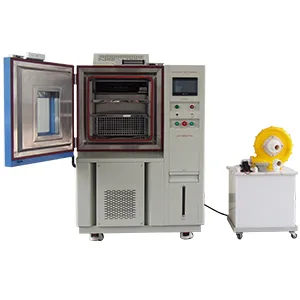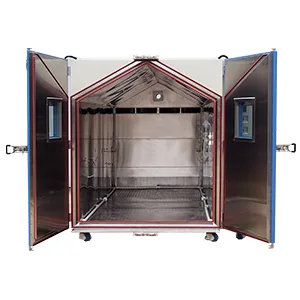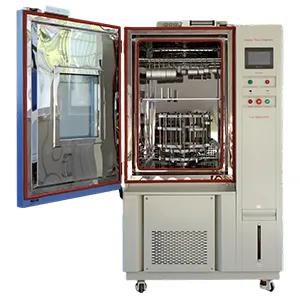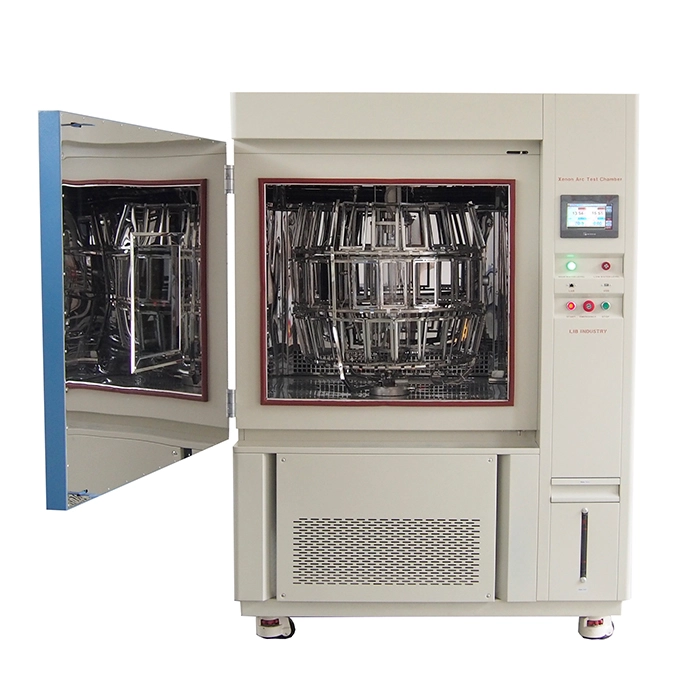
Mixed flowing gas (MFG) testing evaluates how electronic components, connectors, and materials perform when exposed to controlled, low-level concentrations of corrosive gases. IEC 60068-2-60:2015 specifies a flowing mixed gas corrosion test for assessing the corrosive influence of indoor environments on electrotechnical products, components, and materials.
But the chamber is only one part of the laboratory. When H₂S, SO₂, NO₂, and Cl₂ are in use, you also have to plan cylinder storage, gas detection, ventilation, exhaust routing, and exhaust treatment before anything is discharged outdoors.
This article covers what a safe multi-gas corrosion laboratory needs, then walks through a real installation by LIB industry.
 Design the laboratory around the complete gas path:
Gas Storage → Flow Control → Test Chamber → Exhaust Treatment → Outdoor Discharge
Each stage has its own safety function.
Allow enough space for operation, maintenance, sample loading, and the gas and exhaust connections. The room also needs dedicated laboratory exhaust. General air conditioning is not a substitute.
On a first-floor installation, plan the exhaust route early. The final discharge point must be considered together with the building layout, the surroundings, and local requirements.
Multi-gas testing needs several gas sources. Cylinders left standing around the chamber are hard to manage and hard to make safe. A dedicated cylinder cabinet with its own ventilation keeps the gas supply organized and prevents gas from accumulating if a leak occurs.
Sensors inside the chamber are not enough. A safe laboratory should also consider:
Ambient gas detectors in the room and inside the cylinder cabinet
Automatic shutoff valves that close the gas supply on a leak or alarm
Ventilation interlocks and audible/visual alarms
Emergency equipment and procedures (eyewash, respiratory protection, evacuation plan)
Coordination with your local EHS requirements and your gas supplier's handling rules
The chamber exhaust should go to a dedicated exhaust route, not into the room. Whether the gas can be discharged directly depends on:
Gas type and concentration
Gas consumption and exhaust volume
Local environmental regulations and emission limits
The location of the discharge point
Test atmospheres are at ppb level, but the exhaust route also has to handle higher-concentration situations, such as purging, cylinder changeovers, line flushing, and abnormal events. For that reason, treatment before discharge is a design question, not an afterthought.
For suitable gas compositions, an NaOH wet scrubber can be integrated into the exhaust route:
Test Chamber → Exhaust Pipe → NaOH Scrubber → Treated Exhaust → Outdoor Discharge
The alkaline solution neutralizes acidic and reactive gases such as H₂S, SO₂, NO₂, Cl₂, and HCl. Some limits to keep in mind:
NH₃ is a basic gas, so NaOH scrubbing does not remove it. Laboratories using NH₃ need a separate acid scrubbing stage.
CO₂ consumes NaOH and affects solution management.
Scrubber design, solution concentration, contact arrangement, and capacity must be set for the actual gases and local regulations. A scrubber is not a universal guarantee of compliance.
One LIB industry customer needed to run multi-gas corrosion tests with toxic and corrosive gases in a first-floor laboratory. The requirement was a working laboratory, not just a chamber, so the chamber, gas supply, ventilation, and exhaust treatment were designed as one system:
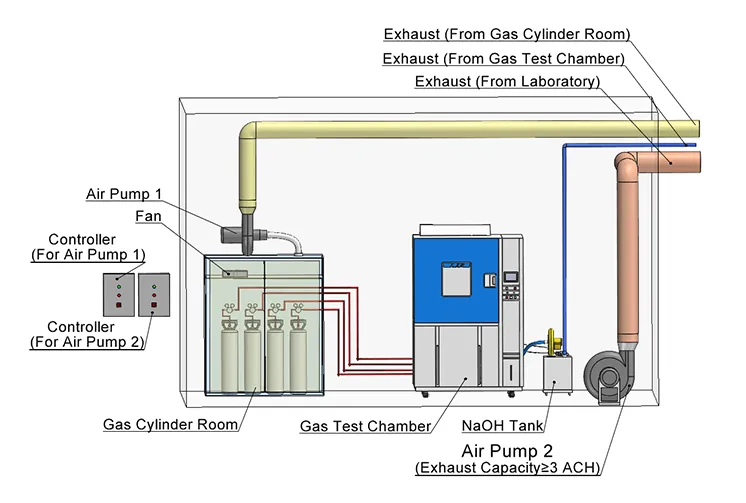
Mixed Flowing Gas Test Chamber → Four-Gas Supply → Ventilated Cylinder Cabinet → Laboratory Exhaust → NaOH Scrubber → Outdoor Discharge
Test standard: IEC 60068-2-60
Gases: H₂S, SO₂, NO₂, Cl₂
The main challenge: On a first-floor installation, the exhaust route was the critical design issue. The laboratory had no direct roof access, so the chamber exhaust could not simply be vented upward through a short duct. The discharge point also had to be positioned with the building layout and surroundings in mind. In addition, four toxic and corrosive gases (H₂S, SO₂, NO₂, and Cl₂) meant that untreated exhaust was not an option.
How it was solved: Instead of treating the exhaust as a building service, we designed it as part of the test system. Chamber exhaust is routed through a dedicated duct to an NaOH wet scrubber, and only the treated exhaust continues to the outdoor discharge point. The cylinders sit in a separately ventilated cabinet, so a leak at the gas supply cannot spread into the laboratory. Because the chamber, gas cabinet, scrubber, and exhaust route were planned together from the start, the interfaces were coordinated before installation rather than fixed on site.
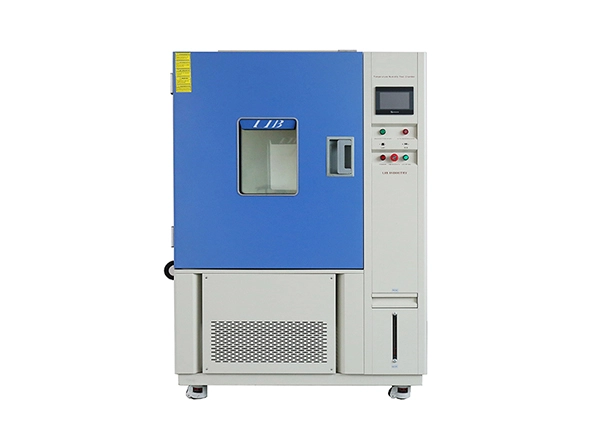
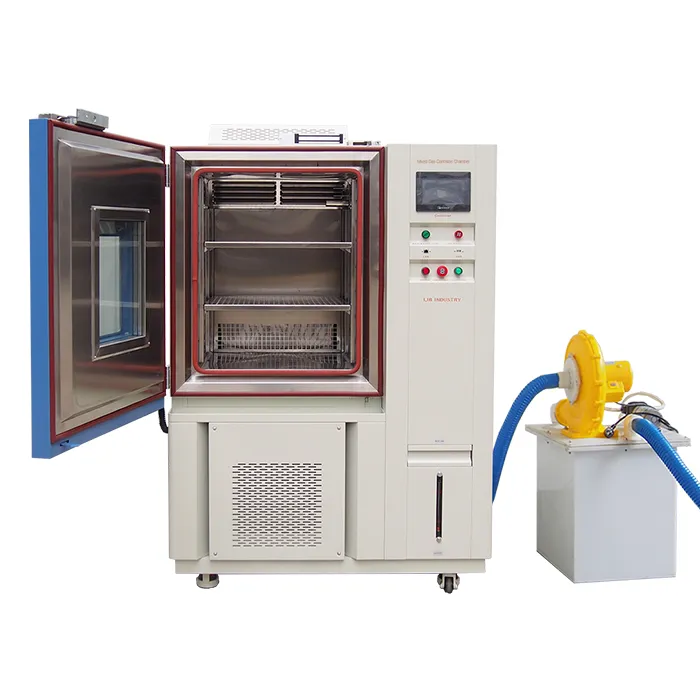
Test Chamber. The interior is 316 stainless steel for corrosion resistance, with adjustable stainless steel shelves for different specimens. The chamber can be configured for gases including H₂S, SO₂, NO₂, Cl₂, NH₃, HCl, and CO₂, depending on the test method.
Gas control. Each gas is controlled independently by a precision mass flow controller. This matters because small changes in concentration affect both the test environment and the repeatability of results.
Monitoring and alarms. The programmable controller provides gas concentration monitoring, over-limit alarms, sensor-failure alarms, and abnormal-condition warnings. An electromagnetic door lock and a sealed chamber structure support controlled operation during gas exposure, and operators can follow the test without repeatedly opening the chamber.
Cylinder cabinet. Four cylinders (H₂S, SO₂, NO₂, Cl₂) are housed in a dedicated, ventilated cabinet instead of standing around the chamber.
Exhaust and scrubbing. Chamber exhaust is routed to the NaOH scrubber before it reaches the outdoor discharge point, never released directly from the chamber.
Parameter | Typical Specification |
Models | GCM-100 / GCM-225 / GCM-800 / GCM-1000 |
Temperature range | 15°C to 100°C |
Temperature fluctuation / deviation | ±0.5°C / ±2.0°C |
Humidity range | 30% to 98% RH |
Humidity deviation | ±1% RH |
H₂S | 10–100 ppb, ±5 ppb |
SO₂ | 100–500 ppb, ±20 ppb |
NO₂ | 200 ppb, ±20 ppb [add range if configurable] |
Cl₂ | 10–20 ppb, ±5 ppb |
Air change rate | 3–10 times/h |
Interior material | 316 stainless steel |
Concentrations depend on the test method selected. Final configuration is set by your standard, gas combination, sample size, and laboratory conditions.
IEC 60068-2-60:2015 (Test Ke) is the primary international reference for flowing mixed gas corrosion testing. It defines several test methods with different gas combinations and concentrations.
IEC 60512-11-7 covers flowing mixed gas testing of electrical connectors and contacts.
Always confirm the applicable standard against your product, test method, and customer requirements. Because of that, chamber, sensors, gas control, and exhaust treatment should be selected around the test requirement rather than around a standard number alone.
Area | Key Questions |
Test chamber | Which gases, concentrations, temperature, and humidity are required? |
Gas storage | Where will cylinders be kept, and how is the cabinet ventilated? |
Gas supply | Does each gas have independent flow and pressure control? |
Leak detection | How are leaks detected in the room and cabinet, and does the supply shut off automatically? |
Room ventilation | Is there enough laboratory exhaust capacity? |
Chamber exhaust | Is there a dedicated exhaust route? |
Gas treatment | Is a scrubber needed, and is it suited to every gas used (including NH₃ or CO₂)? |
Safety system | Are alarms, interlocks, and emergency procedures in place? |
Compliance | Does the final exhaust meet local requirements? |
Installation | Are gas, electrical, ventilation, and exhaust interfaces coordinated? |
For a new laboratory, LIB industry can supply the chamber, gas supply, cylinder cabinet, monitoring, exhaust treatment, installation, commissioning, and operator training, starting from your test requirements and site conditions. Equipment is backed by a 3-year manufacturer warranty and technical support [for the service life of the product].
To get a preliminary proposal, send us: the gases and concentrations you need, your test standard, sample size, the floor and building layout, and available exhaust conditions.
Does an MFG laboratory need a scrubber?
It depends on the gases, quantities, and local regulations. Even when test-atmosphere concentrations are very low, purging and abnormal events can produce higher concentrations, so treatment should be evaluated for every project.
Can gas cylinders be kept in the laboratory?
Local regulations and your gas supplier's rules apply. Best practice is a dedicated, ventilated cylinder cabinet with leak detection, not loose cylinders beside the chamber.
Does an NaOH scrubber remove all the gases?
No. It suits acidic and reactive gases such as H₂S, SO₂, NO₂, Cl₂, and HCl. NH₃ needs an acid stage, and CO₂ consumes the solution.
Which standard should I choose?
That depends on your product and your customer's requirement. IEC 60068-2-60 is the main reference, and IEC 60512-11-7 applies to connectors.
|
|
|
| SO₂ Gas Corrosive Test Chamber Evaluates how materials, coatings, and components resist corrosion in a controlled sulfur dioxide atmosphere, with temperature and humidity control. | Walk-In Corrosion Test Chamber Provides a large walk-in space for corrosion testing of oversized parts and bulk batches, such as automotive components and large assemblies, under continuous salt fog exposure. | Ozone Test Chamber Tests the ozone aging and cracking resistance of rubber, plastics, and other polymer materials under controlled ozone concentration, temperature, and humidity. |
 English
 русский
 français
 العربية
 Deutsch
 Español
 한국어
한국어 italiano
 tiếng việt
 ไทย
ไทย Indonesia