For ADAS environmental testing, manufacturers should normally combine temperature/humidity testing with dedicated IP water and dust testing, while selecting the chamber according to sensor size, optical access, operating heat load and required environmental profile. A conventional temperature chamber is mainly used for thermal and climatic exposure, while IP equipment evaluates sealing against water or dust ingress. For camera and LiDAR development, optical access can also be important because engineers may need to monitor image quality or sensor response without removing the device from the chamber. The most important selection factors are the required temperature and humidity range, sample operating condition, chamber volume, ramp rate, optical interfaces and applicable automotive standards.
Modern ADAS systems depend on sensors that must remain reliable despite changing road and weather conditions. Cameras, radar sensors and LiDAR modules may be mounted behind grilles, windshields, bumpers, mirrors, lighting assemblies or other exposed locations.
Environmental testing therefore needs to evaluate more than simple component survival.
For an automotive camera test chamber, engineers may examine:
· Image quality at temperature extremes
· Lens and housing dimensional changes
· Internal condensation or fogging
· PCB and connector reliability
· Image sensor performance
· Seal and enclosure integrity
LiDAR reliability testing can additionally examine optical transmission, receiver sensitivity, beam stability and electronic performance under temperature and humidity changes.
Radar modules can be evaluated for electrical stability, enclosure sealing and changes in sensor performance after environmental exposure.
LIB has a specific environmental chamber configuration with multiple optical ports for camera modules, image sensors and LiDAR/ToF modules. The chamber allows optical signals or reference targets to be introduced while the sample remains inside the controlled environment, supporting measurements such as MTF/SFR, optical response and receiver sensitivity during environmental exposure.
This approach is particularly useful for ADAS development because removing a sensor from the chamber after every exposure can interrupt the test condition and make it harder to correlate environmental stress with real-time performance.
Automotive environmental qualification normally combines several standards and manufacturer-specific requirements rather than relying on one universal test condition.
Test requirement | Example standard | Typical environmental condition | Main purpose |
Cold testing | IEC 60068-2-1 | Low temperature exposure | Check cold-start and low-temperature performance |
Dry heat | IEC 60068-2-2 | Elevated temperature | Evaluate thermal durability |
Temperature/humidity | ISO 16750-4 | Temperature and humidity cycles | Automotive climatic reliability |
Temperature cycling | IEC 60068-2-14 | Repeated temperature transitions | Detect thermal expansion and contraction failures |
Water ingress | IEC 60529 | Water spray or jet exposure | Verify enclosure sealing |
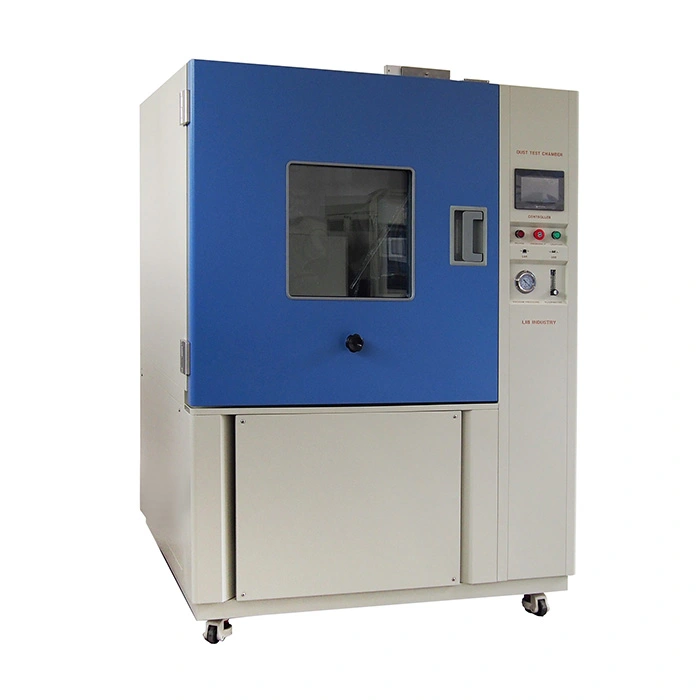
Dust ingress | IEC 60529 | Controlled dust exposure | Evaluate protection against dust penetration |
High-pressure water | ISO 20653 / applicable OEM procedures | High-pressure water exposure | Automotive ingress protection |
Actual test temperature, humidity, dwell time, cycle count and water conditions should always be taken from the applicable product specification or test procedure.
LIB's automotive environmental testing solutions cover temperature/humidity, vibration, thermal shock, IP dust and water ingress, corrosion and accelerated weathering. Its automotive application page specifically identifies these as environmental reliability test areas for automotive components.
For example, LIB's temperature chamber portfolio includes configurations for low and high temperature testing, while its IP test equipment is designed for dedicated dust and water ingress evaluations.
Selection Factor | Temperature / Climatic Chamber | |
Temperature range | Typically the primary control parameter | Usually secondary or application-dependent |
Humidity range | Important for climatic and condensation testing | Generally not the main parameter |
Chamber volume | Selected according to sensor or assembly size | Selected according to product dimensions |
Ramp rate | Important for thermal cycling | Usually not the primary factor |
Airflow | Important for temperature uniformity and recovery | Water or dust circulation is application-specific |
Sample heat load | Important when sensor operates during testing | Depends on powered test configuration |
Safety configuration | Over-temperature, over-current and refrigeration protection | Water, electrical and enclosure safety |
Optical access | Valuable for camera and LiDAR monitoring | Usually not the main requirement |
Applicable standards | IEC 60068, ISO 16750-4 and OEM procedures | IEC 60529, ISO 20653 and related procedures |
The difference between the two equipment categories is important.
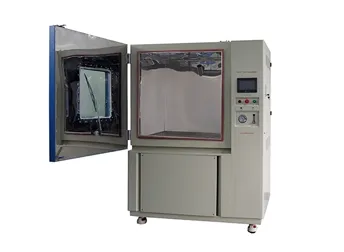
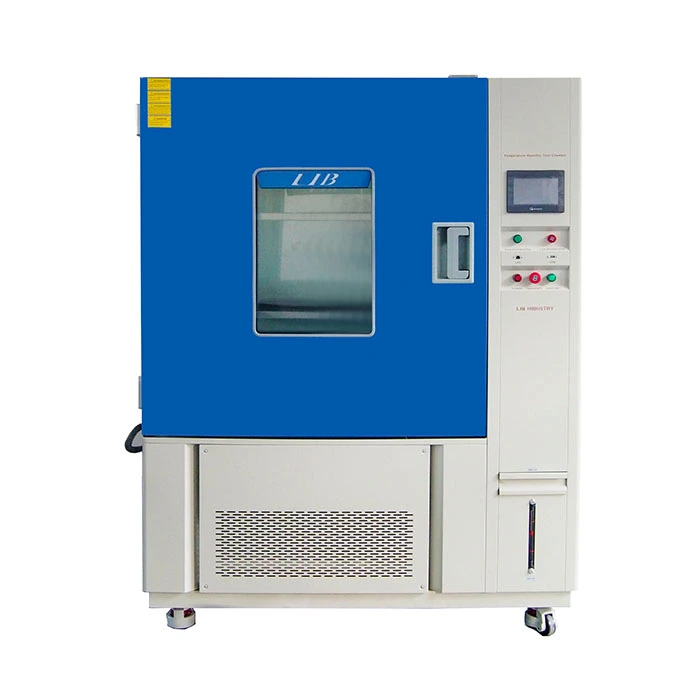
A temperature or climatic chamber creates a controlled thermal environment around the sensor. It is suitable for testing how cameras, radar and LiDAR behave during cold, heat, humidity and thermal cycling.
IP equipment focuses on physical ingress protection. It evaluates whether water or dust can penetrate the housing and affect the electronics, optics, connectors or sealing system.
For ADAS development, these tests are complementary rather than interchangeable.
An ADAS sensor can remain electrically functional while its optical performance has already degraded. Camera fogging, lens distortion or LiDAR transmission changes may become the actual failure mechanism.
For optical sensors, environmental exposure and performance measurement should be correlated whenever possible. Optical access can allow engineers to monitor the device while it remains under controlled conditions.
ADAS sensors may generate significant heat when powered. A chamber that performs well with an unpowered specimen may behave differently when the camera, radar or LiDAR operates continuously.
A chamber capable of reaching –40°C and +150°C is not automatically suitable for every automotive test. Ramp rate, humidity capability, airflow, recovery time, sample load and cable access can also affect results.
Natural rain, water spray, high-pressure water jetting and immersion represent different environmental stresses. The equipment must reproduce the specific test method rather than simply “getting the product wet.”
Fixtures, optical targets, cables and sensor mounting systems occupy additional space. These should be included when calculating usable chamber volume.
Before purchasing, confirm electrical power, drainage, ventilation, access space, water supply where required and the routing of signal or power cables.
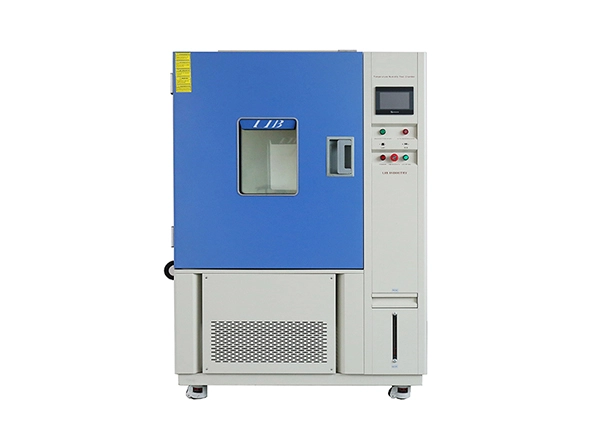
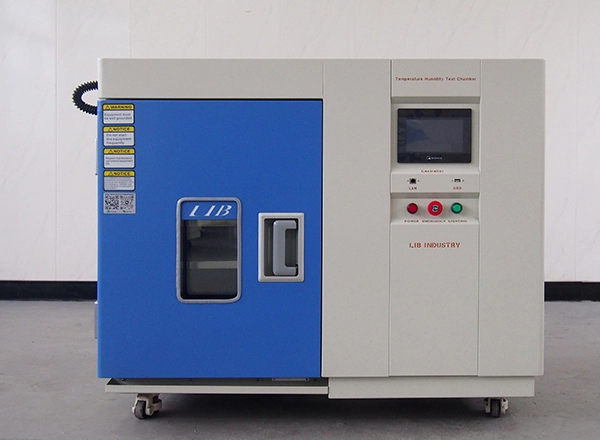
A Benchtop Environmental Chamber is suitable for individual camera modules, LiDAR modules, radar sensors and other small ADAS components. LIB offers compact chambers for limited laboratory space, while its optical-port configuration is particularly relevant when engineers need to monitor camera or LiDAR performance during environmental exposure.
A reach-in chamber is more appropriate when several sensor assemblies or larger ADAS modules need to be tested. It provides greater fixture flexibility while remaining practical for laboratory-based R&D.
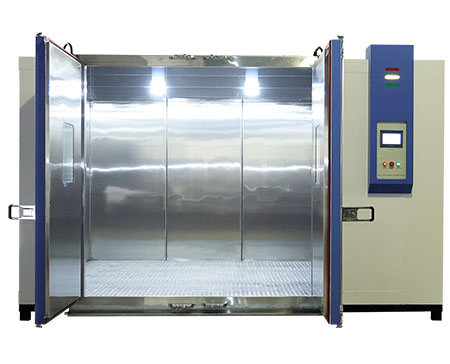
A walk-in chamber is suitable for larger assemblies or high-volume validation programs. LIB's walk-in environmental chambers can be customized for temperature, humidity, rain, dust, corrosion and other environmental conditions, making them suitable for large-scale automotive testing.
When ADAS components must withstand rapid temperature transitions, a dedicated thermal shock system should be selected instead of relying on a standard climatic chamber.
LIB's automotive environmental testing solution identifies thermal shock as an important reliability test for automotive electronic components and parts.
For sensors and housings exposed to road salt, corrosion testing can supplement climatic and IP testing. Automotive environmental validation may require evaluation of protective coatings, metal components and enclosure materials.
For exposed ADAS sensors, IP testing is essential for evaluating dust and water ingress.
LIB's IP Test Equipment portfolio covers different ingress protection requirements, while its automotive solution specifically includes IP dust and water ingress testing.
For high-pressure water exposure, LIB also provides dedicated IP equipment for automotive applications. Its IPX6K/IPX9K solution, for example, is designed for applications such as radar sensors, ECUs and connectors exposed to road splash and pressure washing.
A custom chamber becomes valuable when an ADAS program requires simultaneous environmental control and real-time optical or electrical measurement.
LIB's Temperature Chamber range provides the basic platform for controlled temperature testing, while the Environmental Test Chamber for Automotive Industry provides a broader automotive testing solution covering temperature/humidity, vibration, thermal shock, corrosion and IP testing.
A particularly relevant LIB article is Why Must the High Low Temperature Test Chamber Be Used for the Verification of Electronic Products?. The article describes an automotive rearview camera tested from –40°C to +85°C over 100 cycles and discusses image degradation, condensation and electrical stability. This makes it a useful supporting resource for engineers developing automotive camera environmental test programs.
Most ADAS programs require a combination of temperature/humidity equipment and IP test equipment. Camera and LiDAR programs may also benefit from optical-access chambers for real-time performance monitoring.
The basic environmental control may be similar, but an automotive camera test chamber may require optical ports, cable access, fixtures and provisions for monitoring image performance while the sample remains inside the chamber.
LiDAR modules can be exposed to controlled temperature and humidity conditions while engineers monitor optical and electrical performance. Optical access can help track receiver sensitivity or other performance changes without removing the module from the chamber.
There is no single duration. Test time depends on the applicable automotive standard, temperature profile, humidity conditions, number of cycles and required stabilization or dwell periods.
For individual camera, radar or LiDAR modules, a benchtop or compact reach-in chamber may be sufficient. Larger assemblies, multiple samples or complex optical fixtures may require a larger chamber.
Generally, temperature/humidity testing and dedicated IP testing use different environmental mechanisms. A climatic chamber should not be assumed to replace dedicated water or dust ingress equipment.
An RFQ should specify the sensor dimensions, operating state, temperature and humidity range, ramp rate, cycle profile, heat load, required IP rating, optical measurement requirements, cable ports, fixture dimensions and applicable automotive standards.
 English
 русский
 français
 العربية
 Deutsch
 Español
 한국어
한국어 italiano
 tiếng việt
 ไทย
ไทย Indonesia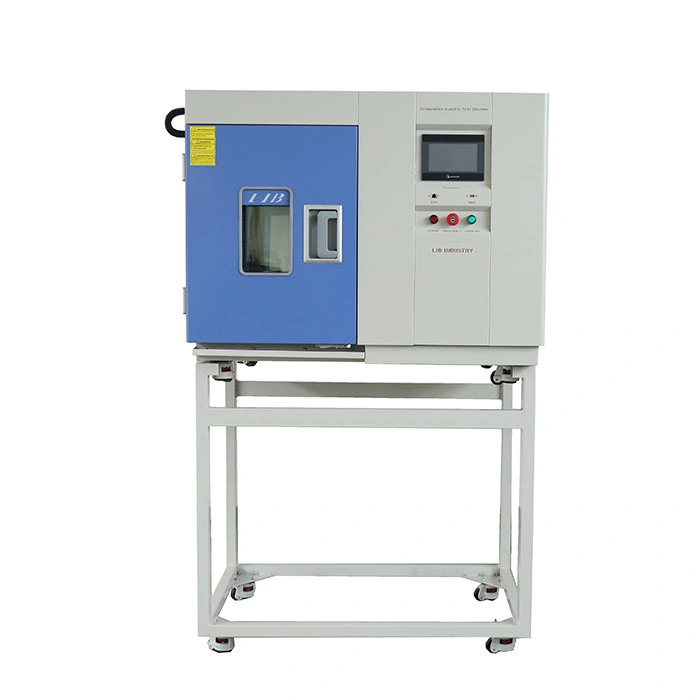
2.webp "Light Fastness Test Instrument")