_20260326101919.webp) Rubber components such as automotive seals, hoses, gaskets, belts, cable jackets, and vibration isolators can crack and lose performance after long-term ozone exposure. These failures are often invisible at first, but small surface cracks can eventually lead to leakage, insulation failure, or mechanical damage.
Rubber components such as automotive seals, hoses, gaskets, belts, cable jackets, and vibration isolators can crack and lose performance after long-term ozone exposure. These failures are often invisible at first, but small surface cracks can eventually lead to leakage, insulation failure, or mechanical damage.
An ASTM D1149 Ozone Test Chamber provides a controlled environment to evaluate the ozone cracking resistance of rubber and elastomer materials, letting engineers see how products perform under ozone attack before they reach real applications. ASTM D1149 covers both static and dynamic ozone testing — static suits parts under constant strain, while dynamic better simulates rubber that repeatedly stretches, bends, or moves. This article explains how the test works, the difference between the two methods, and how to choose a suitable ozone test chamber.
ASTM D1149 is a standard test method for evaluating the resistance of vulcanized rubber and elastomer materials to ozone cracking under controlled temperature and strain conditions, isolating the effect of ozone by eliminating variables such as sunlight and rain.
Ozone is a highly reactive form of oxygen. When it contacts rubber containing unsaturated polymer bonds, it causes molecular oxidation; once the surface is stretched, these weakened areas crack perpendicular to the stretching direction — shortening service life and creating safety risks:
Rubber Product | Potential Ozone Failure |
Automotive sealing rings | Air or water leakage |
Rubber hoses | Surface cracking and rupture |
Cable jackets | Insulation damage |
Drive belts | Reduced mechanical strength |
Vibration isolators | Loss of flexibility |
Industrial gaskets | Sealing failure |
An ozone aging test chamber lets manufacturers catch these weaknesses during development and quality control, rather than after field failure.
Testing generally follows five steps: specimens are prepared, stretched to a defined elongation (or placed in a dynamic fixture), exposed to controlled ozone concentration and temperature, inspected periodically for cracking, and evaluated based on crack growth. A longer exposure time doesn't automatically mean better resistance — different compounds react differently depending on polymer structure, antioxidants, fillers, and curing systems.
Parameter | ASTM D1149 Requirement |
Ozone concentration range | 25–200 pphm |
Standard ozone level | 50 ± 5 pphm |
Temperature | 40 ± 1°C |
Dynamic tensile strain | 25 ± 3% maximum |
Dynamic frequency | 0.5 Hz (30 cycles/min) |
Static straight-strip strain | 20% elongation |
Static tapered-strip strain | 10%, 15%, 20% zones |
Minimum chamber volume | 0.11 m³ (110 L) |
Gas exchange rate | ≥75% chamber volume/min |
Specimen conditioning | 24 hours ozone-free at test temperature |
These parameters keep results comparable across different laboratories. Related standards include ASTM D4575 (measuring ozone concentration in chambers) and ISO 1431-1 (ozone cracking resistance) — both cover static and dynamic evaluation, but concentration, temperature, and humidity requirements should not be mixed between standards.
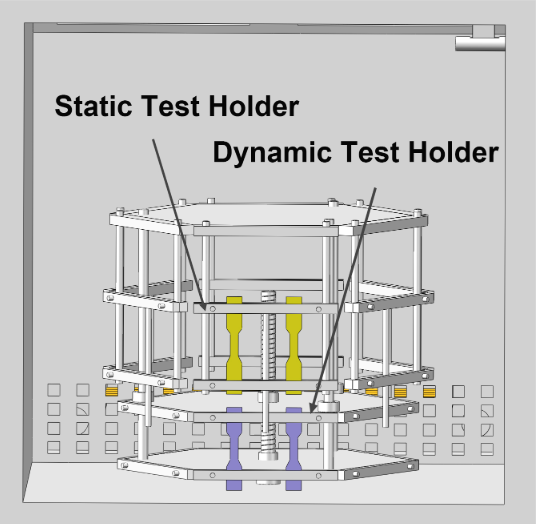
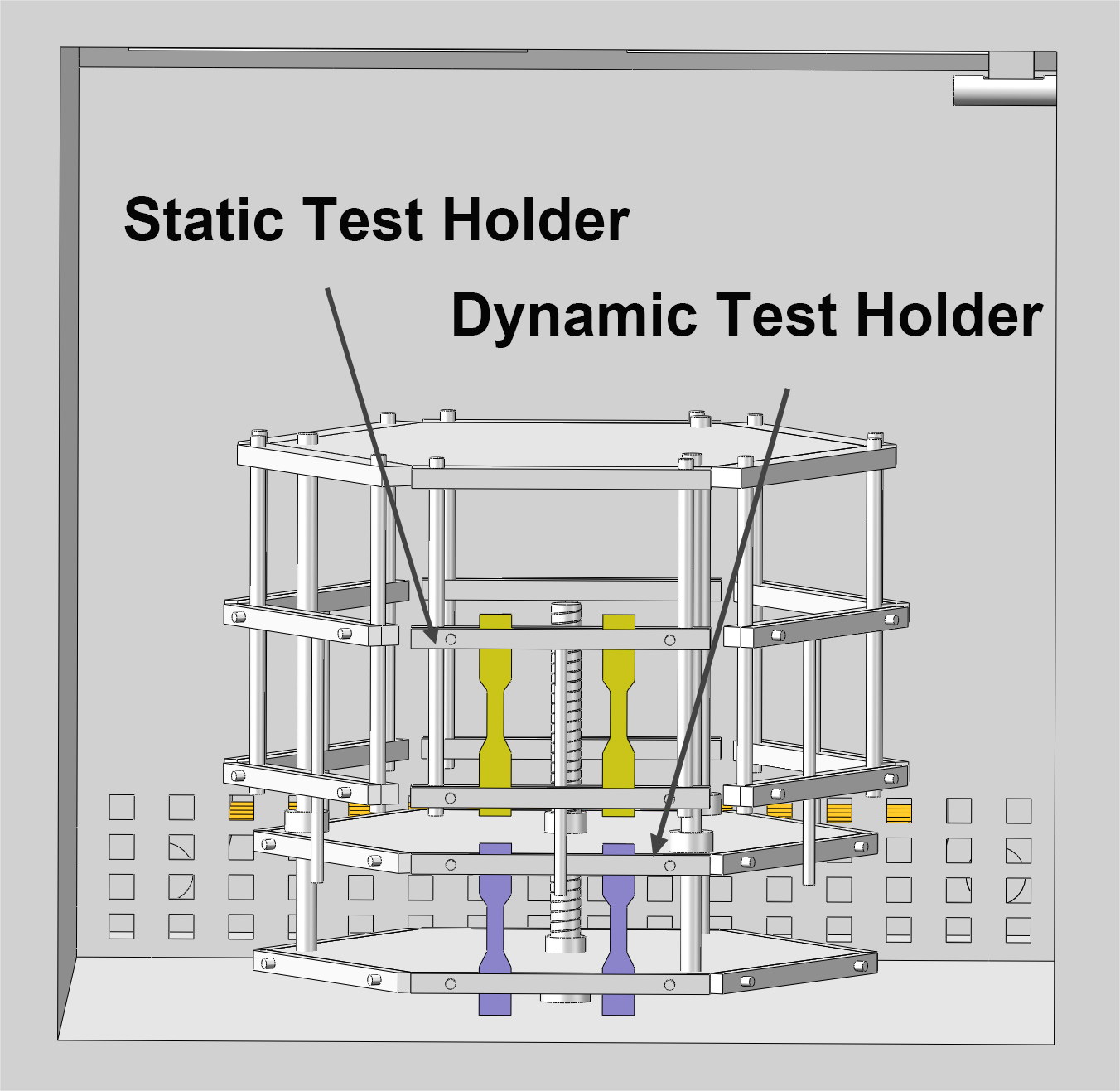
Static testing keeps the specimen at a fixed strain throughout exposure — typically a straight strip at 20% elongation, a tapered strip spanning several strain zones, or a looped specimen. Because the specimen doesn't move, the setup is simple and repeatable, well suited to comparing rubber compounds during material development.
Its main limitation is that it doesn't reproduce repeated movement — a material may hold up under constant elongation but still fail under repeated stretching in service. Static testing therefore fits fixed sealing components, stationary gaskets, and other rubber parts with limited movement.
Dynamic testing combines ozone exposure with repeated mechanical deformation, typically up to 25 ± 3% strain at 0.5 Hz, under continuous ozone exposure and controlled temperature. Because repeated deformation continuously exposes new rubber surface, it accelerates crack growth — giving a more realistic picture for parts that move in service, such as suspension boots, drive belts, moving hoses, and pump diaphragms.
Neither method is universally better — it depends on how the product actually works.
Comparison | Static Testing | Dynamic Testing |
Main purpose | Ozone resistance under constant strain | Ozone resistance under repeated deformation |
Specimen condition | Fixed elongation | Cyclic movement |
Typical strain | 10–20% elongation | 25 ± 3% maximum |
Movement | None | 0.5 Hz |
Suitable products | Seals, gaskets, fixed parts | Belts, hoses, boots, flexible components |
| Main advantage | Simple and repeatable | Better simulates real service conditions |
 | ||
A stationary sealing ring manufacturer, for example, may focus on static testing, while one developing a suspension boot needs dynamic testing because the part continuously flexes during driving. For critical components, many labs run both methods for a complete picture.
Choosing a chamber isn't just about whether it can generate ozone. A few factors matter most:
Ozone concentration control. Fluctuating levels can produce inconsistent cracking results, so a good chamber needs stable generation, real-time monitoring, and automatic adjustment.
Static and dynamic capability. A chamber supporting both modes gives a lab more flexibility and can reduce the need for separate equipment.
Temperature control. ASTM D1149 calls for 40 ± 1°C; uniform distribution and stable airflow are essential, since poor uniformity means different samples can experience different aging conditions.
Safety protection. Ozone is a strong oxidizing gas, so a reliable chamber should include concentration monitoring, automatic protection, a sealed testing area, and exhaust treatment.
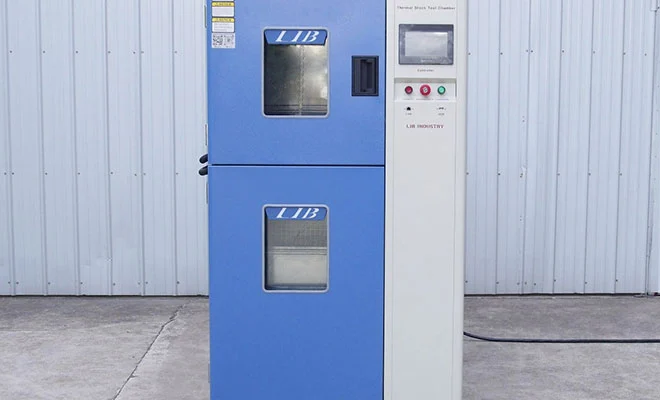
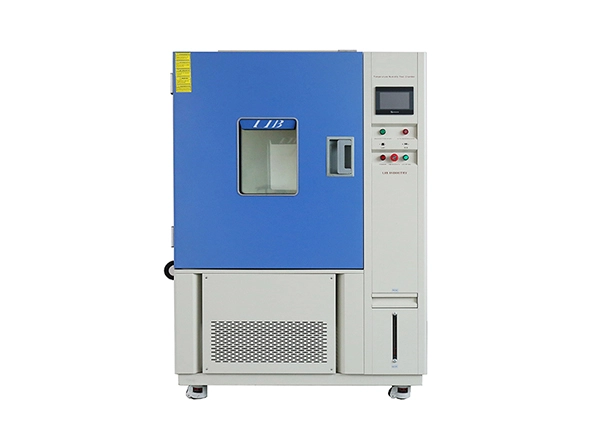
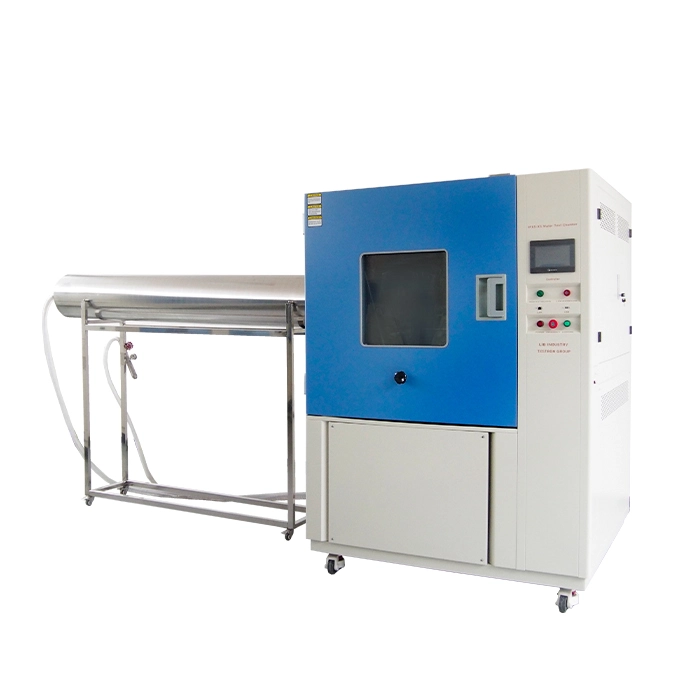
Xi'an LIB Environmental Simulation Industry provides environmental simulation testing equipment for material reliability evaluation, including ozone aging, temperature and humidity, and corrosion testing. Its ASTM D1149 Ozone Test Chamber is designed for laboratories that require stable exposure conditions, accurate control, and repeatable results.
The ozone generation and monitoring system maintains a consistent testing atmosphere throughout the exposure process.
| Feature | LIB Specification |
|---|---|
| Ozone concentration range | 25–200 pphm |
| Control accuracy | ±10% |
| Standard ozone level | 50 ± 5 pphm |
| Monitoring method | Real-time ozone concentration monitoring |
| Testing modes | Static and dynamic ozone testing |
Stable ozone control helps reduce test variation caused by concentration changes and improves comparison accuracy between different rubber materials.
LIB ozone chambers support different rubber testing requirements through flexible specimen fixtures and testing modes. Main functions include:
Static ozone cracking evaluation
Dynamic tensile ozone testing
Adjustable specimen strain conditions
Multiple specimen testing capability
Long-duration continuous exposure testing
This allows users to evaluate different products, from rubber compounds to finished components.
An intelligent control system lets operators set and monitor ozone concentration, temperature, test duration, and testing status — reducing manual errors, improving repeatability, and helping manage long-term aging programs. Before delivery, every chamber undergoes comprehensive testing to verify control performance, temperature stability, ozone accuracy, mechanical operation, and safety functions, ensuring stable performance for long-term laboratory use.
Beyond the ozone test chamber, LIB offers other equipment that often supports the same material reliability programs:
| 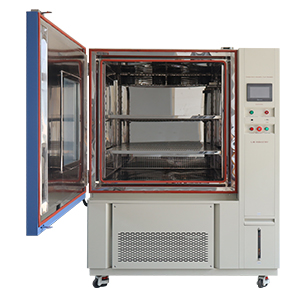 | 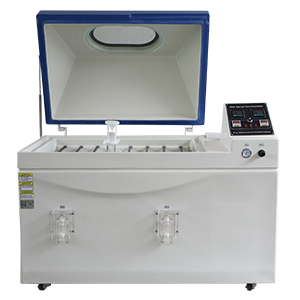 |
UV Weathering Test Chamber Sunlight and outdoor weathering effects on polymers, coatings, plastics | Temperature & Humidity Chamber Combined thermal/moisture stress for electronics, automotive parts, batteries | Salt Spray Corrosion Chamber Corrosion resistance under salt mist (ASTM B117, ISO 9227) |
Together, these let engineers cover multiple qualification standards through one supplier.
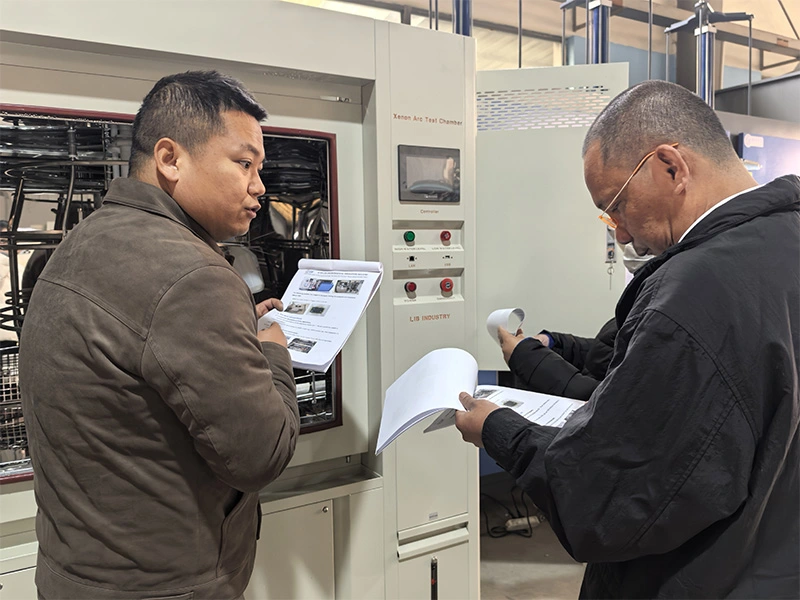
Founded in 2012, LIB Industry is ISO 9001 certified, with export experience across 60+ countries, a 3-year warranty, lifetime maintenance support, and installation and training assistance for customers who need it.
LIB chambers are widely used across automotive, new energy, and electronics manufacturing, as well as research laboratories developing new rubber compounds — helping engineers catch potential failure risks before products reach the market.
What is an ASTM D1149 Ozone Test Chamber used for?
It evaluates the ozone cracking resistance of rubber and elastomer materials under specified concentration, temperature, and strain conditions.
What's the difference between static and dynamic ozone testing?
Static testing holds specimens at a fixed elongation, while dynamic testing applies repeated stretching cycles — better suited to components that move in service. A properly designed chamber can support both through different specimen fixtures.
What ozone concentration does ASTM D1149 require?
Common laboratory conditions range from 25–200 pphm, with 50 ± 5 pphm frequently used for standard evaluations.
How do I choose the best ozone test chamber supplier?
Look at ASTM D1149 compliance, ozone accuracy, temperature control, static/dynamic capability, reliability, and technical support — suppliers with real engineering experience tend to offer better-fitted solutions.
Static and dynamic ozone testing aren't competing methods — they evaluate different service conditions, with static measuring resistance under constant strain and dynamic adding repeated mechanical stress. For labs and manufacturers working with rubber seals, hoses, belts, and flexible components, choosing an ASTM D1149 Ozone Test Chamber with accurate ozone control, stable temperature performance, and flexible testing modes is essential to reliable results.
Contact LIB Industry today to get ASTM D1149 Ozone Test Chamber specifications, technical solutions, and customized environmental testing recommendations for your application.

 English
 русский
 français
 العربية
 Deutsch
 Español
 한국어
한국어 italiano
 tiếng việt
 ไทย
ไทย Indonesia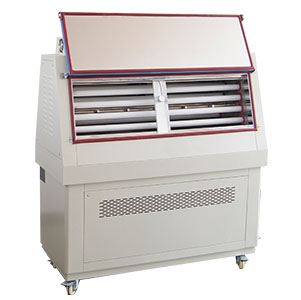


.webp "CO₂ Carbonation Curing Chamber Automation Kit")