Understanding Quality Degradation in Low-Moisture Foods Through Controlled Environmental Simulation
In snack foods, nuts, and bakery products, shelf life is rarely defined by safety limits. Instead, it is defined by sensory and functional quality loss.
A product may still be microbiologically safe while already being rejected by consumers due to:
Loss of crispness in crackers and chips
Oxidized or “stale” flavor in roasted nuts
Moisture-induced softening in wafers and filled bakery items
Texture collapse in cookies and bars
These changes often occur slowly under ambient storage, making real-time shelf life validation inefficient for product development cycles.
This is where accelerated shelf life testing (ASLT) becomes essential. By using controlled environmental stress, degradation mechanisms are observed in a compressed time frame, enabling faster formulation and packaging decisions.
Shelf life failure in low-moisture foods is primarily driven by three interacting mechanisms:
Lipid oxidation is one of the dominant failure modes in nuts, fried snacks, and butter-based bakery products.
Why it matters:
Unsaturated fatty acids react with oxygen to form hydroperoxides, which further decompose into aldehydes and ketones responsible for off-flavors.
Even at low concentrations, these compounds have extremely low sensory thresholds, meaning flavor deterioration is often detected before chemical degradation appears severe.
Moisture transfer does not always significantly change total water content, but it directly affects texture.
Parameter | Meaning | Why It Matters |
Water Activity (aw) | Free water available for reactions | Determines microbial stability and texture behavior |
Moisture Content | Total water in product | Often insensitive to early texture change |
WVTR | Water vapor transmission rate of packaging | Controls moisture exchange rate |
Key insight:
A cracker can gain only 1–2% moisture yet lose crispness entirely due to starch plasticization.
Texture degradation is often the first consumer-perceived failure.
Common mechanisms include:
Starch softening in baked products
Fat migration in filled wafers
Loss of fracture behavior in fried snacks
Humectant-driven stickiness in bars
These changes cannot be predicted by chemical analysis alone and require mechanical testing.
Accelerated Shelf Life Testing does not simulate exact storage conditions. Instead, it accelerates dominant failure pathways through controlled stress factors.
Typical ASLT conditions:
Product Type | Condition Range | Purpose |
Roasted nuts | 35–45°C / 50–65% RH | Accelerate oxidation |
Fried snacks | 35–45°C / 30–50% RH | Lipid stability testing |
Crackers / biscuits | 30–40°C / 65–75% RH | Moisture uptake & texture loss |
Wafers / filled products | 30–35°C / 65–75% RH | Migration & shell softening |
Bakery cookies | 25–35°C / 60–75% RH | Aroma + texture stability |
Higher temperature increases reaction kinetics (Arrhenius behavior)
Humidity accelerates diffusion-driven moisture transfer
Packaging barrier performance becomes more apparent under stress
However, excessive temperature can distort real mechanisms, especially in fat-based bakery systems. Therefore, condition selection must align with expected failure modes rather than applying a “universal high temperature method”.
A reliable Accelerated Shelf Life Testing program integrates chemical, physical, and sensory measurements at defined pull points.
Typical timeline:
Day 0: Baseline measurement
Day 7 / 14 / 21 / 28 / 42: Pull-point analysis
Each stage includes:
Oxidation indicators
Moisture and aw measurement
Texture mechanical testing
Packaging integrity check
Sensory evaluation
Test Item | Standard | Technical Role |
Water activity | ISO 18787 | Indicates moisture-driven stability |
OTR | ASTM D3985 / ISO 15105-2 | Oxygen ingress rate |
WVTR | ASTM F1249 / ISO 15106-2 | Moisture ingress control |
Peroxide value | AOAC methods | Primary oxidation stage |
Hexanal / Anisidine value | GC-based methods | Secondary oxidation marker |
Texture (3-point bend, shear) | Internal method | Crispness quantification |
Shelf life cannot be separated from packaging performance.
Critical factors include:
Headspace oxygen concentration
Seal integrity variability
Film thickness and barrier layer
Product-to-pack volume ratio
A product that performs well in bulk storage may fail rapidly in final packaging due to localized micro-environment changes.
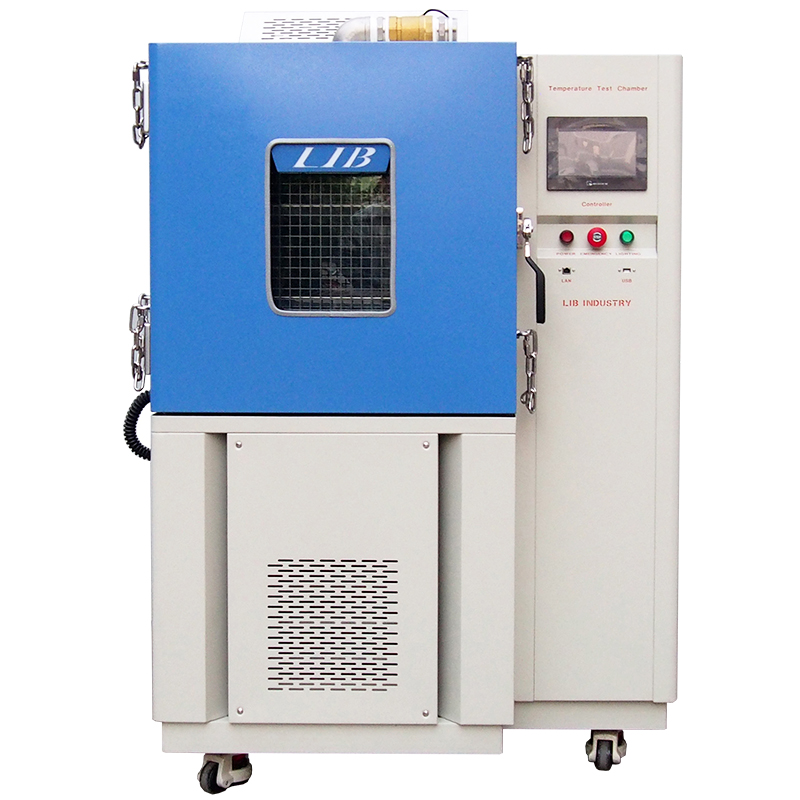
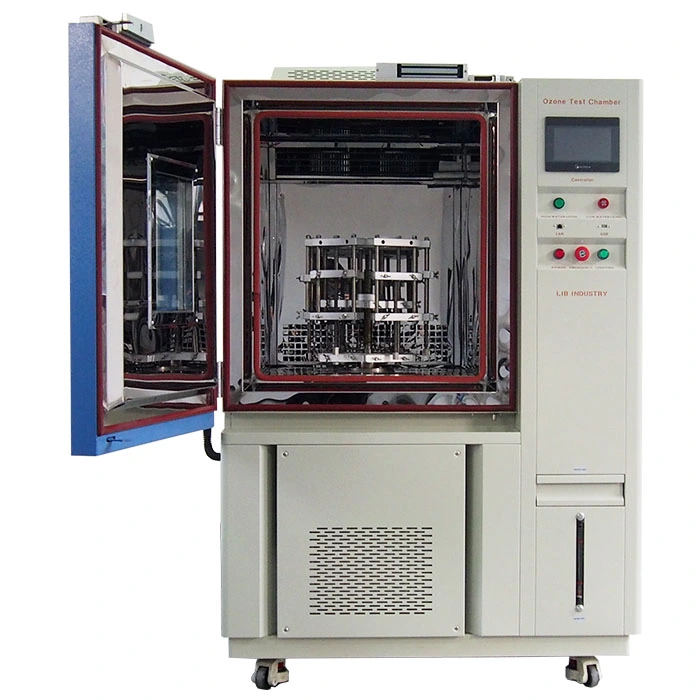
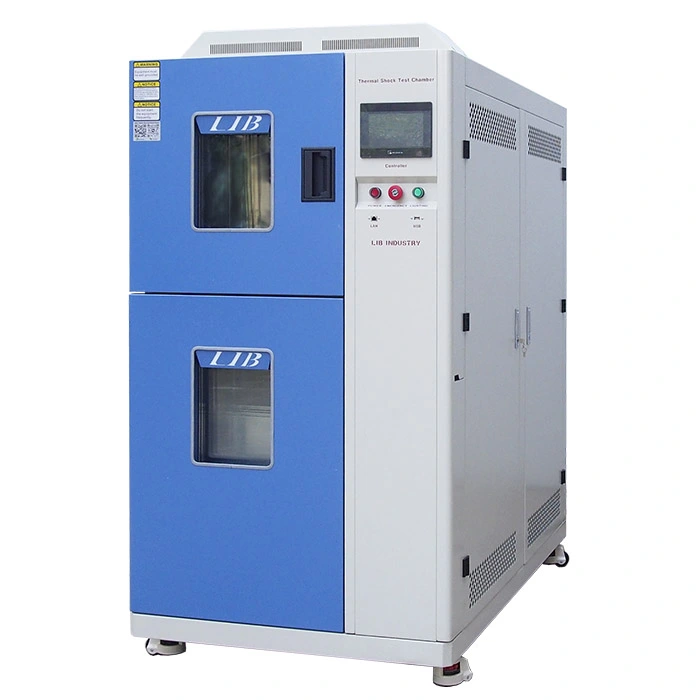
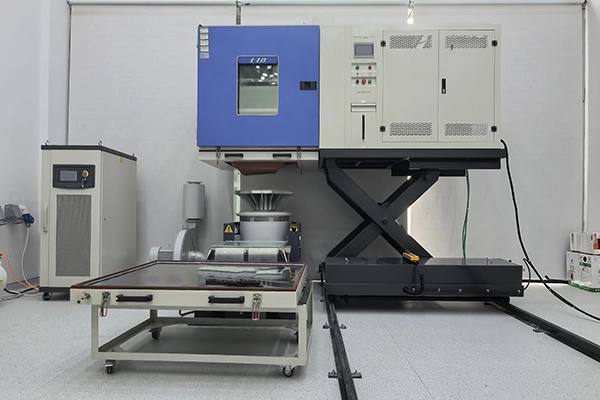
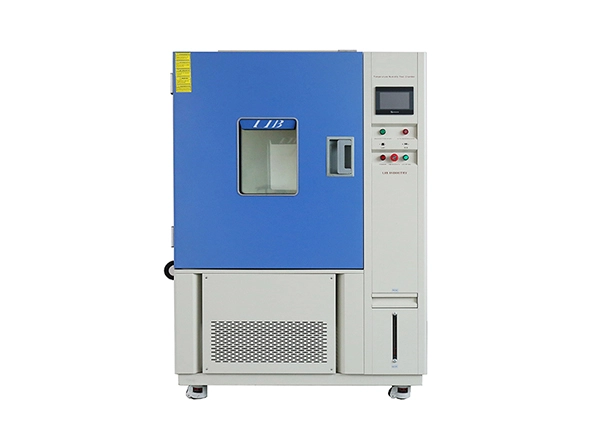
Environmental chambers used for ASLT are not simple storage units. They function as controlled reaction environments where temperature and humidity define the degradation kinetics.
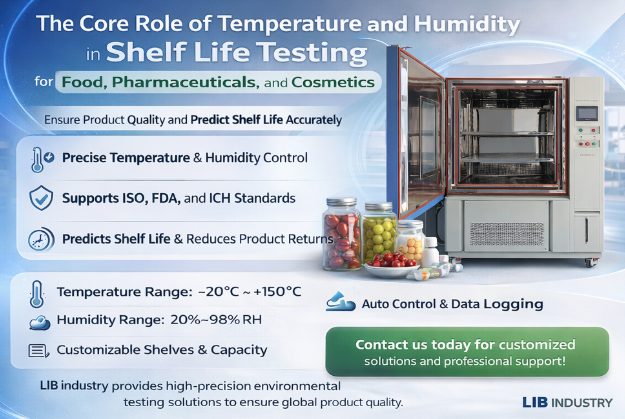
To ensure repeatable data, the system must maintain:
Temperature stability within ±0.5°C
Humidity accuracy within ±2% RH
Uniform airflow distribution
Stable recovery after door opening
Data logging and traceability
These parameters directly influence:
Oxidation rate consistency
Moisture diffusion reproducibility
Cross-batch comparability
Small deviations can significantly alter degradation pathways:
+2°C may double oxidation rate in lipid-rich systems
RH fluctuation may reverse moisture gradient direction
Poor uniformity leads to inconsistent sample behavior
This is why industrial-grade environmental chambers are preferred over general incubators in food stability research.
In industrial R&D environments, ASLT chambers are typically integrated into a broader testing ecosystem:
Sensory evaluation labs
Packaging barrier testing systems
Texture analyzers
Chemical analysis instruments
This allows correlation between environmental stress → material response → consumer perception.
From a production perspective, accelerated shelf life testing is not only a research tool but also a risk management system.
It supports:
New product formulation validation
Packaging material selection
Supplier consistency checks
Export market adaptation (hot/humid climates)
In global manufacturing environments, ASLT is increasingly used to simulate:
Tropical distribution conditions (38°C / 90% RH)
Long-distance logistics stress
Warehouse storage variability
In industrial testing environments, equipment such as environmental chambers used for ASLT are developed by companies like LIB industry, which focus on controlled temperature and humidity simulation systems for R&D and quality assurance applications.
Such systems are typically designed to support:
Stable long-duration conditioning tests
Programmable climate cycling
Data traceability for audit environments
Integration with analytical workflows
Accelerated shelf life testing is not simply a faster storage method. It is a structured approach to understanding how chemical reactions, moisture transport, and structural changes interact over time.
For snack and bakery products, shelf life is ultimately defined by:
Oxidation stability (flavor integrity)
Moisture control (texture stability)
Packaging performance (environmental barrier function)
When these elements are evaluated together under controlled environmental conditions, shelf life decisions shift from estimation to mechanism-based prediction.
Accelerated shelf life testing usually applies controlled temperature and humidity conditions such as 30–45°C and 50–75% RH, depending on the product type. These conditions are selected based on the dominant failure mechanism, such as oxidation in nuts or moisture migration in crackers, rather than using a single universal setting.
By storing products in their final packaging under controlled environmental stress, ASLT reveals how oxygen transmission rate (OTR), water vapor transmission rate (WVTR), seal quality, and headspace conditions influence product stability. This allows engineers to compare different packaging materials under identical degradation conditions.
Key measurements typically include peroxide value and hexanal for oxidation, water activity (aw) for moisture stability, and mechanical texture tests such as three-point bend or compression tests. These parameters help link chemical changes with actual sensory quality loss.
For long-duration projects, LIB provides installation guidance, chamber commissioning, operator training, and remote technical support. This helps ensure stable operation and consistent test conditions throughout extended aging or shelf life studies.
Before shipment, each LIB environmental chamber is validated for temperature and humidity stability, uniformity, and continuous operation performance. This ensures the system can maintain consistent conditions during long-term testing programs.
 English
 русский
 français
 العربية
 Deutsch
 Español
 한국어
한국어 italiano
 tiếng việt
 ไทย
ไทย Indonesia