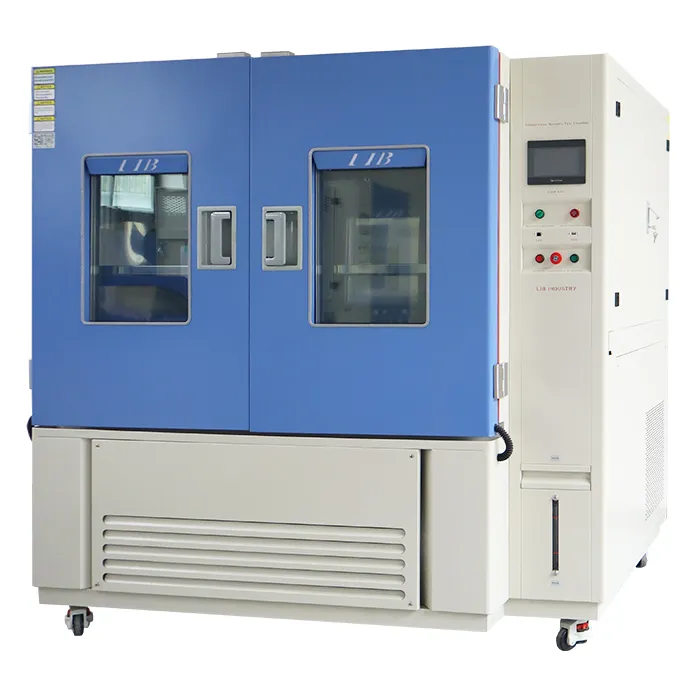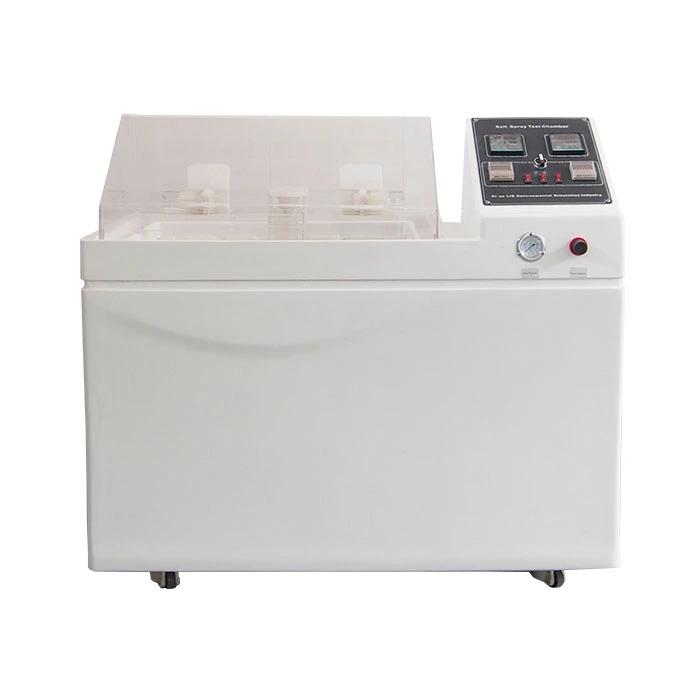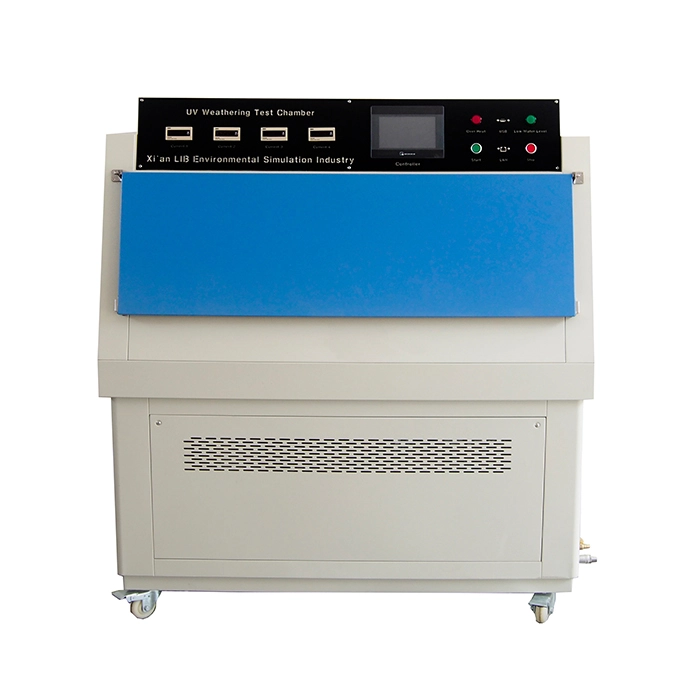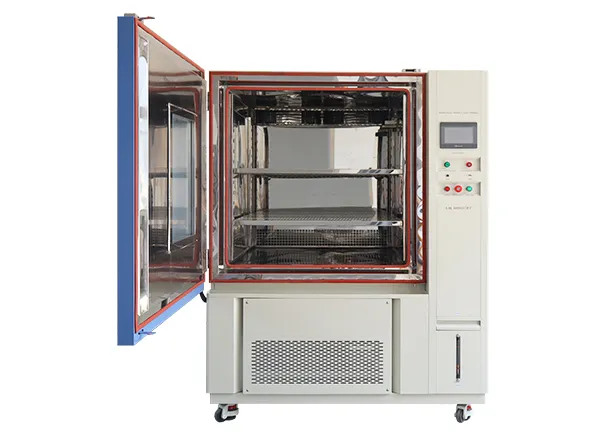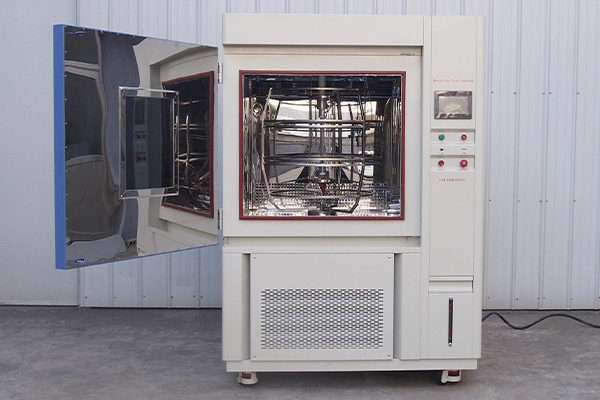
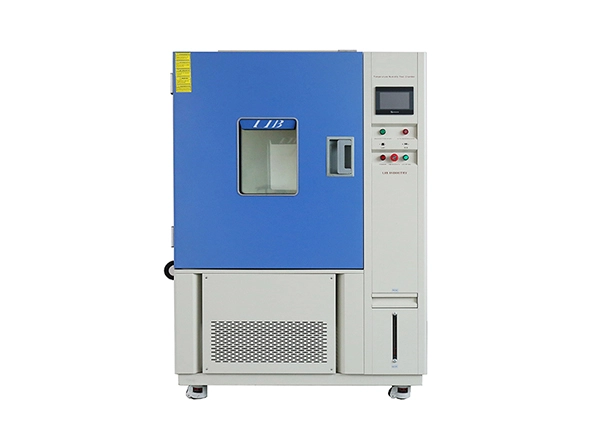
Industrial parts rarely fail in a clean, dry room. Metal fasteners, coated panels, electronic terminals, connectors, outdoor hardware, automotive parts, and electrical enclosures often face moist air mixed with acidic pollutants. Sulfur dioxide is one of the most damaging gases in this environment because it reacts with moisture and accelerates corrosion on metals and coatings. An SO2 Corrosion Test Chamber gives manufacturers a controlled way to check how products behave under sulfur dioxide, humidity, and temperature before they are released to the market. For laboratories, the real challenge is not only running the test, but running it safely, repeatably, and in line with the right standard.
 | 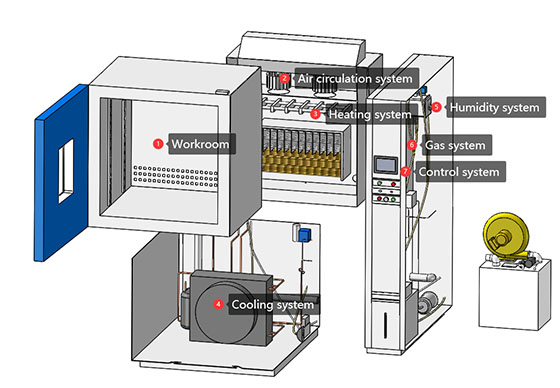 |
SO2 (Sulfur Dioxide) is highly toxic to operators and corrosive to equipment. In industrial testing, a safe chamber design is critical because safety flaws directly ruin test accuracy.
Gas Leaks = Invalid Results: If the chamber leaks, $SO_2$ concentration drops, causing samples to show weaker corrosion than they should (false passes).
Poor Airflow = Uneven Corrosion: Without proper gas circulation, samples near the inlet corrode faster than those at the back, destroying test consistency.
A reliable SO2 chamber must include:
Airtight & Anti-Corrosive Build: Prevents toxic leaks and resists long-term acid damage.
Auto-Purge System: Automatically exhausts hazardous gas before the door opens.
Precise Control: Stable sensors, uniform air circulation, and real-time alarms.
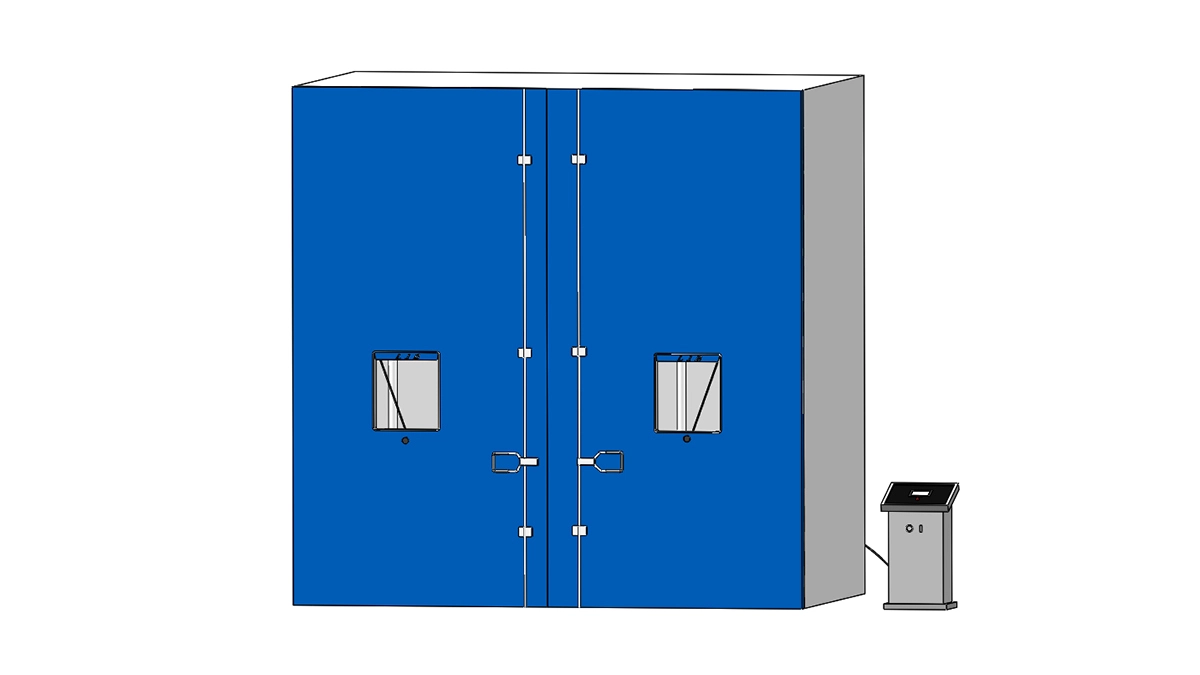
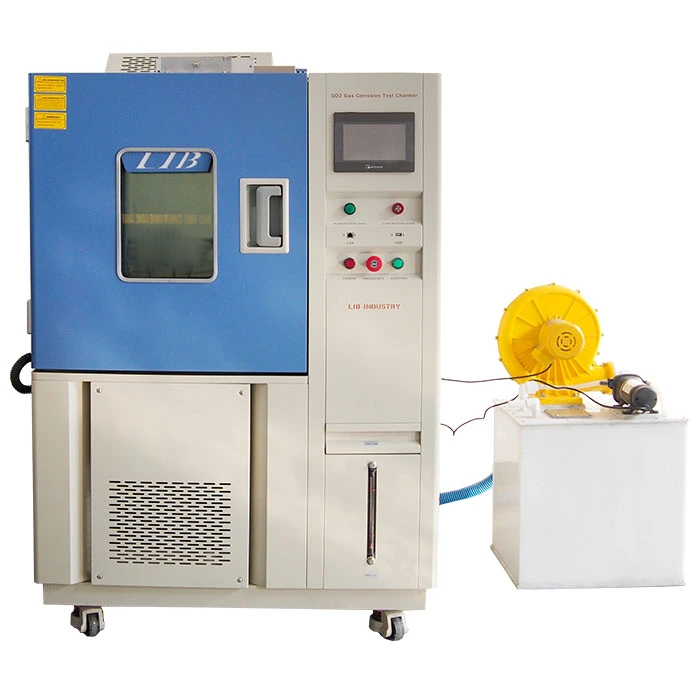
LIB SO2 Corrosion Test Chambers deliver both safety and precision. With controlled gas dosing, independent climate adjustment, and uniform air diffusion, LIB ensures repeatable testing. Available in reach-in, walk-in, and custom designs for any sample size.
| Standard | Main Application |
|---|---|
| ISO 6988 | Metallic and inorganic coating corrosion testing under condensed SO2 atmosphere |
| DIN 50018 | SO2 corrosion testing in saturated humidity conditions |
| ASTM G87 | Moist SO2 corrosion evaluation for coatings and metals |
| IEC 60068-2-42 | Low-concentration SO2 testing for electrical contacts and connectors |
Different industries use different SO2 corrosion test methods. Some focus on moist sulfur dioxide for coatings, while others use low-concentration SO2 for electrical contacts and components. Before purchasing a chamber, the test team should match the chamber range with the target method.
A good SO2 corrosion chamber safety guide should start with the hardware. Safety is not one single part. It comes from the chamber body, door seal, gas dosing, sensor feedback, alarm logic, and exhaust treatment working together.
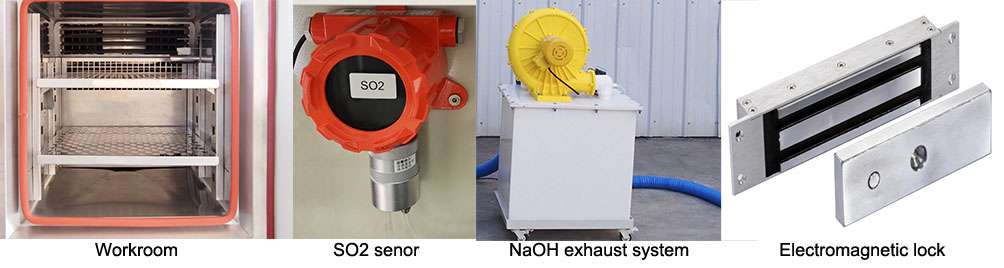
The SO2 gas corrosion chamber door is the first place to check. The door gasket must stay elastic after repeated humidity, heat, and acid gas exposure. LIB uses a double layer of hard corrosion-resistant silicone rubber sealing material between the door and chamber to help prevent SO2 gas leakage.
Maintenance: Regularly clean seal surfaces and check for damage, pipe joint wear, or trapped sample wires to prevent leaks.
An SO2 gas sensor helps the control system track gas concentration during exposure. It also supports alarm response when gas levels move outside the permitted range. LIB’s chamber configuration includes an SO2 gas sensor, programmable color LCD touch screen controller, Ethernet connection, and PC Link function.
Maintenance: Implement regular calibration and zero-checks, as prolonged exposure to acidic moisture can degrade sensor accuracy over time.
The SO2 exhaust unit is critical before the chamber door is opened. Remaining gas should be removed or treated so that the operator is not exposed to concentrated SO2. LIB’s SO2 and humidity chamber uses an exhaust device with a NaOH solution tank to dilute SO2 and keep the workplace cleaner.
Maintenance: Daily checks are required for tubing wear, pipe blockages, and neutralizing liquid levels.
A door lock prevents accidental opening during active gas exposure. LIB’s SO2 Corrosion Test Chamber includes an electromagnetic lock, over-temperature protection, over-current protection, water shortage protection, humidifier dry-combustion protection, and earth leakage protection.
Sealing does more than block leakage. It also keeps the internal atmosphere stable, which improves repeatability between test cycles.
SO2, heat, and high humidity can damage weak materials quickly. LIB uses SUS316 stainless steel in the inner workspace, with corrosion-resistant treatment for temperature, moisture, and gas exposure. The interior material is designed for long-term SO2 corrosion resistance.
For coated metal panels, terminals, or plated fasteners, the sample rack should also allow gas contact without creating water traps. Perforated racks help SO2 flow around samples and reduce blocked exposure areas.
If a chamber loses gas through gaps, the control system may need to inject more gas or may fail to hold the required concentration. Stable sealing supports stable SO2 concentration, especially in low-concentration tests around 25 ± 5 ppm.
Stable concentration matters in:
· electronic connector testing
· coating pore detection
· metal plating comparison
· automotive hardware validation
· batch quality control for suppliers
An SO2 gas sensor does two jobs. It protects people, and it protects data quality. Without sensor feedback, the chamber may appear to be running while the real gas concentration is too high, too low, or uneven.
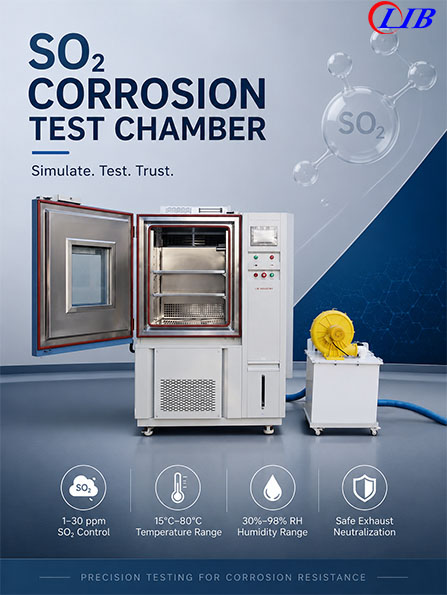
LIB’s SO2 Corrosion Test Chamber can precisely control SO2 concentration, temperature, and humidity. The product range covers 15°C to 80°C, 30% to 98% RH, and SO2 concentration around 25 ± 5 ppm for standard chamber operation.
For a materials lab, this range supports common acid gas corrosion tests for coatings, metal parts, electrical components, and industrial samples. For an electronics lab, stable low-level SO2 helps reveal contact resistance issues and corrosion on exposed conductive surfaces.
A sensor should trigger a warning when concentration rises beyond the set level or drops below the planned exposure level. Both cases matter. Too much gas raises safety risk and may over-stress samples. Too little gas produces weak test severity and misleading results.
A practical alarm setup should include gas concentration, temperature deviation, humidity deviation, water shortage, exhaust failure, and door status.
The end of the test is one of the highest-risk moments. Samples may be ready for inspection, but the air inside the chamber may still contain SO2.
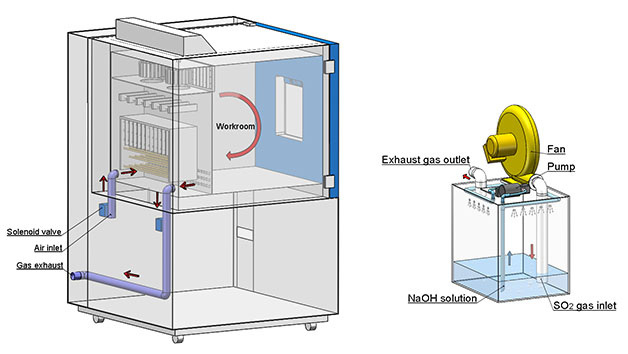
A complete SO2 exhaust unit removes or neutralizes remaining gas before the door opens. When using a NaOH solution tank, SO2 is diluted and treated through an alkaline medium. The system should run long enough to lower gas concentration before sample handling.
The chamber should be installed in a room with suitable ventilation and enough service space around the machine. Gas cylinders should be fixed properly. Exhaust discharge should follow local safety rules, and operators should be trained before running the first cycle.
A safe shutdown sequence is simple but important:
1. Stop SO2 dosing.
2. Run the exhaust process.
3. Confirm gas concentration has dropped.
4. Allow temperature and humidity to return to safe handling levels.
5. Open the door slowly.
6. Remove samples with suitable gloves and eye protection.
 Double-Layer Silicone Sealing
Better airtight performance
Reduces SO2 leakage
More stable ppm-level concentration
Improved durability under humidity and acidic exposure
Stronger resistance to acidic corrosion
Better long-term durability
Lower contamination risk on samples
More suitable for humid SO2 environments
Neutralizes residual SO2 before discharge
Reduces operator exposure
Improves laboratory safety
Cleaner exhaust process than direct discharge
Low-level SO2 testing is harder because small leakage, airflow fluctuation, or sensor drift can affect ppm stability. LIB industry uses controlled gas dosing, circulation airflow, and sensor monitoring to maintain stable concentration conditions.
A chamber should be selected around the test standard, sample size, gas concentration, and safety plan. Price alone is a weak basis for purchase because unstable control or poor sealing can lead to failed tests and repeated work.
For IEC-style low concentration testing, 25 ± 5 ppm is a key range. For Kesternich-style testing, gas volume dosing and chamber capacity become more important. The buyer should check whether the control method matches the test method.
Small electronic terminals, plated fasteners, and coating panels may fit a reach-in chamber. Large assemblies, longer profiles, or batch testing may require a walk-in or customized chamber. LIB provides different chamber sizes, reach-in options, walk-in options, and customized designs for varied sample volumes.
Before purchase, a technical review should cover:
· inner material and rack material
· door gasket type
· SO2 sensor type and calibration plan
· exhaust unit structure
· alarm and interlock logic
· controller data recording
· maintenance access
LIB industry provides standard and customized environmental test chambers including corrosion chambers, climate chambers, dust and water IP chambers, and walk-in systems for global industrial laboratories.
An SO2 Corrosion Test Chamber is not just a box filled with sulfur dioxide. It is a controlled safety system for acid gas corrosion testing. Reliable sealing keeps SO2 inside the workspace. Sensors help maintain concentration and trigger alarms. Exhaust systems remove or neutralize gas before samples are handled. Standards such as ISO 6988, DIN 50018, ASTM G87, and IEC 60068-2-42 give laboratories clear test directions, but the chamber must have the right structure and control capability to run them well.
For manufacturers testing coatings, metals, electronic connectors, automotive parts, and outdoor hardware, a safe SO2 corrosion chamber reduces risk, improves repeatability, and supports better product reliability decisions.
An SO2 Corrosion Test Chamber is used to evaluate the corrosion resistance of metals, coatings, electronic components, automotive parts, plated materials, and industrial products under controlled sulfur dioxide, humidity, and temperature conditions.
Sealing prevents SO2 leakage, ensures operator safety, and maintains stable internal gas concentration. A reliable sealing system also improves test repeatability and consistency between cycles.
A safe SO2 corrosion test chamber should include an SO2 gas sensor, exhaust neutralization system, corrosion-resistant inner materials, electromagnetic door lock, alarm system, and protection functions such as over-temperature and water shortage protection.
Common standards include ISO 6988, DIN 50018, ASTM G87, ISO 3231, and IEC 60068-2-42. IEC 60068-2-42 typically specifies 25 ± 5 ppm SO2, 25 ± 2°C, and about 75% RH for electrical contact testing.
Yes. LIB industry provides reach-in, walk-in, and fully customized SO2 corrosion test chambers tailored to different sample sizes, testing requirements, and laboratory layouts.
Yes. LIB industry provides a 3-year warranty, lifetime technical support, and global after-sales service. Our team also offers fast response assistance, spare parts support, and maintenance guidance to ensure long-term stable operation of the equipment.
 English
 русский
 français
 العربية
 Deutsch
 Español
 한국어
한국어 italiano
 tiếng việt
 ไทย
ไทย Indonesia