The JESD22-A104 temperature cycling test is a widely recognized standard set by JEDEC to evaluate the thermal reliability of semiconductor devices.
This thermal cycle testing method simulates the real-world conditions that components may experience, from power-up cycles to environmental temperature fluctuations. It stresses the package, solder joints, and internal interconnections by repeatedly cycling between high and low temperatures. The goal is to detect potential failures such as cracking, delamination, or electrical performance degradation before the product reaches the market.
JESD22-A104 Temperature Cycling Test: What You Need to Check
Test factor | What engineers should verify |
Temperature range | Must cover the required high and low temperatures |
Ramp rate | Chamber capability should meet the selected test condition |
Dwell time | Stable temperature must be maintained at both extremes |
Cycle count | Controller should support the required number of cycles |
Temperature uniformity | Samples should experience consistent thermal conditions |
Data logging | Test profiles and results should be traceable |
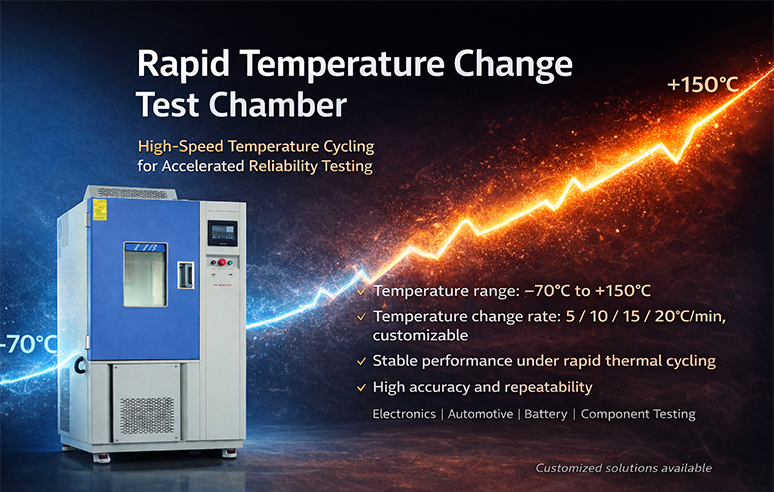
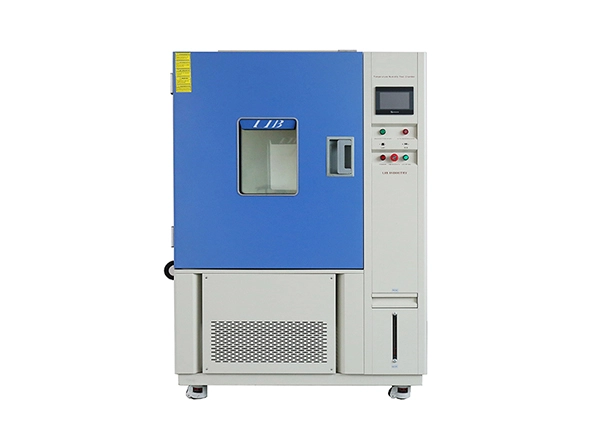
Conducting a proper temp cycle test ensures your devices maintain performance, extend product life, and comply with industry standards. For engineers, using a high-quality thermal cycling chamber from LIB industry is essential to accurately reproduce JESD22-A104 conditions and achieve reliable results.
Despite following the standard, many products fail temperature cycling tests due to equipment limitations or improper test setups. The most common reasons include:
Insufficient ramp rates: If the temperature changes too slowly, it may not create the stress required to reveal potential failures.
Poor temperature uniformity: Uneven airflow or inconsistent chamber performance can lead to inaccurate results.
Extended dwell times: Overly long or short high/low temperature holds can distort test outcomes.
Inaccurate control systems: Unstable temperature control or delayed transitions compromises test validity.
Lack of data traceability: Without proper logging, failed cycles may go unnoticed, making it hard to verify compliance.
The JESD22-A104 standard defines several critical parameters for thermal cycle testing:
Temperature range: Typically from -40°C to +125°C for commercial devices, or -55°C to +150°C for industrial applications.
Ramp rate: Usually 5°C/min or faster to generate realistic thermal stress.
Dwell time: Minimum of 10 minutes at high and low temperatures to allow full material expansion and contraction.
Cycle count: Often 100, 500, or 1000 cycles depending on reliability requirements.
Controlled air circulation: Ensures uniform temperature distribution across all samples.
The exact temperature range, transition rate, dwell time, and number of cycles depend on the selected JESD22-A104 test condition and the device qualification requirement.A high-quality thermal cycling chamber is engineered to meet or exceed these parameters, ensuring that your temperature cycling test produces accurate, reproducible, and standard-compliant results.
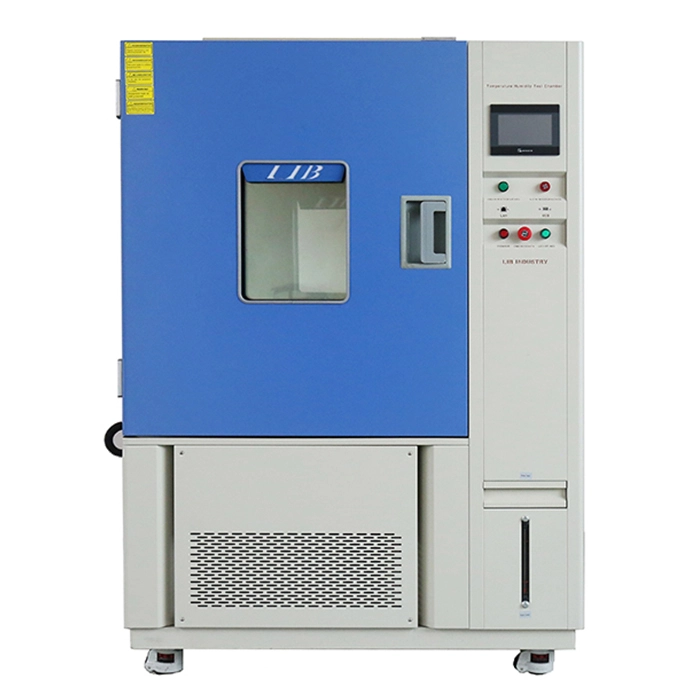
When it comes to passing the JESD22-A104 temperature cycling test, the quality of your temperature cycle chamber from LIB industry can make all the difference. A premium chamber is engineered to not just meet, but exceed standard requirements, ensuring every test cycle is precise, repeatable, and fully compliant. Here’s how a high-performance solution guarantees reliable results:
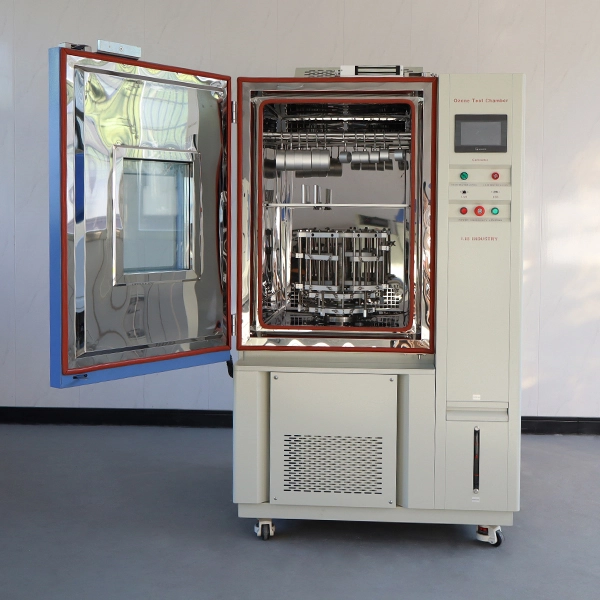
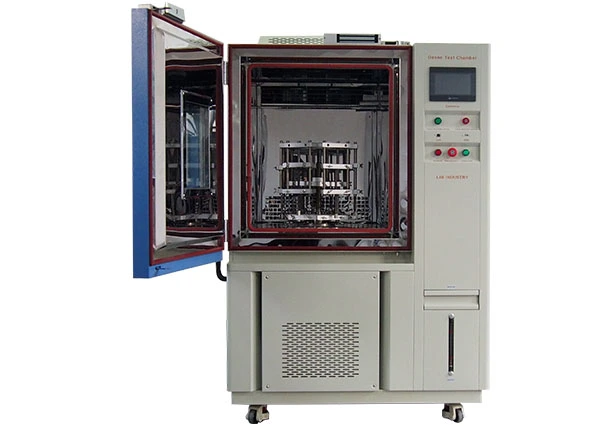
Small semiconductor samples → 100L/225L
PCB assemblies → 225L/500L
Larger automotive electronics → 500L/800L/1000L
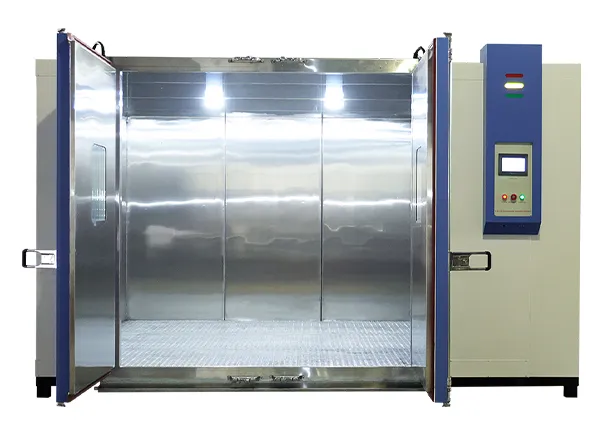
Large quantities or fixtures → customized chamber
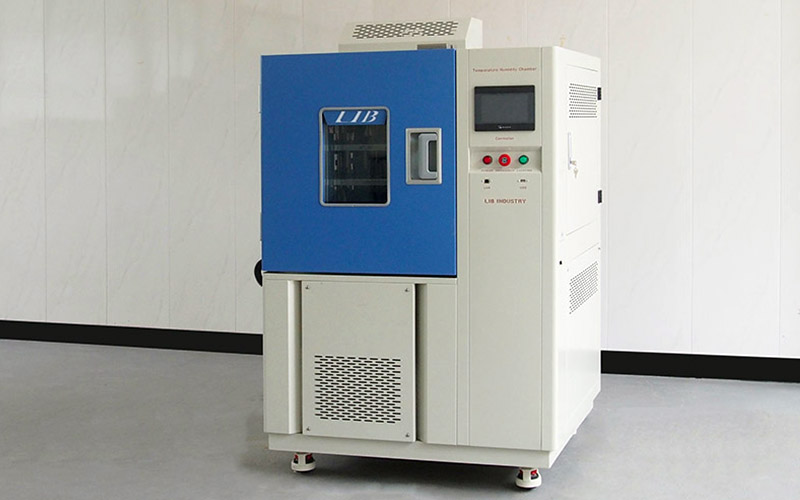
Model | TR5-100 | TR5-225 | TR5-500 | TR5-800 | TR5-1000 |
Interior Volume | 100L | 225L | 500L | 800L | 1000L |
Heat load | 1000W | ||||
Temperature Range | A : -20℃ ~ +150 ℃ B : -40℃ ~ +150 ℃ C: -70℃ ~ +150 ℃ | ||||
Temperature Fluctuation | ± 0.5 ℃ | ||||
Temperature Deviation | ± 2.0 ℃ | ||||
Cooling Rate | 5 ℃ /10 ℃/ 15℃/ 20℃(customized)/ min | ||||
Heating Rate | 5 ℃ /10 ℃/ 15℃/ 20℃(customized)/ min | ||||
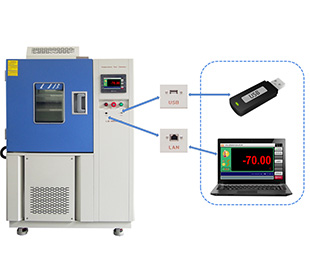
Controller | Programmable color LCD touch screen controller, Multi-language interface, Ethernet , USB | ||||
Cooling System | Mechanical compression refrigeration system,environmentally friendly refrigerant | ||||
 | |||||
Supports extreme ranges from -70°C to +180°C, covering every JESD22-A104 condition for commercial, industrial, and high-reliability applications.
Ensures that even components exposed to harsh automotive, aerospace, or military environments are tested accurately.
Maintains stable dwell temperatures to simulate real-world thermal stress and prevent inaccurate results.
Provides standard 5°C/min ramp rates, with optional upgrades to 10°C/min or faster.
Rapid temperature transitions accelerate failure detection in solder joints, package interfaces, and internal interconnects.
Dual refrigeration systems guarantee fast, uniform temperature changes without overshoot or lag.
Advanced airflow design delivers ±0.5°C temperature uniformity across all sample positions.
Eliminates hotspots and cold zones, ensuring that every part of the test batch experiences the same thermal cycle.
High-precision PID control guarantees stable, repeatable cycles, reducing variability between test runs.
Supports 1000+ programmable cycles, allowing engineers to set custom profiles that match specific JESD22-A104 conditions.
Automated sequences reduce human error and save significant testing time.
Built-in data logging and export functions provide audit-ready records, ensuring traceability and compliance for quality assurance.
Chambers can be tailored in size to accommodate various sample types, from small IC packages to large automotive electronics assemblies.
Optional accessories, including specialized fixtures and sensor integration, allow testing under precise real-world conditions.
Advanced software interfaces enable remote monitoring and control, ensuring tests run smoothly even when unattended.
|
|
|
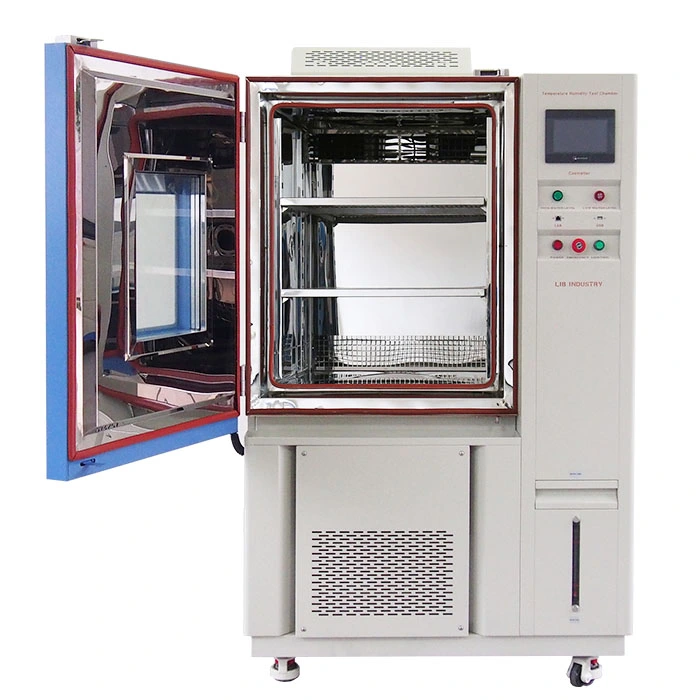
| Robust Workroom | Cable Hole | Romote Control |
Temperature cycling testing is widely used to evaluate product reliability under repeated temperature changes.
Semiconductors: Detect package cracking, delamination, die damage, and interconnect failures caused by repeated thermal stress.
Automotive Electronics: Evaluate solder joints, PCBs, connectors, and electronic components exposed to changing temperatures during vehicle operation.
PCB & Solder Joints: Assess solder fatigue and cracking caused by repeated thermal expansion and contraction.
Consumer Electronics: Verify the reliability of electronic assemblies during transportation, charging, storage, and everyday temperature changes.
Military & Aerospace: Evaluate high-reliability components under demanding and repeated temperature variations.
For these applications, the thermal cycling chamber should provide the required temperature range, ramp rate, uniformity, and programmable cycle control. The right configuration helps engineers reproduce the required test profile consistently and obtain reliable, repeatable results.
By integrating these features, a high-performance thermal cycling chamber from LIB industry ensures that your temperature cycling tests replicate the stress conditions required by JESD22-A104. This not only guarantees accurate results but also accelerates product validation, reduces failure risk in the field, and enhances overall device reliability.
Choosing a chamber with these capabilities turns thermal cycle testing from a potential bottleneck into a streamlined, reliable, and repeatable process — giving engineers confidence that their components will pass JESD22-A104 every time.
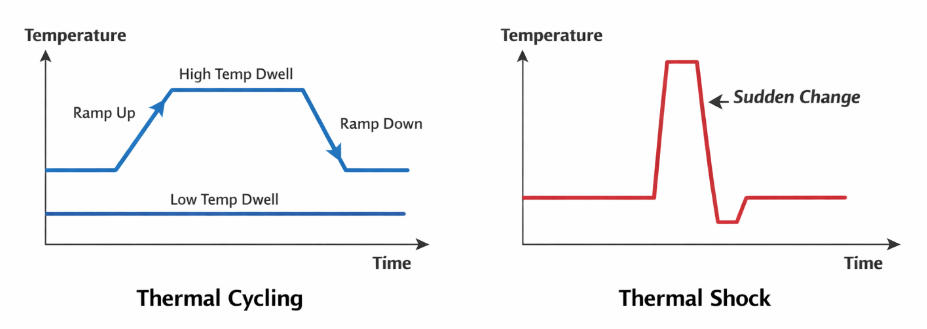
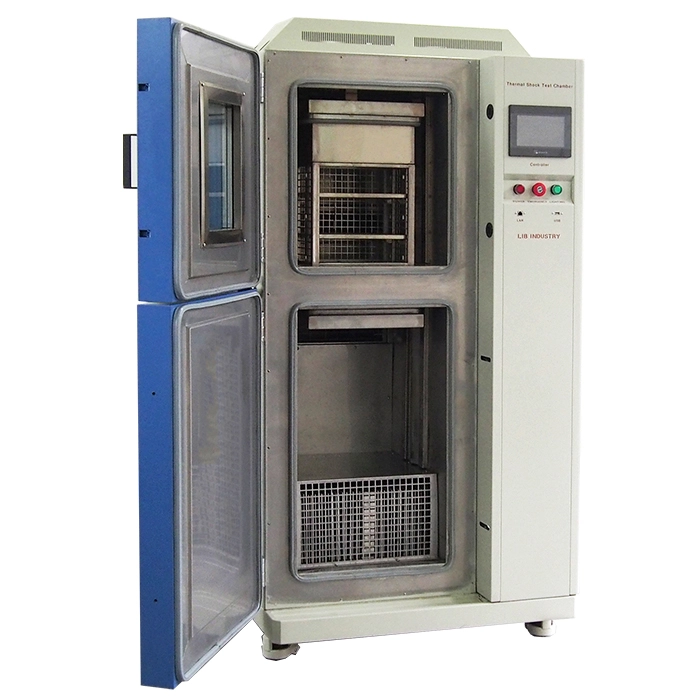
Many engineers confuse thermal cycling tests with thermal shock tests, but they are fundamentally different:
Feature | ||
Temperature Control | Gradual ramp-up/down between high and low temperatures | Rapid transfer between extreme temperatures |
Focus | Material stress and long-term reliability | Sudden stress tolerance and immediate failure detection |
Typical Use | JESD22-A104 compliance, device reliability testing | Extreme stress tests for high-risk components |
| Ramp Rate | 5–10°C/min (customizable) | Instantaneous transfer between zones |
 |
| |
 | ||
The JESD22-A104 standard specifically requires controlled thermal cycle testing, not shock testing. Using a properly configured thermal cycling chamber ensures compliance and protects your devices from latent failures.
If your test requires... | Consider |
Controlled temperature ramp | Thermal Cycling Chamber |
Repeated high/low temperature exposure | Thermal Cycling Chamber |
Rapid transfer between extreme zones | Thermal Shock Chamber |
JESD22-A104 temperature cycling | Thermal Cycling Chamber |
For JESD22-A104 temperature cycling, the key consideration is not simply how fast a chamber can change temperature, but whether it can accurately reproduce the required temperature profile under the actual test load.
Send us your required temperature range, ramp rate, cycle count, sample dimensions, and test standard. Our engineers can recommend a suitable thermal cycling chamber configuration for your application.
A professional thermal cycling chamber from LIB industry provides:
3-year warranty covering major components
Lifetime technical support for installation, maintenance, and training
Dedicated custom solutions to match your product and lab requirements
Global installation and service support for uninterrupted operation
✅️Contact LIB industry today at inquiry@libtestchamber.com to discover how our thermal cycling equipment can help your devices pass the JESD22-A104 temperature cycling test with confidence.
 English
 русский
 français
 العربية
 Deutsch
 Español
 한국어
한국어 italiano
 tiếng việt
 ไทย
ไทย Indonesia

.webp "Coil Steel Sunshine Carbon Arc Weathering Tester")