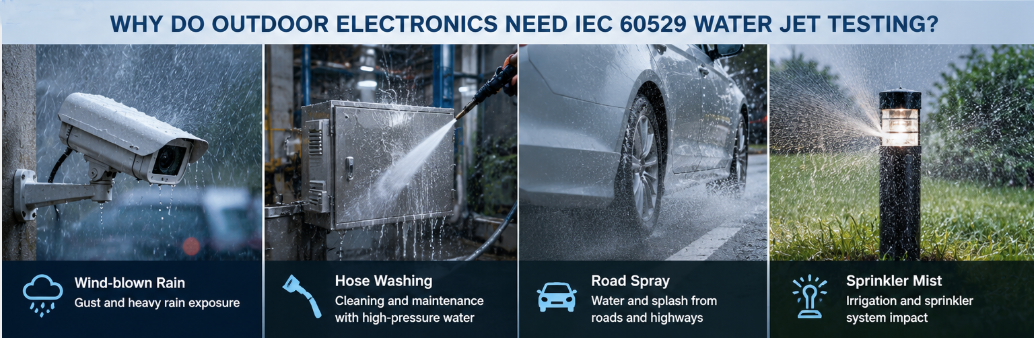
Outdoor electronics deal with water in ways that are tough to guess: wind-blown rain, hose washing, road spray, sprinkler mist, and high-pressure water from upkeep tasks. A device might seem sealed in the plans. However, a tiny gap in a cable entry, worn seal, bad screw spot, or rough case edge can allow water to hit the circuit board in just minutes.
For makers of outdoor cameras, LED lights, control units, sensors, communication tools, and EV charging parts, IEC 60529 waterproof test outcomes mean more than a sticker. They let design groups decide if a device case can keep running when water hits from various sides. An IPX5 IPX6 Water Spray Jetting Chamber offers groups a steady method to redo that check before third-party approval or full making.
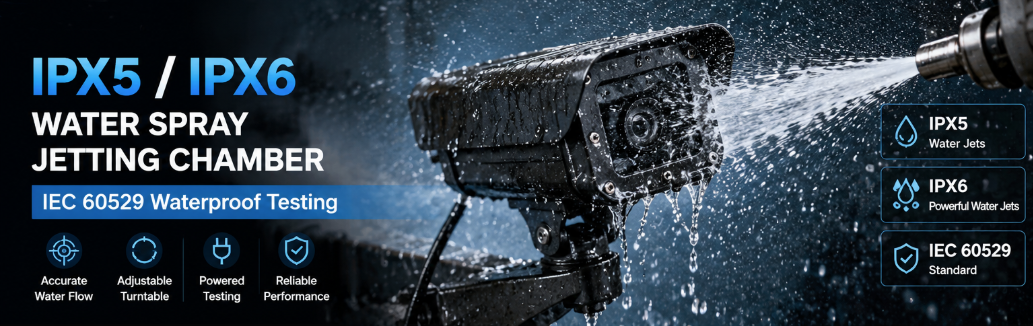
IEC 60529 sorts how cases guard electrical gear from dust, water, and reach to risky parts. For water entry, IPX5 and IPX6 target water streams instead of soaking. This fits well with items used in open outdoor spots. IEC 60529 rates case strength for electric and electronic devices against dust and fluids.
A device fixed on a wall, post, roadside box, farm site, port area, or plant yard may never go under water. But it might face rain blown sideways in gusts or get washed with a hose. That is when water stream checks become useful.
Common Outdoor Devices often mix plastic covers, metal sheets, clear windows, rubber rings, buttons, plugs, and wire entries. Each part acts differently to tight force, heat shifts, shakes, and sun aging. A water entry test room helps spot weak spots before breaks show up on site.
IPX5 stands for guard against water streams. IPX6 stands for guard against strong water streams. The “X” means the dust guard level is not listed in that code. A device may have a full rating like IP65 or IP66 when both dust and water checks are done.
IPX5 and IPX6 are not loose waterproof claims. They use set nozzle sizes, flow amounts, spray range, and check length. That is why designers cannot swap the check with basic rain show or hand spray.
Test Item | IPX5 | IPX6 |
Nozzle Diameter | 6.3 mm | 12.5 mm |
Water Flow Rate | 12.5 L/min ±5% | 100 L/min ±5% |
Spray Distance | 2.5 m – 3 m | 2.5 m – 3 m |
Test Duration | 1 min/m² | 1 min/m² |
Minimum Test Time | 3 minutes | 3 minutes |
The set test rules call for spraying the case from all possible sides. For IPX5, the nozzle size is 6.3 mm with 12.5 L/min ±5% flow. For IPX6, the nozzle size is 12.5 mm with 100 L/min ±5% flow. Both use a 2.5 m to 3 m nozzle range. They also need at least 3 minutes of checking.
|
|
|
|
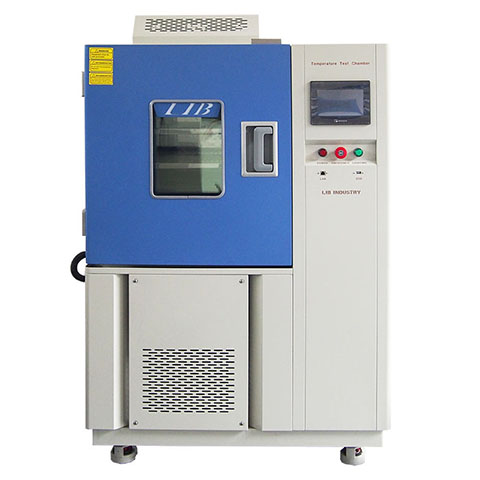
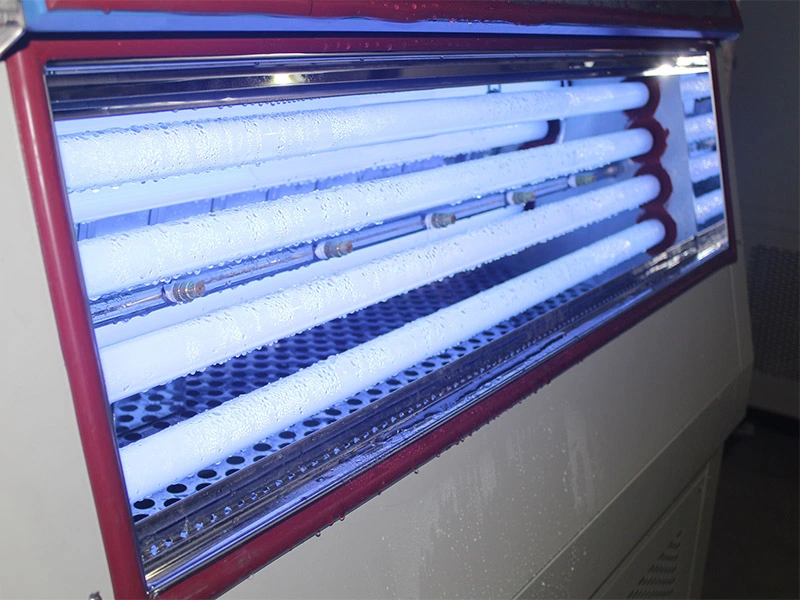
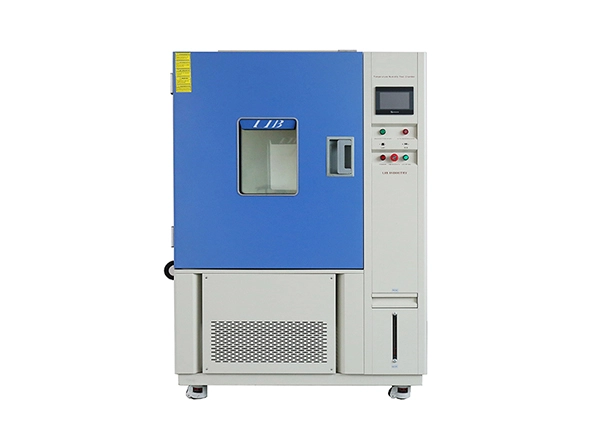
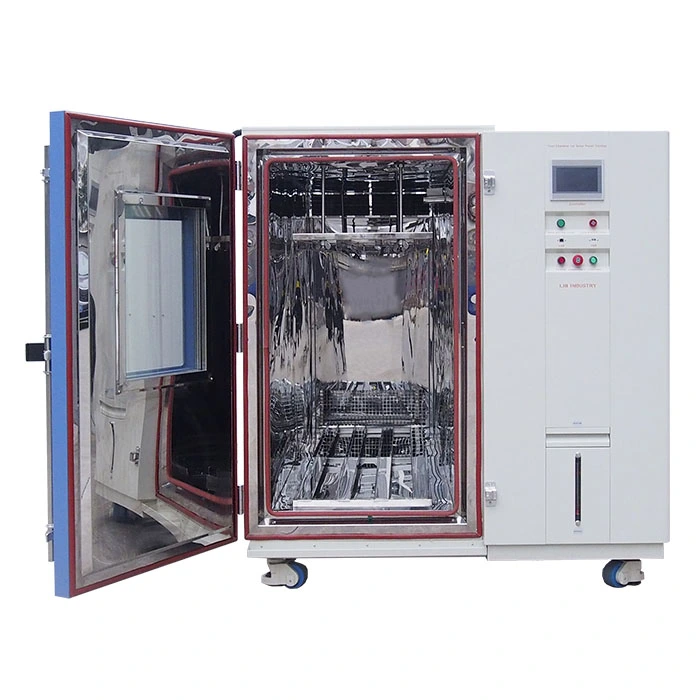
Workroom | View Window | Internal Power
| Build-in Lighting |
|
|  |  |
| Turnbale | Spray Nozzle | IPX5 IPX6 Water Jetting Outlet | Built-in waterproof power supply |
Accurate flow control is one of the most important factors in IPX5 and IPX6 testing. If the water flow is lower than the IEC requirement, defective products may incorrectly pass testing. Excessive flow can also produce unrealistic testing conditions.
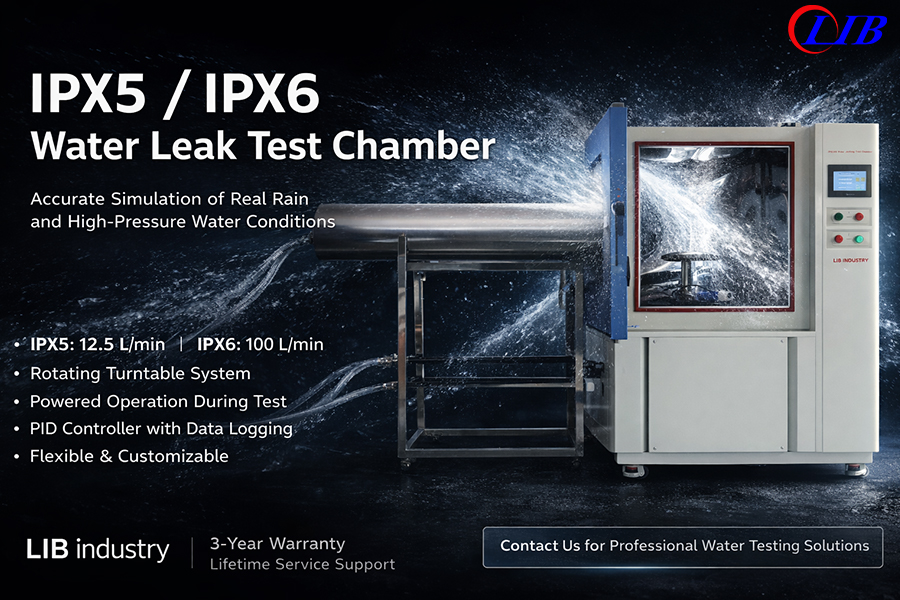
The LIB industry system is equipped with dedicated IPX5 and IPX6 nozzles:
6.3 mm nozzle for IPX5 testing
12.5 mm nozzle for IPX6 testing
The chamber maintains:
12.5 L/min ±5% flow for IPX5
100 L/min ±5% flow for IPX6
Integrated pressure regulation and water circulation systems help maintain stable spray performance throughout long testing cycles.
The chamber also supports adjustable spray distance according to IEC 60529 requirements, ensuring consistent water jet impact on the test sample.
Outdoor electronic products are exposed to water from multiple directions during real operation. To simulate these conditions, the LIB industry chamber includes an adjustable rotating turntable system.
The rotating platform allows water jets to reach:
Front surfaces
Side panels
Cable connections
Bottom edges
Door seams
Connector areas
Adjustable turntable speed improves exposure consistency and helps engineers evaluate complete enclosure protection performance.
For larger or irregular products, LIB industry can also provide customized fixture solutions and open-type waterproof testing systems.
The chamber uses a programmable touch screen controller for simple operation and parameter management.
Operators can easily set:
Spray duration
Water flow conditions
Turntable rotation speed
Test cycles
Operating sequences
The control system improves testing repeatability while reducing operator error during long testing procedures.
Real-time monitoring allows users to observe chamber operating conditions throughout the testing process.
Many outdoor electronic products must remain operational during waterproof testing. For example:
Outdoor surveillance cameras
Communication systems
Sensors
EV charging components
Control modules
The LIB industry IPX5 IPX6 Water Spray Jetting Chamber can support powered sample testing through waterproof electrical connections. This allows engineers to monitor product functionality during water exposure instead of only performing post-test inspection.
Powered testing helps identify:
Temporary short circuits
Signal interruptions
Display failures
Sensor malfunctions
Water-triggered operational instability
This is especially important for products requiring continuous outdoor operation.
The chamber interior is manufactured using SUS304 stainless steel, providing long-term corrosion resistance under continuous wet operating conditions.
Additional chamber features include:
Observation window
Integrated drainage system
Water recirculation tank
Automatic water supply
Overflow protection
Water shortage protection
Leakage protection system
The robust chamber design supports long-term laboratory and production testing applications.
IPX5/IPX6 testings help most for outdoor electronics that face straight spray, clean washes, and weather shifts. These items may stay fixed for years. Often, they sit in spots where fix costs a lot.
Outdoor cameras often break near lens rings, turn joints, wire outs, and sound holes. A small route can lead water to the image part. This causes blur or rust.
Outdoor light items face varied risks. Water can get in through the lens frame, end cover, screw spot, or wire entry. In LED setups, even a bit of water may hurt drivers, cut safety hold, or mark light faces.
Factory sensors and control units often stand near pumps, tanks, farm gear, belt systems, or wash areas. Their cases must fight water streams from many sides, not just down rain. For these items, outdoor electronics checks should happen early. Do not wait until tools are set.
Waterproof approval is often seen as the last step. In real use, it should join product build. Early water entry checks give designers time to fix the case, ring, screws, wire paths, and drain before make costs grow.
A room check can show if water gets in from one side. It can check if the ring presses even. It may reveal if the plug cap slips under stream hit. Or, it can spot if the case makes a thin water path near the join.
In sample work, groups may do many IPX5/IPX6 checks after changing wall thick, seal shape, screw spot, or glue way. In test make, checks can show put-together issues. Examples include uneven ring place or loose tight fasteners.
In full make, the same room can back batch looks. For example, a plant making outdoor lights can check samples from each lot after age, shake, or heat cycles. This gives quality groups a better view of if real make units match the checked plan.
Many breaks do not come from the biggest face of the case. They come from small joins where stuff meets.
Usual break spots include:
· Wire entries with bad press or wrong wire size
· Lens rings and clear covers on cameras and lights
· Button films and key spots
· Screw bases that make leak routes
· Rough ring cuts or too-pressed rings
· Plug caps that slip in spray
· Drain holes that lead water to gear
· Plastic join lines or thin case edges
A strong water stream can also show put-together changes. One unit may pass. But another from the same group fails because a ring moved in close. That is why room-based water entry checks help both design and quality groups.
Xi’an LIB Environmental Simulation Industry has worked on environment check rooms since 2009. It covers plan, build, sell, and help for world buyers. Its item line has heat and weather rooms, rust rooms, dust and water IP rooms, weather rooms, and special check rooms for varied states.
For an IPX5 IPX6 Water Spray Jetting Chamber seller, design help counts as much as parts. Waterproof check systems need right water link, drain, power safety, set knowledge, nozzle ready, and worker train. LIB gives set-up guide, keep help, fix service, 3-year hold, and life-long follow help. This aids plants to keep check gear steady after send.
IPX5 and IPX6 checks give outdoor electronics makers a clear way to look at water guard under set IEC 60529 rules. The main parts are exact: 6.3 mm nozzle and 12.5 L/min ±5% for IPX5, 12.5 mm nozzle and 100 L/min ±5% for IPX6, 2.5 m to 3 m spray range, 1 minute per square meter, and at least 3 minutes of check time.
For outdoor cameras, lights, sensors, control units, and other open electric items, a steady water entry check room can show case weak spots before approval or site gripes. The LIB IPX5 IPX6 Water Spray Jetting Chamber backs steady flow, set spray time, changeable sample turn, water loop, and real work for design and make groups.
IPX5 uses a 6.3 mm nozzle with a water flow rate of 12.5 L/min ±5%. IPX6 uses a 12.5 mm nozzle with a water flow rate of 100 L/min ±5%. Both tests use a 2.5 m to 3 m spray distance and a minimum test duration of 3 minutes.
Outdoor cameras, LED lights, factory sensors, control units, EV charge parts, talk tools, outdoor screens, and electric cases can gain from IPX5/IPX6 water stream checks.
Yes. LIB industry supplies full IP waterproof and dust ingress testing systems, including IPX1–IPX8 waterproof equipment, IP5X/IP6X dust chambers, sand and dust chambers, and integrated environmental reliability testing systems.
Makers should look at nozzle sizes, flow true, spray range, turntable guide, water loop, safety guard, room stuff, guide work, set-up help, keep service, and if the seller can give standard or custom waterproof check fixes.
 English
 русский
 français
 العربية
 Deutsch
 Español
 한국어
한국어 italiano
 tiếng việt
 ไทย
ไทย Indonesia



.webp "340nm UV Light Aging Accelerated Machine For Glass Test")