Automotive electronic systems operate in harsh environments where dust, sand, tire wear particles, and road debris can enter enclosures and affect performance. Dust contamination may lead to signal instability, overheating, insulation problems, or premature component failure.
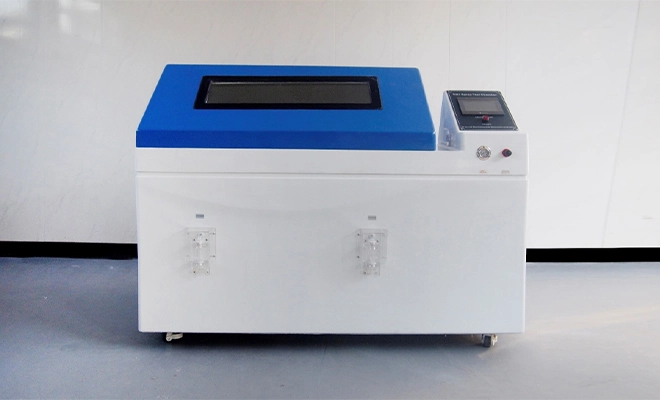
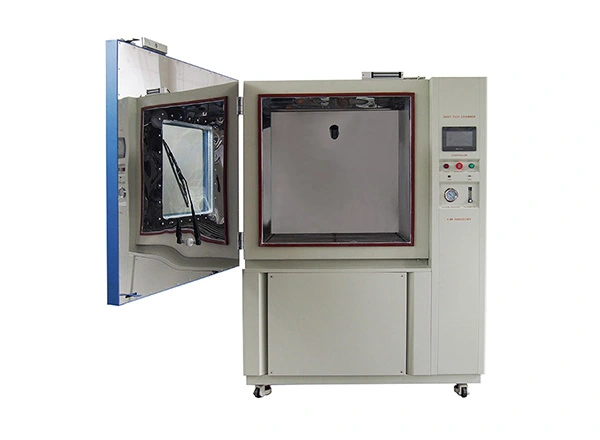
To verify enclosure protection, automotive manufacturers perform dust ingress testing according to ISO 20653. A dust proof chamber simulates real-world dust exposure under controlled laboratory conditions, helping engineers evaluate the sealing performance of sensors, ECUs, battery systems, connectors, and other vehicle electronics before products reach the market.
 What Is ISO 20653 Dust Testing?
ISO 20653 is an international standard that specifies ingress protection requirements for electrical equipment installed on road vehicles.
For dust protection, the standard evaluates whether dust can enter an enclosure and whether any ingress affects safety or normal operation.
Unlike IEC 60529, which is intended for general electrical equipment, ISO 20653 focuses specifically on automotive environments where components may be exposed to road dust, vibration, pressure changes, and severe outdoor conditions.
The most common dust protection ratings are:
IP5KX (Dust Protected)
IP6KX (Dust Tight)
Both ratings are widely used for automotive electronics, EV components, and exterior vehicle systems.
Although IP5KX and IP6KX are both dust protection ratings, their acceptance criteria differ significantly.
| Rating | Protection Level | Requirement |
|---|---|---|
| IP5KX | Dust Protected | Limited dust ingress allowed if it does not affect operation or safety |
| IP6KX | Dust Tight | No dust ingress permitted |
IP5KX is suitable for products where small amounts of dust will not impact performance.
IP6KX is commonly required for safety-critical systems, including:
ADAS sensors
Battery Management Systems (BMS)
High-voltage electrical components
Sealed control units
Exterior electronic modules
Because IP6KX requirements are more stringent, achieving compliance often requires improved sealing design and manufacturing control.
Dust ingress testing is commonly performed on components exposed to road environments, underbody conditions, or exterior installation locations.
Modern vehicles rely heavily on cameras, radar systems, and parking sensors.
Dust contamination may:
Reduce image quality
Affect sensor accuracy
Cause false signals
Interfere with autonomous driving functions
Electronic Control Units (ECUs) and Body Control Modules (BCMs) must remain protected from contamination throughout the vehicle's service life.
Dust ingress can affect:
PCB cleanliness
Insulation resistance
Heat dissipation
Long-term reliability
Electric vehicle battery packs and battery management systems frequently require IP6KX validation because of their safety-critical function.
Connectors, cable entries, and lighting assemblies are among the most common failure points during ingress protection testing.
Proper sealing helps maintain electrical reliability and optical performance.
A successful dust test requires proper sample preparation, controlled exposure conditions, and careful inspection.
The sample should represent the final production configuration.
This includes:
Production gaskets
Actual connectors
Production cable routing
Final mounting hardware
Any deviation from the production design may affect test results.
ISO 20653 commonly uses ISO 12103-1 A2 Fine Arizona Dust, which closely resembles real road dust.
During testing, the chamber controls:
Dust circulation
Airflow
Exposure duration
Vacuum conditions
Stable dust concentration is essential for repeatable and reliable results.
After testing, engineers inspect:
Sealing surfaces
Connector cavities
Vent membranes
Internal electronics
For IP5KX, limited dust ingress may be acceptable if operation remains unaffected.
For IP6KX, no dust ingress is allowed inside the protected enclosure.
Most failures result from sealing or assembly issues rather than dust itself.
Uneven gasket compression can create microscopic leakage paths that allow dust to enter the enclosure.
Improperly installed connectors or damaged seals are common sources of dust ingress.
Pressure equalization vents must allow airflow while preventing dust penetration. Damaged membranes can compromise enclosure protection.
Identifying these issues during testing helps manufacturers reduce field failures and warranty costs.How to Choose a Dust Test Chamber
Selecting the correct dust test chamber depends on the product size, applicable standards, and testing objectives.
The chamber should support:
ISO 20653
IEC 60529
OEM automotive specifications
Different products require different chamber capacities.
Typical applications include:
Sensors
Connectors
ECUs
Battery modules
Large vehicle assemblies
Choosing an appropriately sized chamber helps maintain stable dust circulation.
Many automotive products require vacuum-assisted testing to simulate pressure differences encountered during vehicle operation.
A reliable vacuum system improves test accuracy and compliance with automotive requirements.
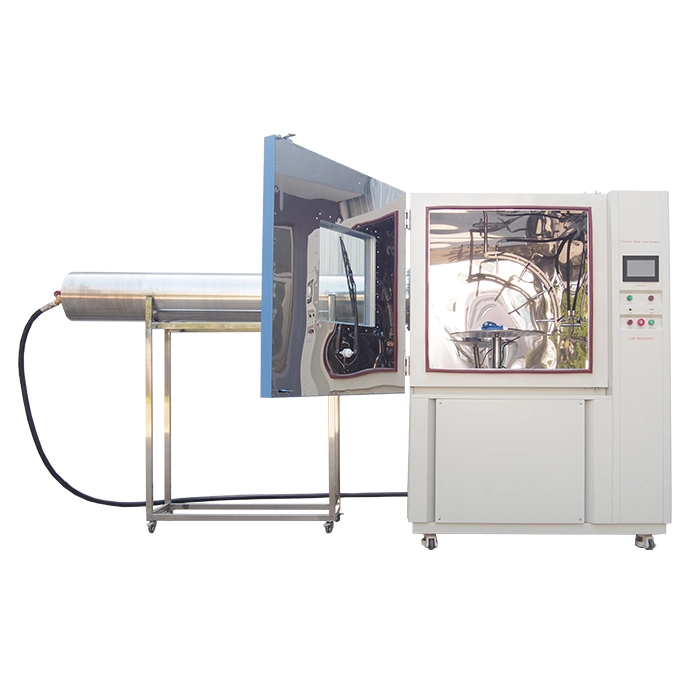
| Diameter of Turntable (mm) | 600 |
|
Turntable loads | 20kgs Max | |
Turntable Rotation Speed | 0~7r/min (Adjustable) | |
Internal Diameter of IPX5 Nozzle | 6.3 mm | |
Internal Diameter of IPX6 Nozzle | 12.5 mm | |
Water Flow Rate IPX5/ IPX6 | 12.5L/min ±5% / 100L/min ±5% | |
Controller | Programmable color LCD touch screen controller | |
Ethernet connection, PC Link, USB | ||
Build-in Water Tank(mm) | 370*375*950 | |
View Window Size(mm) | 475*475 |
 |  |
|
| Test Area | LAN and USB | Controller |
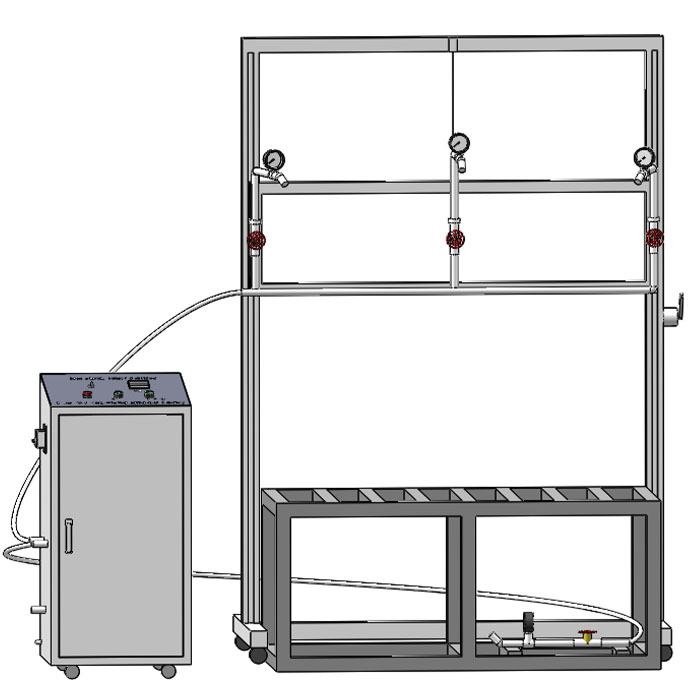
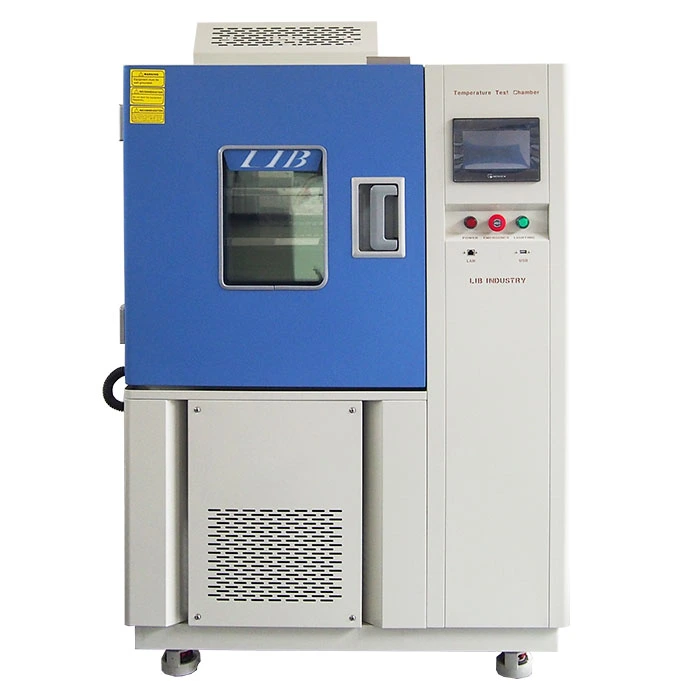
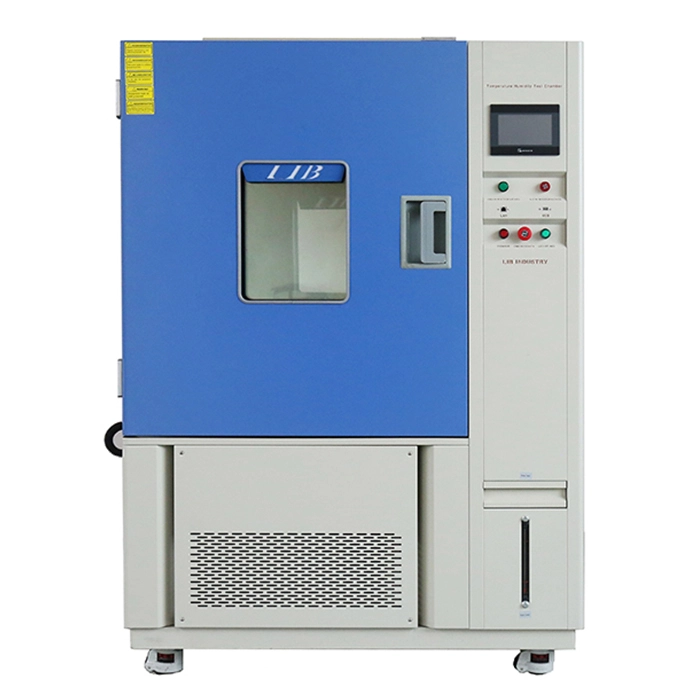
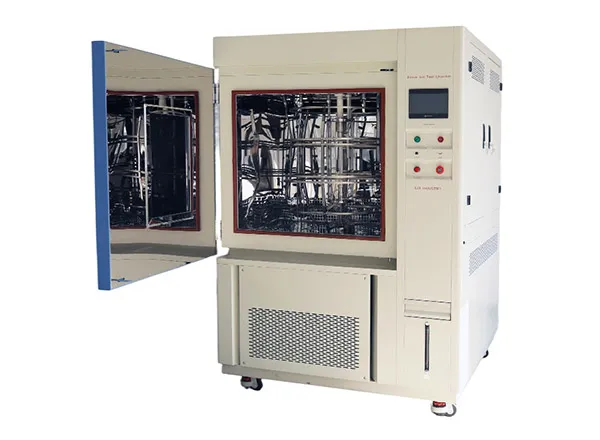
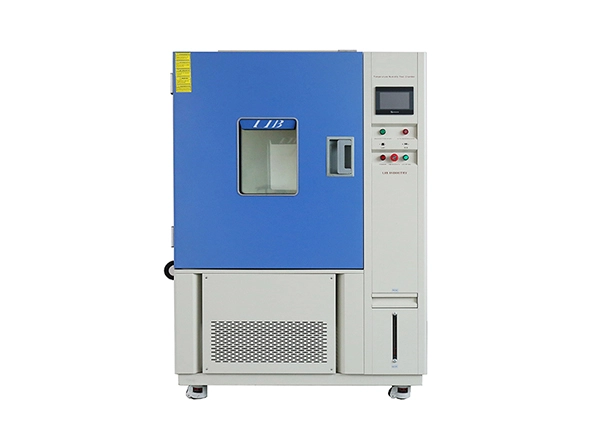
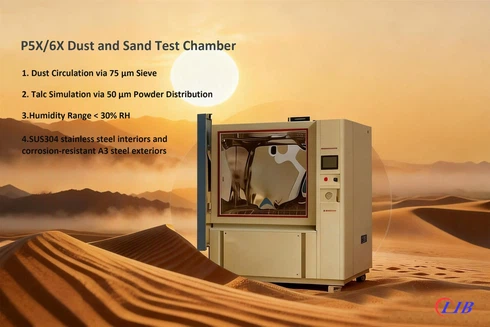
LIB industry provides dust test chambers designed for automotive and industrial ingress protection testing.
Key features include:
ISO 20653 and IEC 60529 compliance
Controlled dust circulation system
Programmable testing cycles
SUS304 stainless steel interior
Stable low-humidity operation
Custom chamber configurations available
Applications include:
Automotive sensors
ECUs
Battery systems
Connectors
Lighting assemblies
EV electronic modules
In addition to standard models, LIB industry offers customized solutions for oversized samples and specialized testing requirements.
ISO 20653 dust testing is an essential validation method for automotive electronics operating in demanding environments.
By evaluating the sealing performance of sensors, ECUs, battery systems, connectors, and other vehicle electronics, manufacturers can identify potential weaknesses before products enter production.
Whether the requirement is IP5KX dust protection or IP6KX dust-tight performance, selecting the right dust test chamber is critical for obtaining reliable and repeatable results.
LIB industry provides complete dust testing solutions, including standard and customized chambers, professional technical support, a 3-Year Warranty, and Lifetime Service Support, helping customers achieve reliable compliance with international automotive testing standards.
 English
 русский
 français
 العربية
 Deutsch
 Español
 한국어
한국어 italiano
 tiếng việt
 ไทย
ไทย Indonesia