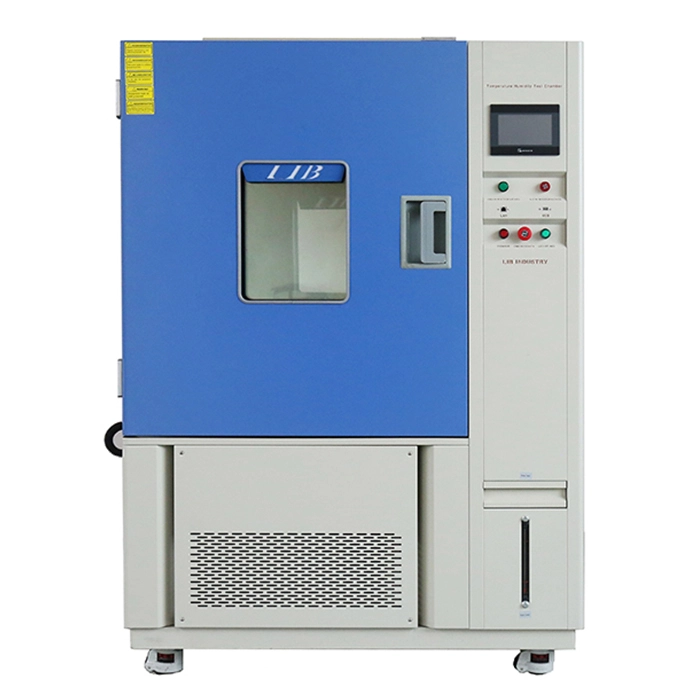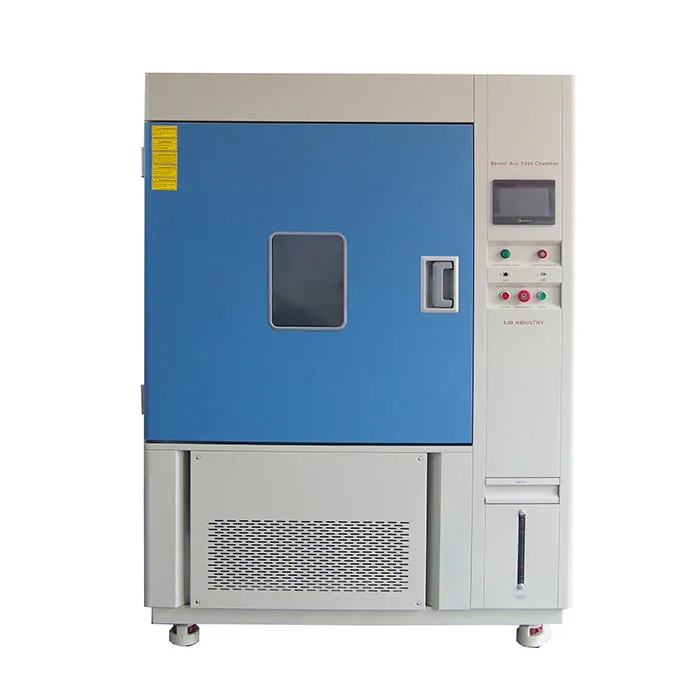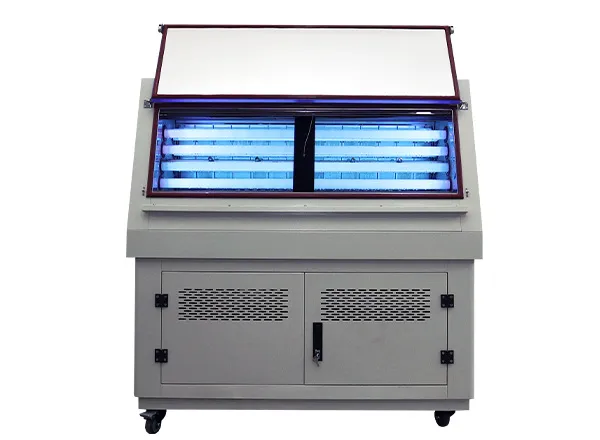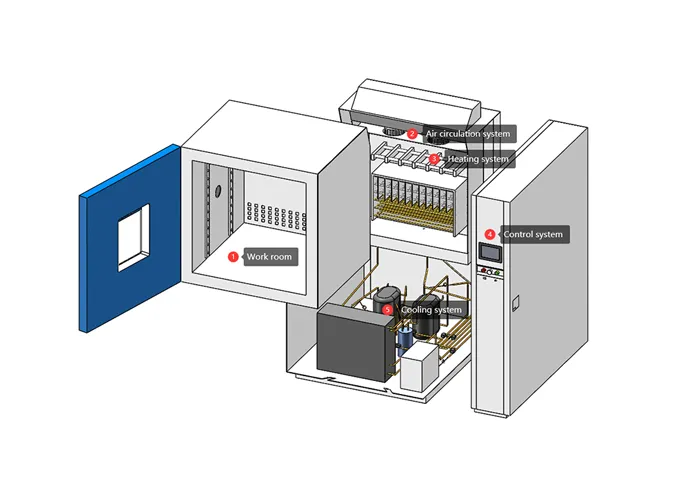
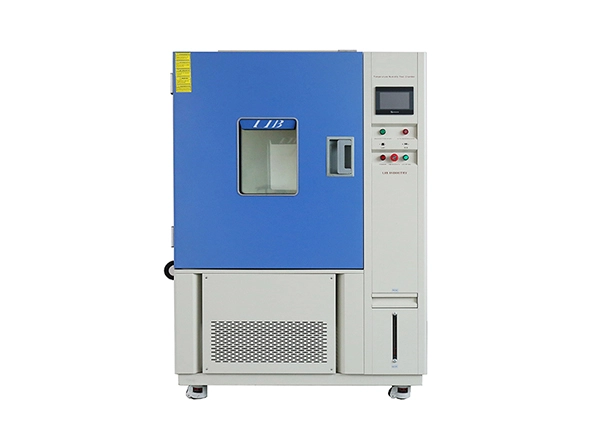
For products exposed to multiple real-world stresses, combined environment testing should be planned around the actual failure mechanism rather than simply selecting the widest chamber specification. A Combined Vibration Climatic Chamber is appropriate when temperature, humidity, and vibration must act together, while a Special Chamber is more suitable when altitude, corrosive gases, pressure, or other application-specific stresses must be integrated. Relevant standards may include IEC 60068-2-53 for combined climatic and dynamic testing, IEC 60068-2-39 for temperature/humidity with low air pressure, and ISO 9227 or ASTM B117 for salt spray. The most important selection factors are the required test profile, specimen size, heat load, vibration system, pressure level, corrosion method, and required transition rates.
Modern products rarely experience one environmental stress at a time. Automotive electronics may encounter vibration while operating in hot or humid conditions. Aerospace components can experience low pressure, temperature changes, vibration, and humidity during transportation or service. Outdoor metal components may face repeated wet, dry, thermal, and corrosive conditions.
This is driving a shift from individual environmental tests toward multi-stress environmental testing. Instead of testing temperature, humidity, vibration, altitude, and corrosion separately whenever the specification requires combined exposure, engineers can develop a coordinated test plan that better represents the interaction between stresses.
Typical samples include electronic modules, vehicle components, battery systems, connectors, sensors, aerospace assemblies, coatings, mechanical parts, and communication equipment.
The purpose is not simply to make the test more severe. It is to identify failure modes that may only appear when stresses interact. Examples include:
Seal degradation under temperature and low-pressure conditions
Mechanical loosening caused by vibration during thermal exposure
Electrical insulation changes under humidity and altitude
Coating and fastener corrosion after repeated salt and climate cycles
Material cracking caused by temperature changes combined with mechanical loading
IEC 60068-2-53 specifically addresses combined climatic conditions such as temperature and humidity with dynamic conditions including vibration or shock.
Combined testing does not have one universal standard covering every combination of stress. The applicable standard depends on the product, industry, and test sequence.
Standard | Main environmental stress | Typical conditions / approach | Test duration or cycle |
IEC 60068-2-53 | Temperature/humidity + vibration/shock | Climatic conditions combined with sine, random, mixed-mode vibration or shock | Defined by product specification |
IEC 60068-2-39 | Temperature/humidity + low air pressure | Temperature or temperature/humidity combined with reduced air pressure | Defined by test specification |
IEC 60068-2-52 | Cyclic salt mist | Cyclic sodium chloride salt-mist exposure | Defined by severity and product specification |
ISO 9227:2022 | NSS/AASS/CASS corrosion | Neutral, acetic acid or copper-accelerated acetic acid salt spray | Product-specific |
ASTM B117-26 | Salt fog | Controlled salt-spray/fog environment | Product-specific |
IEC 60068-2-13 | Low air pressure | Simulated low-pressure/high-altitude exposure | Defined by required severity |
ISO 9227:2022 covers NSS, AASS, and CASS salt-spray methods but does not prescribe a universal exposure time for every product. ASTM B117 likewise defines the salt-fog test environment but leaves specimen type, exposure duration, and result interpretation to the applicable product specification.
For combined vibration and climatic testing, IEC 60068-2-53 is particularly relevant because it specifically considers the interaction between climatic and dynamic conditions.
For altitude-related testing, IEC 60068-2-13 covers low air pressure, while IEC 60068-2-39 addresses combined temperature or temperature/humidity with low air pressure.
Selection factor | Combined Vibration Climatic Chamber | Combined Salt Spray & Climate Chamber | Special Chamber |
Temperature range | Typically -70°C to +150°C | -20/-40/-70°C to +150°C, customizable | Customized |
Humidity range | About 20–98% RH depending on model | 20–98% RH | Customized |
Chamber volume | Benchtop to large/custom | Standard to larger custom configurations | Highly customizable |
Ramp rate | Model-dependent; rapid changes available | Heating ≥3°C/min; cooling ≥1°C/min, customizable | Application-dependent |
Airflow | Forced circulation around vibration setup | Controlled airflow for climate/drying cycles | Designed for test function |
Sample heat load | Critical during vibration testing | Critical during climate/corrosion cycling | Calculated from application |
Safety configuration | Over-temperature, over-current and refrigeration protection | Corrosion-resistant construction and explosion-proof options | Gas, pressure, electrical or application-specific safety |
Applicable standards | IEC 60068, ISO 16750, MIL-STD-810 and others | ASTM B117, IEC 60068-2-52, ISO 9227, SAE J2334 and others | Standard or customer-specific |
LIB's current Combined Vibration Climatic Test Chamber integrates temperature, humidity and vertical/horizontal vibration, with listed configurations reaching -70°C to +150°C, 20–98% RH and vibration frequencies up to 4,000 Hz depending on model.
For corrosion-oriented programs, LIB's Combined Salt Spray and Climate Test Chamber combines salt mist, temperature, humidity and drying within one programmable system. Its listed temperature configurations range from -20°C to +150°C, -40°C to +150°C, or -70°C to +150°C, with customizable options.
When a test requires unusual combinations such as pressure, corrosive gases, vibration, special fixtures, or application-specific safety systems, a Special Chamber becomes more practical than forcing a conventional chamber to perform outside its intended configuration. LIB's special-chamber portfolio includes gas corrosion and other customized environmental systems.
1. Ignoring sample heat generation
Powered electronics, batteries, motors, and other active specimens can generate substantial heat. A chamber may reach the specified temperature without the sample itself reaching the required condition.
2. Selecting a chamber that is too small
The nominal internal volume is not the same as usable test space. Fixtures, shaker heads, cable routing, airflow clearance, and safety spacing all reduce available space.
3. Placing sensors incorrectly
A sensor located too close to a heater, air outlet, vibration fixture, or specimen can produce misleading measurements. Sensor placement should follow the applicable standard and test plan.
4. Confusing display accuracy with chamber uniformity
A controller displaying ±0.1°C does not mean every location inside the chamber differs by only ±0.1°C. Stability, fluctuation, deviation, and spatial uniformity are separate performance characteristics.
5. Checking temperature range but not ramp rate
A chamber capable of -70°C to +150°C may still be unsuitable if the test requires rapid temperature transitions. Ramp rate must be evaluated together with specimen mass and heat load.
6. Forgetting infrastructure requirements
Before ordering, confirm electrical supply, drainage, compressed air if required, exhaust or ventilation, water supply, salt solution handling, shaker installation, room height, door clearance, and maintenance access.
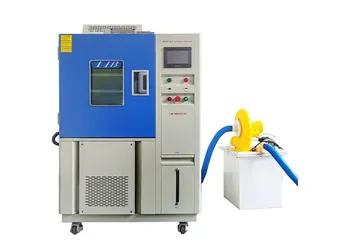
The appropriate chamber should follow the stress combination rather than the product name.
Benchtop: Best for small electronic components, sensors, materials, and laboratory screening where sample volume is limited. LIB offers compact benchtop environmental chambers with customizable temperature and humidity performance.
Reach-In: Suitable for medium-sized assemblies and routine temperature/humidity programs where easier sample access is important.
Walk-In: Recommended for large automotive assemblies, aerospace structures, multiple samples, or large fixtures where internal working space is the main constraint.
Thermal Shock: Better when the key requirement is rapid transfer between hot and cold conditions rather than simultaneous environmental stresses.
Salt Spray: Appropriate for dedicated corrosion exposure under standards such as ASTM B117 or ISO 9227.
IP: Select dedicated IP dust or water equipment when the primary objective is ingress protection rather than climate simulation.
Special Custom Chamber: Recommended when the test combines unusual parameters such as altitude, corrosive gas, pressure, vibration, special loading, or custom safety requirements.
For applications where temperature, humidity, and vibration must operate simultaneously, see LIB's Combined Vibration Climatic Test Chamber. For more application-specific environmental combinations, the Special Chamber range provides a better starting point.
For automotive applications involving corrosion, temperature/humidity, vibration, thermal shock and IP testing, LIB also provides an Automotive Environmental Testing solution covering multiple environmental stresses.
A useful related resource is LIB's Altitude Chamber vs Temperature-Altitude Chamber: When Combined Testing Is Required, which can help engineers distinguish low-pressure testing from broader temperature-altitude simulation requirements. LIB's current blog also covers the growing need to select chambers according to test profile, sample load, ramp rate, and applicable standards.
A Combined Vibration Climatic Chamber is generally the appropriate solution when temperature, humidity, and vibration need to be controlled simultaneously. The chamber should be matched to the shaker, specimen mass, fixture dimensions, and required vibration profile.
Combined climatic vibration testing focuses on the interaction between mechanical and climatic stresses. Corrosion-climate testing focuses on salt mist, humidity, temperature, drying, and condensation cycles. They require different chamber architectures and materials.
It can be technically possible, but not every standard requires all four stresses simultaneously. A customized Special Chamber may be required when low pressure must be integrated with climate and vibration control. The test sequence should be defined before chamber design.
There is no universal test duration. Exposure time depends on the applicable standard, severity level, number of cycles, dwell periods, vibration profile, and product specification. Salt-spray standards such as ISO 9227 and ASTM B117 do not prescribe one exposure duration for all products.
Choose the chamber according to the complete test setup, not only the specimen dimensions. Include fixtures, shaker clearance, airflow requirements, cable routing, sample spacing, and future testing needs.
Yes, a properly configured chamber may support several standards, but “supporting” a standard does not automatically mean every test condition can be performed. Temperature range, humidity, ramp rate, vibration system, pressure capability, salt spray system, and safety configuration must be checked against each test method.
An RFQ should include the applicable standards, specimen dimensions and weight, number of specimens, temperature and humidity range, ramp rate, vibration frequency and force, altitude or pressure requirement, corrosion method, sample heat load, test sequence, power requirements, and available laboratory space.
Choose a Special Chamber when standard temperature/humidity, vibration, or corrosion equipment cannot reproduce the required combination. Custom pressure, gas, altitude, unusual fixtures, special sample loading, or enhanced safety requirements are strong indicators for a customized design.
 English
 русский
 français
 العربية
 Deutsch
 Español
 한국어
한국어 italiano
 tiếng việt
 ไทย
ไทย Indonesia