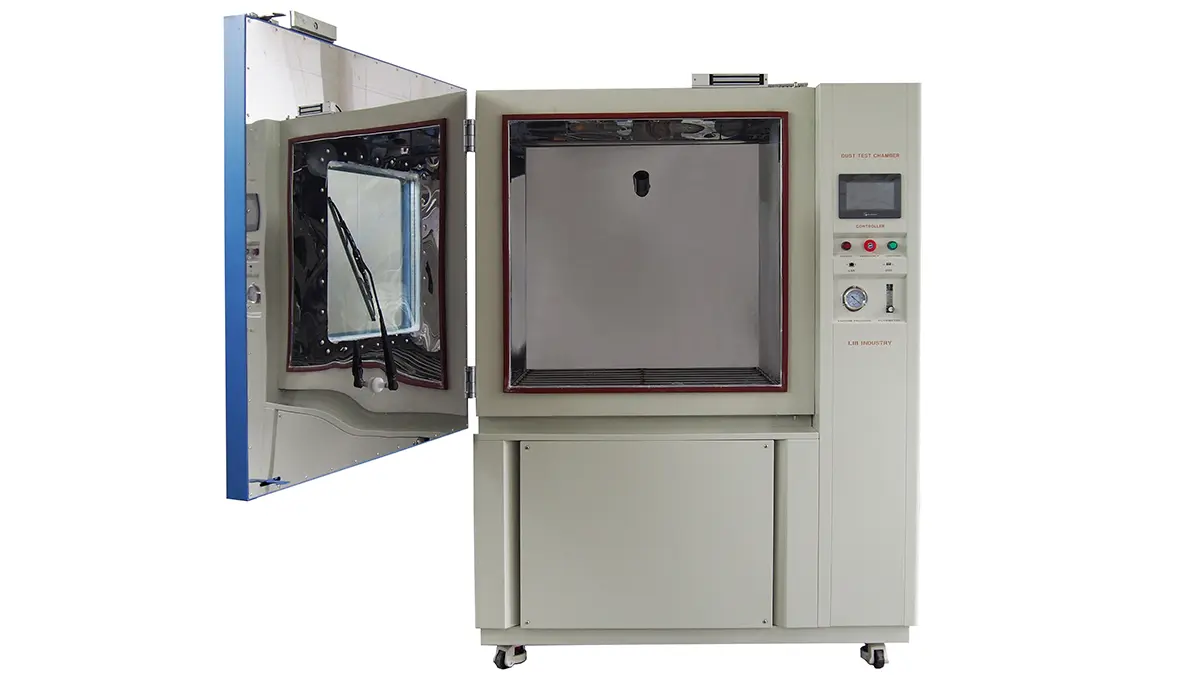
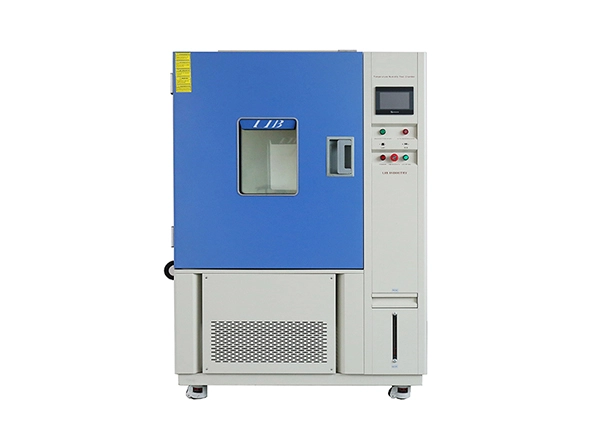
Engineers and procurement teams asking "what can a constant temperature humidity chamber test?" are usually trying to solve one of three problems: a product is failing in the field, a new design needs qualification data before launch, or a lab is being built out and needs to specify the right equipment. This guide answers that question directly, walks through the test standards that govern electronics, food, cosmetics, and automotive testing, compares chamber types side by side, and shows how LIB's constant temperature and humidity chambers are built to deliver stable, repeatable results across all of these applications.
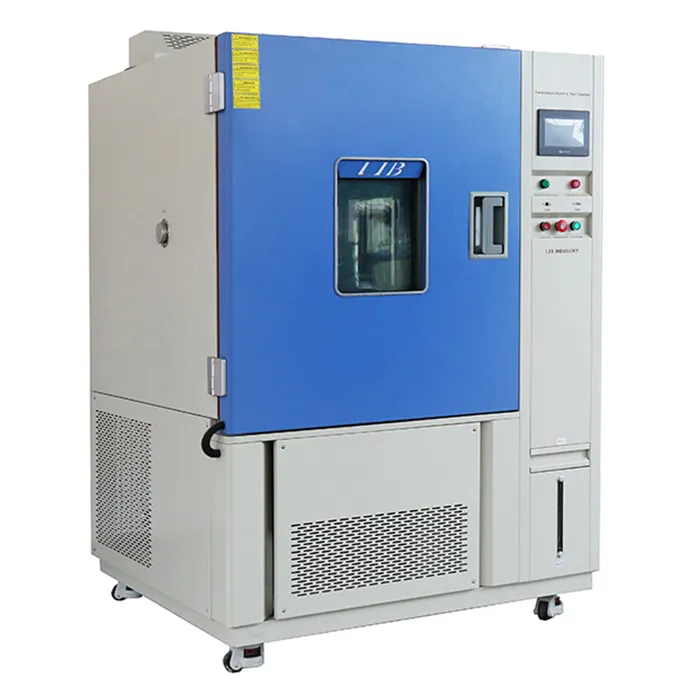
A constant temperature humidity chamber is a sealed enclosure that holds temperature and relative humidity (RH) at fixed — or precisely programmed — levels for hours, days, or months. Unlike a simple oven or freezer, it controls heat and moisture simultaneously, which lets a lab reproduce real-world climate stress on demand. Typical test outcomes include:
Heat and cold resistance — softening, warping, brittleness, seal shrinkage, sensor drift
Humidity and moisture absorption — corrosion, delamination, insulation resistance loss, swelling
Condensation exposure — surface moisture damage on PCBs, lenses, labels, and painted parts
Accelerated aging and shelf-life — how fast a material, formula, or solder joint degrades under stress
Batch comparison and supplier qualification — whether incoming parts meet the same performance baseline
A stable chamber matters because small deviations produce misleading data. A 3°C hot spot can soften an adhesive ahead of schedule, and a low-humidity corner can mask a packaging weakness that would otherwise show up as a real failure.
Before running a profile, a lab should define specimen size, live-load heat, chamber operating conditions, data-logging points, pass/fail criteria, and specimen recovery time. Most of these parameters are already defined by an industry standard, so the real work is matching the right standard to the product.
Standard | Application | Typical Conditions |
ISO 16750-4 | Automotive electronics, high-temp operation | 85°C / 48 h storage; Tmax / 96 h operating |
IEC 60068-2-78 | Electrotechnical products, steady-state damp heat | 30±2°C or 40±2°C at 85%/93% RH, 12 h–56 days |
IEC 60068-2-30 (Test Db) | Cyclic damp heat with condensation | 12 h + 12 h cycles with surface condensation |
ICH Q1A(R2) | Pharmaceutical stability | 25±2°C/60±5% RH (12 mo, long-term); 40±2°C/75±5% RH (6 mo, accelerated) |
85°C/85% RH (JEDEC-style) | Semiconductor / connector humidity bias life | 1,000 h continuous exposure |
Humidity failures are often silent — a board can test fine at room conditions and only develop excess leakage current after 500+ hours at high RH. A test plan for PCBs should track insulation resistance change, solder mask blistering, copper corrosion, conformal coating adhesion, and weight gain, with special attention to ionic contamination on fine-pitch boards, which can form conductive paths as moisture accumulates. For semiconductor packages and connectors, 85°C/85% RH for 1,000 hours is a common humidity bias life benchmark. Battery packs, sensor housings, and cable assemblies typically need electrical monitoring — cable ports and side test ports let a lab track voltage, resistance, capacity retention, and drift without opening the chamber.
Food testing usually tracks gradual deterioration rather than sudden failure. Samples are sealed and stored at common shelf-life points — 25°C/60% RH, 30°C/65% RH, or 40°C/75% RH — then evaluated for texture, color, odor, water activity, package weight, and microbial growth. Dry products such as baked snacks, pet food, tea, coffee, and seasoning powders are especially moisture-sensitive. Packaging tests separately evaluate seal integrity, delamination, ink rub-off, carton compression loss, and pouch curling, with uniform airflow needed to fairly compare coated versus uncoated substrates.
Stability testing can reveal phase separation, viscosity and pH shifts, off-odors and off-colors, microbial count changes, and active-ingredient loss — plus packaging issues like pump clogging, cap-seal leakage, tube collapse, and label adhesion failure.
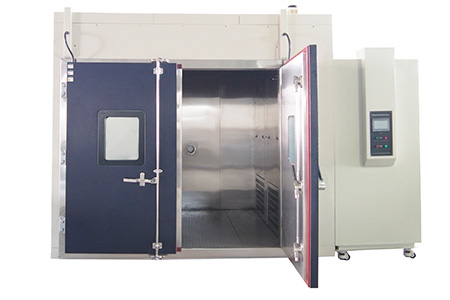
A single part may sit at a port terminal, run in desert heat, sit in a wet cabin, and face cold nights over its service life. Chamber testing on interior plastics, rubber seals, adhesives, coatings, lamps, switches, sensors, and ECUs checks dimensional change, gloss loss, odor, fogging, coating blisters, contact resistance, and post-recovery function. Larger assemblies often need a walk-in chamber so airflow isn't restricted.
Factor | Benchtop Chamber | Walk-In Chamber |
Typical use | R&D, small parts, PCBs, packaged samples | Large assemblies, bulk cartons, multi-batch runs |
Volume | ~100 L–1000 L | Custom, room-scale |
Airflow | Compact, tightly controlled | Larger footprint, needs open circulation paths |
Access | Front door, cable/test port | Personnel door, multiple monitoring ports |
Best for | Component qualification, fast test cycles | Full assemblies, production-batch QC |
 |  |
| Parameter | Available Capability |
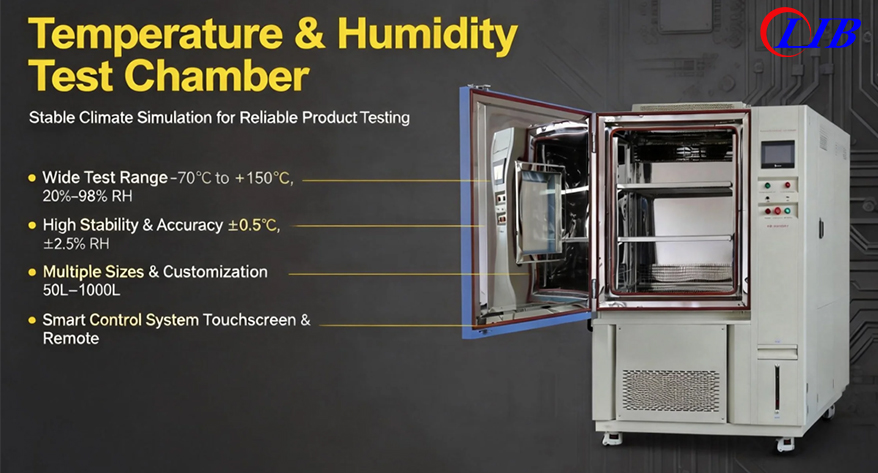
Temperature range | -20°C, -40°C, or -70°C low end up to +150°C |
Humidity range | 20%–98% RH (custom ranges from 10% RH available) |
Temperature fluctuation | ±0.5°C |
Temperature deviation | ±2.0°C |
Humidity deviation | ±2.5% RH |
Heating / cooling rate | 3°C/min heating; 1°C/min cooling |
Volume range | ~100 L–1000 L, plus custom and walk-in sizes |
Control & access | Color touchscreen, PC link, LAN interface, cable test port |
Chamber build | SUS304 stainless steel workroom, observation window, silicone sealing |
Safety systems | Over-temperature, over-current, water shortage, earth leakage, refrigeration pressure protection |
For long-duration tests, small engineering details make the biggest difference: stable PID control, constant airflow, automatic water supply, water purification, and remote data access all reduce the chance of a test being invalidated partway through. The side cable outlet supports live electrical monitoring for electronics testing, and the stainless steel workspace is easy to clean between food, cosmetics, and packaging test runs.
Labs that bring in a LIB constant temperature humidity chamber typically go through the same process: defining the test profile and applicable standard, sizing the chamber and live-load heat, confirming utility requirements (power, water supply, drainage), on-site installation and commissioning, and operator training on the touchscreen controls and data logging setup. After installation, LIB provides calibration, inspection, and maintenance support so test data stays comparable across the life of the equipment.
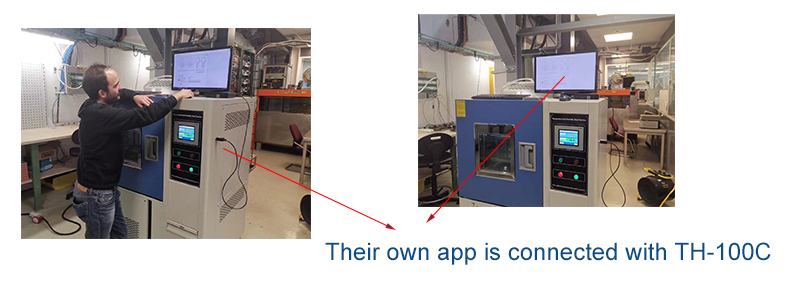
What is a constant temperature humidity chamber used for?
It assesses how temperature and humidity affect products, packaging, and materials — measuring heat/cold resistance, moisture absorption, condensation risk, aging rate, and shelf life.
Can a temperature humidity chamber test electronics, food, and automotive parts in the same lab?
Yes. The same chamber platform can qualify PCBs, sensors, and batteries; run food and packaging shelf-life studies; and test automotive interior materials and ECUs — the difference is the test profile (standard, temperature/RH range, and duration), not the equipment category.
What temperature and humidity range should I choose, and what's the difference between a benchtop and walk-in chamber?
Base the range on storage, transport, and use conditions plus the applicable standard — a typical lab range is -40°C to +150°C at 20%–98% RH, with -70°C for severe low-temperature testing. Benchtop chambers suit small R&D samples; walk-in chambers offer more space and airflow for large assemblies, bulk cartons, or multiple batches at once.
Does LIB offer a warranty and long-term after-sales support?
Yes. LIB chambers come with a 3-year warranty, backed by lifetime after-sales service covering calibration, inspection, spare parts, and maintenance guidance — so test data stays comparable across the full working life of the equipment, not just the warranty period.
What does LIB's one-stop service actually include?
LIB supports the full project lifecycle in-house: test profile and standard consultation, chamber design and sizing, manufacturing, on-site installation and commissioning, operator training, and ongoing calibration and maintenance — a single point of contact from initial inquiry through years of operation.
Can LIB build non-standard or custom chambers, and what's their production capability?
Yes. Beyond standard benchtop, vertical, and walk-in models, LIB engineers non-standard, fully customized chambers for unusual volumes, temperature/RH ranges, cable/monitoring access, or specimen-handling requirements. This is backed by a full in-house production line covering temperature and climate chambers, corrosion chambers, dust and water IP chambers, weathering chambers, and other special test chambers.
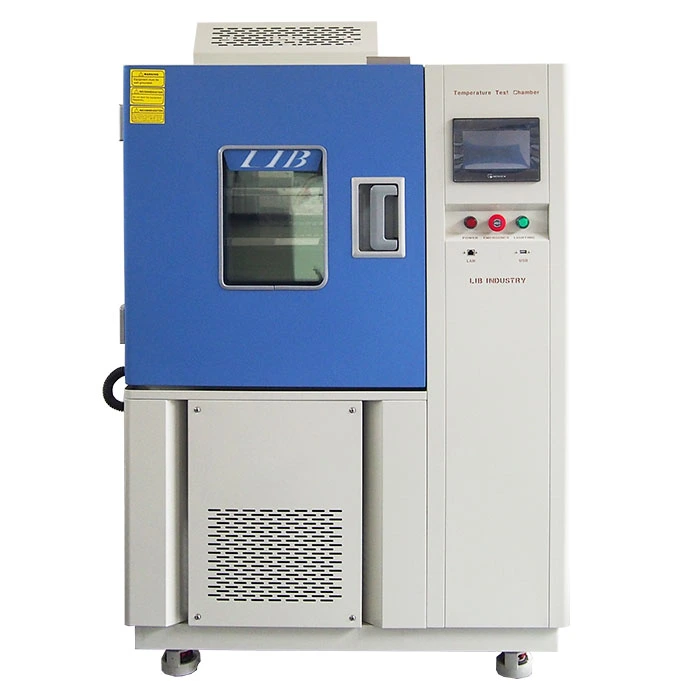
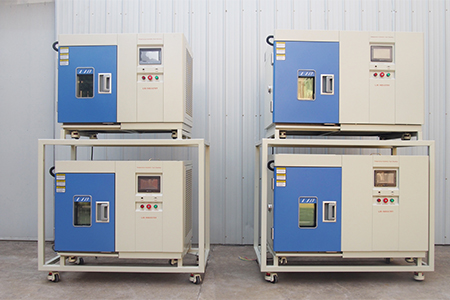 Benchtop Constant Temperature Humidity Chamber — compact footprint for PCB, component, and small-part R&D testing. |
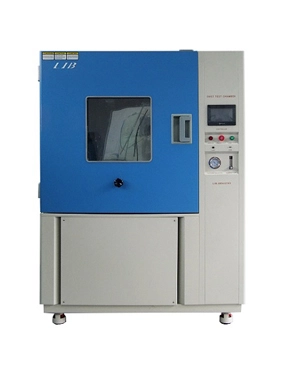
— higher-volume option for mid-size assemblies and batch QC. |
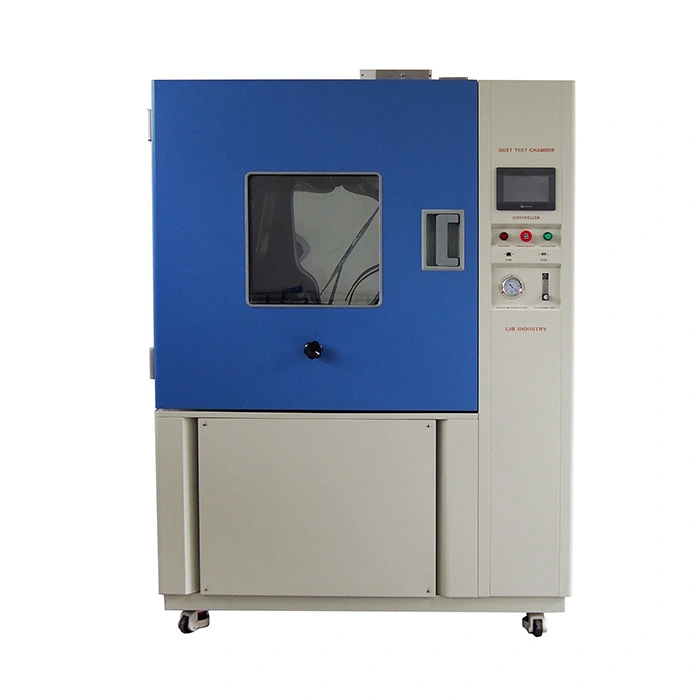
— custom room-scale testing for automotive assemblies, bulk cartons, and production-line qualification. | 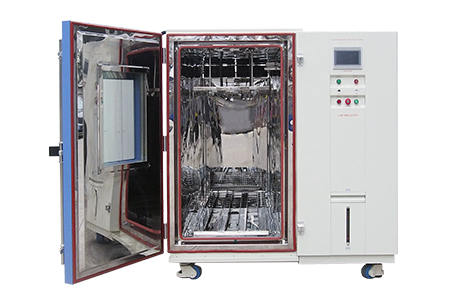 Damp Heat / Condensation Test Chamber (IEC 60068-2-30) — dedicated cyclic testing for condensation-sensitive electronics and coatings. |
Choosing the right constant temperature humidity chamber starts with your test profile, not the catalog. Before requesting a quote, define your temperature range, RH range, chamber volume, live-load heat, monitoring/access needs, and applicable standard. Xi'an LIB Environmental Simulation Industry has built temperature, climate, corrosion, dust/water IP, weathering, and special test chambers since 2009, supporting design, production, installation, and long-term calibration service. Contact LIB today to get a chamber specification, technical proposal, or custom quote matched to your product's real climate risks.
3-Year Warranty | Lifetime Technical Support | Rapid Engineering Response
 English
 русский
 français
 العربية
 Deutsch
 Español
 한국어
한국어 italiano
 tiếng việt
 ไทย
ไทย Indonesia

.webp "ASTM G154 Outdoor Furniture Testing: Prevent Fading, Cracking and Chalking")