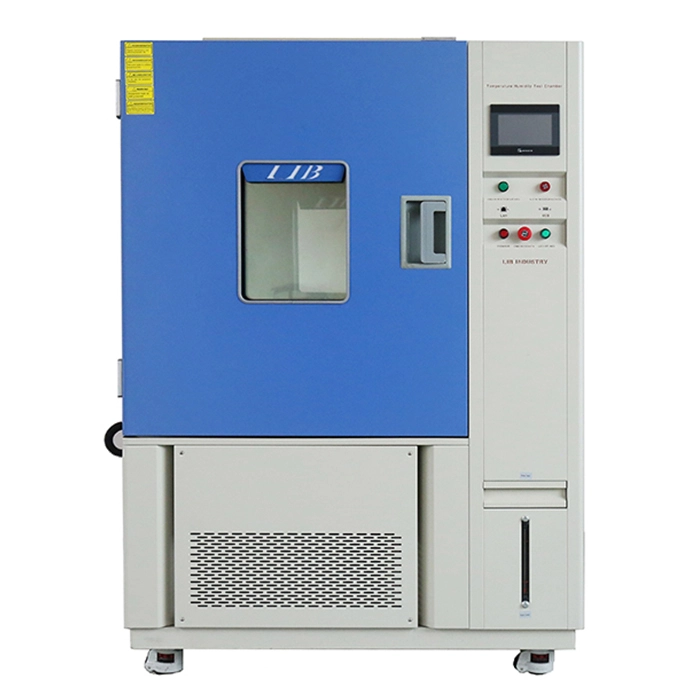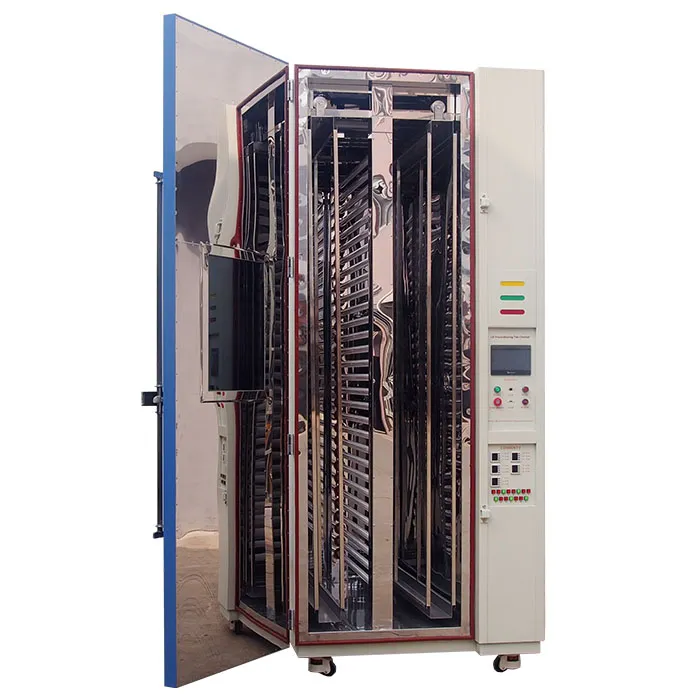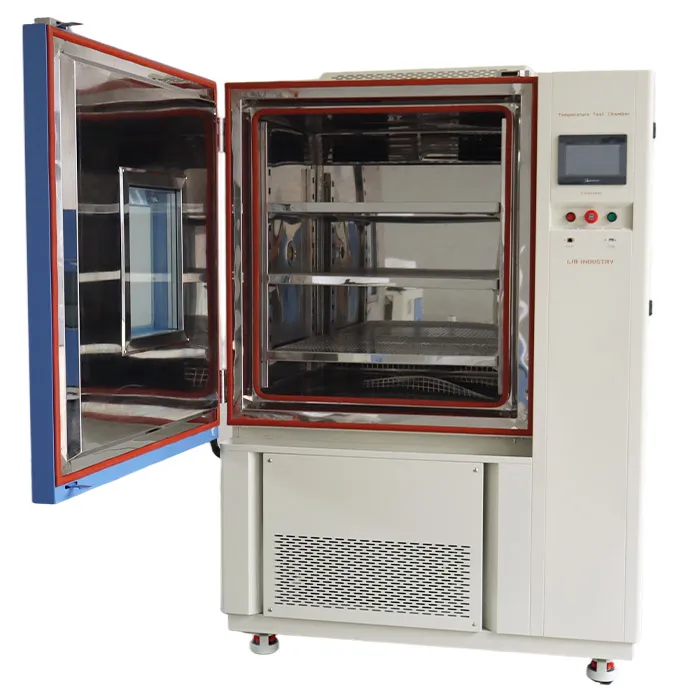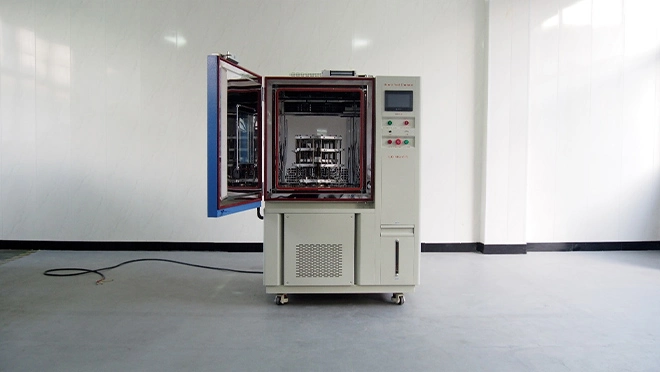
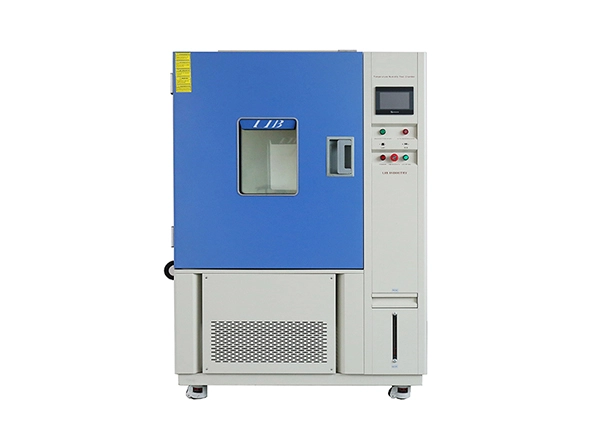
In many laboratories and manufacturing facilities, selecting a Temperature and Humidity Test Chamber often starts—and unfortunately ends—with price comparison. On paper, most chambers look similar: temperature range, humidity range, volume, and maybe a few performance figures.
But in real environmental testing—whether it is ESS (Environmental Stress Screening), reliability validation, or accelerated aging—the real difference is not on the price tag. It is in the hidden engineering parameters that determine whether your test data is trustworthy or not.
This article breaks down the 5 most overlooked technical factors that define a truly professional temperature and humidity chamber, and how advanced systems such as those developed by LIB industry address them in real-world testing environments.
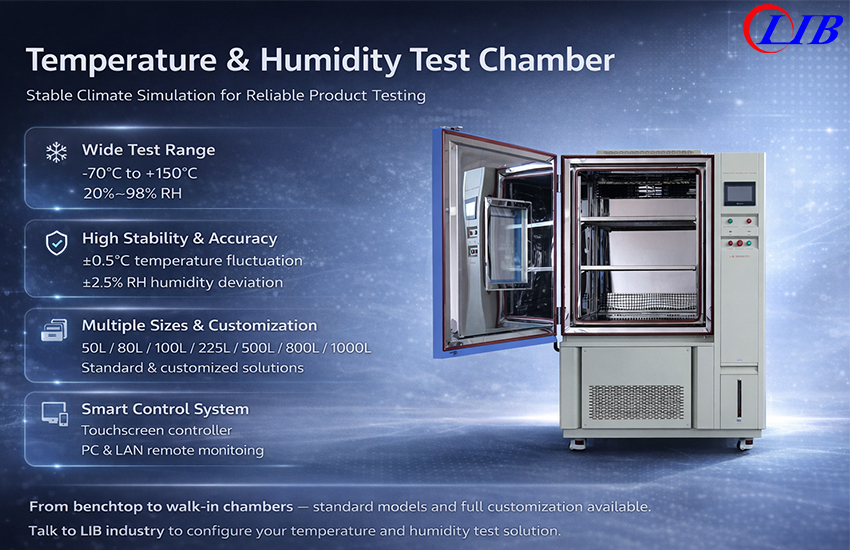
Many buyers see specifications like “±0.5°C temperature accuracy” and assume all chambers perform the same. In reality, this number is often incomplete without understanding two different parameters:
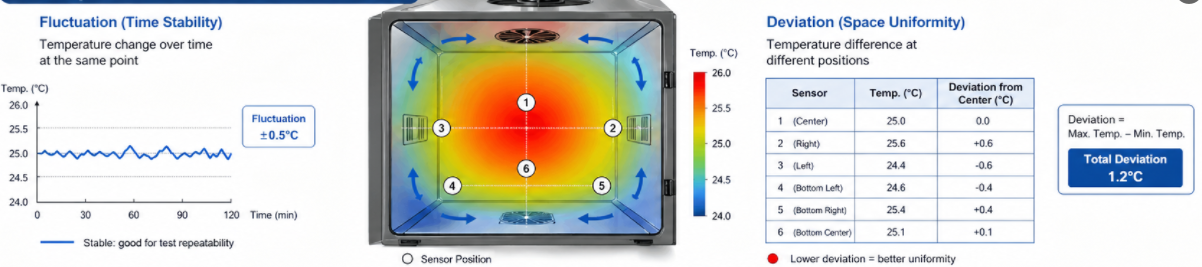
This refers to how much the temperature changes over time at the same point inside the chamber. Even small instability can affect ESS testing results, especially in long-duration cycles or rapid thermal transitions.
This refers to temperature differences between different locations inside the chamber. A sample placed in one corner may experience slightly different conditions compared to the center.
If fluctuation is unstable, your test curve is unreliable. If deviation is high, your samples are not being tested under identical conditions. Both directly affect data credibility.
Advanced airflow design and PID control systems are used to maintain tight thermal stability across the chamber. In high-performance models from LIB industry, temperature fluctuation is controlled within ±0.5°C while also minimizing spatial deviation, ensuring that every sample experiences consistent environmental exposure.
Most specifications highlight humidity range such as “20% to 98% RH.” However, this number alone does not guarantee accurate humidity testing.
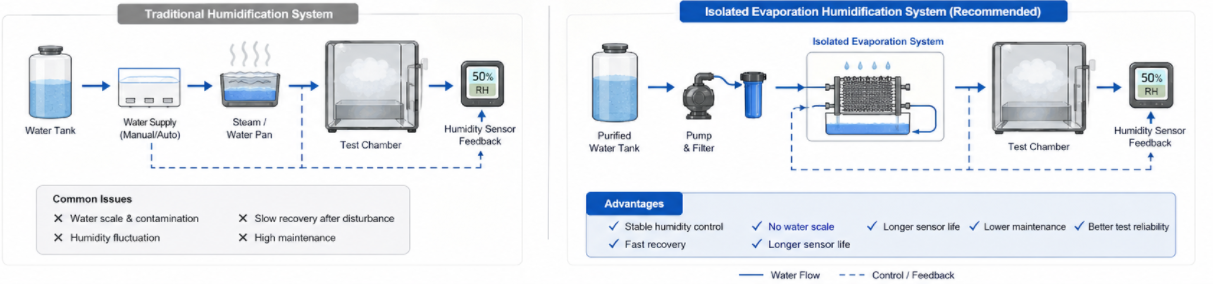
Humidity systems are constantly affected by:
Door opening recovery
Load heat output
Water quality variation
Sensor drift over time
Traditional steam or water tray humidification systems often suffer from scaling, inconsistent vapor generation, and slow recovery after disturbance.
To improve long-term reliability, LIB industry integrates external isolated evaporation humidification systems with purified water supply. This design reduces mineral buildup, prevents contamination, and ensures stable humidity response even during high-frequency test cycles such as 85°C / 85%RH reliability testing.
At first glance, chamber material may seem like a structural detail. In reality, it directly affects test integrity over time.
In high humidity and high temperature environments:
Corrosion can occur internally
Particles may contaminate test samples
Surface degradation affects airflow consistency
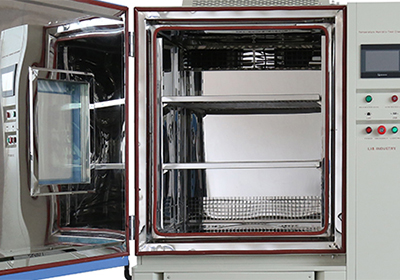 Why SUS304 matters
SUS304 stainless steel provides:
Strong corrosion resistance in humid environments
Stable surface conditions for long-term testing
Reduced maintenance frequency
Improved cleanliness for sensitive electronics testing
All internal chambers in LIB industry temperature and humidity systems use SUS304 stainless steel construction, ensuring durability even under continuous 85°C/85%RH accelerated aging conditions.
A temperature and humidity chamber is not just a heating and cooling box—it is a dynamic control system.
PID (Proportional-Integral-Derivative) control continuously adjusts:
Heating output
Cooling response
Humidity regulation
Instead of simple on/off control, it maintains a continuously balanced system.
 Why it matters in real testing
Without PID-based control:
Temperature overshoot occurs
Humidity recovery is slow
Multi-step test programs become unstable
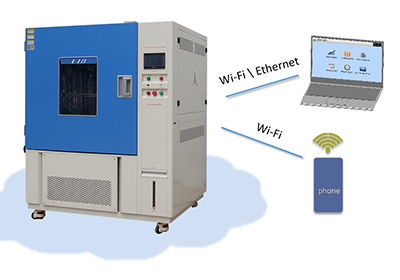
LIB industry chambers use programmable PID-based controllers with:
Up to 120 programs × 100 steps each
Real-time curve monitoring
LAN and USB data export
Modbus TCP integration for laboratory automation systems
This makes them suitable for complex ESS profiles, thermal cycling, and multi-condition reliability simulations.
Many buyers evaluate only purchase price, but ignore operational risk costs.
If a chamber fails:
Entire test batches may be invalidated
Product certification can be delayed
Production schedules may be impacted
These losses are often far higher than equipment cost.
A longer warranty is not just service—it reflects manufacturer confidence in system stability and engineering quality.
LIB industry provides:
3-year full equipment warranty
Global installation and commissioning support
Remote technical assistance and diagnostics
Long-term spare parts availability
This reduces downtime risk and ensures continuous operation for critical laboratory environments.
Before purchasing, engineers and procurement teams should evaluate more than specifications. A reliable system should clearly demonstrate:
Defined temperature fluctuation AND deviation values
Stable humidity control beyond just range numbers
SUS304 stainless steel internal structure
Advanced PID programmable control system
Proven long-term warranty and global support capability
Systems designed by LIB industry are built around these engineering principles, ensuring that performance is not just theoretical, but consistent in real laboratory conditions.
In environmental testing, inaccurate data is more expensive than equipment itself. A low-cost chamber that produces unstable results can compromise product reliability, delay certification, and increase long-term testing costs.
The real decision is not about finding the cheapest Temperature and Humidity Test Chamber. It is about selecting a system that guarantees repeatable, stable, and traceable test conditions.
Advanced engineering, such as that used in LIB industry systems, focuses on eliminating hidden variability—ensuring every test result reflects real-world performance with confidence.
LIB industry provides customizable Temperature and Humidity Test Chambers designed for:
ESS testing
Accelerated aging
Thermal cycling
85°C / 85%RH reliability validation
With fast customization, global installation support, and a 3-year warranty, our engineering team helps ensure your testing environment meets the highest reliability standards.
Contact us to get a tailored solution for your laboratory or production testing needs.
 English
 русский
 français
 العربية
 Deutsch
 Español
 한국어
한국어 italiano
 tiếng việt
 ไทย
ไทย Indonesia