Choosing a stability chamber is not only about physical size. The decision affects sample storage, laboratory workflow, validation activities, energy consumption, maintenance, and long-term data quality. In pharmaceutical, food, cosmetic, electronics, packaging, and materials testing laboratories, the main question is often: reach-in chamber or walk-in chamber?
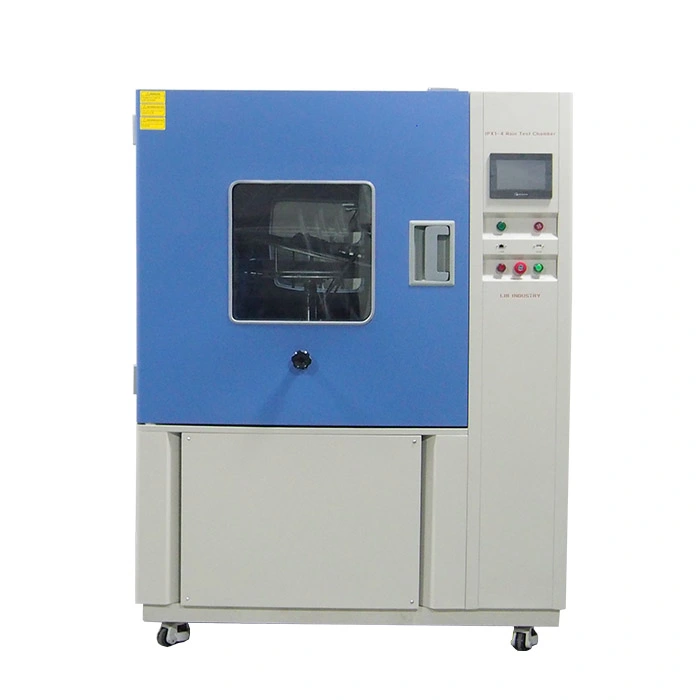
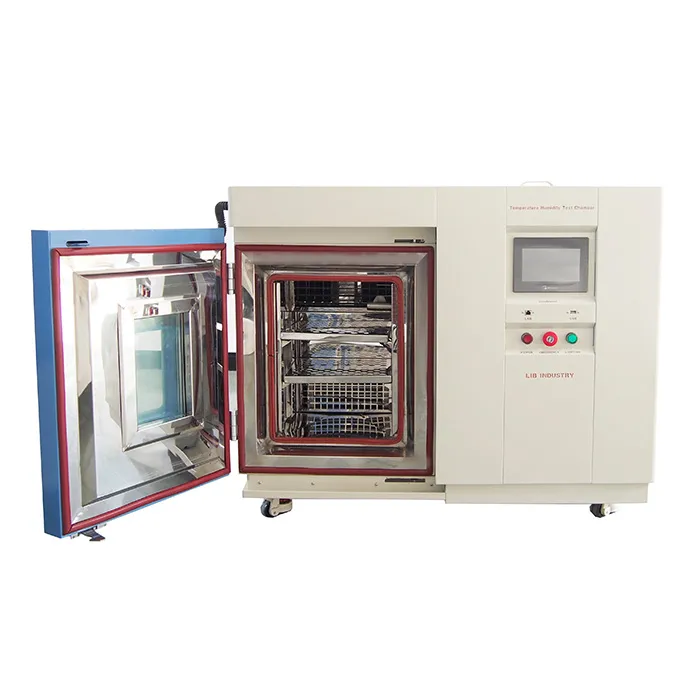
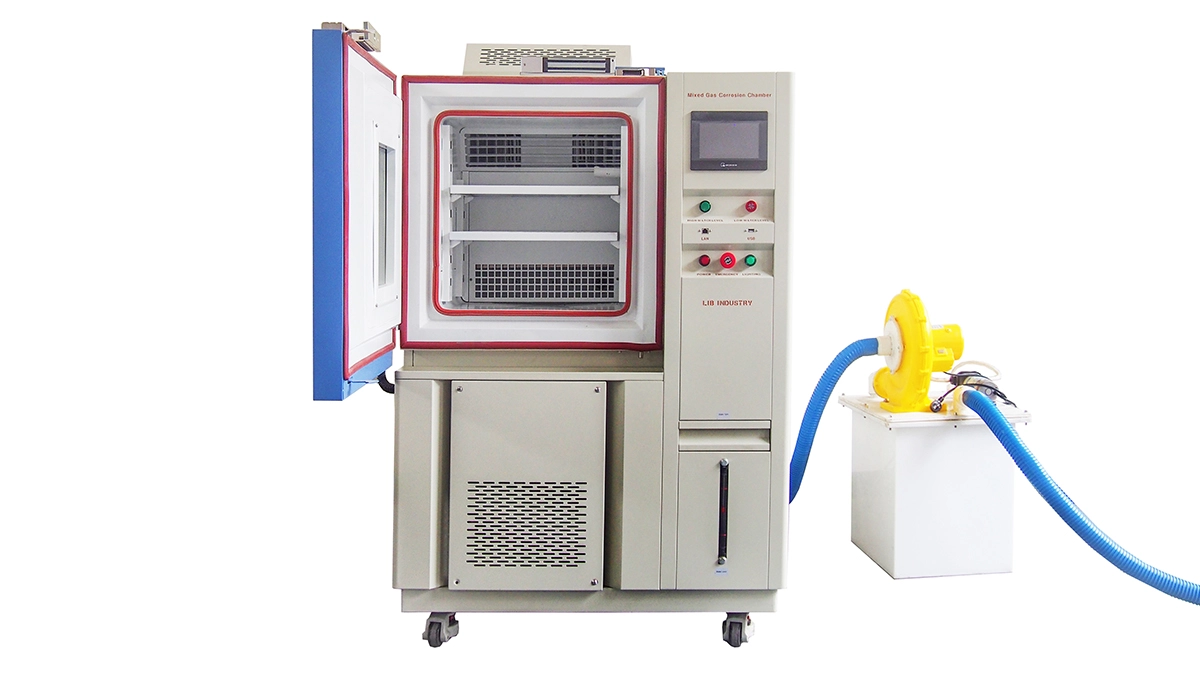
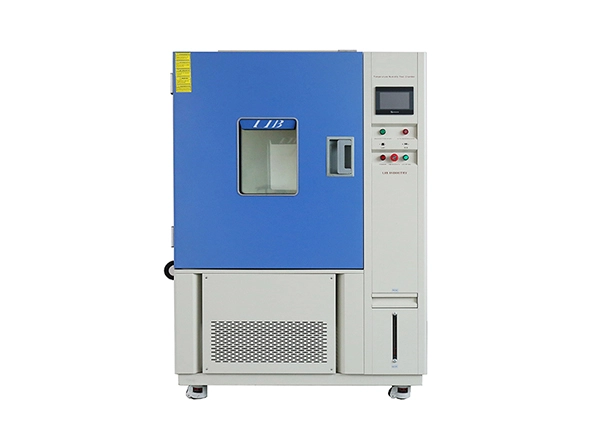
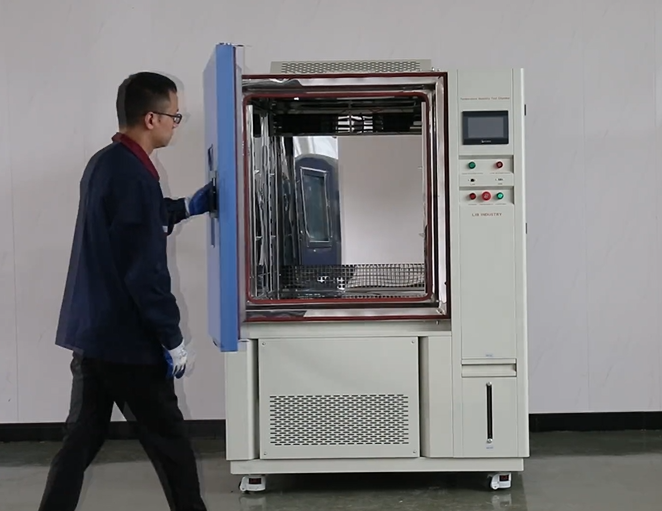
 A reach-in stability chamber is a cabinet-style environmental chamber designed for small to medium sample loads. Samples are placed on shelves, the door is closed, and a programmed temperature and humidity condition is maintained for a defined period.
Typical applications
Pharmaceutical tablets, capsules, and vials
Cosmetic formulations
Packaging films and cartons
Electronic components
Adhesives, coatings, plastics, and rubber materials
Reach-in chambers are often installed directly in R&D laboratories, quality control rooms, and pilot plants because they require relatively little floor space and can usually be integrated into existing laboratory layouts without major construction work.
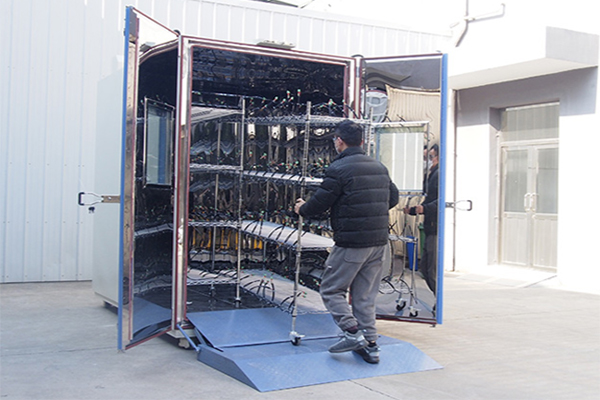
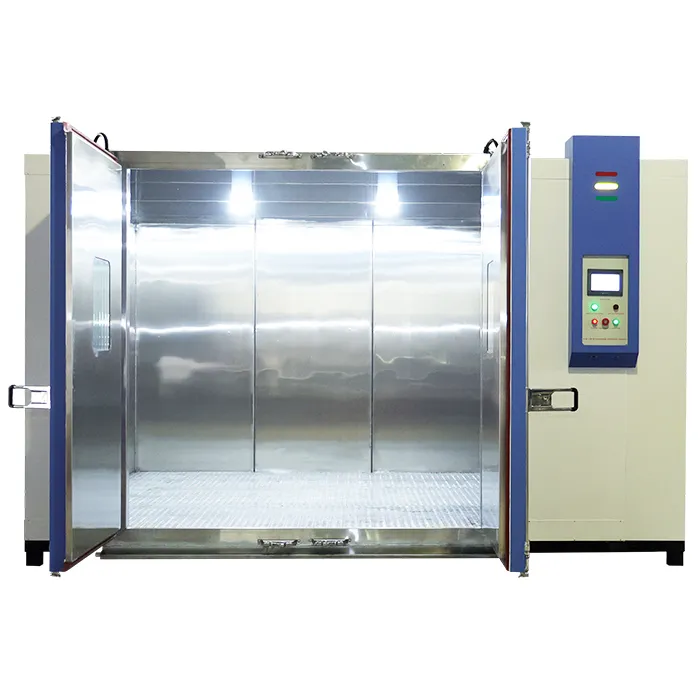 A walk-in stability chamber is a room-sized environmental chamber intended for large sample volumes, oversized products, or long-term storage programs. Personnel can enter the chamber to organize racks, cartons, pallets, or complete assemblies.
Typical applications
Commercial pharmaceutical stability studies
Retained sample storage
Battery and energy storage testing
Packaging and transportation studies
Large industrial product conditioning
Because of their size, walk-in chambers require more planning, including floor loading, power supply, drainage, HVAC considerations, and safety access.
Selection Factor | Reach-In Stability Chamber | Walk-In Stability Chamber |
Best Fit | R&D, small batches, routine QC | Large batch storage, bulk samples, full-size products |
Space Requirement | Lower floor space | Dedicated room area |
Loading Method | Shelves and trays | Racks, carts, pallets |
Installation | Generally simple | Requires site planning |
Operating Cost | Lower for small programs | More efficient for high-volume programs |
Flexibility | Easy to relocate or add units | Centralized sample management |
| Main Risk | Limited capacity during peak demand | Greater impact if downtime affects many samples |
 |  |
Many laboratories select stability chambers based on compliance with recognized industry standards.
Standard | Application |
ICH Q1A(R2) | Pharmaceutical stability testing |
ICH Q1B | Light exposure studies |
FDA 21 CFR Part 211 | Drug product storage requirements |
WHO Stability Guidelines | Global pharmaceutical products |
ASTM D4332 | Packaging conditioning |
IEC 60068 | Electronics reliability testing |
Parameter | Reach-In Chamber | Walk-In Chamber |
Temperature Range | -70°C to +150°C | |
Humidity Range | 20%RH to 98%RH | |
Temperature Fluctuation | ±0.5°C | |
Humidity Stability | ±2.5%RH | |
Internal Volume | 100L–1000L | Custom |
Controller | Programmable touch screen | |
Data Export | USB / Ethernet | |
Sample Quantity | Recommended Chamber |
Less than 100 samples | Reach-In 150L–225L |
100–500 samples | Reach-In 500L–1000L |
500–2000 samples | Walk-In Chamber |
More than 2000 samples | Large Walk-In Chamber |
This guide provides a practical starting point. Final sizing should also consider airflow clearance, shelf configuration, and future expansion plans.
Pharmaceutical stability studies commonly follow ICH Q1A(R2) conditions.
Study Type | Storage Condition | Typical Purpose |
Long-Term | 25°C ±2°C / 60%RH ±5%RH | Shelf-life determination |
Long-Term | 30°C ±2°C / 65%RH ±5%RH | Zone III & IV markets |
Intermediate | 30°C ±2°C / 65%RH ±5%RH | Follow-up studies |
Accelerated | 40°C ±2°C / 75%RH ±5%RH | Expiry prediction |
Refrigerated Products | 5°C ±3°C | Cold-chain products |
Frozen Products | -20°C ±5°C | Biologics and specialty products |
Both LIB reach-in and walk-in stability chambers can be configured to meet these common pharmaceutical stability testing conditions.
For regulated laboratories, chamber performance must be documented and verified.
Typical validation activities include
IQ (Installation Qualification)
OQ (Operational Qualification)
PQ (Performance Qualification)
Temperature mapping
Humidity mapping
Calibration support
These activities help demonstrate that the chamber can maintain the required environmental conditions throughout the usable space and during routine operation.
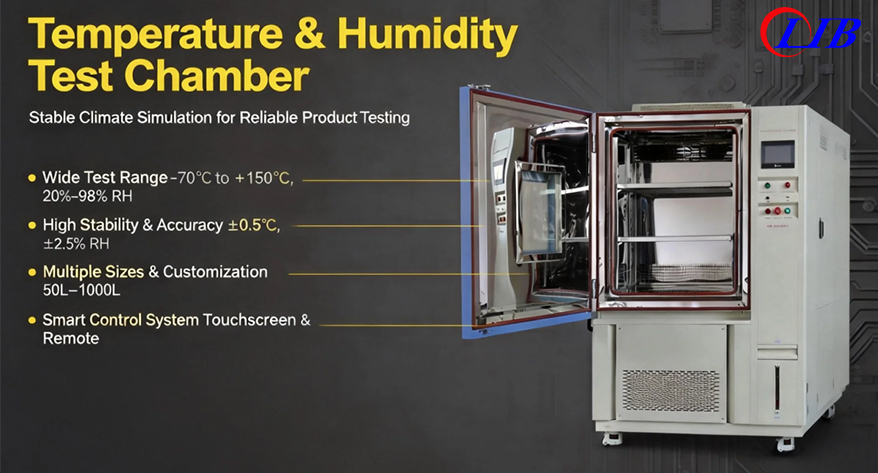
Choose a reach-in temperature humidity stability chamber when you need
Early-stage pharmaceutical formulation screening
Small-scale release and stability testing
Packaging material evaluations
Accelerated aging of electronic components
Material conditioning before mechanical or chemical analysis
Flexible deployment in existing laboratory space
Reach-in chambers are often preferred when multiple projects require different conditions and separate chambers can be assigned to each program.
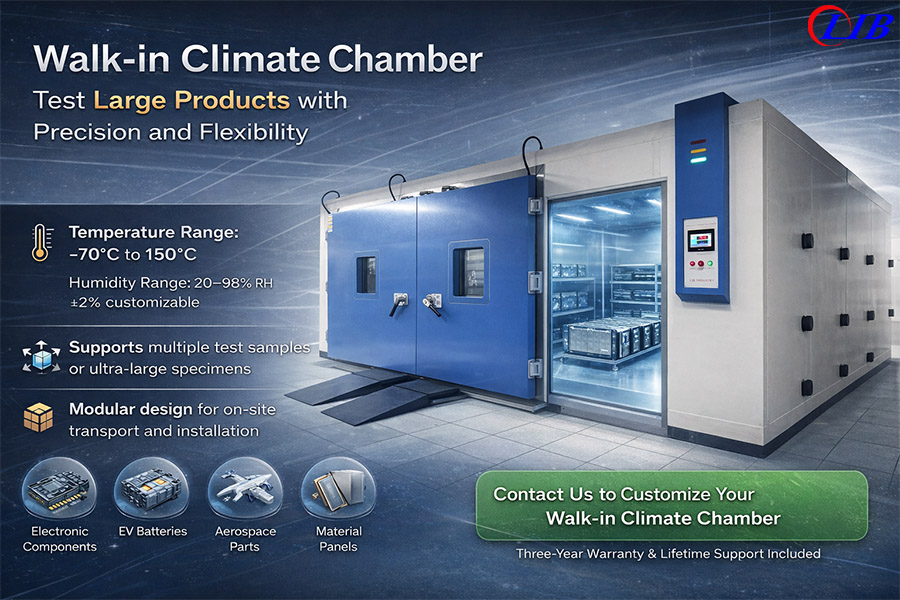
Choose a walk-in chamber when you need
Long-term commercial stability studies
Storage of hundreds or thousands of sample boxes
Testing of products in final packaging or shipping cartons
Rack or pallet-based sample management
Centralized storage under one controlled condition
Clear aisle access and organized sample retrieval schedules
Walk-in chambers become especially valuable when study duration extends to 12, 24, or 36 months and sample organization is critical.
Example 1: Pharmaceutical Formulation Laboratory
Requirement
50 batches
40°C / 75%RH accelerated study
6-month duration
Recommended Solution:LIB Reach-In Stability Chamber
Example 2: Commercial Drug Manufacturer
Requirement
1500 sample boxes
24-month long-term study
Multiple product strengths and packaging formats
Recommended Solution:LIB Walk-In Stability Chamber
Custom sizes available Standard and custom configurations to match laboratory space and sample volume requirements. | Wide environmental range Temperature capability from -70°C to +150°C with humidity control from 20%RH to 98%RH. |
| Stable control performance Designed for long-term testing with temperature fluctuation of ±0.5°C and humidity stability of ±2.5%RH. | Validation support Assistance for IQ/OQ/PQ activities, temperature mapping, humidity mapping, and calibration planning. |
Installation and training Support for commissioning, operator training, and ongoing technical service. | Long-term service commitment 36-month warranty and lifetime follow-up support for stability testing programs. |
Reach-in stability chambers are ideal for laboratories that need compact, flexible environmental testing for small to medium sample volumes. Walk-in stability chambers are better suited for high-volume programs, large products, and long-term sample storage where organization and capacity are critical.
Before selecting a chamber, evaluate sample quantity, storage duration, test conditions, laboratory space, utilities, and future growth. For pharmaceutical applications, common ICH conditions such as 25°C / 60%RH, 30°C / 65%RH, and 40°C / 75%RH should be clearly defined before capacity is selected.
LIB stability chambers combine wide temperature and humidity capability, stable long-term control, flexible sizing, and supplier support to help laboratories perform repeatable climate testing with confidence.
What is the main difference between a reach-in and a walk-in stability chamber?
A reach-in chamber is a cabinet-style unit for smaller sample loads, while a walk-in chamber is a room-sized unit designed for large sample volumes, pallets, racks, or oversized products.
Which chamber is better for a small laboratory?
A reach-in chamber is usually the better choice because it occupies less floor space, is easier to install, and supports most routine R&D and QC testing.
When should a lab choose a walk-in chamber?
Choose a walk-in chamber when sample volume becomes large, products are oversized, studies run for many months, or organized rack and pallet storage is required.
Can LIB chambers meet pharmaceutical stability testing requirements?
Yes. LIB stability chambers can be configured for common ICH conditions such as 25°C / 60%RH, 30°C / 65%RH, and 40°C / 75%RH, as well as refrigerated and frozen storage conditions.
How should buyers determine the right chamber capacity?
Calculate total sample volume, shelf or rack utilization, airflow clearance around packaging, pull-point frequency, and expected future growth. Avoid overfilling, as excessive loading can affect airflow and environmental uniformity.

 English
 русский
 français
 العربية
 Deutsch
 Español
 한국어
한국어 italiano
 tiếng việt
 ไทย
ไทย Indonesia