A Practical Buying Guide for Modern R&D Laboratories
In many R&D laboratories, testing delays don’t come from complex test methods — they come from logistics.
Engineers wait weeks for access to large environmental systems. Lab space is consumed by oversized equipment. Small samples such as PCBs, sensors, or electronic modules are tested in systems designed for full assemblies, resulting in unnecessary energy consumption and slow response times.
For electronics engineers, reliability managers, and lab directors, this mismatch directly impacts development speed and time-to-market.
This is where a benchtop environmental chamber proves its value — not as a scaled-down compromise, but as a precision testing accelerator purpose-built for modern R&D workflows.A benchtop environmental chamber is a compact environmental testing system designed to precisely simulate temperature and humidity extremes within a limited footprint.
Often referred to as a small climate chamber or tabletop environmental testing system, it is engineered for:
Small to medium-sized samples
Rapid thermal and humidity transitions
High-precision control in confined laboratory spaces
Rather than replacing large walk-in systems, benchtop units complement them, enabling faster iteration, early-stage validation, and decentralized testing directly at the engineer’s workstation.
In practical terms, it allows R&D teams to test more often, earlier, and with far less operational friction.
Miniaturization does not reduce complexity. In fact, achieving stable environmental conditions in a small volume is technically more demanding.
Mechanical refrigeration forms the foundation of low-temperature performance. A closed-loop refrigeration cycle — consisting of a compressor, condenser, expansion device, and evaporator — enables stable sub-zero conditions, commonly down to −40°C.
Heating is achieved through high-efficiency electric heaters, allowing rapid temperature rise and precise holding at elevated setpoints up to +150°C.
Thanks to the reduced internal volume, benchtop systems often achieve faster ramp rates and tighter stability than larger installations, making them ideal for thermal cycling and screening tests.
Humidity control within a small climate chamber requires precise sensing and fast feedback.
Modern benchtop environmental chambers use electronic humidity sensors combined with controlled steam or ultrasonic humidification. Dehumidification is achieved through controlled condensation via the refrigeration system.
The result is accurate relative humidity control across a wide range, typically 20% to 98% RH, even under dynamic temperature conditions.
|
| ||||
| Model | TH-50 | TH-80 | |||
| Internal dimension (mm) | 320x350x450 | 400x400x500 | |||
| Overall dimension (mm) | 800x1050x950 | 900×1100×1000 | |||
| Temperature range | -86 ℃ ~+150 ℃ | ||||
| Temperature fluctuations | ± 0.5 ℃ | ||||
| Humidity Range | 10%/20%~95 % | ||||
| Temperature deviation | ± 2.0 ℃ | ||||
| Temperature Sensor | PTR Platinum Resistance PT100Ω/MV A-class | ||||
| Temperature Resolution | ± 0.001 ℃ | ||||
| Exterior Material | Steel Plate with A protective coating | ||||
| Interior Material | SUS 304 stainless steel | ||||
Large walk-in systems are essential for full-scale qualification testing. But for daily R&D work, they are often excessive.
Space efficiency
A benchtop environmental system fits directly on a laboratory bench. No dedicated room, reinforced flooring, or special infrastructure is required.
Energy optimization
For small samples, benchtop systems typically consume only 10–20% of the energy required by walk-in installations.
Faster response times
Smaller internal volume enables quicker temperature and humidity transitions, shortening test cycles and accelerating results.
Lower investment threshold
Initial acquisition cost is significantly lower, and ongoing maintenance is simplified — no external cooling water or complex auxiliary systems.
For R&D laboratories focused on speed, flexibility, and efficiency, benchtop environmental testing is often the most rational choice.
Product Type | Function | Image |
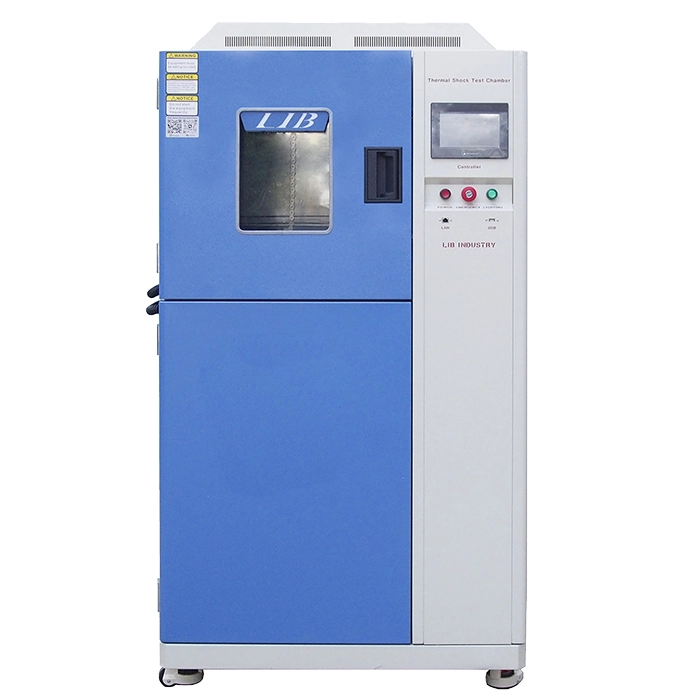
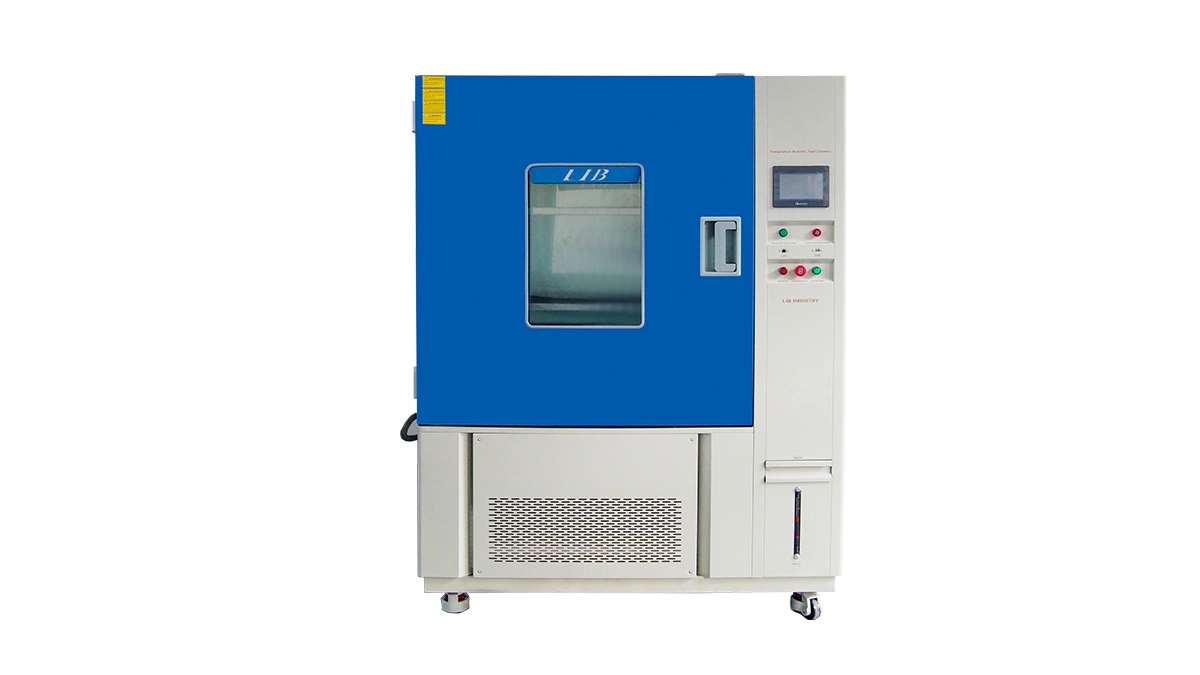
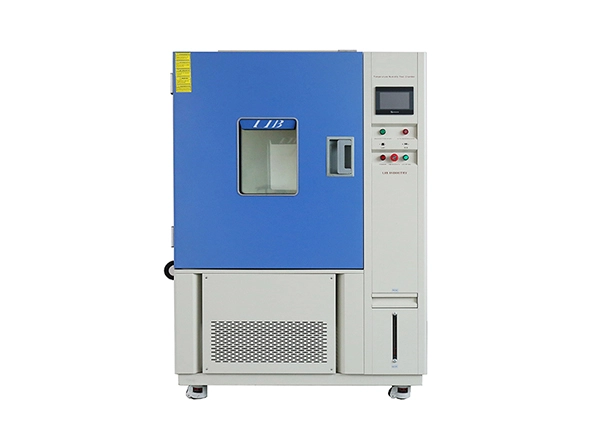
100L,225L,...,1000L,Suitable for regular test pieces |  | |
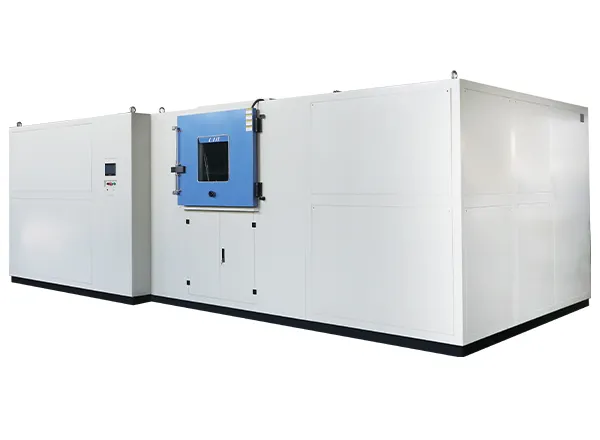
Walk-in Temperature Humidity Chamber | From 5m³ to 100m³,Suitable for large-scale testing and full machine testing. |  |
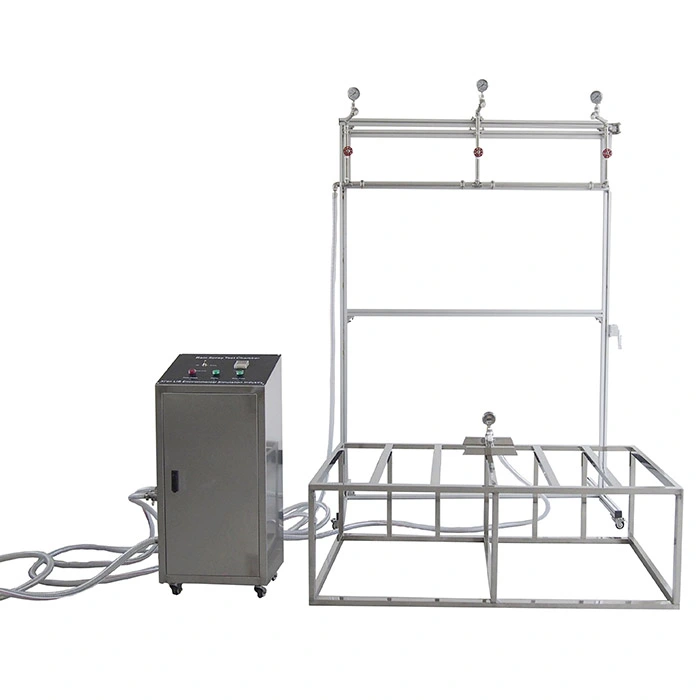
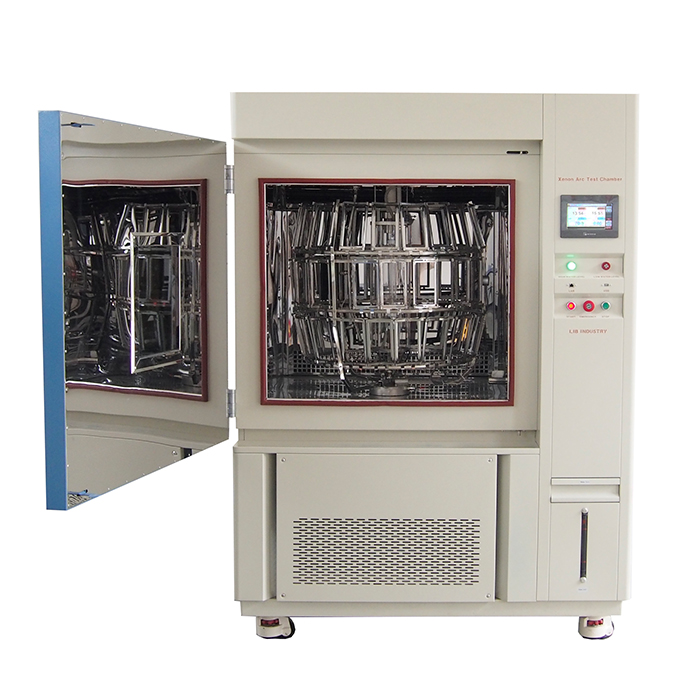
Multi-function Chambers | Temperature & humidity combined with salt spray, xenon, UV testing... |  |
The LIB industry also offers more customization options: test holes, controllers, performance ranges, and so on...
Instead of scheduling time in a centralized test facility, engineers can observe material behavior, condensation effects, or component deformation in real time, directly next to their workstation.
This immediate feedback loop dramatically improves design iteration speed.
Despite their size, benchtop environmental chambers are designed to meet strict international standards, including IEC, ISO, and MIL-STD test requirements.
Precision is not sacrificed — it is concentrated.
From electronics reliability testing to material research, a single tabletop environmental testing system can serve multiple departments, maximizing utilization and ROI.
A high-quality benchtop environmental system can support testing in accordance with major international standards, such as:
IEC 60068 series
ISO 16750 (selected test conditions)
MIL-STD-810 (method-dependent applications)
Compliance ensures that data generated during R&D is not only fast, but also reliable and transferable to later qualification stages.
What temperature range does a benchtop environmental chamber typically cover?
Most benchtop systems operate from −70/-40/-20°C to +150°C, suitable for the majority of R&D and screening tests.
Is accuracy comparable to larger environmental systems?
Yes. When properly designed, a small climate chamber can achieve temperature and humidity stability comparable to large installations.
What power supply is required?
Benchtop environmental testing systems are usually compatible with standard 110V or 220V laboratory power, depending on configuration.
How do I choose the right benchtop model for my lab?
Key factors include sample size, required temperature/humidity range, ramp rate, applicable standards, and available lab space.
Looking for a benchtop environmental testing solution that fits your laboratory space, test standards, and long-term operation needs?
LIB industry provides a complete lifecycle service to ensure stable, reliable performance from day one:
On-site installation and operator training
A 3-year warranty for long-term confidence
Lifetime technical support and spare parts availability
Fast, responsive English-speaking after-sales service
From initial consultation to long-term operation, our team supports your laboratory throughout the entire equipment lifecycle, helping you achieve accurate, repeatable test results with confidence.
Contact LIB industry today inquiry@libtestchamber.com to discuss your benchtop environmental testing application or request a technical proposal tailored to your requirements.
.webp "How to Use an Accelerated Weathering Test Chamber to Evaluate Recycled Plastic Durability?")
 English
 русский
 français
 العربية
 Deutsch
 Español
 한국어
한국어 italiano
 tiếng việt
 ไทย
ไทย Indonesia