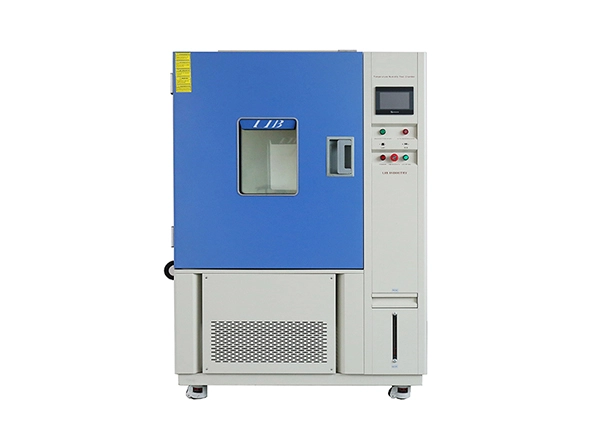
Composite materials are highly sensitive to temperature and humidity. Before conducting mechanical tests such as tensile, compression, or bending, environmental conditioning is crucial to ensure reliable and reproducible results. Minor variations in temperature or humidity can significantly impact material performance, particularly in high-end applications like aerospace and deep-sea exploration.
For aerospace, deep-sea, and extreme environment applications, -70℃ is not just a low temperature—it represents a realistic simulation of harsh operating conditions. Only a temperature and humidity chamber capable of reliably reaching -70℃ can accurately evaluate the low-temperature performance of composite materials.
Conventional chambers often struggle under extreme low temperatures, resulting in:
Large temperature drift affecting test accuracy
Failure of humidity control due to frosting
Slow cooling rates, extending test cycles
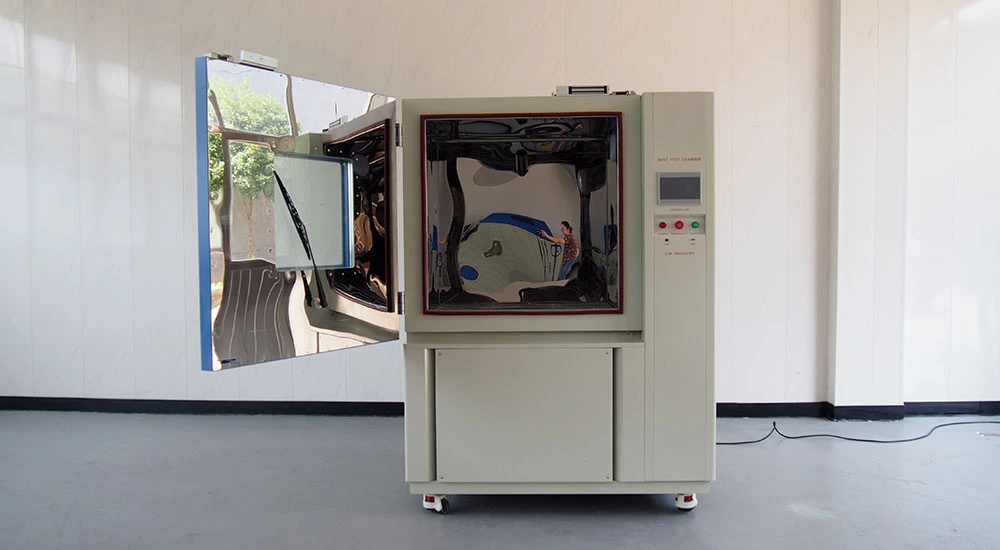
A high-quality temperature and humidity chamber can overcome these limitations. LIB industry’s ultra-low temperature humidity chambers provide a stable, precise, and reproducible testing environment, ensuring reliable composite materials testing results.
Achieving ultra-low temperatures relies on cascade refrigeration technology. Compared with single-stage compressors, cascade systems can:
Stably reach -70℃
Achieve rapid cooling rates
Use environmentally friendly refrigerants
LIB industry cascade refrigeration systems ensure rapid, stable cooling from room temperature to -70℃, guaranteeing the accuracy and efficiency of composite materials mechanical testing.
Low temperatures make humidity control challenging, as moisture tends to freeze. Selection criteria include:
Anti-frost design
Fast-response dehumidification
Precision chamber sealing and heat-stress-resistant materials
LIB industry temperature and humidity chambers feature multi-layer vacuum insulated observation windows and high-density polyurethane insulation, maintaining stable humidity even at -70℃.
Referenced Standards: ASTM D5229, GB/T 2573
Forced air circulation design ensures uniform temperature and humidity across the chamber
LIB industry chambers are optimized for airflow distribution, achieving ±0.5℃ temperature uniformity to ensure consistent test results for all composite material samples.
 |  | |||
Model | TH-100 | TH-225 | TH-500 | TH-1000 |
Interior Volume | 100L | 225L | 500L | 1000L |
Heat load | 1000W | |||
Temperature Range | A : -20℃ ~ +150 ℃ B : -40℃ ~ +150 ℃ C: -70℃ ~ +150 ℃ | |||
Temperature Fluctuation | ± 0.5 ℃ | |||
Temperature Deviation | ± 2.0 ℃ | |||
Humidity Range | 20% ~ 98% RH | |||
Humidity Deviation | ± 2.5% RH | |||
Cooling Rate | 1 ℃ / min | |||
Heating Rate | 3 ℃ / min | |||
Controller | Programmable color LCD touch screen controller,PC Link, LAN interface for remote control | |||
Cooling system | Mechanical compression refrigeration system | |||
Refrigerant | Environmentally friendly refrigerant,compliant with the GWP standards requirements | |||
Water supply system | Automatic water supply; Water purification system | |||
Interior Material | SUS304 stainless steel | |||
Using PT100 high-precision sensors ensures accurate temperature and humidity measurements.
Supports USB data export and remote control, meeting laboratory accreditation requirements and ensuring full traceability of experimental data.
Optimized internal layout allows efficient placement of multiple composite material specimens while maintaining airflow uniformity.
LIB industry offers customizable sample racks to maximize space utilization and test efficiency for batch composite testing.
Sample Preparation: Cut composite material specimens to standard dimensions according to ASTM or GB/T guidelines and label each sample.
Environmental Conditioning: Place samples in the temperature and humidity chamber at the target temperature (e.g., -70℃) and humidity, allowing the material to reach equilibrium.
Mechanical Testing: Conduct tensile, compression, or bending tests under stable conditions to ensure reliable data.
Data Recording and Analysis: Use built-in sensors or external devices to monitor temperature and humidity, generating a complete traceable data chain.
ASTM D5229 / D5529M: Moisture absorption and mechanical performance testing for composite materials
GB/T 2573: Environmental testing methods for composite materials
ISO 9142 / ISO 14126: Conditioning and environmental performance testing
LIB industry chambers support full environmental simulation and data recording, ensuring compliance with international and domestic testing standards for research and quality certification purposes.
Ultra-low temperature chambers consume high power; confirm laboratory electrical capacity in advance.
Cascade refrigeration systems generate significant heat; provide adequate maintenance and ventilation space.
Extreme low-temperature equipment is complex; evaluate manufacturer maintenance and support capabilities.
Choosing LIB industry temperature and humidity chambers ensures:
3-year warranty
Lifelong technical support
24/7 English-speaking service
Globally stocked spare parts
Professional commissioning and installation
Guaranteeing safe, efficient, and continuous operation for every composite materials test.
To support global users, LIB industry temperature and humidity test chamber controllers are supplied with English and Chinese interfaces as standard, ready for immediate use at no extra cost.
Optional languages such as French, German, Russian, and Polish are available upon request, helping users operate the chamber smoothly in different regions.
Yes. Real-time curve display is a standard feature of LIB industry temperature and humidity test chambers.
Temperature and humidity curves are generated and displayed during the test process, allowing users to clearly monitor environmental changes. Data is automatically recorded once per minute, with continuous storage supported for up to three years, ensuring stable, complete, and traceable test data.
For standard test ports or regular viewing window adjustments, there is no impact on delivery time compared to standard temperature and humidity test chamber models.
For special custom designs, production is arranged according to technical requirements to ensure timely delivery.
If an optical glass viewing window is required, the delivery time is typically extended by 5–10 days, with close coordination to minimize waiting time.
The standard temperature change rate of LIB industry temperature and humidity test chambers is 5–10 °C/min.
For advanced applications, customized solutions can achieve 20 °C/min or higher, fully supporting non-standard requirements for accelerated and high-demand environmental testing.
Conclusion and Call to Action
If your laboratory is planning -70℃ environmental simulation for composite materials testing, contact LIB industry technical experts to receive a customized selection report, ensuring every mechanical test is efficient, accurate, and safe.

 English
 русский
 français
 العربية
 Deutsch
 Español
 한국어
한국어 italiano
 tiếng việt
 ไทย
ไทย Indonesia