Moisture-induced failures are among the most insidious risks in electronics. They rarely manifest immediately but accumulate silently, eventually causing costly defects. Common manifestations include:
Solder joint corrosion,conductive Anodic Filament (CAF) growth, popcorn cracking,electrochemical migration, micro-crack propagation, compromising structural integrity
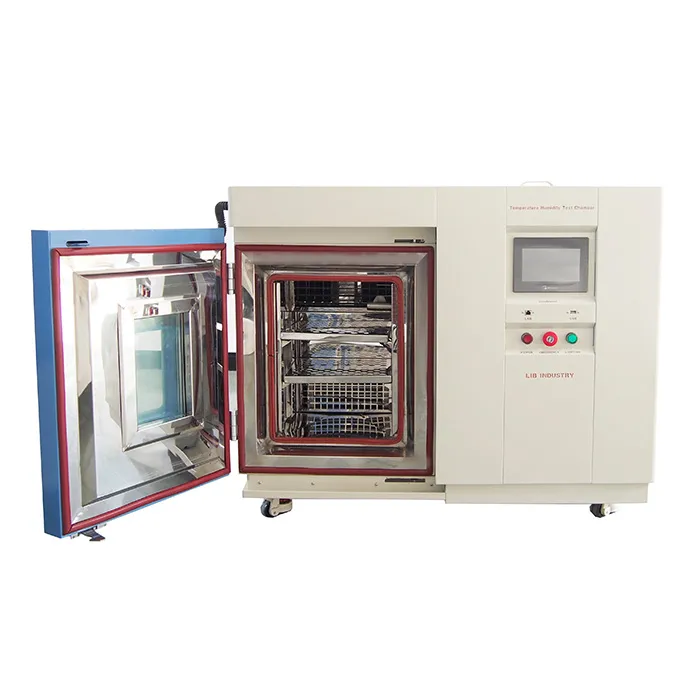
This is why the Small Benchtop Humidity Chamber from LIB industry has become an essential tool for engineers. Compact, precise, and programmable, it allows rapid, controlled simulation of high-humidity and high-temperature conditions in a laboratory or office environment, helping teams detect moisture-related failure modes early in the design process.
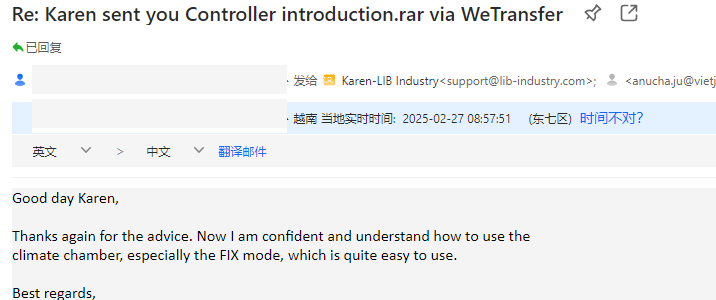
A client from Vietnam recently purchased the TH-50 Small Benchtop Humidity Chamber for electronic product testing. They reported that the chamber was straightforward to operate, especially appreciating the ease of using the FIX mode, which allowed them to run precise humidity tests confidently.
High temperature and high humidity interact to accelerate chemical reactions inside electronic assemblies. Examples include:
Solder corrosion under prolonged 85°C / 85% RH exposure
Delamination of conformal coatings due to moisture ingress
Oxidation of exposed traces and pads
Such conditions are routinely simulated in accelerated life testing protocols, such as JEDEC JESD22-A101 and 85/85 double-eight-five testing.
Small environmental chambers allow engineers to replicate these micro-environment stresses with precision, producing repeatable, audit-ready data critical for early R&D decisions.
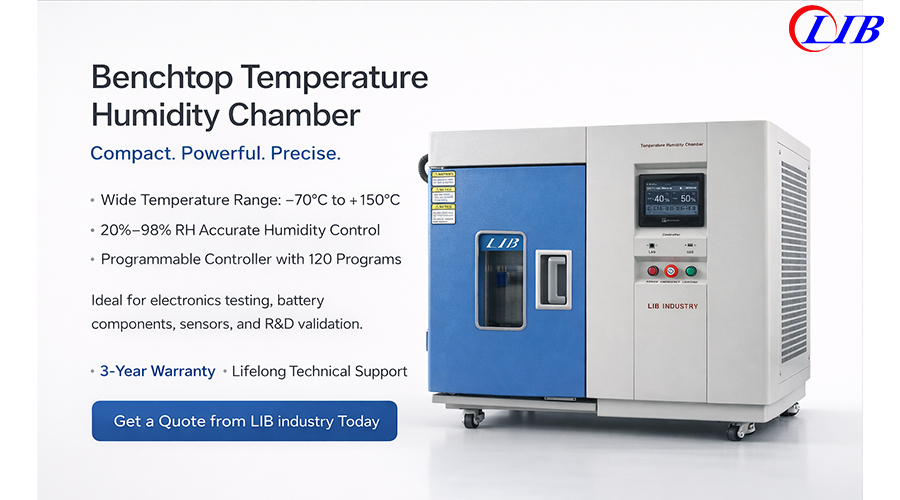
The Small Benchtop Humidity Chamber is a compact environmental test chamber designed to simulate high-humidity and high-temperature conditions in a controlled micro-environment. It allows engineers to accelerate moisture-related failure modes during early R&D phases.
Key Highlights:
Purpose: Rapidly test PCBA, sensors, MEMS, and moisture-sensitive components
Design: Space-efficient, low-noise, and office-friendly
Control: Programmable profiles with data logging and remote monitoring
Value: Enables 24–48 hour accelerated validation cycles, helping teams identify potential failures before full-scale production
This benchtop temperature humidity chamber is an essential tool for preventing moisture-induced failures, providing a tangible reliability advantage in product development.
Choosing the right benchtop climatic chamber directly impacts product reliability and testing efficiency.
|
| |||
| Model | TH-50 | TH-80 | ||
| Internal dimension (mm) | 320x350x450 | 400x400x500 | ||
| Overall dimension (mm) | 800x1050x950 | 900×1100×1000 | ||
| Temperature range | -20/-40/-70℃ ~ +150 ℃ | |||
| Temperature fluctuations | ± 0.5 ℃ | |||
| Humidity Range | 20%~98 % | |||
| Temperature deviation | ± 2.0 ℃ | |||
| Temperature Sensor | PTR Platinum Resistance PT100Ω/MV A-class | |||
| Temperature Resolution | ± 0.001 ℃ | |||
| Exterior Material | Steel Plate with A protective coating | |||
| Interior Material | SUS 304 stainless steel | |||
A suitable chamber must meet the full range of industry-standard testing requirements, including:
85°C / 85% RH testing for accelerated stress evaluation
40°C / 93% RH for storage condition simulation
JESD22-A101 preconditioning for moisture-sensitive devices
Long-duration steady-state testing to detect latent failure modes
LIB industry advantage:
Wide temperature range from -20°C to +150°C, with optional -40°C / -70°C for specialized testing
Humidity coverage 10/20% to 98% RH, sufficient for almost all electronics testing needs
High environmental stability (±0.5°C) ensures consistent results across multiple cycles
Advanced PID control algorithm maintains precise setpoints for both temperature and humidity
Benefit: Engineers can confidently replicate real-world stress conditions in the lab, identify potential failures early, and ensure compliance with all mainstream reliability standards. This reduces costly redesigns and improves first-pass yield.
Even small benchtop chambers can suffer from uneven conditions:
Edge condensation affecting sample corners
Dead air zones causing inconsistent stress
Localized overheating or over-humidity spots
LIB industry design advantage:
Optimized forced-air circulation system ensures every part of the sample experiences the same environmental stress
Corrosion-resistant stainless steel interior guarantees durability over long-term testing
Balanced airflow architecture avoids hot or cold spots
Compact volume with controlled humidity distribution maximizes precision
Benefit: Every component or PCBA face is subjected to identical conditions, producing repeatable, reliable, and audit-ready data, which is critical for quality assurance and regulatory compliance.
Modern R&D demands chambers that not only test but also document and monitor every step:
Programmable test profiles with multiple segments
Multi-step humidity cycling to simulate realistic environmental changes
Data export to USB or network for analysis and traceability
Remote monitoring and real-time alerts
Audit trail functionality for ISO and quality standards
LIB industry advantage:
Large 7-inch touchscreen programmable controller for intuitive operation
120 programs × 100 segments, supporting complex test routines
USB & Ethernet connectivity for seamless data logging and integration
Multi-language interface and real-time remote monitoring
Benefit: Engineers gain full control over test procedures, with the ability to track, reproduce, and validate results for audits, regulatory submissions, and internal QA — reducing human error and ensuring consistent product reliability.
A chamber may be technically capable but impractical for daily R&D use if it is bulky, noisy, or energy-inefficient.
Essential practical requirements:
Compact and space-efficient footprint
Energy-saving operation for cost-effective testing
Low operational noise suitable for office or lab environments
Easy installation and plug-and-play usability
LIB industry design focus:
Compact design fits comfortably on benches or in small labs
Efficient refrigeration system minimizes electricity usage while maintaining precision
Low noise operation ensures a comfortable working environment
Ready-to-use installation means teams can start testing immediately without special setup

For larger-scale or specialized testing, LIB industry also offers:
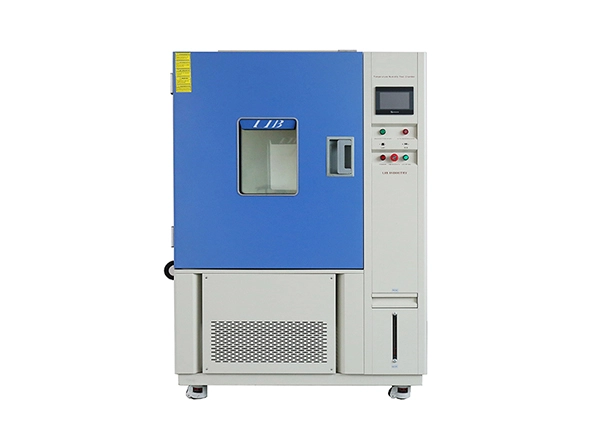
Standard Temperature & Humidity Test Chambers – suitable for larger batch validation
Walk-In Temperature & Humidity Chambers – accommodate full-size products or operator-accessible environmental simulations
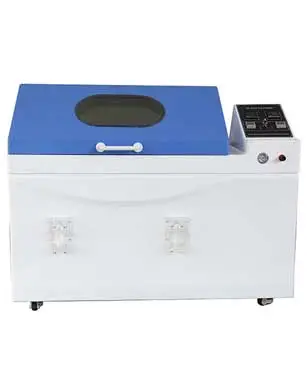
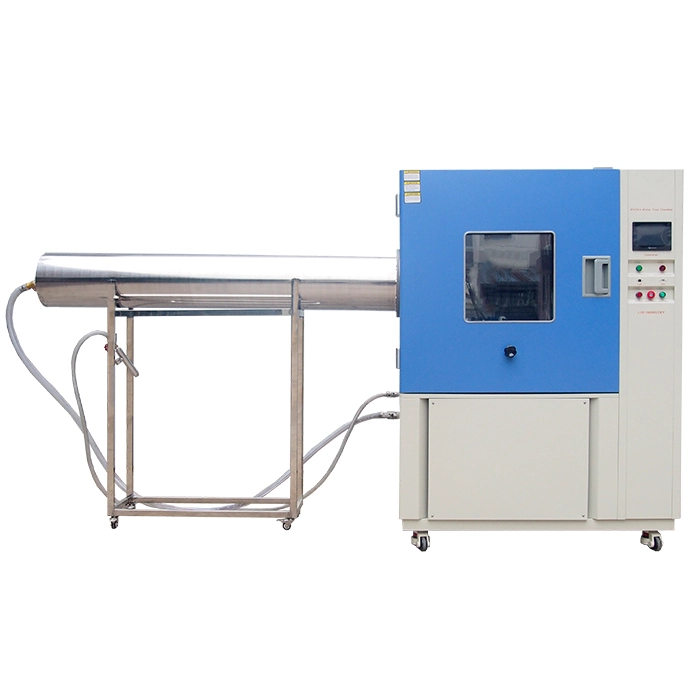
Walk-in chambers can be equipped with:Blowing sand and dust,Water/spray exposure,Vibration testing,UV/xenon,Salt spray corrosion
LIB industry provides a complete spectrum from benchtop to walk-in chambers, enabling teams to select the right chamber for every stage of development — from early design validation to full-scale environmental qualification.
Detect blistering, cracking, or delamination under high humidity
Ensure protective coatings perform reliably
Evaluate humidity-induced offset in precision sensors
Enable accurate calibration for real-world performance
Simulate humid shipping conditions
Verify packaging integrity before deployment
Validate moisture-sensitive components prior to reflow soldering
Prevent popcorn failures and ensure JEDEC compliance
These scenarios demonstrate how benchtop chambers enable small-batch, high-precision R&D testing that is otherwise impractical with larger, shared facilities.
Ensure your electronics are protected from moisture-induced failures — contact LIB industry to explore specifications, request customized configurations, or schedule a sample testing demonstration.
 English
 русский
 français
 العربية
 Deutsch
 Español
 한국어
한국어 italiano
 tiếng việt
 ไทย
ไทย Indonesia