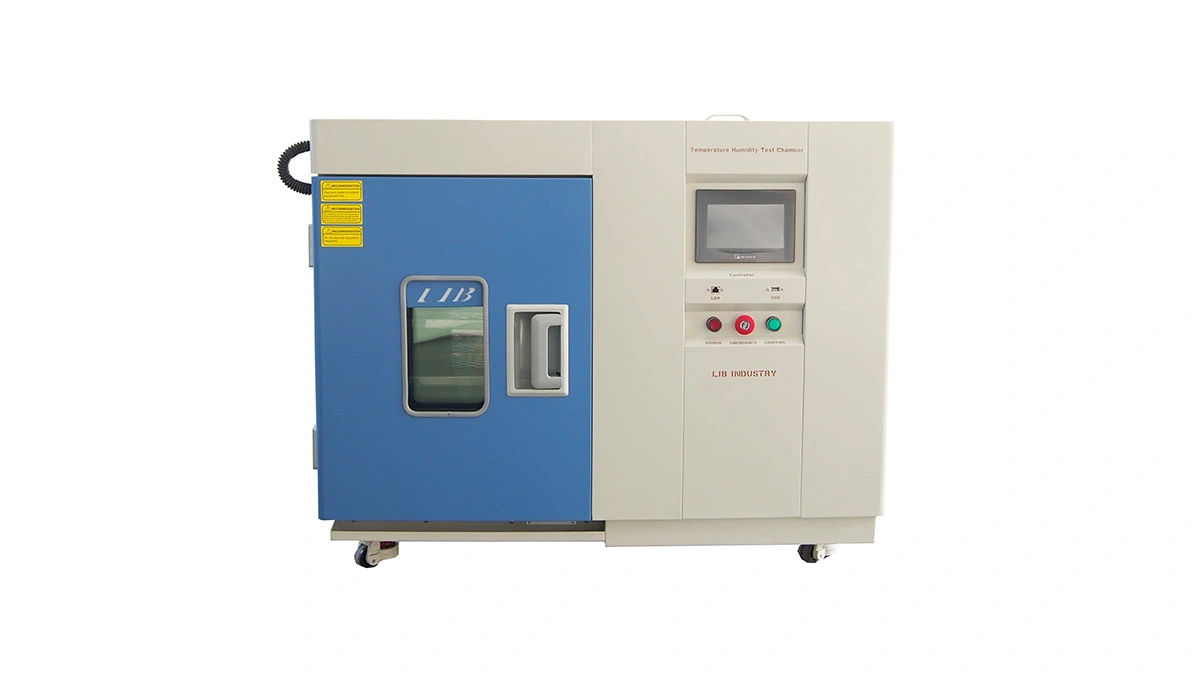
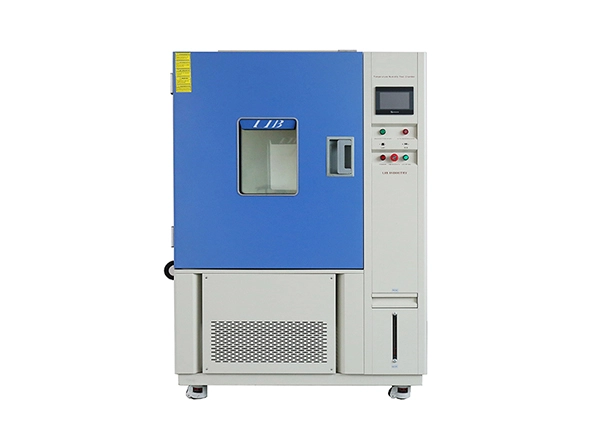
Concrete drying, shrinkage and long-term durability depend directly on the interaction of temperature, humidity and chemical exposure. For laboratory teams working on drying kinetics, curing protocols or durability validation, three complementary test families are essential: thermal cycling, humidity / wet-dry cycling, and salt / cyclic corrosion testing.
LIB’s environmental chambers are engineered to cover these needs with programmable control, accurate data logging and workflows that map to common standards used in concrete research and QC.
LIB offers a coordinated set of climate and corrosion chambers that let labs:
Reproduce controlled drying environments (e.g., +15 °C → +25 °C, 20% → 75% RH) to produce repeatable drying curves.
Accelerate thermal stress (temperature cycles) to reveal micro-cracking and altered moisture pathways.
Simulate chloride/chemical exposure using salt spray / cyclic corrosion protocols and then re-test moisture & damage under controlled humidity.
These capabilities are useful for R&D, material qualification, curing optimization and structural durability studies.
Test family | Primary aim for concrete | Typical lab outputs |
Thermal cycling | Reveal crack initiation/propagation caused by repeated temperature swings; evaluate thermal-fatigue effects on drying path | Crack maps, dimensional change, acoustic/strain monitoring |
Humidity / Wet-Dry cycling | Quantify drying rate, equilibrium moisture, shrinkage and surface scaling under controlled RH/T | Drying curves (mass vs time), shrinkage vs time, internal RH profiles |
Salt / Cyclic corrosion | Accelerate chloride ingress & steel corrosion risk; evaluate protective admixtures/coatings | Surface scaling, chloride profiles, electrochemical corrosion metrics |
Cure & baseline — Standard curing to required age; record initial mass and dimensions.
Controlled drying matrix — Use Temperature & Humidity chambers to run groups at +15 / +20 / +25 °C × RH = 20% / 50% / 75% (replicates per group). Continuous mass logging and periodic length / image capture.
Thermal-cycle challenge — Selected specimens exposed to programmed temperature cycles (day/night, rapid ramps) to observe if thermal loading changes drying rate or crack development.
Salt exposure (optional) — Move specimens to salt fog / cyclic corrosion chamber for accelerated chloride dosing; return to humidity chamber and continue monitoring for combined-effect assessment.
Role | Suggested model | Key specs | |
Primary — controlled drying | Temp: −20 → +150 °C (options); Humidity: 20%–98% RH; Humidity dev: ±2.5% RH; Temp stability ±0.5 °C; Touch controller; LAN/CSV export. |
| |
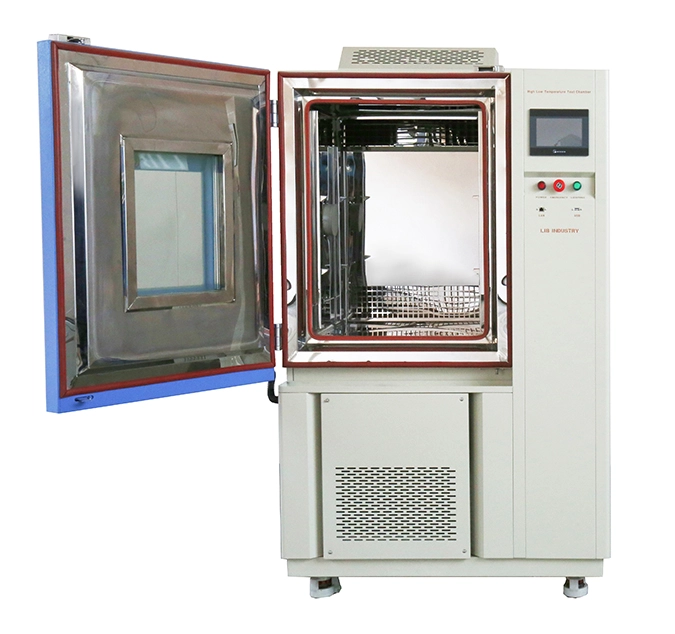
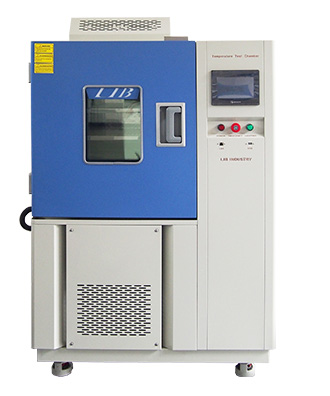
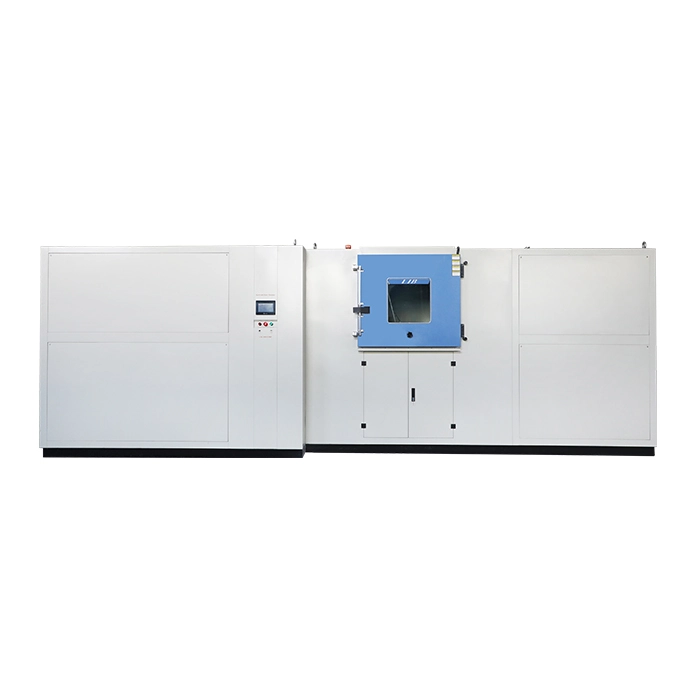
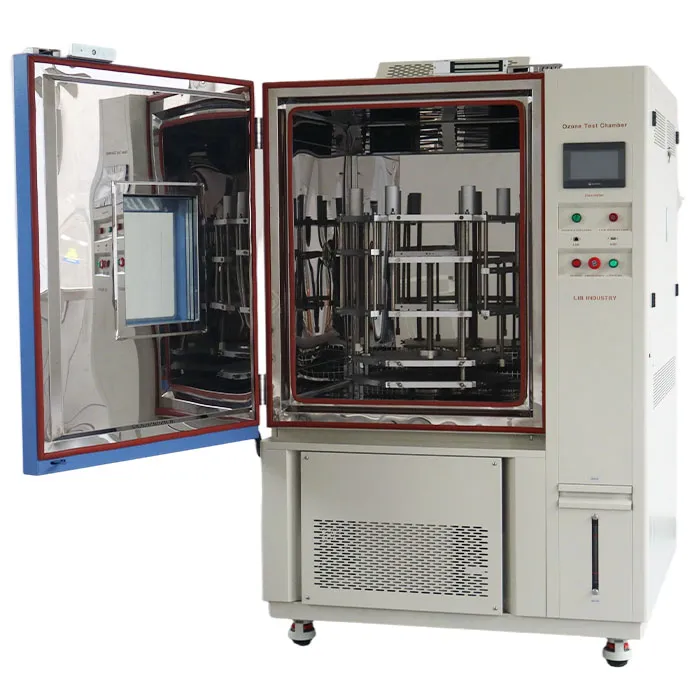
Thermal cycling | Temp range options −20/−40/−70 → +150 °C; Ramp: typical 5 °C/min (options for faster ramps); Precise program control. |
| |
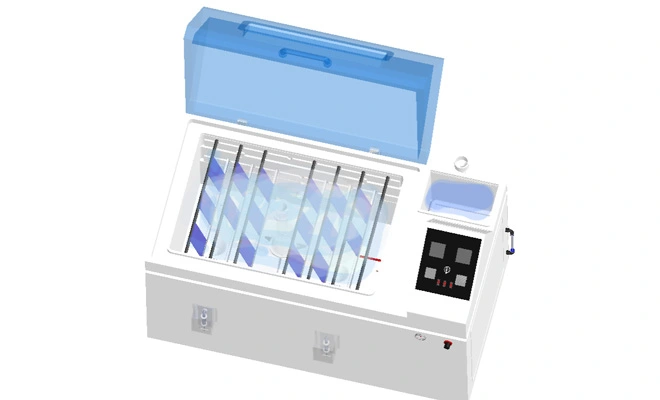
Corrosion / salt | NSS/CASS/CCT capable; Spray control; Cycle programs per ASTM B117 / G85 / ISO 9227; Humidity control for cyclic tests. | 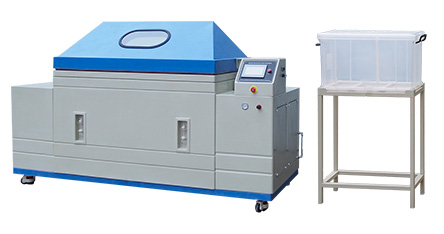 |
Notes: interior dimensions and low-temperature options vary by model.
Warranty: typical LIB offering includes a 3-year warranty on major components; confirm scope (parts vs parts+labor).
Calibration: factory calibration certificates included; third-party traceable calibration available on request.
Service: global service partners in many regions — confirm local SLA, spare-part lead times and availability of preventive maintenance contracts.
Q — Will the TH series meet the +15 → +25 °C & 20%→75% RH window?
A — Yes. LIB TH models support RH down to ~20% and fine temperature control; specify desired stability and they will confirm.
Q — How do we do continuous mass logging inside the chamber?
A — Integrate an internal balance via a sealed feedthrough or request factory-fitted weighing trays; ensure chamber cable port size is adequate.
Q — What standards are supported for salt / corrosion tests?
A — LIB units run ASTM B117 (NSS), ASTM G85 (cyclic), ISO 9227 and customer-defined cyclic programs.
Q — Is water quality for humidifiers a problem?
A — Use demineralized water and optional purification kits. Routine tank maintenance (cleaning / filter replacement) is recommended.
 English
 русский
 français
 العربية
 Deutsch
 Español
 한국어
한국어 italiano
 tiếng việt
 ไทย
ไทย Indonesia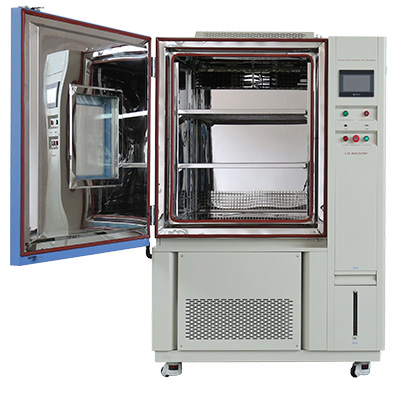
.webp "UV Accelerated Weathering Tester")