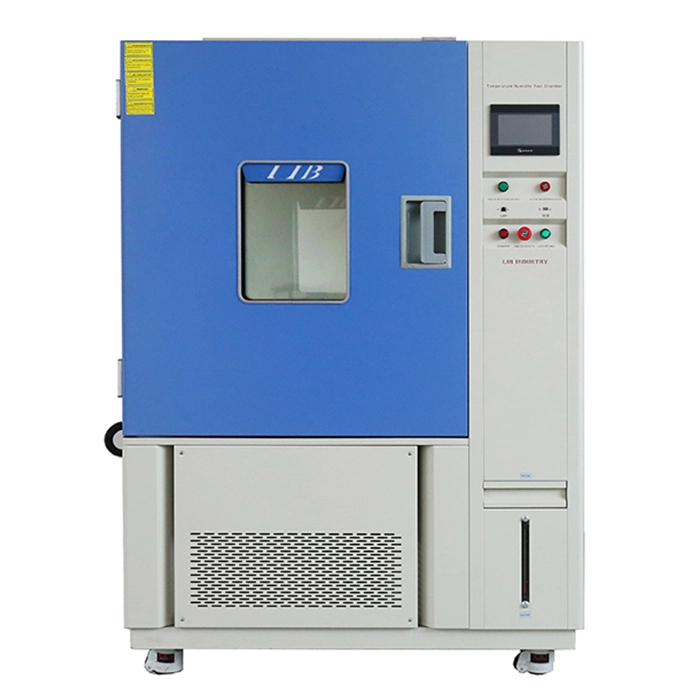
Choosing the right temperature humidity laboratory climatic test chamber is not about selecting the widest temperature range or the most complex configuration.
For laboratories working with moisture-absorbent materials, testing success depends far more on humidity accuracy, temperature stability, and long-term repeatability.
Materials such as paper, textiles, fibers, powders, and pharmaceutical packaging react quickly to changes in humidity. Even small RH deviations can affect absorption behavior, mechanical properties, or shelf-life predictions. In these applications, extreme low-temperature capability adds cost without improving results.
This is exactly where a well-designed temperature and humidity test chamber from LIB industry delivers practical value.
Many laboratories still associate higher specifications with better performance. As a result, climatic test chambers capable of –70°C are frequently selected, even though real testing conditions rarely fall below 0°C.
For moisture-absorbent materials, most test standards focus on controlled humidity exposure between 0°C and 45°C, often over long durations. Ultra-low temperature systems increase energy consumption, maintenance requirements, and purchase cost — while doing little to improve humidity control.
LIB industry designs its temperature humidity laboratory climatic test chambers based on real laboratory applications, helping customers avoid over-specification and focus on usable performance.
Before selecting any temperature and humidity test chamber, the first step is understanding how it will actually be used.
LIB industry solutions are especially suitable for laboratories testing:
Paper, pulp, and packaging materials
Textiles, fibers, and nonwoven products
Hygroscopic powders and granules
Pharmaceutical products and moisture-sensitive packaging
Consumer goods exposed to humid storage or transport environments
These applications demand stable humidity, uniform airflow, and reliable operation over extended periods — not extreme thermal limits.
When testing moisture-absorbent materials, results rarely fail because of temperature.
They fail because humidity slowly drifts out of control.
This is the core problem LIB industry addresses when designing its temperature humidity laboratory climatic test chambers.
LIB industry chambers are built with humidity accuracy as a core requirement, not an optional feature. High-precision humidity sensors with long-term stability detect even small moisture changes, while responsive control algorithms keep relative humidity within a tight range during extended test cycles.
A balanced airflow circulation system distributes humidity evenly throughout the workspace. This ensures that samples on different shelves experience the same conditions, reducing variability and improving repeatability.
High humidity places constant stress on chamber materials and components. Over time, poorly designed systems suffer from corrosion, condensation, and performance degradation.
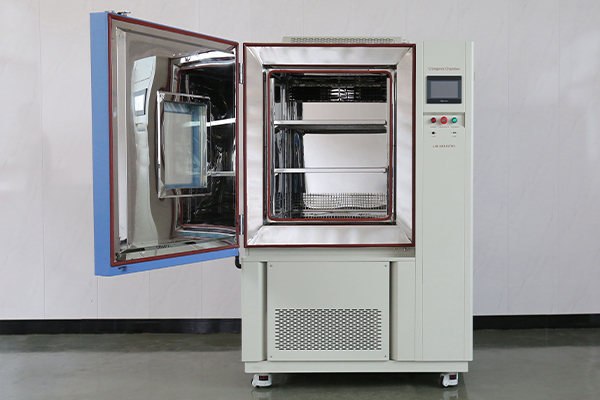
To prevent this, LIB industry uses SUS304 stainless steel interiors for corrosion resistance and long-term durability. The observation window is insulated and heated to prevent condensation, allowing samples to be monitored without opening the door. A sealed structural design further protects internal components from moisture exposure.
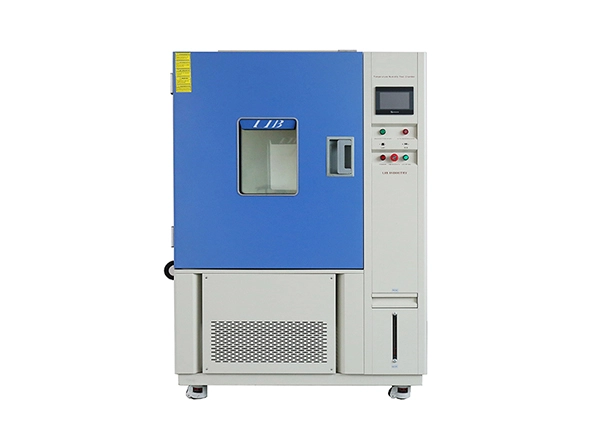
Reliable testing also depends on how easily a chamber fits into daily laboratory workflows. LIB industry chambers feature intuitive touchscreen controllers that support multi-step temperature and humidity programming.
Laboratories can create realistic exposure profiles — such as gradual humidity increases or long-term steady conditions — without constant manual adjustment. Test data can be exported via USB or RS485, making documentation and reporting easier for audits, validation, and regulatory review.
LIB industry chambers are optimized for mid-temperature, high-humidity testing between 0°C and 45°C. By eliminating unnecessary ultra-low temperature components, energy consumption is reduced during long-duration tests. Optimized compressor control maintains stable conditions while lowering operating costs.
A modular system design also simplifies maintenance, allowing routine cleaning and basic servicing to be handled quickly by laboratory technicians.
Cost efficiency does not come from cutting corners — it comes from focus.
LIB industry temperature humidity laboratory climatic test chambers concentrate engineering effort on the parameters that truly affect moisture-absorbent material testing: humidity accuracy, airflow uniformity, and structural reliability. Features that add cost but deliver no value in this application range are deliberately avoided.
The result is a temperature and humidity test chamber that delivers reliable data, lower energy consumption, and predictable long-term performance.
LIB industry supports laboratories worldwide with reliable delivery schedules and comprehensive service.
Standard configurations with short lead times
Remote installation guidance and technical support
12–24 month warranty with lifetime spare parts availability
Global service network for ongoing assistance
This support structure ensures that each temperature humidity laboratory climatic test chamber remains dependable throughout its service life.
Selecting a temperature humidity laboratory climatic test chamber for moisture-absorbent materials is not about reaching extremes. It is about maintaining control where test results are most sensitive.
If your laboratory prioritizes humidity accuracy, mid-temperature stability, and repeatable results, LIB industry delivers a temperature and humidity test chamber designed for the tests you actually run.
Precision is not about extremes — it is about consistency.
 English
 русский
 français
 العربية
 Deutsch
 Español
 한국어
한국어 italiano
 tiếng việt
 ไทย
ไทย Indonesia