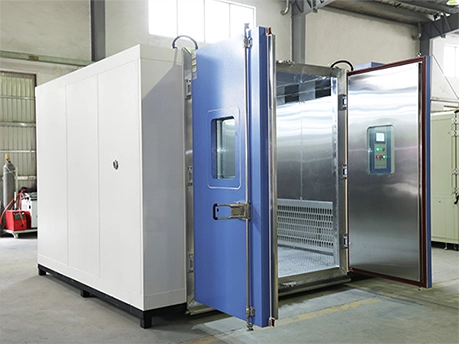
Designed in Compliance with MIL-STD-810 Method 510
Item | Procedure I – Blowing Dust | Procedure II – Blowing Sand |
Particle Size | < 150 μm | 150 – 850 μm |
Typical Media | Quartz powder, talcum powder, or similar fine dust | Natural sand or standardized test sand |
Air Velocity | 1.5 – 7 m/s | 1.5 – 29 m/s |
Test Temperature | Ambient 23°C ± 3°C; can be elevated to 40–50°C to simulate desert dust conditions | 23°C – 60°C; can be elevated to simulate extreme desert environments |
Exposure Duration | Typically 6-hour continuous cycle; can be extended to 24–72 hours as required | Typical 6-hour cycle; customizable per project; multiple cycles for durability evaluation |
Test Objective | Dust ingress protection and sealing verification | Abrasion resistance and impact resistance evaluation |
Typical Applications | Military communication equipment dust protection; UAV sensor housing sealing test; photovoltaic module dust durability | Military vehicle enclosure wear resistance; aerospace sensor sand protection; outdoor electronic equipment sand resistance testing |
Product Advantages – MIL-STD-810 Blowing Wind Environmental Test Chamber
1.Standard Compliance
Fully compliant with MIL-STD-810 Method 510 for blowing dust and sand.
Ensures your equipment meets rigorous military and industrial reliability standards.
2. Robust Construction
Workroom made of SUS304 stainless steel to resist high-speed sand and dust erosion.
Double rubber sealing prevents sand and dust leakage, extending service life.
3. Precise Environmental Control
Equipped with temperature probe, wind speed probe, and concentration probe for accurate real-time monitoring.
Multi-step test cycles programmable color LCD touch screen controller, supports remote operation and data logging.
4. High-Speed Sand & Dust Simulation
Centrifugal fan system creates high-speed airflow, blowing sand/dust into the workroom.Dust/sand circulates for uniform exposure.
Air velocity for blowing dust: 1.5 – 8.9 m/s; blowing sand: 18 – 29 m/s.
5. Automatic Sand & Dust Handling
Dust inlet with stepper motor and vibration system prevents caking.
Funnel-shaped dust collection and recycling system ensures dust is reused and evenly redistributed.
Dust return port allows removal of remaining particles after the test.
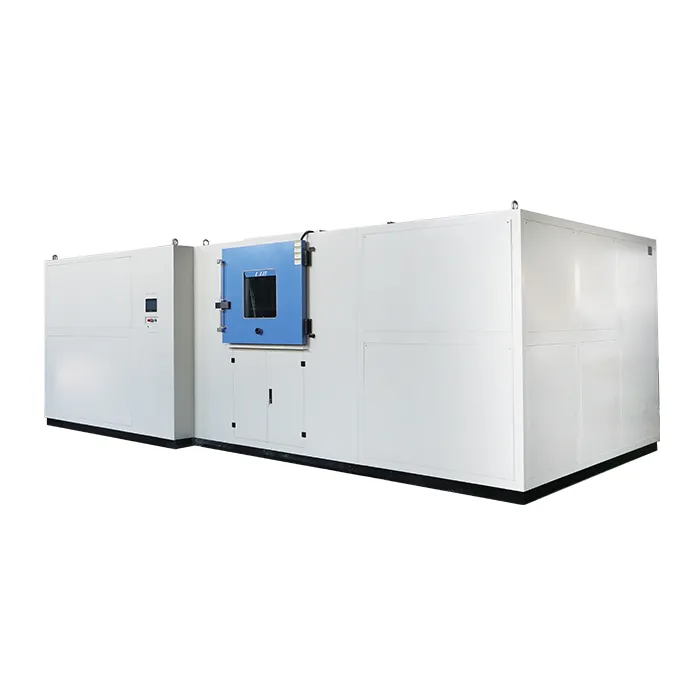
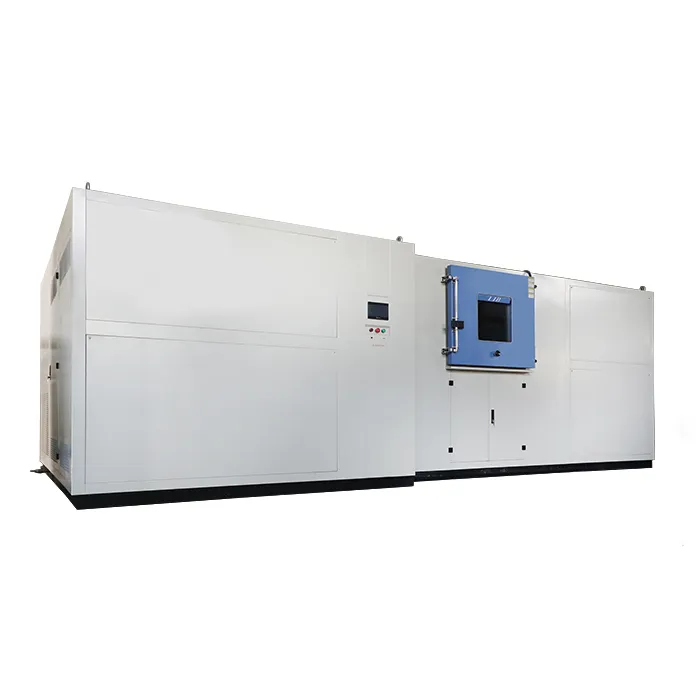
Specifications of MIL-STD-810 Blowing Wind Environmental Test Chamber
Model | DIM-1000 |
Internal Dimension | 1000*1000*1000mm D*W*H |
Overall Dimension | 3000*6100*2200mm D*W*H |
Interior Volume | 1000L |
Blowing Dust |
Air velocity | 1.5 -8.9m/s |
Concentration of dust | 10.7±7g/ m³ |
Dust particles | < 150μm |
Blowing Sand |
Air velocity | 18.0 -29.0m/s |
Concentration of sand | 0.18+0.2g/m³; 1.1+0.3g/m³; 2.2+0.5g/m³ |
Sand particles | 149μm - 600μm, 600μm - 850μm |
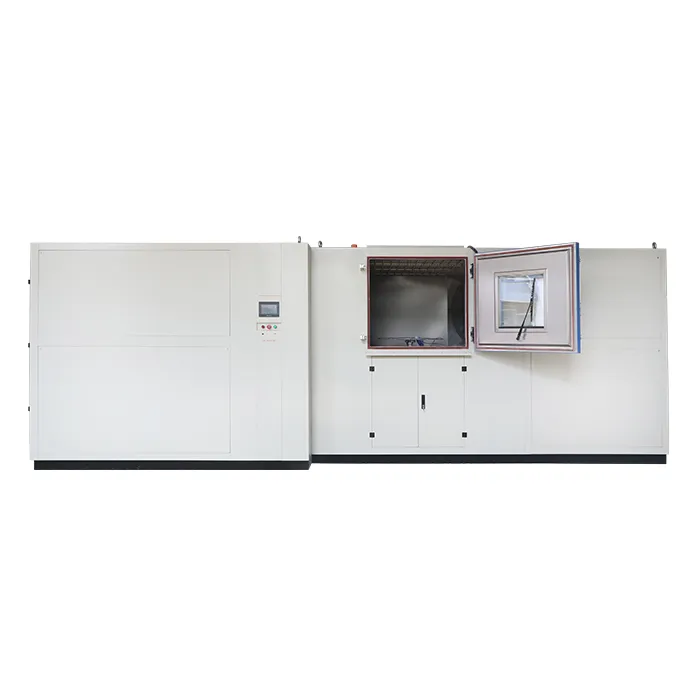
Controller | Programmable color LCD touch screen controller, Ethernet connection |
Testing Platform Diameter | 600mm |
Door Lock | Electromagnetic lock |
Testing Platform Speed | 1-7 r.p.m |
Dust Detector | Integrated dust detector |
Exterior Material | A3 Steel Plate with protective coating |
Interior Material | SUS304 stainless steel |
Standard | MIL-STD- 810 |
Key Components and Features of MIL-STD-810 Blowing Wind Environmental Test Chamber
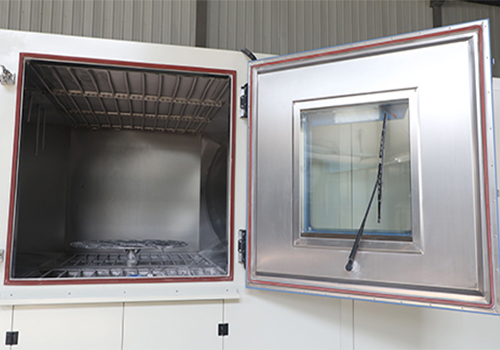
WorkroomSUS304 stainless steel for superior resistance against high-speed sand and dust erosion. Turntable: 1–7 r.p.m. for uniform exposure of test samples with a standard load of 50kgs. Observation Window: High-strength glass with dust-proof brush, ensuring clear visibility during testing.
| 
|
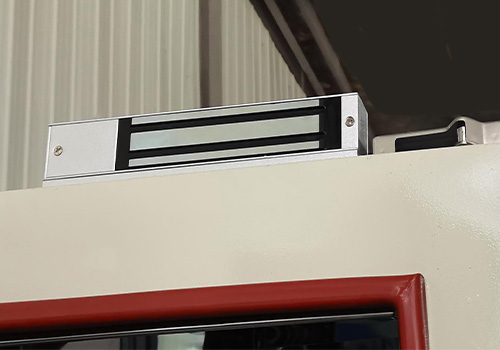
Electromagnetic LockGenerates a strong suction force to tightly attract the iron plate, effectively locking the door. This lock mechanism is designed for safety purposes, preventing the door from accidentally opening during the test, which could pose risks to the operator and affect the test results.
|  |
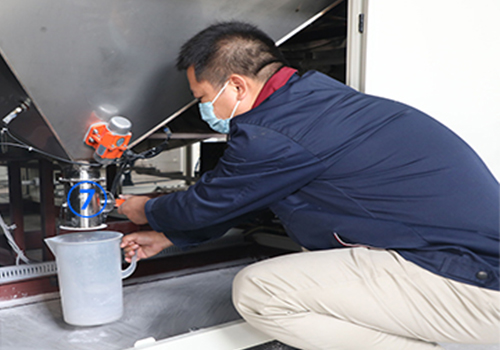
Dust & Sand Recovery PortFunnel-shaped collection at the bottom of the chamber. Function: Dust/sand that falls is collected and filtered through a mesh sieve, then re-injected into the workroom by the centrifugal fan for continuous recycling.
|  |
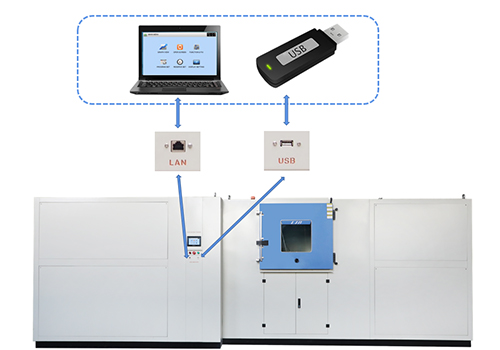
ControllerProgrammable color LCD touchscreen controller. Supports 120 programs with up to 99 segments each,control wind speed, particle concentration, and temperature. Remote connectivity via Ethernet for integration with laboratory systems.Real-time logging from temperature, wind, and concentration sensors.
|  |
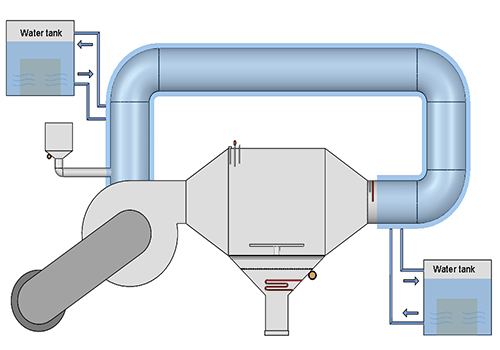
Pipe Cooling SystemCools high-speed airflow ducts to dissipate heat generated by friction from sand/dust in motion. water circulates around the duct creating a cooling jacket to maintain stable temperature.Prevents thermal damage to ducts caused by high-speed particle erosion.
|  |
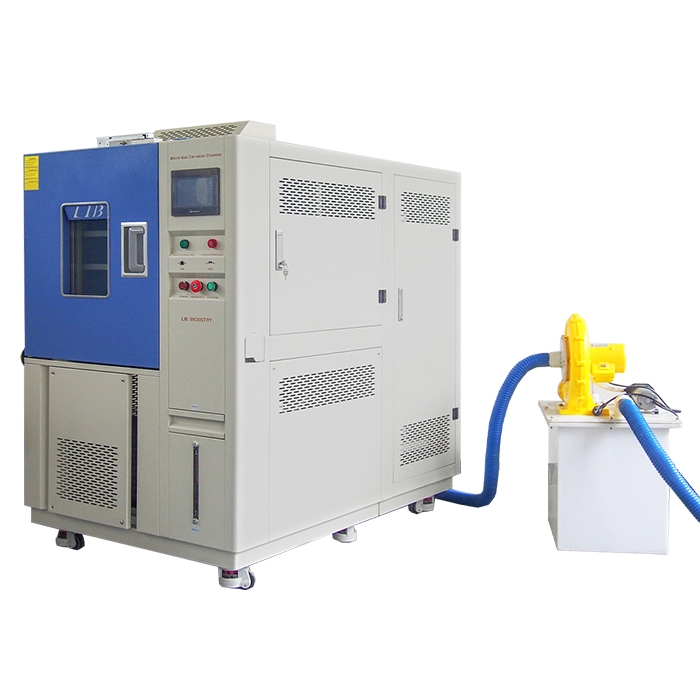
LIB industry provides free talcum powder (test dust) for initial testing and commissioning.
Standard accessories, operation guidance, and remote technical support are also included to ensure smooth installation and immediate test readiness
Work With LIB Industry
You will enjoy:
Precision manufacturing and strict quality control
Global installation and commissioning support
Professional technical consultation
3-year warranty, lifetime service and spare parts support
Contact LIB industry today to request technical specifications, project consultation, or a customized solution proposal.

 English
 русский
 français
 العربية
 Deutsch
 Español
 한국어
한국어 italiano
 tiếng việt
 ไทย
ไทย Indonesia

.webp "How Energy-Efficient Environmental Chambers Reduce Testing Cost Without Sacrificing Performance")