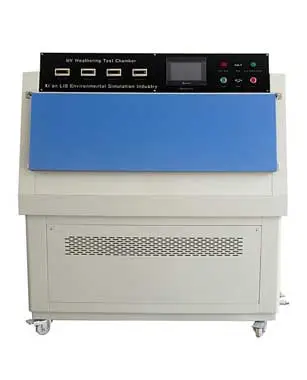
Electronics, lithium batteries, LED lighting, and photovoltaic (PV) modules often face harsh environments with extreme heat and high humidity. Without proper testing, these conditions can cause serious failures, including battery swelling, circuit shorts, LED degradation, or reduced PV efficiency. Such failures may lead to costly recalls, warranty claims, and loss of customer trust.
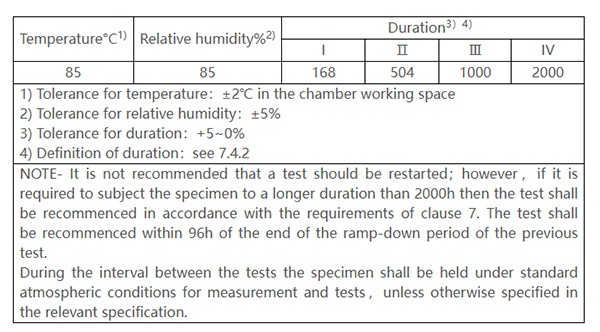
To prevent these risks, manufacturers rely on the Double 85 Test, an accelerated aging test that simulates 85°C ±2°C temperature and 85% RH ±3% humidity over extended periods. By combining this test with LIB industry's Damp Heat Chambers and PV Environmental Test Chambers, manufacturers can identify product vulnerabilities early, improve reliability, and ensure long-term performance in real-world conditions.
The Double 85 Test is designed to accelerate the aging process for electronic components and PV modules. High temperatures speed up chemical reactions inside materials, while high humidity promotes moisture ingress, corrosion, and insulation degradation. By maintaining these conditions continuously, manufacturers can simulate years of environmental exposure in just hundreds or thousands of hours.
Key benefits of the test include:
Weather resistance evaluation – Ensures products withstand tropical, humid, or coastal climates.
Sealing and enclosure verification – Detects potential leakage or enclosure weaknesses.
Electrical stability testing – Identifies early signs of shorts, insulation breakdown, or component failure.
Material durability assessment – Evaluates long-term performance of metals, plastics, and composites under heat and moisture stress.
Standards compliance:
Battery Standards: UL 2580, UL 2271, IEC 62660-2, UL 1642, UL 1973, SAE J2929, SAE J2464
Photovoltaic Standards: IEC 61215, IEC 61730
Automotive Electronics: SAE J2334, VW 80000
LED & Luminaire Material Testing: IEC 62717
For consumer electronics like smartphones or smart watches, 500 hours of Double 85 Testing is usually sufficient for hot and humid regions. For high-reliability products such as electric vehicle components or outdoor power systems, testing often exceeds 1,000 hours to guarantee long-term performance.
By applying this test early in the development process, manufacturers can reduce risks, avoid field failures, and optimize product designs before large-scale production.
Test Duration | Typical Applications | Notes |
168h | Small electronic devices | Basic verification |
504h | Smartphones, smart watches | Industry standard minimum |
1000h | Automotive electronics, photovoltaic panels | High reliability required |
2000h | Outdoor power equipment | Extreme reliability testing |
IEC 60068-2-67-2019 | ||
Different durations allow manufacturers to tailor testing to the specific reliability requirements of their products. Shorter tests can detect early failures in consumer electronics, while longer tests help preventing long-term failures and warranty issues.
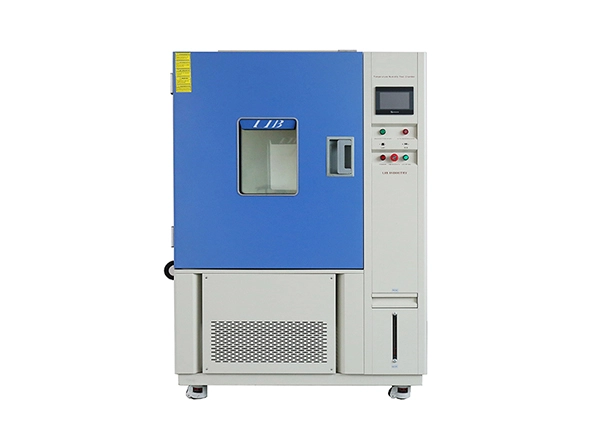
LIB industry offers two types of Double 85 Test Chambers, each designed to meet specific testing needs while sharing key features for precision, reliability, and efficiency.
Precise Temperature & Humidity Control: ±2°C temperature deviation, ±2.5% RH humidity deviation, simulating real-world aging conditions accurately.
Uniform Air Circulation: Advanced forced-air systems ensure consistent conditions, preventing hotspots or uneven moisture distribution.
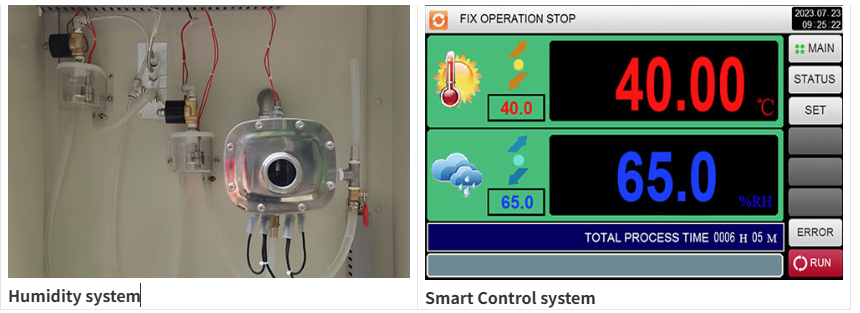
Real-Time Monitoring: Large observation windows with LED lighting and intuitive touchscreen PID controllers allow operators to monitor tests without interruption.
Safety & Reliability: Robust door seals, over-temperature protection, and grounding systems safeguard both operators and samples.
Remote Connectivity: Ethernet and USB interfaces support real-time data logging, remote control, and automatic report generation.
Energy Efficiency & Low Noise: Optimized circulation fans, compressors, and insulation reduce power consumption and maintain lab-friendly noise levels (<65 dB).
|  | ||||
| Name | Temperature Humidity Chamber | ||||
Temperature range | -20℃ ~+150 ℃ | ||||
Low type | A: -40℃ B:-70℃ C -86℃ | ||||
Humidity Range | 20%-98%RH | ||||
Temperature deviation | ± 2.0 ℃ | ||||
Heating rate | 3 ℃ / min | ||||
Cooling rate | 1 ℃ / min | ||||
Controller | Programmable color LCD touch screen controller, Multi-language interface, Ethernet , USB | ||||
Refrigerant | Environmentally friendly refrigerant, meeting GWP emission requirements | ||||
Interior material | SUS304 stainless steel | ||||
Standard configuration | 1 Cable hole (Φ 50) with plug; 2 shelves | ||||
Timing Function | 0.1~999.9 (S,M,H) settable | ||||
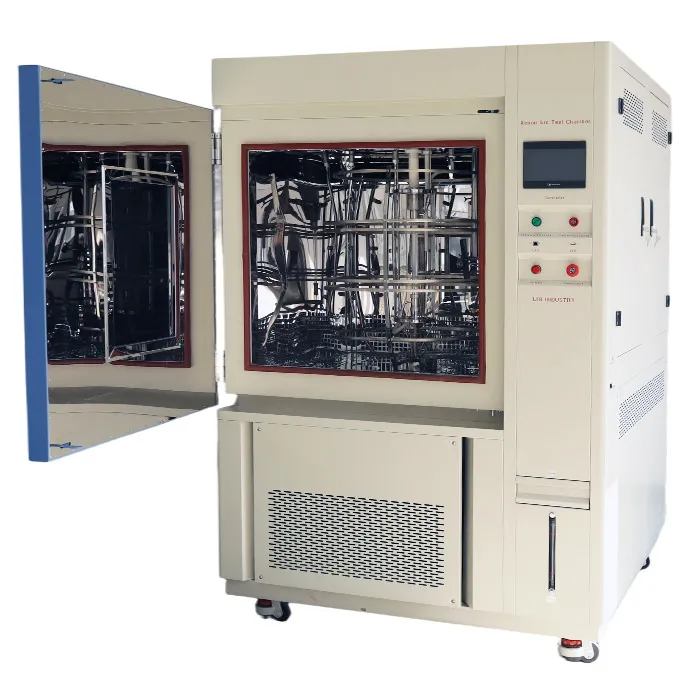
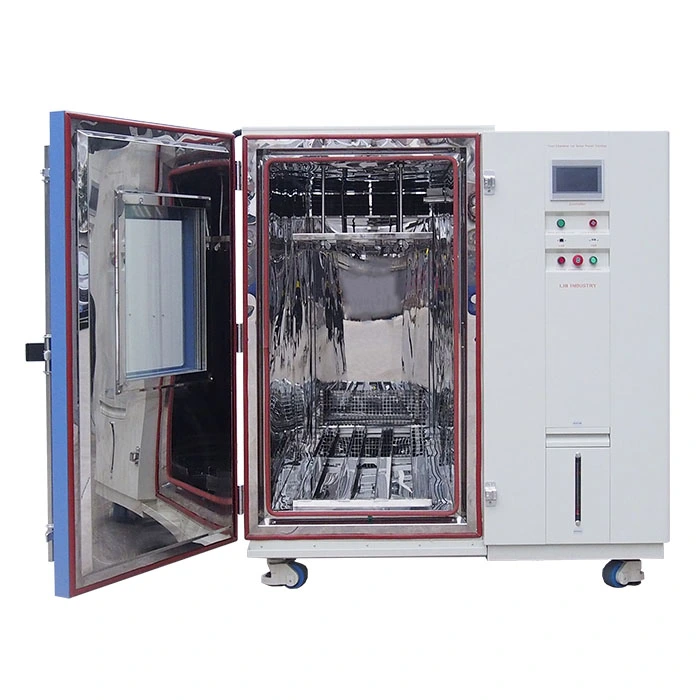
The Damp Heat Chamber (Temperature Humidity Chamber) is ideal for small to medium electronic devices, lithium batteries, and LED modules. It is designed to accelerate product aging under controlled 85°C/85% RH conditions, helping engineers detect vulnerabilities early and improve reliability.
Key Features and Benefits:
Flexible Sample Placement: Adjustable stainless steel shelves accommodate devices of different sizes and weights, with each shelf supporting up to 50 kg. Multiple shelves allow simultaneous testing of several small devices, improving laboratory throughput.
Operational Efficiency: PID touchscreen controllers support programmed cycles with multiple steps, enabling repeatable and precise testing while reducing manual intervention.
Cable Testing Capability: Integrated test holes (standard φ50 mm, customizable) allow devices to operate under real-world power conditions during testing, evaluating electrical stability under heat and humidity stress.
Energy-Efficient Cooling & Heating: French Tecumseh refrigeration compressors and high-precision chrome-nickel alloy heaters provide fast ramp rates—heating up to 3°C/min and cooling 1°C/min—ensuring accurate temperature control.
Safety & Durability: Robust door seals with concave-convex silicone strips prevent heat and moisture leakage. Interior made of SUS304 stainless steel resists corrosion, while over-temperature protection ensures operator and product safety.
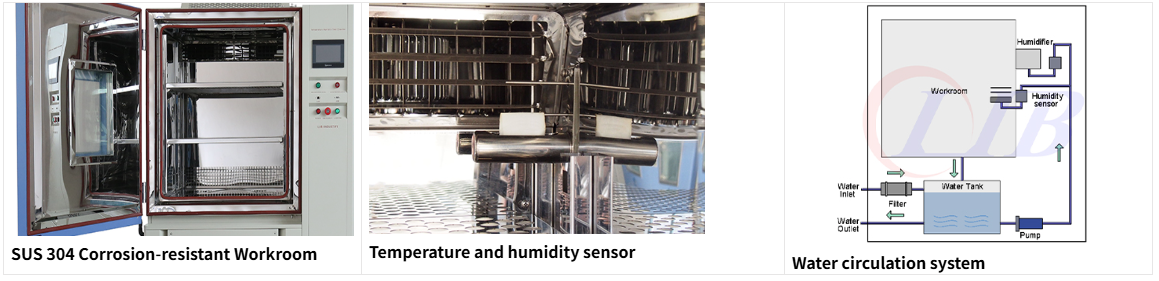
This Damp Heat Chamber (Temperature Humidity Chamber) ensures electronics undergo consistent accelerated aging, helping manufacturers identify design flaws early, reduce warranty claims, and improve product reliability.
 |  | ||
Model | PV-02/04/06/08 | ||
Parameter | Temperature Range | -60℃ ~ +100 ℃ | |
Humidity Range | 20% ~ 98% RH | ||
Temperature Change Rate | 1 ~ 3.4℃ / Min | ||
Panel Size | 1M*2M | ||
Panel Capacity | 4 / 6 / 8 / 10 / 12 Pieces | ||
Controller | Programmable color LCD touch screen controller | ||
Ethernet connection, PC Link, USB | |||
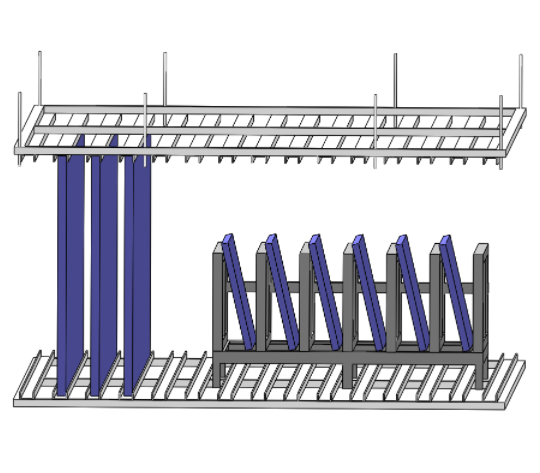
The PV Environmental Chamber is specially designed for large photovoltaic panels, supporting modules up to 2m × 1m, and enabling multiple panels to be tested simultaneously. It simulates real outdoor tropical and humid conditions, allowing long-term durability and reliability testing in a controlled environment.
Key Features and Benefits:
Large Capacity & Multi-Panel Testing: The chamber accommodates full-size PV modules and multiple samples at once, significantly improving testing efficiency for R&D and quality control teams.
Integrated Cable and Signal Access: Test holes (φ50–100 mm, customizable) allow monitoring of live modules during testing. This ensures electrical stability evaluation under high temperature and high humidity, replicating field conditions.
Durability and Safety: Heavy-duty construction, SUS304 stainless steel interiors, and robust powder-coated steel exteriors ensure long-term reliability. Door seals, grounding, and over-temperature systems provide operator and sample safety.
Flexible and Customizable Testing: Sample shelves, test hole locations, and chamber dimensions can be customized, providing maximum flexibility for different PV modules and experimental setups.
With these capabilities, PV manufacturers can simulate years of tropical exposure in hundreds of hours, validate material and module durability, and confidently deliver long-lasting, high-performance photovoltaic solutions to the market.
Q1: What exactly is the Double 85 Test?
A: The Double 85 Test is an accelerated aging test where products are exposed to 85°C temperature and 85% relative humidity over extended periods. It helps manufacturers evaluate weather resistance, sealing performance, electrical stability, and material durability, simulating years of real-world exposure in just hundreds or thousands of hours.
Q2: Which products can be tested in a Damp Heat Chamber?
A: Damp Heat Chambers are ideal for electronics, lithium batteries, LED modules, and small to medium devices. They allow multiple samples to be tested simultaneously while monitoring performance under extreme heat and humidity.
Q3: What makes the PV Environmental Chamber different from a standard Damp Heat Chamber?
A: The PV Environmental Chamber is designed for full-size photovoltaic modules, supporting panels up to 2m × 1m. It ensures uniform temperature and humidity across large surfaces, allowing long-term reliability and aging tests that simulate real outdoor tropical and humid conditions.
Q4: Can the chambers accommodate custom sample sizes or configurations?
A: Yes. Shelves, test hole sizes, chamber dimensions, and number of test stations can all be customized. This allows flexible testing for small electronics or large PV modules, meeting diverse R&D and QC needs.
Q5: How quickly can I get a custom solution from LIB industry?
A: LIB industry offers rapid consultation and pre-sales support, with typical response times of 1–3 hours. Custom environmental test chamber solutions are designed based on your product size, testing requirements, and standards compliance.
Get your custom Double 85 Test solution today! Enjoy 3 years warranty and lifetime support from LIB industry—reliable performance, expert service, and peace of mind for your electronics and PV modules.
 English
 русский
 français
 العربية
 Deutsch
 Español
 한국어
한국어 italiano
 tiếng việt
 ไทย
ไทย Indonesia