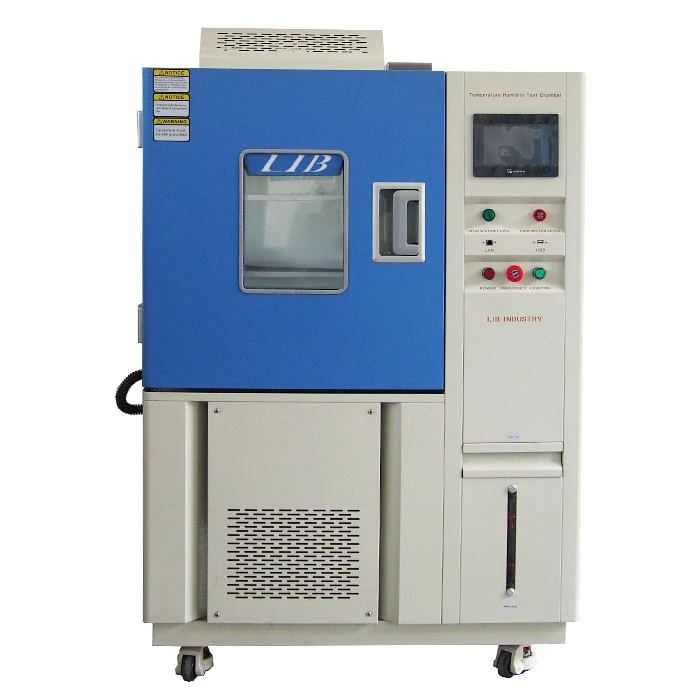
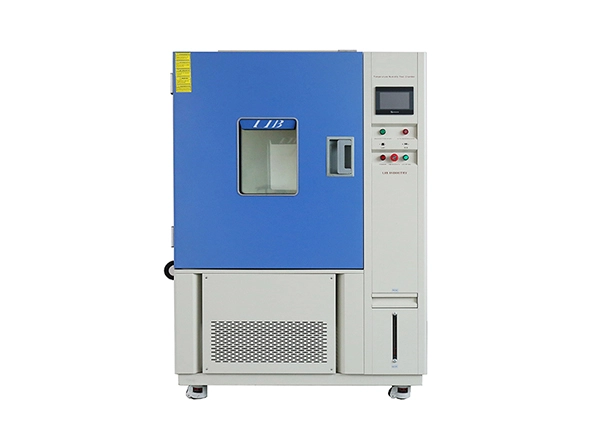
A xenon lamp aging test chamber is one of the most reliable laboratory tools for simulating long-term outdoor weathering. By reproducing sunlight, temperature fluctuations, and humidity exposure in a controlled environment, it allows manufacturers and research labs to evaluate material durability in a shortened time frame.
Industries such as automotive, coatings, plastics, construction materials, and polymer research rely heavily on xenon aging tests to predict real-world performance. Choosing the wrong test chamber, however, can result in unstable conditions, inconsistent results, or data that fails to meet international standards.
This guide explains the key factors for selecting the right xenon lamp aging test chamber and shows how LIB industry provides professional, application-oriented solutions.
Accelerated aging tests are not just about speeding up time — they are about accurately reproducing natural degradation mechanisms. Light spectrum deviation, unstable irradiance, or poor environmental control can lead to misleading results.
A well-selected xenon lamp aging test chamber ensures:
Reliable simulation of natural sunlight
Consistent, repeatable test conditions across batches
Data that meets international standards
Reduced risk of product failure after market release
For laboratories and manufacturers, this translates into lower validation risk and higher confidence in material performance.
Before evaluating equipment specifications, it is essential to clarify your testing purpose. Different materials and industries require different testing priorities.
For example:
Automotive coatings require stable irradiance and precise cycle control to evaluate color fading and gloss retention
Plastics and polymers demand accurate UV spectrum simulation combined with temperature stress
Building materials require long-duration exposure with humidity cycling to evaluate cracking and surface degradation
Selecting a xenon lamp aging test chamber without matching it to your application often leads to over-configuration or, worse, underperformance.
LIB industry approach:
LIB industry designs xenon lamp aging test chambers based on application requirements. Test parameters, irradiance ranges, and cycle programs can be customized to match specific materials and international testing standards.
|
|
 | |
Aging is not caused by light alone — it is the combination of light, heat, and moisture. That’s why the core performance of the test chamber is critical.
Full-spectrum solar simulation (UV, visible, and partial infrared)
Stable irradiance output during long test cycles
Consistent spectral distribution
Long lamp lifespan and controlled aging behavior
Low-quality light systems may cause irradiance drift or spectral deviation, leading to inconsistent or non-comparable test results.
LIB industry solution:
LIB industry xenon lamp aging test chambers use water-cooled xenon arc lamps combined with a closed-loop irradiance control system. This ensures stable light output throughout extended testing. Multiple optical filter options are available to simulate daylight, window glass, or specific application environments.
|
|
| Workroom | Water-cooled xenon arc lamps with filters |
Outdoor aging is the result of multiple environmental factors acting simultaneously. Temperature changes and moisture exposure significantly accelerate material degradation.
A high-performance xenon lamp aging test chamber must offer:
Fast temperature ramping and recovery
Accurate humidity regulation
Long-term stability under continuous operation
Programmable multi-stage test cycles
LIB industry advantage:
LIB industry integrates advanced PID control technology to deliver precise temperature and humidity control. The system supports complex test programs required by ASTM, ISO, and SAE standards, ensuring excellent repeatability.
Selecting the correct chamber capacity improves both test efficiency and energy utilization. Oversized chambers increase operating costs, while undersized chambers limit sample quantity and flexibility.
Structural design considerations include:
Uniform irradiance distribution across all samples
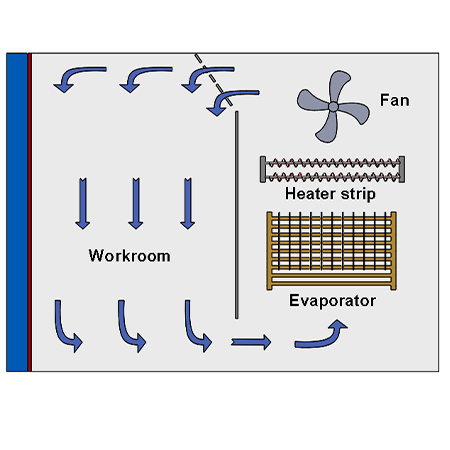
Optimized airflow for consistent temperature and humidity
Convenient sample mounting and replacement
Safe and ergonomic operation
 |
|
| Control system | Rain spray system |
LIB industry solution:
LIB industry offers multiple standard chamber volumes as well as customized designs. Optimized optical layout and airflow systems ensure uniform exposure, while adjustable sample racks and observation windows improve usability and safety.
 |
|
| Air circulation | Hanging specimen |
Test data must be recognized and accepted globally. A xenon lamp aging test chamber should comply with major international standards, including:
ASTM G155
ISO 4892
SAE J2527
LIB industry advantage:
LIB industry xenon lamp aging test chambers are engineered to fully comply with international weathering standards and can be customized to meet specific customer or industry requirements.
1. Can the chamber be customized?
Yes. Chamber size, irradiance range, filter systems, test programs, and control options can all be tailored to specific testing requirements.
2. If the test chamber is not fully loaded and there are gaps, will it affect humidity inside?
Even if the chamber is not fully loaded and gaps exist, the humidity uniformity inside the chamber will not be affected. The xenon system is equipped with uniform light distribution and air circulation to ensure a stable and reliable test environment.
3. What is the diameter of the rotating xenon lamp rack?
According to ASTM G155, the diameter of the rotating xenon lamp rack is 650 mm, with the standard distance from the test specimen to the lamp ranging from 320–420 mm to ensure uniform irradiation.
4. Can the xenon lamp spray water from both front and rear?
The xenon lamp system can be optionally equipped with front and rear water spray to enhance the wet-dry cycle performance.
5. Using different radiometers to measure irradiance, how can different irradiance levels be achieved if the lamp remains unchanged?
The irradiance of the xenon lamp can be adjusted by changing the electrical current. The lamp emits a full-spectrum solar simulation, with the UV portion as the baseline. Adjusting the current increases or decreases UV intensity. Radiometers detect specific bands and display the measured value on the controller for precise irradiance control.
6. What is the minimum temperature of the xenon test chamber? What design changes are needed?
The xenon test chamber can reach a minimum temperature of -70 °C. Required design changes include: 1. Lamp design capable of high/low temperatures; 2. Increased refrigeration capacity; 3. Special radiometer and black panel compatible with extreme temperatures.
Xenon aging tests often run continuously for weeks or months. Equipment stability and service support are essential to avoid costly interruptions.
Key considerations:
Long-term operational reliability
Downtime minimization
Availability of spare parts
Total cost of ownership vs. upfront price
LIB industry commitment:
3-year warranty
Lifelong technical support
24/7 English-speaking service team
Globally stocked spare parts and professional commissioning support
Durable core components and optimized system design ensure low maintenance costs and consistent, credible test results over the years.
Contact LIB industry today inquiry@libtestchamber.com to configure a xenon lamp aging test chamber designed for your materials, standards, and testing goals.
 English
 русский
 français
 العربية
 Deutsch
 Español
 한국어
한국어 italiano
 tiếng việt
 ไทย
ไทย Indonesia