When people think about Electric Vehicle (EV) batteries, the conversation often revolves around maximizing range and reducing charging time. However, there’s a hidden danger that engineers must account for: Atmospheric Pressure.
EV batteries, particularly lithium-ion cells, are meticulously engineered for efficiency and safety at sea level. But what happens when these batteries are subjected to drastically lower atmospheric pressures—whether during air freight transport or while traversing high-altitude mountain ranges like the Alps or Rockies? At high altitudes, batteries face external pressure drops that can cause structural stress, leading to potentially catastrophic issues such as cell swelling, seal failure, and even thermal runaway.
For EV manufacturers and battery companies, the stakes are high. Testing batteries under these extreme conditions in a controlled environment using altitude test chambers has become a critical safety requirement. Let’s explore why these tests are non-negotiable and how they prevent EV battery failure when the pressure drops—literally.
When EV batteries are transported via cargo planes or tested for performance in mountainous regions, they transition from typical atmospheric conditions (at sea level) to low-pressure environments. Here's what happens when the pressure drops:
Low atmospheric pressure creates a pressure imbalance between the battery's internal structure and its external environment. Lithium-ion pouch cells are particularly vulnerable to this phenomenon, where internal gases cause the pouch to swell like a balloon. This deformation not only damages the battery’s structural integrity but also risks leakage.
As the external pressure decreases, the seals of a battery pack are subjected to higher stress from within. This can lead to the leakage of electrolytes—a safety hazard that can compromise battery performance and longevity.
Structural deformation at high altitudes can alter the internal geometry of the battery cells, potentially leading to short circuits. Combined with the chemical properties of lithium, this increases the likelihood of thermal runaway, a chain reaction that results in overheating, fire, or even explosions.
These risks aren’t theoretical. They underline the importance of simulating extreme altitude scenarios to ensure battery reliability and safety.
Before batteries are cleared for air transport or global EV production, they must pass stringent safety tests defined under the UN Manual of Tests and Criteria. One essential milestone is UN 38.3, Test T1 (Altitude Simulation).
To comply with this standard, batteries must be exposed to a simulated pressure of 11.6 kPa or less (equivalent to an altitude of ~15,000 meters) for a minimum of six hours. This test ensures a battery’s ability to endure the low-pressure conditions encountered during air transportation.
Consistency Is Key: Altitude test chambers must maintain a stable pressure of 11.6 kPa throughout the six-hour interval, as pressure fluctuations can lead to inaccurate results.
Realistic Scenarios: The test setup should closely replicate real-world conditions by factoring in additional variables like temperature and humidity.
While meeting regulatory standards is necessary, engineers and manufacturers often go beyond these minimum requirements to optimize battery reliability for challenging environments.
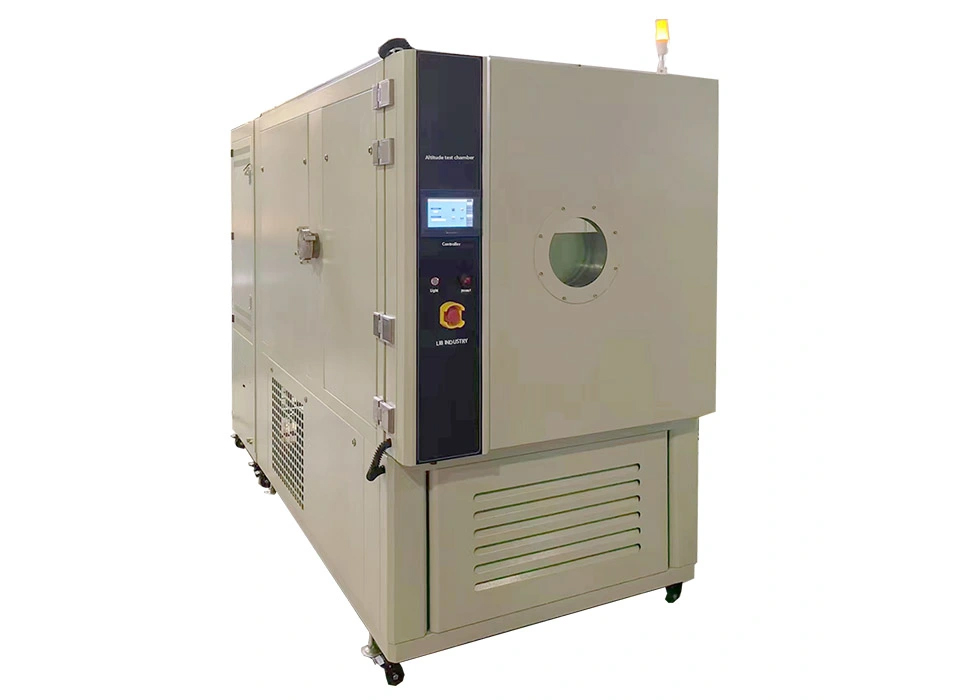
Not all altitude challenges are the same. Battery testing often involves modeling two distinct scenarios: air cargo transport at high altitude and real-world mountain driving conditions.
Air freight subjects batteries to slow but sustained low-pressure exposure, often accompanied by subzero temperatures ranging from -10°C to -20°C. This scenario mimics the stable atmospheric environment inside a cargo plane at altitude.
Driving an EV up a high-altitude mountain range imposes additional stresses. Here, batteries are exposed to fluctuating temperatures, lower air densities, and high discharge loads as the vehicle powers uphill. This creates a unique combination of pressure-temperature demands, requiring a combined environment test that factors in both altitude and temperature variations.
Testing for both scenarios ensures that EV batteries perform flawlessly during real-world use and logistics.
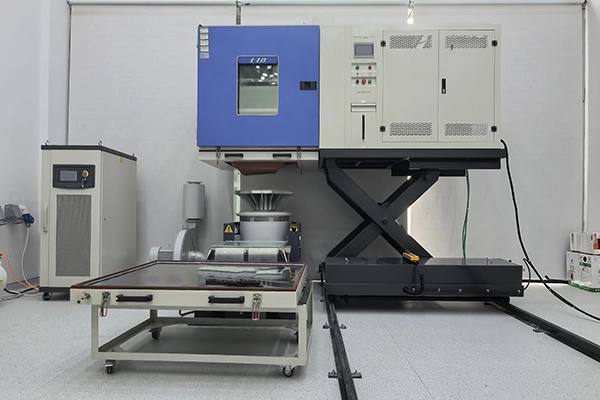
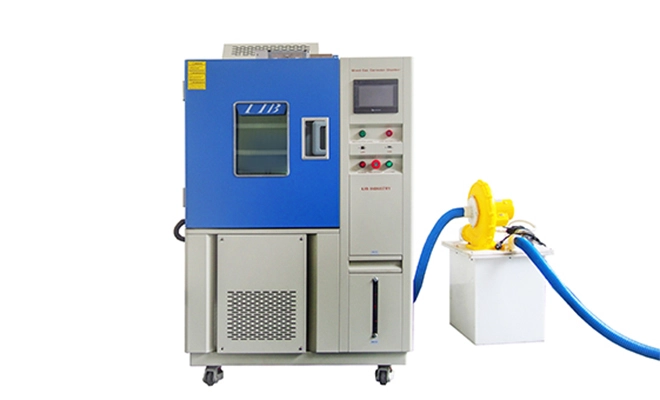
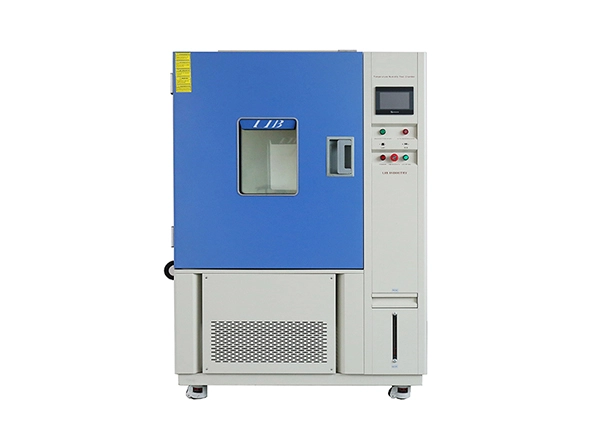
The cornerstone of altitude simulation testing is the altitude test chamber. Designed for precision and safety, these chambers create controlled low-pressure environments and allow manufacturers to rigorously evaluate battery integrity under extreme conditions.
Standard vacuum chambers lack the advanced features required for EV battery testing. Specialized altitude test chambers offer additional advantages, including:
Integrated Cooling Systems: Prevent heat buildup during prolonged testing.
Explosion-Proof Venting: Mitigates risks of off-gassing during pouch cell deformation or seal failure.
Real-Time Monitoring: Enables engineers to track battery performance metrics such as voltage, current, and temperature in real-time throughout the simulation.
Advanced altitude test chambers are a critical investment for EV manufacturers and battery developers. Here's what to prioritize when selecting a chamber for extreme-condition testing:
Batteries under test can emit flammable or hazardous gases during structural failure. Choose an altitude chamber equipped with:
Spark-proof interiors.
Pressure-relief valves.
Fire suppression mechanisms.
Most chambers can simulate gradual pressure drops, but consider whether the chamber can replicate sudden cabin decompression events—a critical factor for air transport safety.
An altitude chamber that can integrate with the Battery Management System (BMS) allows real-time monitoring of critical parameters. This feature ensures seamless safety evaluations during testing.
By focusing on these features, manufacturers can optimize their R&D processes and create safer, more reliable EV batteries.
In today’s EV-driven world, battery safety extends far beyond fire prevention—it’s about ensuring reliability under the harshest environmental conditions. Altitude test chambers are at the forefront of this effort, simulating the rigorous demands of high-altitude transport and mountain driving to build batteries that won’t falter under pressure.
 English
 русский
 français
 العربية
 Deutsch
 Español
 한국어
한국어 italiano
 tiếng việt
 ไทย
ไทย Indonesia
_20260824102429.webp "IPX7 IPX8 Pressurized Water Ingress Protection Tester")