Plastic products get exposed more and more to sunlight and outdoor weather. Manufacturers have a big need. They want to check how durable the products stay. They also want to see how the products look over time. UV exposure is one main thing in the environment. It can make plastic break down. This includes color change plastic UV test issues. It also causes gloss loss after UV exposure. And it leads to surface cracking.
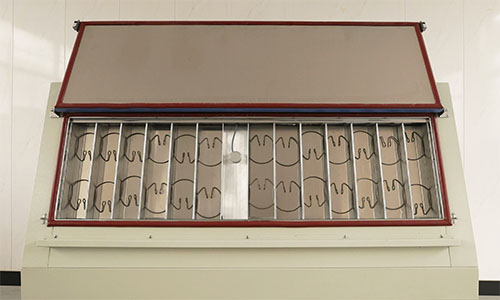
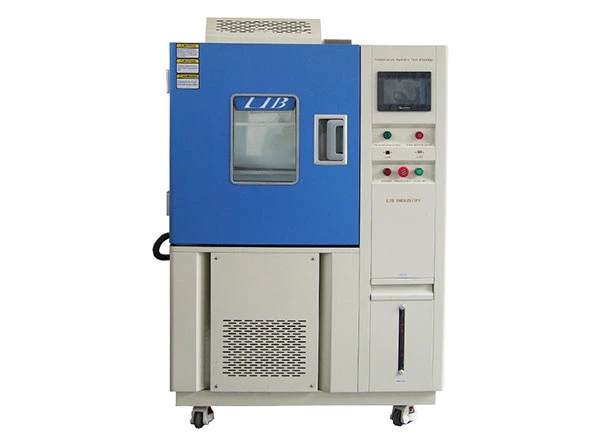
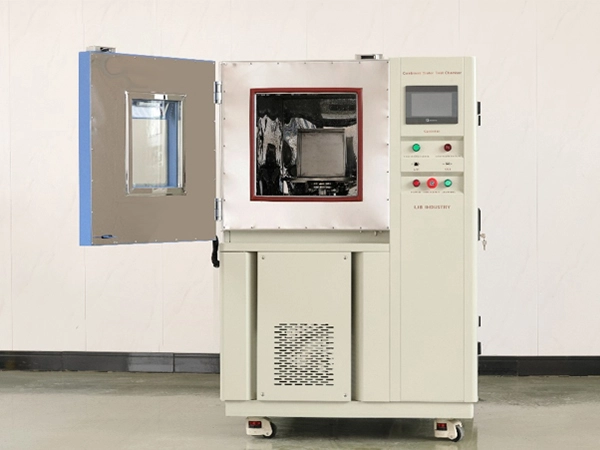
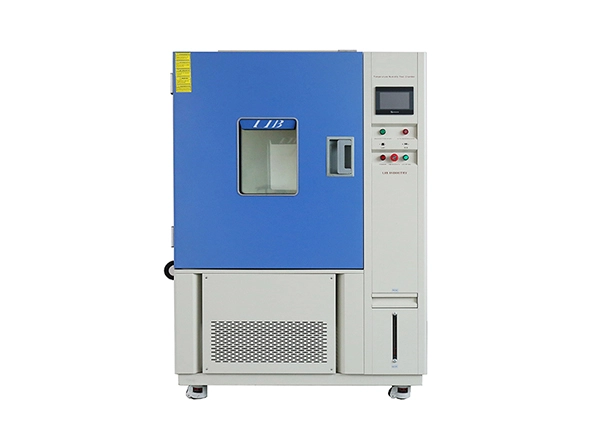
Industries need to deal with these problems. They use exact testing ways. These ways help them check how plastics perform under faster UV exposure. The LIB UV Light Fastness Test Chamber gives a good solution. It copies the real effects of UV radiation, heat, and moisture on plastic samples.
This blog looks at why it matters to measure plastic UV aging data. It also shows how the LIB chamber helps manufacturers and quality control teams. They can make smart choices about how long products last and how they look.
Plastic products face sunlight over time. They show clear changes. These changes hit both how they look and how they work. The changes can include color shifts, dull surfaces, and weaker material. Manufacturers want to keep product quality high. They also want happy customers. So they need solid data. This data shows how products react to long UV exposure.
People can look at products and see problems. But that may not give enough details. It does not fully check long-term performance. Measured data lets manufacturers see exact changes in plastic under UV exposure. This makes it easier to set clear goals. It also helps set pass or fail rules.
The data can show if a plastic product meets industry rules. It can also meet special customer needs.
Brands and labs want clear and steady pass or fail rules for plastic tests. They set number limits for things like color shift, gloss loss after UV exposure, and surface wear. This testing keeps quality strong through the whole product life. These limits also make quality control faster. They help improve how products get made.
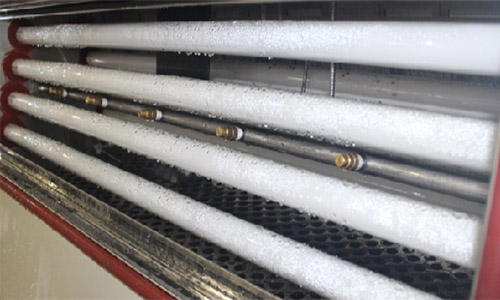
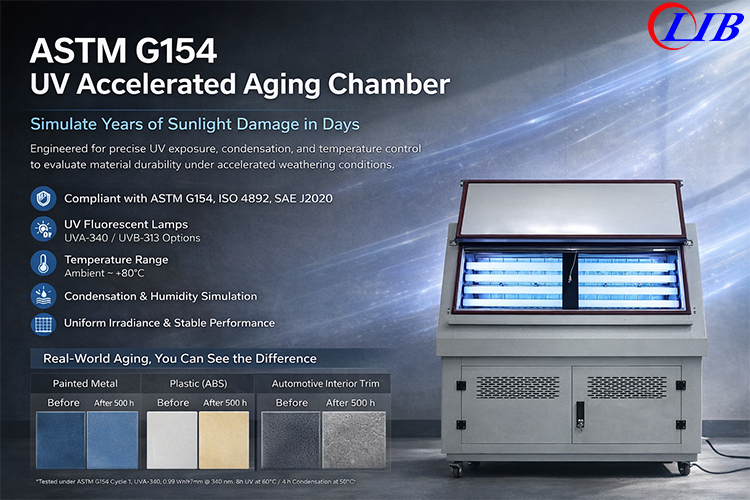
The LIB UV Light Fastness Test Chamber utilizes two primary types of UV lamps, UVA-340 and UVB-313, to simulate different portions of the UV spectrum. Each lamp type has distinct characteristics that influence the testing results for various plastic materials.

The UVA-340 lamp is designed to simulate the long-wave UV radiation (320–400 nm) that predominantly makes up the majority of sunlight. This type of UV light is responsible for causing color fading and surface degradation in many plastic materials. The UVA-340 lamp is typically used for testing plastics that are exposed to sunlight in environments such as outdoor furniture, automotive parts, and packaging materials.
· Wavelength range: 320–400 nm
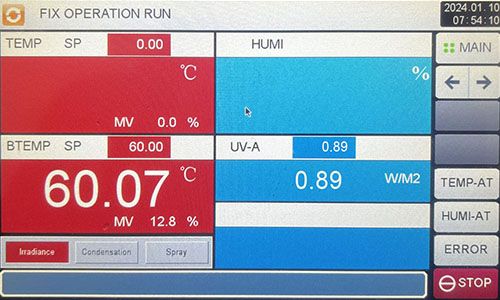
· Irradiance level: 0.35 W/m² to 0.70 W/m²
· Simulates: Sunlight’s UV-A exposure, typically leading to mild aging effects such as gradual fading and color shift.
For more severe conditions, UVB-313 lamps are used to simulate short-wave UV radiation (280–320 nm). This portion of the UV spectrum is more damaging and can cause rapid degradation in plastics, leading to faster changes in appearance and physical properties. The UVB-313 lamp is ideal for testing materials in regions with high UV radiation levels or for products that require enhanced durability.
· Wavelength range: 280–320 nm
· Irradiance level: 0.40 W/m² to 1.20 W/m²
· Simulates: Aggressive UV-B exposure, accelerating the aging process and revealing material weaknesses in a shorter period.
Selecting the right UV lamp depends on the intended application of the plastic and the environmental conditions it will face. For instance, outdoor products exposed to direct sunlight might require testing with UVA-340 lamps, while materials used in harsh environments or applications with high UV intensity, such as solar panels, may need UVB-313 testing to ensure their long-term durability.
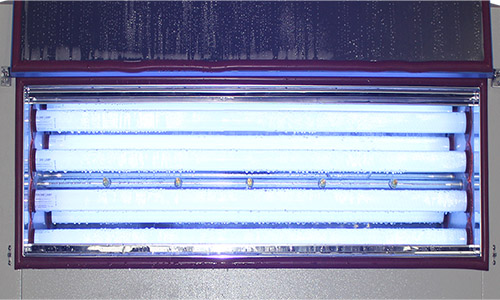
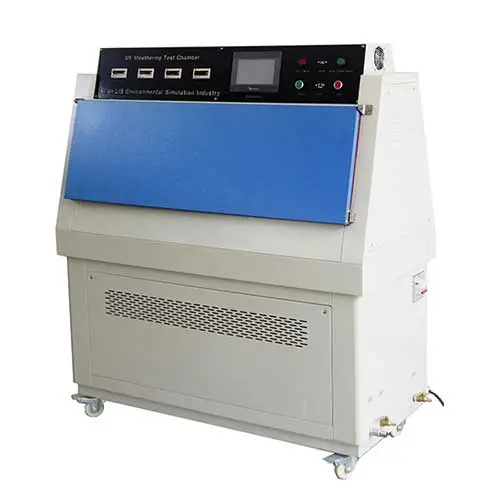
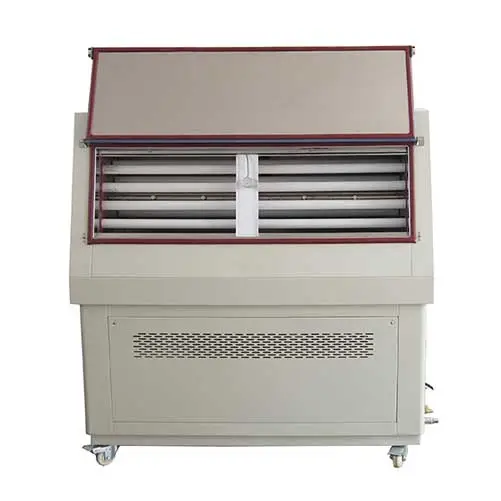
The LIB UV Light Fastness Test Chamber copies the mix of UV radiation, heat, and moisture. It does this in a faster setting. It shows how plastic products age in real life. Knowing these parts and how they work together helps predict outdoor performance. This ensures products last a long time.
 |  |
|
|
|
|
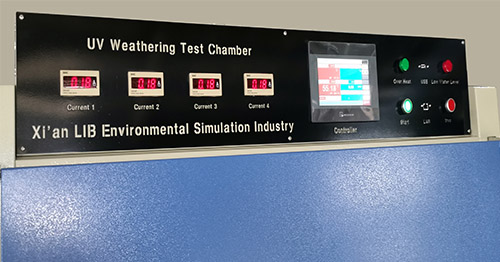
Programmable Test Cycle Controller |
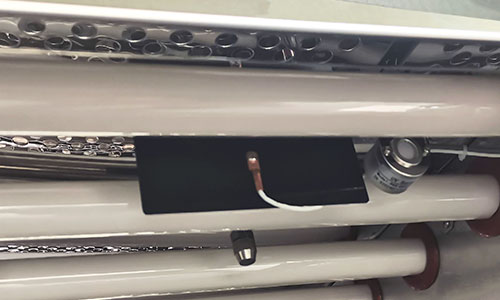
Customizable Sample Holder |
Plastics in sunlight get UV radiation and higher heat. They may also face moisture from rain or damp air. The LIB test chamber copies these combined things. It gives useful info on real-world aging of plastics. This mix speeds up the aging process. Manufacturers can then predict performance in a shorter time.
Tests in faster conditions give key info. They show how plastic acts after long outdoor time. This method cuts testing time a lot. Yet it still gives trusted data on color hold, surface strength, and overall material work. Manufacturers use this data. It helps them predict how products keep their look and strength in real conditions.
After UV exposure, some common look problems can hit plastics. These change both how they look and how they work.
· Color Change and ΔE Shift: Color change often shows up first from UV exposure. The change in color gets measured with the ΔE value. It shows the difference between the start color and the new one.
· Yellowing Development: UV exposure can make plastic materials turn yellow over time. This break down usually comes from chemical bonds in the polymer structure.
· Gloss Loss and Surface Dulling: As plastic ages under UV exposure, the surface loses its shine. It looks dull. This surface wear can hurt the product’s nice look.
· Chalking, Surface Powdering, and Resin Breakdown: Chalking or surface powdering happens when the plastic surface gets brittle and flakes off. This can lead to loss of strength over time.
· Cracking, Crazing, and Embrittlement: Long UV exposure can make plastic crack, craze, or turn brittle. These issues hurt both the look and the use of the material.
ΔE is a standard way to measure the difference between two colors. Manufacturers use this to track color change from UV exposure. A ΔE value below 1 usually means little color change. Values above 5 may show a clear shift. This shift could affect product quality.
Yellowing is a common sign of plastic aging. It often comes from the break down of additives in the plastic. To measure yellowing, teams use a spectrophotometer or other color tools. These tools give numbers for the color shift over time. This data is key. It makes sure products meet set color rules.
Gloss loss is an important part of how plastic products look. The gloss level gets measured with a glossmeter. It gives a number for surface shine. This data helps teams see how much the product look will wear under UV exposure.
Chalking and surface powdering can get checked by eye. In some cases, teams use more detailed tests like abrasion or surface hardness checks. These things can hurt a product’s work. This is true especially for plastics used outside.
Surface cracking and crazing show the material has become brittle. Teams can see these by eye. But advanced ways like scanning electron microscopy can give more details on the damage. Such testing helps make sure plastic products last long and work well.
To make a good UV aging test for plastics, teams must think about several things. These include exposure conditions, how samples get ready, and check methods.
Teams must set the right irradiance, temperature, and humidity levels in the test chamber. This copies real conditions. These levels should stay standard. It keeps results the same in every test. Humidity cycles and condensation also matter in plastic aging. This is true for materials that face outdoor air.
Teams pick good exposure times. This lets them track how plastic wear happens step by step. Long tests are important. They show trends in color change, gloss loss after UV exposure, and other surface problems.
To get the same results every time, teams must set standard ways to prepare and place test samples. They also keep steady times for checks. This helps them compare results from many tests in an accurate way.
After UV aging tests, manufacturers must decide if plastic products meet the needed rules. They turn the results into clear pass or fail choices. This step is important. It keeps products from failing in the market. It also makes sure products stay strong over time.
One big challenge is to put different measures together in one full report. Key numbers like ΔE color shift, yellowing, gloss hold, chalking, and cracking all matter. They help judge the full performance of plastic materials. Teams put these factors in one report. This makes it easy to compare against set rules. They can then make a clear pass or fail choice. This full view shows how well the product handles UV exposure.
When teams work with many suppliers or production batches, they need set material goals. These goals let manufacturers compare how different plastic materials do in UV aging tests. For example, they set a base level for color change like delta e plastic aging, gloss retention, or cracking. This helps spot which materials meet quality rules and which do not. With these goals in place, teams keep product quality steady across suppliers and lots. It makes the quality control process smoother.
When test results show a plastic material failed, the measured data gives clear steps to fix it. Specific problems like big color change or gloss loss guide changes to the plastic mix or coating design. For example, if yellowing happens too fast, teams may add UV stabilizers or change the resin mix. If gloss hold is not good enough, they can adjust the mix or surface coating. This improves resistance to UV wear. With detailed UV aging data, manufacturers can make their products better. They get longer life and stronger performance under UV exposure.
Xi’an LIB Environmental Simulation Industry is a top supplier of UV light fastness test chambers. These chambers give exact, trusted, and steady results for plastic UV aging tests.
LIB test chambers work for many test needs. They handle small lab samples or big industrial jobs. The chambers are flexible. They fit many fields like automotive, electronics, and packaging.
The LIB UV test chamber has advanced parts. These support faster aging and climate copy tests. This helps manufacturers predict how long their plastic products will last under real environment conditions.
LIB gives full help to quality control teams, material check steps, and R&D groups. The company focuses on exact work and trust. This ensures manufacturers can make plastic products that meet industry rules for look and performance.
The LIB UV Light Fastness Test Chamber is a key tool. It helps check how UV exposure affects plastic products. By measuring changes in color, gloss, surface damage, and other performance points, manufacturers can make smart choices. They decide on materials and product design. Whether for quality control, R&D, or material checks, LIB’s trusted chambers give the info needed. This makes sure plastic products stand up to time.
The limit depends on product look rules, how the product gets used, and inside QC needs. In general, a ΔE value of 1 or below means little color change. Values above 5 may show big color wear.
Surface wear can show up earlier than big color change. This happens often in coated or textured plastics. They may lose gloss before a clear color shift appears.
Yes, surface powdering and small cracks may start before a big color difference shows. This is common in plastics that face long UV and moisture.
 English
 русский
 français
 العربية
 Deutsch
 Español
 한국어
한국어 italiano
 tiếng việt
 ไทย
ไทย Indonesia