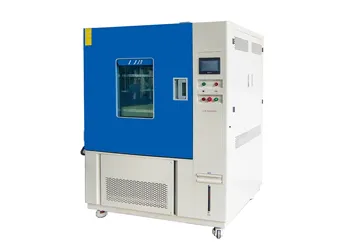
Consumer electronics now sit in places that were once considered harsh for delicate circuits: jeans pockets full of lint, sandy beaches, warehouse floors, kitchens, bathrooms, car dashboards, and outdoor smart home installations. A small speaker grille, charging port, hinge gap, camera module, or microphone opening can become the path that lets fine dust reach a PCB, connector, sensor, or display layer.
That is why an IP5X IP6X dust ingress chamber has become a practical tool for product teams working on phones, tablets, earbuds, smart locks, routers, cameras, wearables, and home automation devices. The purpose is not only to pass a certificate. A proper dust ingress test shows whether the enclosure design can survive real handling, shipping, installation, and long-term use.
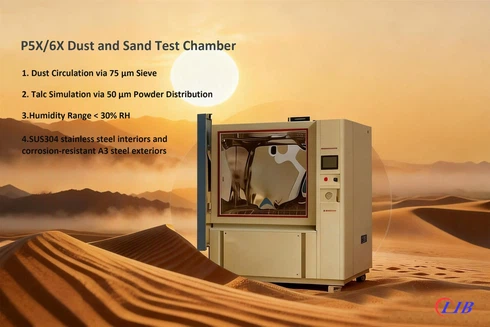
An IP5X IP6X dust ingress chamber is a sealed test cabinet designed to suspend fine dust around a product for a defined period. It simulates controlled dust conditions based on IEC 60529, allowing engineers to verify whether an enclosure effectively prevents dust intrusion.
The system typically includes a sealed workspace, dust circulation system, collection unit, specimen holder or turntable, optional vacuum connection, timer controls, and safety interlocks. To ensure repeatable results, dust must remain dry, evenly distributed, and measurable—rather than simply settling on the sample.
IP5X means “dust protected.” Limited dust ingress is allowed, but it must not affect normal operation or safety.
During testing, fine talcum powder is circulated around the sample. Products may be powered if required. After the test, engineers inspect key areas such as seals, connectors, buttons, membranes, and internal components for dust accumulation.
IP6X means “dust tight,” requiring zero dust ingress under test conditions.
This level is typically used for outdoor or rugged electronics. Compared to IP5X, the main difference lies in stricter acceptance criteria. Vacuum-assisted testing is often applied to detect sealing weaknesses, especially in products subject to pressure or temperature changes.
A controlled dust test chamber helps:
Detect leakage paths before certification or mass production
Provide consistent, repeatable test data
Validate sealing performance across materials and assembly variations
For electronics, even small dust ingress can impact critical parts like connectors, speakers, vents, and switches—making controlled testing essential.
Dust failure is often slow. The product may work after the first exposure, then show performance drift weeks later. Fine particles can carry moisture, create friction, block airflow, or settle across sensitive areas.
Typical dust-related issues include charging instability from contaminated ports, muffled audio due to clogged speaker or microphone meshes, button stiffness, camera haze, fan noise, connector wear, optical sensor errors, and heat buildup from blocked ventilation channels. In tablets and smartphones, dust may also collect around display bonding gaps or under removable trays. In smart home devices, long exposure near doors, garages, kitchens, or outdoor walls can make small seal weaknesses visible.
The problem becomes more serious when dust mixes with sweat, cooking oil, skin particles, or humidity. Once particles stick to a gasket or adhesive edge, later cleaning may not restore the original sealing performance.
Dust ingress testing should begin before the final enclosure is frozen. Prototype tests can compare gasket hardness, screw torque, adhesive width, vent membrane position, and connector cover design. Final validation then confirms that the production design meets the required rating.
Before testing, the product should be built with the intended production materials. Temporary 3D-printed parts, hand-cut gaskets, or non-production adhesives can give misleading results.
IEC 60529 is the key standard for IP dust protection. The test uses talcum powder that can pass through a square-mesh sieve with a nominal wire diameter of 50 μm and a nominal gap width of 75 μm. The dust quantity is 2 kg per cubic meter of chamber volume. The same talcum powder should not be used for more than 20 tests.
A typical controlled setup is shown below.
Test item | IP5X | IP6X |
Protection meaning | Dust protected | Dust tight |
Dust medium | Dry talcum powder | Dry talcum powder |
Sieve requirement | 50 μm wire, 75 μm gap | 50 μm wire, 75 μm gap |
Dust concentration | 2 kg/m³ chamber volume | 2 kg/m³ chamber volume |
Typical exposure | Up to 8 hours, depending on test category | Up to 8 hours, depending on test category |
Vacuum use | Applied when the enclosure category requires it | Common for pressure-sensitive enclosures |
Acceptance | No harmful dust deposit | No dust ingress |
For Category 1 enclosures, where pressure inside the enclosure may differ from the surrounding air, the sample is connected to a vacuum pump. The pressure difference is typically limited to 2 kPa, equal to 20 mbar. If the required air extraction rate is reached, the test may finish after the specified volume of air has been drawn through. If not, exposure can continue up to 8 hours. Category 2 enclosures, where no pressure difference is expected during normal use, are exposed without vacuum for the defined duration.
Chamber conditions also matter. For stable dust suspension, many professional chambers keep humidity below 30% RH, because wet or clumped talc does not behave like fine airborne dust. A chamber temperature range from ambient to +50°C is practical for many electronics tests, especially when the product may be powered during exposure.
Useful dust testing does not end when the timer stops. The inspection method should be defined before the test starts. For smartphones, tablets, and smart home devices, inspection may include external visual review, opening the enclosure, checking PCB surfaces, examining connector interiors, inspecting acoustic parts, testing buttons, running charging cycles, checking wireless performance, and measuring thermal behavior.
Good test records normally include:
· Sample serial number, build stage, and seal version
· Chamber volume and dust quantity
· Talc condition and reuse count
· Test duration and vacuum pressure
· Powered or unpowered sample status
· Photos before and after exposure
· Functional test results after cleaning and before cleaning
The most useful finding is not only “pass” or “fail.” It is the location of the leak path. Dust around one screw boss may point to uneven torque. Dust near a flex cable exit may show gasket compression loss. Dust inside a speaker cavity may show that the acoustic mesh was not bonded across the full edge.
Dust testing looks simple, but small mistakes can change the result. The chamber should be dry before loading talc. Old, damp, or overused powder can reduce test severity. The specimen should be placed so dust can circulate around all exposed surfaces, not buried in a corner of the cabinet.
Operators should also check the vacuum line, filters, seals, and pressure gauge before testing. A loose hose or clogged filter may create a false pass or false fail. When testing powered electronics, the internal heat generated by the sample must be considered, because warmer air movement can pull dust through weak points.
After testing, the enclosure should be opened carefully. Shaking or wiping the outside too aggressively can move dust into areas that were not actually penetrated during exposure.
Dust ingress testing is essential as consumer electronics are used in real environments—pockets, bags, homes with pets, kitchens, and outdoor spaces—where fine particles are unavoidable.
Smartphones contain multiple dust entry points, including speaker holes, charging ports, SIM trays, buttons, and display gaps.
IP5X/IP6X testing helps verify whether seals, meshes, and adhesives effectively block dust without affecting sound, charging, or heat dissipation. It can reveal issues such as loose gaskets, weak adhesive sealing, or wear from repeated use.
Tablets have larger seams and are more prone to flexing, increasing the risk of dust ingress.
Testing focuses on side seams, connectors, camera modules, and speaker openings. For devices with detachable accessories, interfaces should be tested in real-use configurations.
Devices like smart locks, cameras, and sensors are exposed to long-term dust from outdoor and indoor environments.
Dust testing ensures stable performance over time, preventing issues such as gear wear, reduced image quality, or sensor blockage.
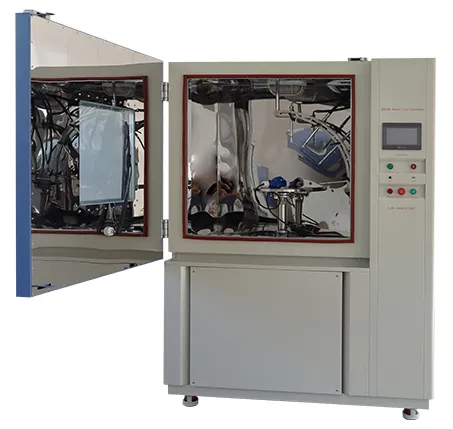
| Diameter of Turntable (mm) | 600 |
|
Turntable loads | 20kgs Max | |
Turntable Rotation Speed | 0~7r/min (Adjustable) | |
Internal Diameter of IPX5 Nozzle | 6.3 mm | |
Internal Diameter of IPX6 Nozzle | 12.5 mm | |
Water Flow Rate IPX5/ IPX6 | 12.5L/min ±5% / 100L/min ±5% | |
Controller | Programmable color LCD touch screen controller | |
Ethernet connection, PC Link, USB | ||
Build-in Water Tank(mm) | 370*375*950 | |
View Window Size(mm) | 475*475 |
 |  |
|
| Test Area | LAN and USB | Controller |
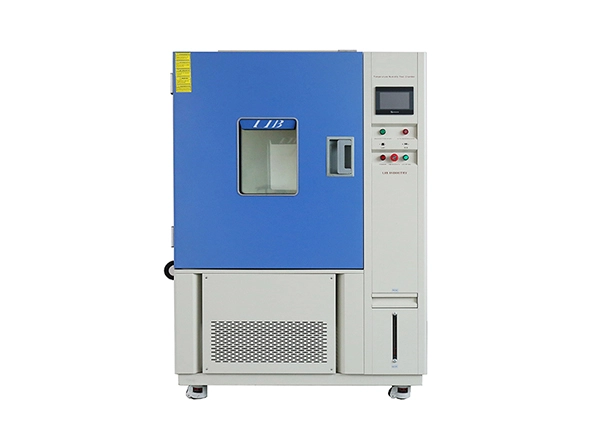
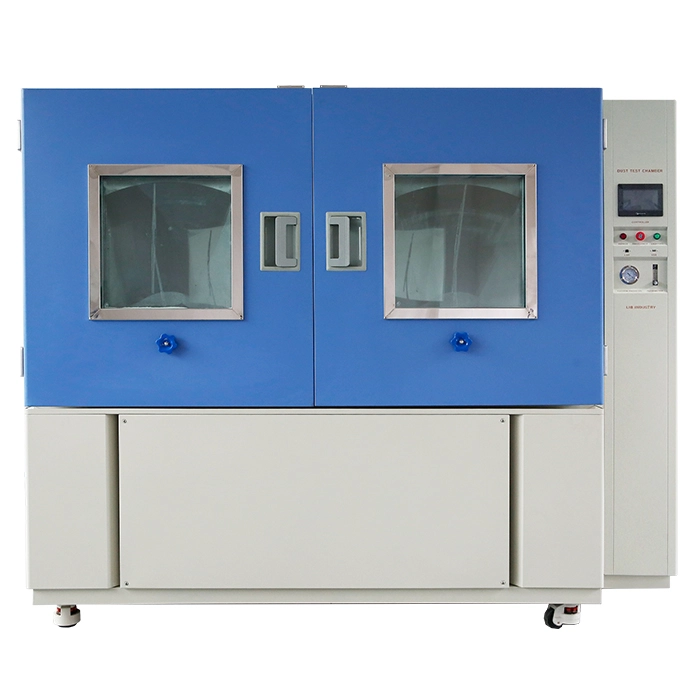
A good dust chamber should make the test repeatable, easy to document, and safe for daily laboratory use. LIB dust ingress chambers are designed for IEC 60529 IP5X and IP6X dust testing, using dry talcum powder, controlled circulation, and practical chamber configurations for electronics and enclosure testing.
Stable dust suspension is the core requirement. LIB chambers use talc dust that meets the 50 μm wire and 75 μm gap sieve requirement, with 2 kg of talc per cubic meter of chamber volume. The humidity control target of less than 30% RH helps keep dust from clumping. Timers for dust blowing and test operation can be set up to 99 hours and 59 minutes, giving laboratories enough range for standard and extended internal validation.
For routine IP5X IP6X dust ingress testing, a clear control interface lowers operator error. LIB chambers use a programmable color LCD touch screen controller with Ethernet connection. A dust-proof 16A specimen power socket allows powered testing when the product’s normal operating state must be checked during exposure.
The operator can manage blowing time, stop time, test time, and sample operation more consistently than with manual setups.
Dust chambers must run reliably in repetitive testing. A practical design should support easy cleaning, powder handling, specimen placement, and maintenance. LIB offers different chamber sizes for small and larger samples, allowing labs to choose a suitable workspace without forcing oversized equipment into every test plan. For electronics manufacturers, that balance can reduce laboratory floor space, power use, and test preparation time.
Dust ingress testing is often only one part of a full environmental protection validation plan.
In addition to IP5X and IP6X dust testing, many manufacturers also require:
| LIB Industry Complete Set of Rain Test Chambers and Dust Test Chambers Solution | |||
 |
| ||
LIB industry provides a complete range of environmental test chambers covering dust, water, temperature, humidity, and corrosion testing. This allows laboratories to build a fully integrated IP and reliability testing system.
Xi’an LIB Environmental Simulation Industry manufactures and supplies environmental test chambers for global customers, with work covering design, manufacturing, sales, and service. Since 2009, the company has served industries such as electronics, automotive, aerospace, battery, materials, and other reliability-focused fields.
As an IP5X IP6X dust ingress chamber supplier, LIB provides equipment for dust, rain, temperature, humidity, corrosion, and other environmental simulation tests. The company’s support includes training, technical service, and chamber selection guidance, which helps laboratories build repeatable test workflows rather than buying a standalone machine without process support.
For consumer electronics teams, this matters because dust ingress testing is linked with enclosure design, quality control, certification, and after-sales reliability. A supplier with broad environmental testing experience can help connect dust testing with the wider product validation plan.
Contact LIB industry today to get a customized IP5X/IP6X dust ingress chamber solution, with free industrial-grade talcum powder included for your initial testing setup.Request a quotation, or receive expert technical guidance for your testing requirements.
IP5X means the enclosure is dust protected. Some dust may enter, but it must not harm normal operation or safety. IP6X means the enclosure is dust tight, so no dust ingress is allowed under the specified test conditions.
It exposes the product to controlled fine dust so engineers can find weak points in seals, ports, buttons, speaker meshes, camera rings, and enclosure joints before mass production. This helps reduce field failures, warranty claims, and late design changes.
Yes, but in a controlled standard-based way. The chamber uses fine talcum powder, fixed dust concentration, defined exposure time, and optional vacuum conditions to reproduce severe dust penetration risks more repeatably than open-air dust exposure.
According to IEC 60529, the same talcum powder should not be used for more than 20 tests. In practice, humidity and contamination should also be monitored, as degraded dust can affect test consistency.
Yes. A properly configured dust ingress chamber can perform both tests. The difference lies in test conditions and acceptance criteria, especially whether vacuum is applied.
 English
 русский
 français
 العربية
 Deutsch
 Español
 한국어
한국어 italiano
 tiếng việt
 ไทย
ไทย Indonesia

_20260824102429.webp "IPX7 IPX8 Pressurized Water Ingress Protection Tester")