 Military handheld radios rarely fail because of heat alone or cold alone. Trouble usually starts when a device moves fast from one thermal state to another: from an air-conditioned vehicle to desert air, from a warm command shelter to a frozen ridgeline, or from storage to instant field use. That is where MIL-STD-810H Method 503.7 becomes highly relevant. For teams that design, buy, or qualify military communication equipment, the question is not just whether a radio can survive hot and cold conditions. The real question is whether it can keep working after a rapid temperature jump. A thermal shock chamber is built for that exact problem, and it gives manufacturers a repeatable way to expose weak points before those weak points show up in service.
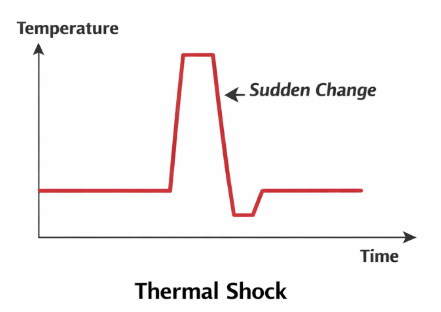
MIL-STD-810H Method 503.7 is the temperature shock test, designed to check whether a product can withstand sudden, extreme temperature changes without damage or performance loss. The standard emphasizes environmental tailoring, meaning the test profile should reflect the item’s actual operational conditions.
Tactical radios routinely face rapid transitions—from warm vehicles to cold outdoors, or from storage to field use within minutes. Method 503.7 simulates these real-world shocks, ensuring equipment remains reliable under daily operational stress.
Difference from steady-temperature testing
Unlike steady hot or cold tests, temperature shock focuses on the transition itself. Rapid changes strain sensitive interfaces like solder joints, seals, displays, and cable entries, which are often the first points of failure.
Temperature shock tests focus on speed. Transfers should mimic real-life thermal transitions and be as fast as possible; transfers exceeding one minute need justification. The product is first brought to the starting extreme at ≤3 °C/min, then the shock sequence begins. Every step is controlled, documented, and tied to actual usage.
Procedure | What it does | Typical use |
I-A | One-way shock from one extreme to the other | A single abrupt transition risk |
I-B | Single cycle shock | One complete out-and-back thermal event |
I-C | Multi-cycle shocks | Repeated field exposure; minimum 3 cycles |
I-D | Shocks to or from controlled ambient | Indoor-to-outdoor or vehicle-to-field transitions |
Procedures I-C and I-D ensure multiple shocks or starting from controlled ambient to replicate realistic scenarios.
Test planning is crucial. Starting temperature, target extremes, dwell times, and functional checkpoints should match the product’s operational lifecycle—for example, a radio moving from a heated vehicle to cold outdoors versus cold storage to a warm shelter.
Effective testing examines the product, not just chamber temperature. For radios, this includes: power-up, display readability, keypad response, battery fit, connector integrity, charging interface, link stability, and RF behavior compared to pretest data.
Handheld radios experience rapid transitions: worn under gear, mounted in vehicles, in transit cases, or handed between operators. Operations in deserts, mountains, air transport, or cold weather cause shell temperatures to change quickly before internal components equilibrate.
Cracked solder joints in RF/control boards
Seal compression loss at battery doors or connectors
Display lag, fogging, or bond-line stress
Temporary frequency drift or unstable transmit/receive
Moisture formation after hot–cold or cold–warm transitions
These risks can cause immediate or delayed failures, especially at interfaces and outer surfaces.
Dense electronics, mechanical sealing, and fast handling make handhelds particularly exposed. Unlike base stations, they move rapidly between environments, making temperature shock a core reliability concern.
PCB solder joint and component stress
Differential expansion strains solder joints and components, exposing weak assembly areas. RF boards, power circuits, and battery-management zones are high-risk.
Connector, seal, and enclosure issues
Seals and connectors often degrade first. Even if the radio powers on, accessory ports, charging interfaces, antenna connectors, or gaskets may already be compromised, affecting later dust or water resistance.
Display, battery, antenna, and RF degradation
A device that boots may still fail functional checks: intermittent displays, battery contacts, antenna fit, audio, or link stability.
Condensation and moisture ingress
Rapid thermal transitions can cross the dew point on local surfaces before full equilibration, causing brief malfunctions like dim screens, noisy audio, unstable buttons, or transient link loss.
Parameter | Typical Value | .jpg "thermal_shock_chamber_(2).jpg") [1] [1] |
Temperature Range | -70°C ~ +220°C | |
Temperature Ramp Rate | 3–5°C per second | |
Recovery Time | ≤5 minutes | |
Sample Capacity | 50–200 kg (per basket or layer) | |
Standards Compliance | MIL-STD-810, IEC 60068, GB/T 2423.22 |
|
|
|
|
|
|
|
|
A test method is only as good as the chamber running it. For Method 503.7, chamber capability directly affects whether the thermal event is realistic and repeatable.
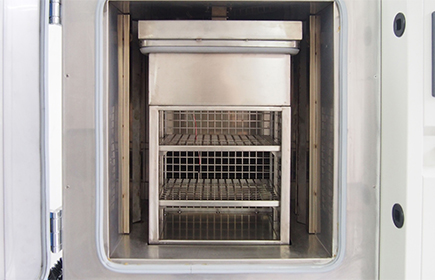
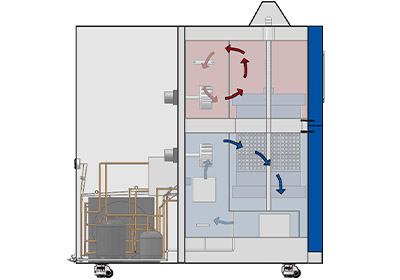
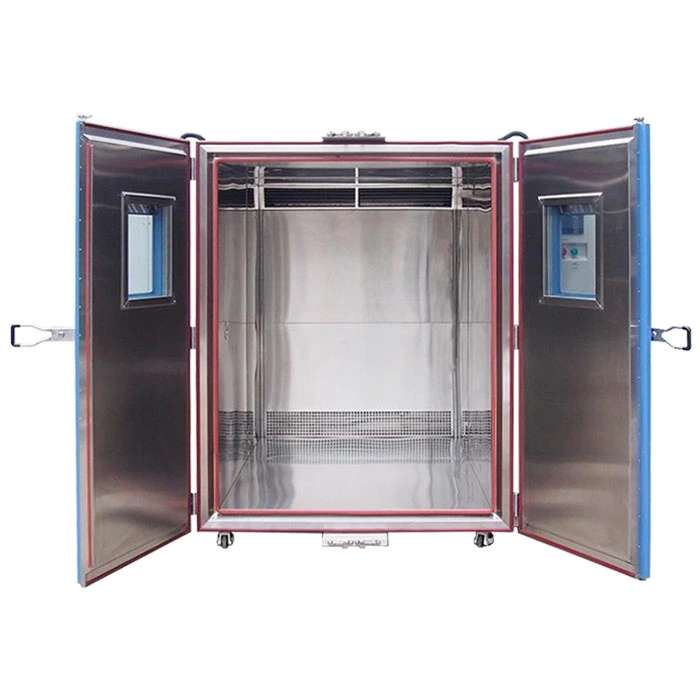
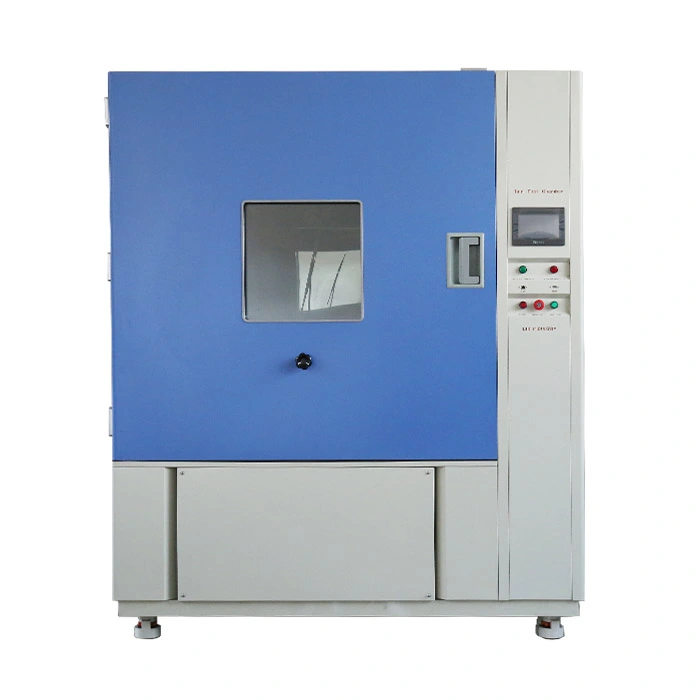
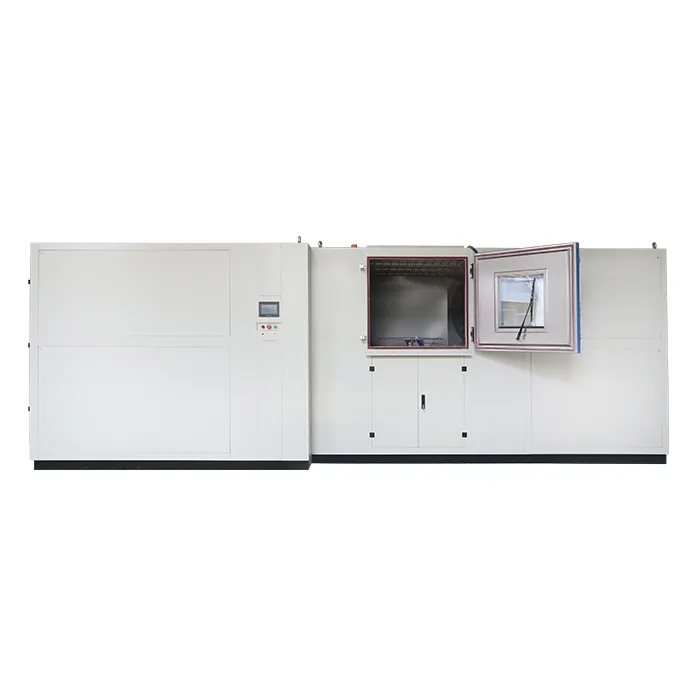
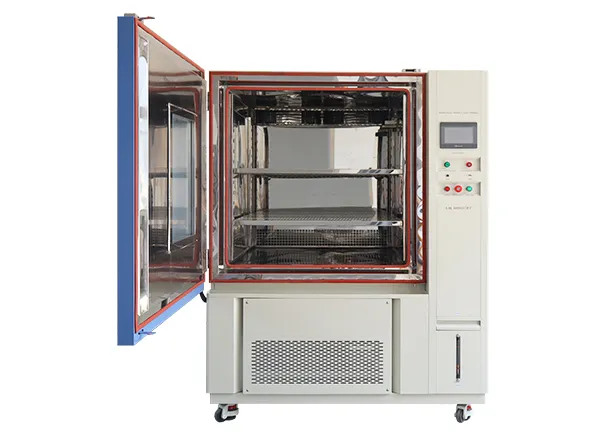
An LIB Thermal Shock Chamber is built to alternate test items between hot and cold environments in a controlled way. On the LIB thermal shock chamber product page, the platform is offered in basket, three-room, and horizontal-movement configurations for air-to-air, air-to-liquid, and liquid-to-liquid shock testing. The published range for thermal shock testing is -70 °C to +200 °C, and the basket transfer can be completed within 3 seconds. Those capabilities fit the basic need of Method 503.7: a fast, repeatable transition that actually creates thermal shock.
|  |  |
| Air-to-Air Thermal Shock Chamber | Air-to-Liquid Thermal Shock Chamber | Liquid-to-Liquid Thermal Shock Chamber |
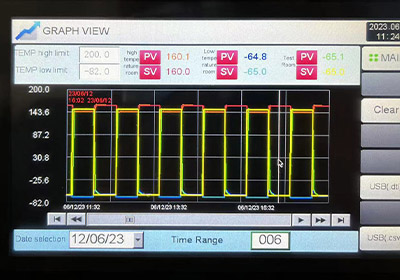
Fast transfer alone is not enough. The chamber also has to recover, hold the target condition, and do it consistently over repeated cycles. LIB chamber’s high-precision temperature control of ±0.5 °C and recovery within 5 minutes for its thermal shock chamber range. That matters because poor recovery or uneven chamber conditions can blur the test result. When the chamber is stable, the engineer can focus on the product rather than arguing with the equipment.
For military handheld radios, the chamber should support more than a simple hot-cold swap. It should allow repeatable cycling, clear parameter setting, observation points for functional checks, and enough flexibility to match real deployment profiles. LIB’s published thermal shock lineup includes two-zone thermal shock chamber and three-zone thermal shock chamber concepts, plus customized solutions for specialized test needs. That gives labs a path to match chamber type to sample size, handling method, and verification depth.
The best test profile is the one that reflects actual use, not the one that looks impressive on paper.
Start with deployment logic. Is the radio moving from vehicle cabin to freezing air? From warehouse storage to hot field use? From cold night patrol back to a warm shelter? The answers determine the right starting condition, final condition, dwell time, and whether a controlled ambient sequence is more realistic than a straight extreme-to-extreme cycle.
A sound profile usually defines:
· the radio configuration during test
· starting state and transfer direction
· target temperatures and dwell duration
· number of cycles
· functional checks during and after exposure
Use the minimum cycles in the standard as a floor, not a ceiling, if the field profile shows repeated transitions.
A practical record sheet should capture more than “pass” or “fail.”
Check item | What to record |
Visual condition | cracks, warping, seal deformation, fogging |
Electrical function | boot, display, keys, charging, audio |
Communication | link stability, transmit/receive behavior, RF consistency |
Mechanical fit | battery latch, connector fit, antenna seating |
Test data | chamber temperature, item temperature, transfer time, dwell |
The standard specifically calls for records of chamber temperature versus time, measured test item temperatures, transfer times, duration of each exposure, and transfer method.
Small handheld radios require different chamber setups than larger assemblies or integrated subsystems. Sample dimensions, fixtures, loading mass, and accessory count all affect chamber choice. A lab testing bare radios and spare batteries may need a simpler setup than one qualifying a fully configured radio kit.
Focus on transfer speed, temperature range, chamber recovery, control precision, data recording, sample handling, and service support. The chamber should enable real verification, not just showcase specs.
Standard chambers suit many radio programs. Custom solutions are preferable when special fixtures, unique transfer geometry, larger loads, or combined environmental tests (dust, rain, humidity) are needed.
Over 16 years in environmental test chambers.
Manufacturing and sales since 2009.
Products used in 56+ countries.
Design → Manufacturing → Commissioning → Delivery → Installation → Training.
Chambers are performance-tested, run continuously for 3 days, calibrated, and fully documented before shipment.
CE and RoHS certified.
3-year warranty with lifelong follow-up service.
Provides reliable support for labs tied to qualification schedules.
Get Started Today – Contact LIB Industry to discuss your thermal shock testing needs and request a customized solution.
A thermal shock chamber creates a repeatable hot-to-cold or cold-to-hot transition under controlled conditions. In Method 503.7, that controlled transfer helps labs evaluate whether the item still meets functional expectations after the thermal event.
That depends on the selected procedure and the test plan. Procedure I-C in Method 503.7 requires a minimum of three cycles, while other variations cover one-way shock, a single cycle, or shocks to and from controlled ambient conditions.
Yes. LIB publishes thermal shock chamber solutions with rapid basket transfer, broad hot and cold ranges, two-chamber and three-chamber designs, and customized options, which makes them suitable for building temperature shock test programs for military communication equipment.
 English
 русский
 français
 العربية
 Deutsch
 Español
 한국어
한국어 italiano
 tiếng việt
 ไทย
ไทย Indonesia