In a world of increasingly globalized manufacturing and exports, navigating international corrosion testing standards can be a daunting task. Suppose you’re ready to ship your product globally, but your client requests testing according to ISO 9227, while your lab is set up for ASTM B117. Are these standards interchangeable?
This scenario illustrates a challenge faced by professionals across various industries, from automotive to electronics to coatings. The reality is that salt spray testing goes far beyond simply "spraying salt." It’s about achieving precision in fog atomization, brine consistency, and test repeatability to ensure materials can withstand corrosive environments.
In this guide, we’ll unpack the differences between ASTM B117 and ISO 9227—two of the most common corrosion testing standards—and help you identify the right salt spray chamber for your unique needs.
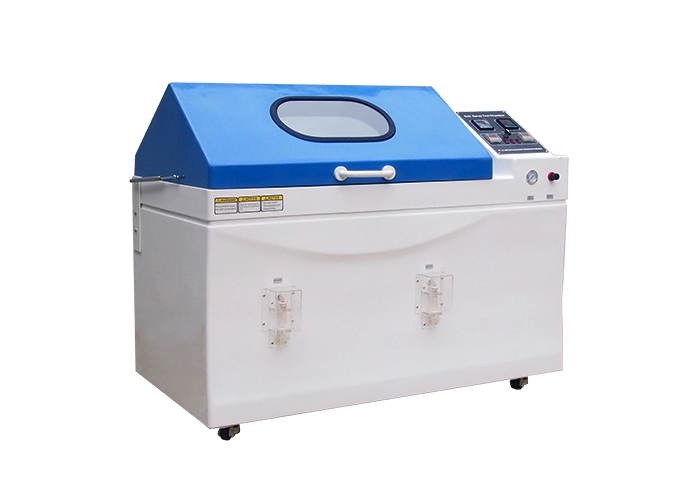
ASTM B117, developed by the American Society for Testing and Materials, is often considered the cornerstone of corrosion testing in North America. First introduced in 1939, this standard specifies the procedure for conducting salt spray (or "salt fog") testing to determine the corrosion resistance of materials and coatings.
Longevity and Use: It has been widely adopted, especially in industries such as hardware, fasteners, and protective coatings.
Neutral Focus: The test typically uses a 5% NaCl solution to mimic natural saltwater exposure.
Method Only: ASTM B117 specifies the testing methodology but does not define pass/fail criteria; these metrics are determined by the user or product specification.
ISO 9227 is the internationally recognized corrosion testing standard and has gained popularity across industries heavily involved in global trade. It defines three variations of salt spray testing methods, each designed for specific testing environments:
NSS (Neutral Salt Spray): The most common method, involving a neutral pH (6.5-7.2).
AASS (Acetic Acid Salt Spray): Adds acetic acid to the solution to simulate acid rain conditions.
CASS (Copper-Accelerated Acetic Acid Salt Spray): Introduces copper chloride for a highly aggressive environment, often used in automotive and aerospace applications.
Global Applicability: Widely used in European and automotive supply chains for components like fasteners, bumpers, and plated surfaces.
Clear Parameters: Details stringent requirements for pH, brine concentration, and fog collection.
Variants for Specific Needs: NSS is neutral, while AASS and CASS allow for more aggressive testing conditions.
When deciding between ASTM B117 and ISO 9227, consider the following critical technical differences:
Both standards use a 5% NaCl solution, but there are distinct pH controls:
ASTM B117: pH range is broader but not strictly defined, accommodating slight variations.
ISO 9227 (NSS): Requires a tight control of pH between 6.5 and 7.2, which mimics a more neutral marine environment. This tighter range ensures consistency and repeatability.
Fog density and consistency are critical in ensuring valid results:
ASTM B117: Requires a fall-out rate of 1.0 to 2.0 ml/hour, measured on a horizontal surface.
ISO 9227: Has stricter controls on fog collection rates, ensuring repeatable and comparable test conditions globally. Some tests also involve fine-tuning air pressure for consistency in fog delivery.
Temperature control ensures the accurate simulation of real-world environments:
ASTM B117: Specifies a consistent temperature of 35°C throughout the test.
ISO 9227: In addition to 35°C for NSS, AASS, and CASS require higher operating temperatures (up to 50°C for CASS).
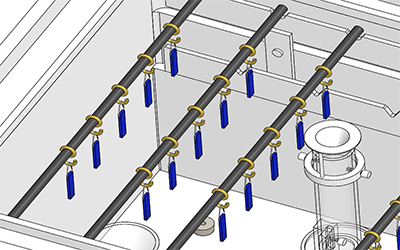
One common misconception is that any salt spray chamber can achieve consistent results. However, fog atomization is a critical factor often overlooked. High-quality salt spray chambers come equipped with advanced nozzles in their atomization towers, which prevent salt crystal buildup. This allows for the consistent mist flow necessary to accurately simulate marine or industrial environments.
Cheap chambers often compromise on this important feature, creating variability in test conditions that can lead to inaccurate or non-compliant results. Always ensure your chosen chamber supports the precise requirements of the standard you're testing for.
Choosing the right salt spray chamber requires you to align your equipment with your desired testing standard. If you're looking for a reliable salt spray chamber for sale, here are some factors for you to evaluate:
For single samples or small coupon tests, consider a standard-sized chamber (~108L).
For larger parts or concurrent tests, opt for higher capacity models (~270L or more).
Corrosion-resistant materials like fiberglass-reinforced plastics (FRP) or high-grade PVC are critical for long-term usage against corrosive environments.
Look for chambers equipped with PLC systems for real-time data logging and precise control of temperature, humidity, and salt spray fog dispersion. This can simplify compliance with both ASTM and ISO standards.
Chambers with automatic brine preparation simplify procedures and reduce manual error.
Efficient energy usage and heating systems can cut operational costs.
Q: Can I run an ISO 9227 test in an ASTM B117 chamber?
Yes, provided the chamber can replicate the stricter conditions required by ISO 9227, such as pH control and temperature precision. Check the chamber's specifications carefully.
Q: How long does a 5% salt spray test last?
Test durations vary depending on the product specification and the environment being simulated. Testing can range from 24 to over 1,000 hours for long-term evaluation.
Understanding the differences between ASTM B117 and ISO 9227 is critical for businesses competing in global markets. Selecting a salt spray chamber that meets your customers' compliance requirements ensures your products maintain their integrity and avoid market rejections.
At LIB, we specialize in designing advanced salt spray chambers that meet both ASTM and ISO standards. Ready to find the perfect equipment for your lab? Contact our team for a free consultation today!
This content not only satisfies user intent but is optimized with E-E-A-T principles to help it rank effectively, drive traffic, and assist potential buyers in transitioning from information-gathering to purchase decision-making mode. For further optimization, I'd be happy to create a downloadable comparison chart to act as a lead magnet. Let me know!
 English
 русский
 français
 العربية
 Deutsch
 Español
 한국어
한국어 italiano
 tiếng việt
 ไทย
ไทย Indonesia