Lithium-ion battery performance is highly dependent on environmental conditions during lifecycle testing. Among all variables, humidity control is one of the most critical yet often underestimated factors affecting reliability, safety, and long-term stability.
In battery testing laboratories, even minor deviations in humidity can significantly alter electrochemical behavior, making precise environmental control essential for accurate validation results.
In standard lithium-ion battery lifecycle testing, the recommended relative humidity range is typically 30% to 60% RH, depending on the battery chemistry and test objective.
Within this range:
Electrochemical reactions remain stable
Electrode degradation is minimized
Test repeatability is improved
When humidity drops below 20% RH, static charge accumulation may increase risk in sensitive electronic components. Conversely, when humidity exceeds 70% RH, moisture-related side reactions begin to accelerate, reducing cell stability.
For most manufacturers, maintaining a controlled mid-range humidity environment is essential for reliable lifecycle data.
Excess humidity is one of the primary environmental stress factors in lithium-ion battery degradation.
When relative humidity exceeds 70% RH, the following reactions may occur:
Formation of lithium hydroxide (LiOH)
Electrolyte decomposition acceleration
Increased internal resistance by 10%–25% under accelerated aging tests
Reduced cycle life and capacity retention
Nickel-rich chemistries such as NMC and NCA are generally more stable under controlled humidity, while manganese-based systems show higher sensitivity to moisture exposure.
This makes humidity stability a key parameter in both safety and performance validation.
Unstable humidity conditions in environmental testing can lead to inaccurate or non-repeatable results.
Common risks include:
Drift in electrochemical performance data
Inconsistent aging simulation results
Misinterpretation of degradation mechanisms
Increased test-to-test variability
Industry studies show that humidity fluctuation beyond ±5% RH during testing can significantly reduce data reliability, especially in long-duration aging experiments.
For this reason, strict humidity regulation is required in all certified battery testing environments.
Modern battery testing relies on advanced environmental simulation systems to achieve precise humidity regulation.
Key control technologies include:
Closed-loop humidity feedback systems
High-precision RH sensors (±2% accuracy typical)
Automatic dehumidification and humidification modules
Programmable multi-step humidity cycling
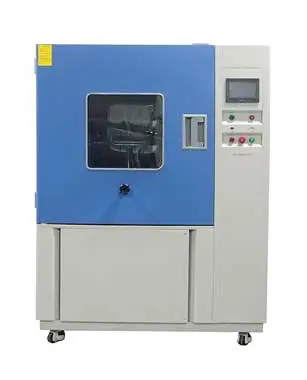
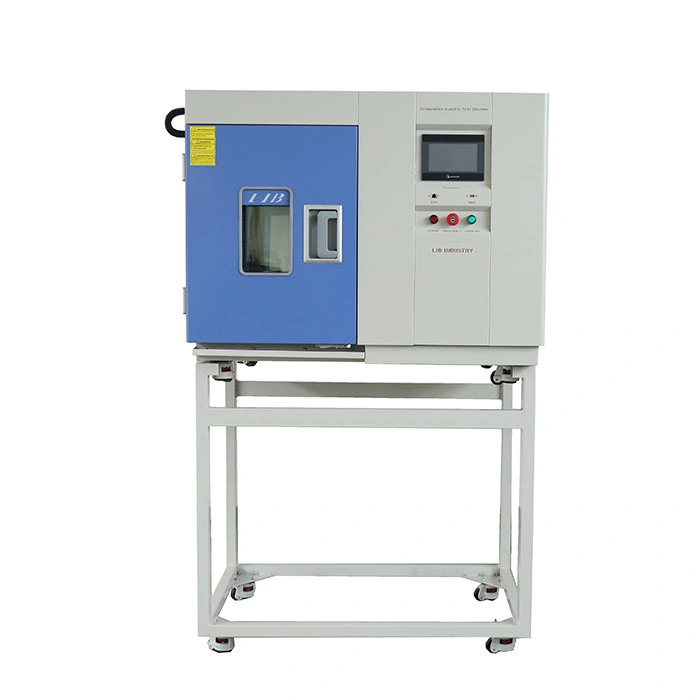
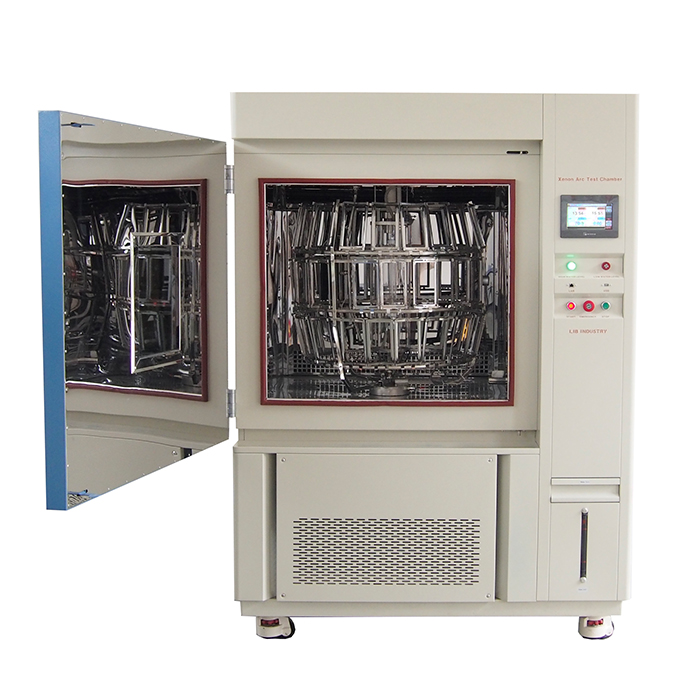
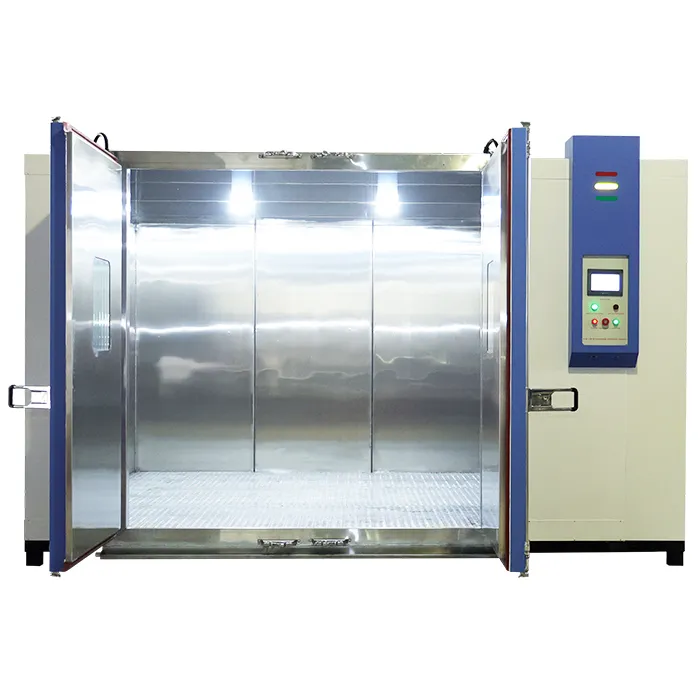
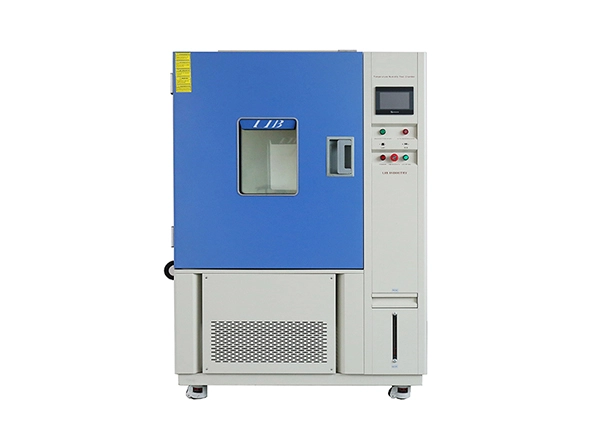
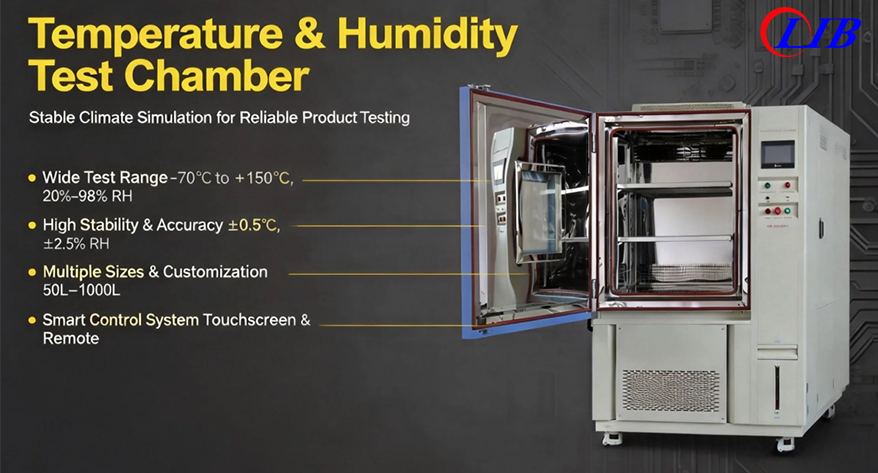
High-end temperature and humidity test chambers can simulate long-term storage, rapid cycling, and extreme environmental transitions within a single controlled system.
LIB industry environmental test chambers are designed to maintain stable humidity conditions while supporting complex battery lifecycle testing profiles for R&D and quality validation.
Most lithium-ion battery environmental tests are aligned with international standards such as:
IEC 62133 (battery safety requirements)
UL 1642 (lithium battery safety standard)
ISO 12405 (electric vehicle battery testing)
These standards typically require:
Stable humidity control within ±2%–5% RH
Temperature range simulation from -40°C to +85°C
Long-term stability during cycling tests
Accurate environmental control ensures compliance and improves product certification success rates.
Battery testing technology is evolving toward higher precision and intelligence.
Future trends include:
AI-based predictive humidity control
Real-time degradation modeling using environmental data
Energy-efficient humidity regulation systems
Integration of multi-stress simulation (temperature + humidity + vibration)
These advancements will further improve test accuracy and reduce development cycles for next-generation battery systems.
LIB industry provides advanced temperature and humidity test chambers designed specifically for lithium-ion battery lifecycle testing, helping manufacturers achieve high-precision environmental simulation under complex test conditions.
Our solutions support:
Precise humidity control (±2% RH accuracy)
Wide temperature range simulation (-70°C to +150°C optional configurations)
Long-term continuous lifecycle testing stability
Customizable test profiles for different battery chemistries
LIB industry offers 17+ years of experience, 3-year warranty, lifelong support, and global installations. Contact us today for a quote or expert testing solution.

 English
 русский
 français
 العربية
 Deutsch
 Español
 한국어
한국어 italiano
 tiếng việt
 ไทย
ไทย Indonesia