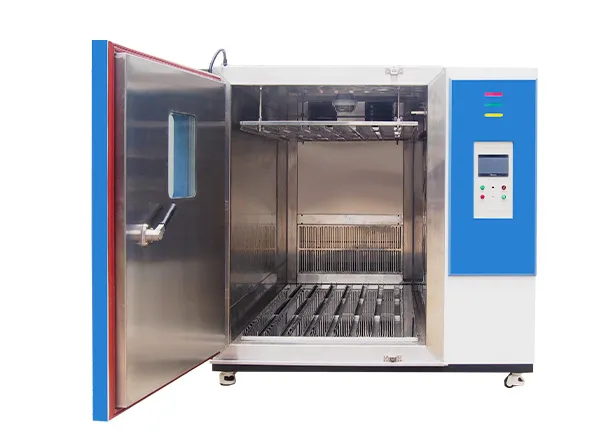
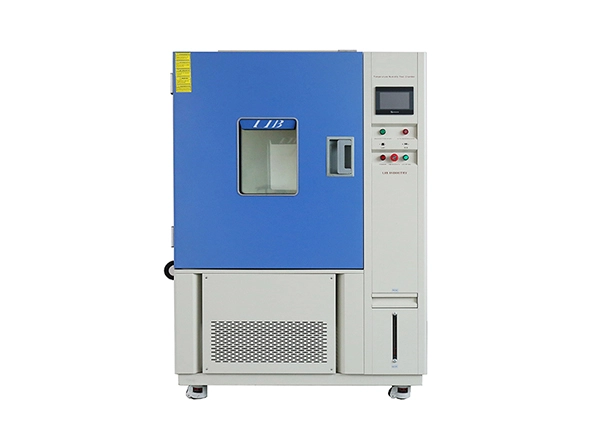
Corrosion testing sounds simple on paper. Put a coated part in a chamber, add salt, wait, and check the damage. In real manufacturing, it is not that simple. A chassis bracket, plated fastener, or underbody connector may face wet roads in winter, dry heat in summer, trapped moisture in crevices, and repeated temperature swings over years of service. A test that is too basic can miss those patterns. A test that is too complex can slow down validation and raise cost without adding much value.
That is why the choice between an ASTM B117 salt spray chamber and an SAE J2334 salt spray chamber matters. Both methods are widely used. Both help compare corrosion resistance. But they answer different questions, and they do not expose parts in the same way.
For engineers, lab managers, and sourcing teams working on automotive parts, the real issue is practical: which method gives data that matches the part’s service environment, and which chamber supports that method with stable, repeatable control.
Salt spray testing accelerates corrosion, allowing material weaknesses to appear in days or weeks instead of years. It is widely used in automotive, coatings, electroplating, and metal finishing to compare materials and protective systems under controlled conditions. A standard salt spray chamber runs continuous fog tests, while cyclic corrosion chambers—such as those developed by LIB industry—introduce humidity and drying stages to better simulate real-world exposure.
Salt spray testing places samples in a controlled chamber where salt concentration, temperature, humidity, and exposure time are precisely regulated. Beyond visible rust, it reveals coating breakdown, blistering, corrosion creep, and early failure at edges or fasteners.
In automotive applications, corrosion is rarely uniform. Components may fail due to stone-chip damage, exposed edges, or moisture trapped in seams. To address these complex conditions, LIB industry designs both standard salt spray chambers and advanced cyclic corrosion systems that replicate diverse environmental stresses.
SAE J2334 is a cyclic corrosion test developed for automotive applications. It simulates real service conditions by repeating cycles of salt exposure, humidity, and drying—closely matching winter road environments.
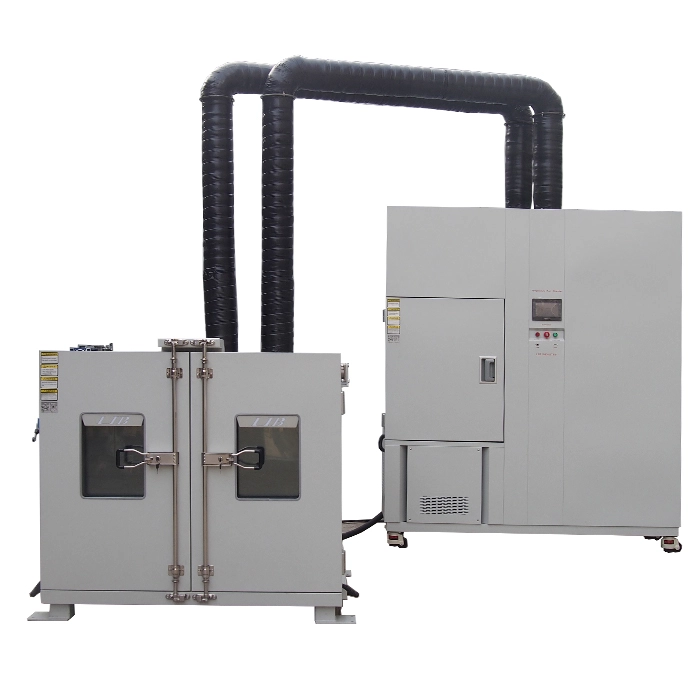
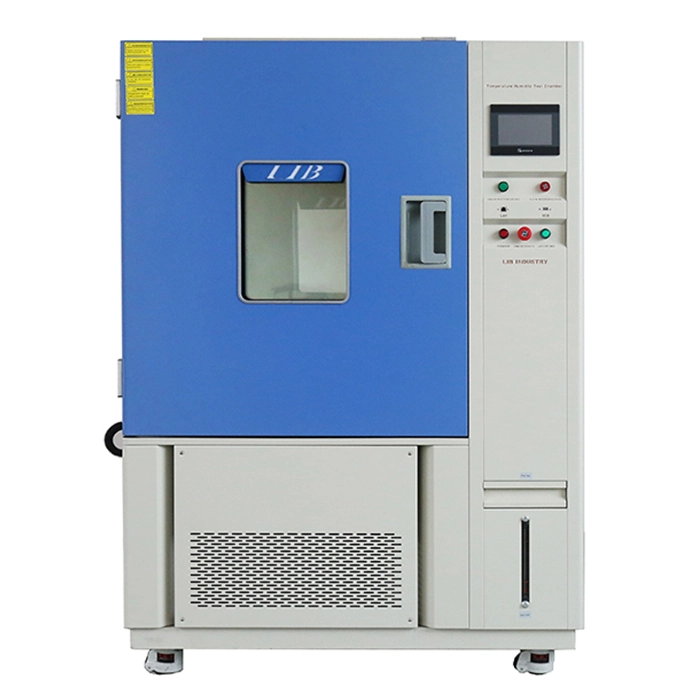
This method is widely used for chassis components, coated structures, and fasteners where real-world correlation is essential. A cyclic corrosion chamber from LIB industry provides programmable multi-stage control, enabling precise adjustment of fog, humidity, and drying phases for accurate simulation.
ASTM B117 is a widely recognized continuous salt fog test, typically using a 5% NaCl solution at 35°C with high humidity. It remains a standard method for coatings, plating, and material comparison.
Its strength lies in simplicity and consistency. LIB industry salt spray chambers are designed to maintain stable temperature, humidity, and salt concentration, ensuring reliable and repeatable test results. While ASTM B117 does not fully replicate real environments, it provides a trusted baseline for corrosion resistance evaluation.
The two standards may look similar from a distance because both involve salt exposure, but in daily lab work they produce different failure modes, different timelines, and different decisions.
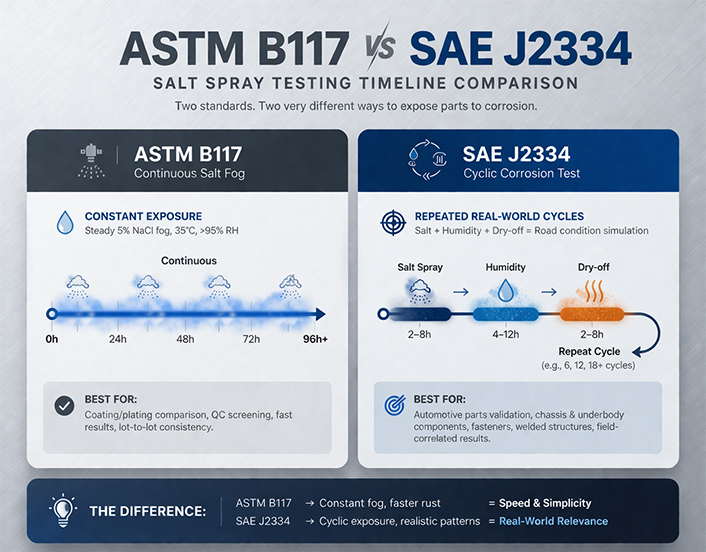
The main difference is static exposure versus cyclic exposure. ASTM B117 keeps parts in a continuous fog environment. SAE J2334 changes the environment over time. That means ASTM B117 is easier to run, while SAE J2334 demands more chamber control and more careful programming. LIB’s testing guidance for cyclic chambers specifically highlights fog, temperature, and humidity alternation, while its standard salt spray chambers focus on constant fog conditions.
Test Aspect | ASTM B117 | SAE J2334 |
Exposure style | Continuous neutral salt fog | Cyclic salt, humidity, and dry-off |
Typical use | Coating and plating comparison, QC screening | Automotive field-related corrosion validation |
Chamber type | Standard salt spray chamber | Cyclic corrosion chamber |
Control complexity | Lower | Higher |
Best fit | Fast comparative testing | Realistic automotive parts testing |
A plating shop testing small fasteners for lot-to-lot consistency may prefer ASTM B117. An automotive supplier validating coated brackets mounted under the vehicle floor will usually get more useful insight from SAE J2334. One test favors speed and consistency. The other favors environmental realism.
The second big difference is how the data is read. In ASTM B117, teams often track hours to red rust, white rust, blistering, or coating failure. In SAE J2334, the focus is often more application-based: corrosion creep from scribe marks, underfilm attack, seam corrosion, edge weakness, and behavior that resembles service exposure.
That distinction matters. A coating may look strong in continuous fog but behave poorly when wet-dry cycling is added. Another coating may not post an impressive “hours to rust” number yet perform better on a real vehicle because it handles cyclic stress more naturally. For chassis corrosion test work, that difference can save a costly redesign.
This question comes up often because automotive parts rarely see a single constant environment. They see road splash, trapped salt, dry parking intervals, garage humidity, and repeated cold-to-warm transitions.
For automotive validation, SAE J2334 is usually the stronger choice. It was built around vehicle-related exposure logic, and industry literature has long pointed to stronger correlation with on-vehicle corrosion than continuous salt fog methods. A well-run SAE J2334 salt spray chamber can reveal coating creep at stone-chip damage, corrosion at flange edges, and weakness in complex assemblies earlier than a simple static fog test.
This is especially valuable for:
Automotive Part | Why Cyclic Testing Matters |
Chassis brackets and stamped parts | Wet-dry cycles reveal edge and scribe corrosion |
Fasteners and clips | Repeated salt and humidity show thread and recess attack |
Underbody assemblies | More realistic for winter road salt exposure |
Coated welded structures | Better at exposing seam and joint corrosion |
For a salt spray chamber for automotive parts, realism often matters more than speed alone. A test that mimics how corrosion starts and spreads on real vehicles is more useful than one that only creates damage quickly.
ASTM B117 still has a clear place in automotive supply chains. It is often the right test when the goal is incoming inspection, plating comparison, process control, or a simple pass-fail screen before a more advanced validation stage.
It is also easier to explain across teams. Purchasing, quality, and suppliers usually know what an ASTM B117 report means. Historical internal data is often built around it. If a company has years of benchmark results for plated clips, washers, or brackets under continuous salt fog, staying with ASTM B117 can make trend analysis straightforward.
In other words, ASTM B117 is not outdated. It is simply narrower. For screening, it is efficient. For full vehicle-related corrosion validation, it is often not enough on its own.
After the test standard is chosen, the next question is chamber selection. A poor chamber can ruin even a good test plan.
|
|
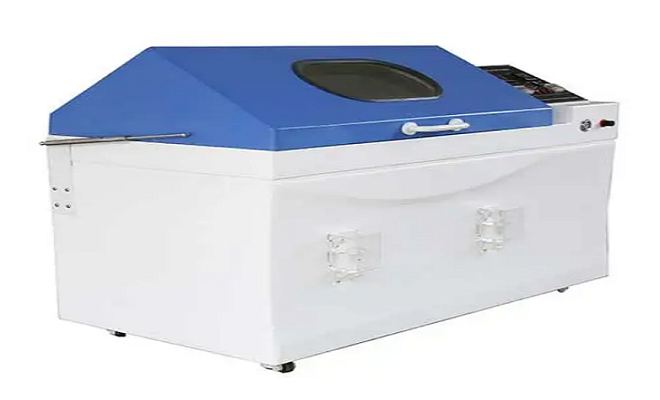
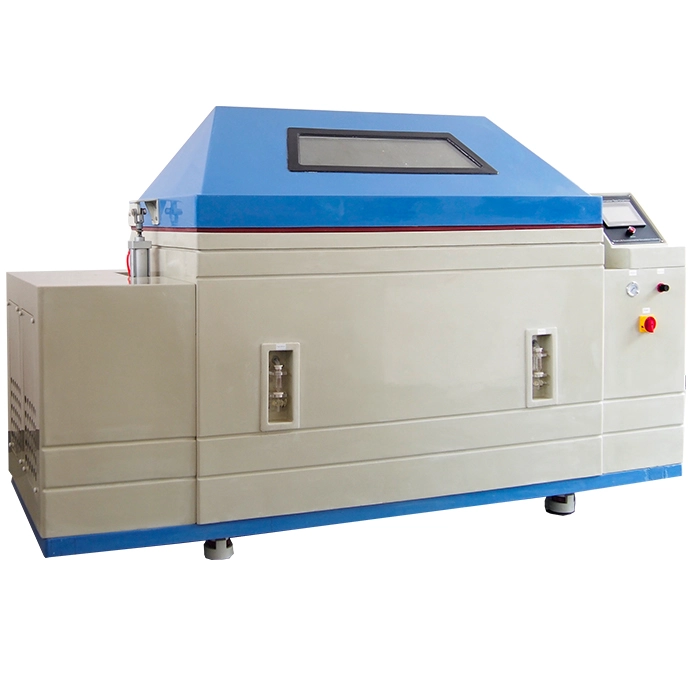
A standard ASTM B117 salt spray chamber should provide stable fog generation, uniform salt deposition, resistant chamber construction, and simple parameter control. LIB states that its standard chambers support neutral and acid salt spray testing, uniform spray distribution, touchscreen control, program setting, data export, and remote PC control. Its standard chamber range lists ambient to 60°C operation with 95% to 98% RH, while the cyclic chamber range adds broader temperature and humidity control needed for multi-stage corrosion programs.
For buyers comparing systems, the most useful questions are practical ones. Can the chamber fit full assemblies rather than coupons only? Is the nozzle system stable over long runs? Can the controller handle repeat programs without drift? Is the material resistant to brine, acidic condensate, and routine cleaning? How easy is calibration? How hard is it to replace consumables?
For a cyclic corrosion chamber, control depth matters even more. If the chamber cannot switch cleanly between humidity dwell and dry stages, the test is only half right.
A basic ASTM B117 chamber usually costs less to buy and less to run. It is simpler, often smaller, and needs fewer control functions. A cyclic corrosion chamber requires more hardware and tighter control, so the initial price is higher.
But purchase price is only one number. If a supplier chooses the cheaper chamber and then needs repeat testing, extra validation, or field complaints because the wrong method was used, the “lower cost” choice can become expensive very quickly. For automotive programs, the right chamber is usually the one that reduces false confidence.
Selecting a salt spray chamber supplier goes beyond equipment size or control features—reliable support is just as critical as the chamber itself.
Since 2009, Xi’an LIB Environmental Simulation Industry has designed, manufactured, and serviced environmental test chambers for clients worldwide. All products carry CE and RoHS certifications, reflecting consistent quality and compliance. For buyers, this experience means reduced risk during installation, faster qualification, and confidence that your equipment will perform reliably for years.
LIB offers both standard salt spray chambers and advanced cyclic corrosion chambers. Whether you need ASTM B117 testing today or a cyclic program for automotive applications tomorrow, LIB can meet evolving requirements. Multiple chamber sizes, programmable controls, and sample-specific customization ensure a solution for everything from small fasteners to large assembled components—allowing one supplier to support current needs and future growth.
Success often depends on service. LIB industry provides comprehensive support, including professional installation guidance, remote technical assistance, readily available spare parts, and a 3-year warranty with lifetime support. An English-speaking team and a global network of service centers and partners ensure overseas labs can minimize downtime, maintain smooth operations, and quickly resolve issues.
Choosing a supplier is not only about chamber size or control logic. In corrosion testing, support matters almost as much as equipment.
ASTM B117 and SAE J2334 are both useful, but they are not interchangeable. ASTM B117 is the better fit for straightforward coating and plating comparison, routine screening, and cost-conscious quality work. SAE J2334 is the stronger option when the goal is to understand how automotive parts behave under more realistic corrosion cycles. For chassis corrosion test programs, fastener corrosion testing, and salt spray chamber selection for automotive parts, cyclic exposure usually gives data that is closer to what happens in service.
The right choice comes down to the question being asked. If the goal is simple comparison, ASTM B117 may be enough. If the goal is field-relevant validation, an SAE J2334 salt spray chamber or cyclic corrosion chamber is the smarter path.
The main difference is exposure mode. ASTM B117 uses continuous salt fog, while SAE J2334 uses cyclic corrosion stages that combine salt, humidity, and dry-off periods. That is why SAE J2334 is often preferred for automotive corrosion testing.
Yes. ASTM B117 is still widely used for plating checks, coating comparison, supplier quality control, and quick screening. It is useful when a simple and repeatable benchmark is needed.
A chassis corrosion test needs to reflect how road salt, moisture, and drying repeat over time. SAE J2334 captures that cyclic pattern better than a continuous fog test, so the results are often more relevant for underbody parts.
A standard salt spray chamber is usually best for ASTM B117 and similar continuous fog methods. A cyclic corrosion chamber is the better choice when programmable humidity and drying stages are required. Some advanced systems can cover multiple methods, but the chamber must have the right control range.
Buyers should focus on chamber size, spray uniformity, control stability, programmability, corrosion-resistant construction, maintenance access, calibration support, and after-sales service. For automotive parts, the ability to run stable cyclic corrosion programs is often the deciding factor.
 English
 русский
 français
 العربية
 Deutsch
 Español
 한국어
한국어 italiano
 tiếng việt
 ไทย
ไทย Indonesia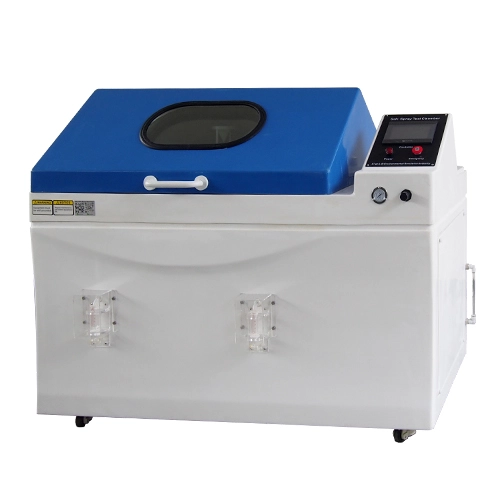
.webp "CO₂ Carbonation Curing Chamber Automation Kit")