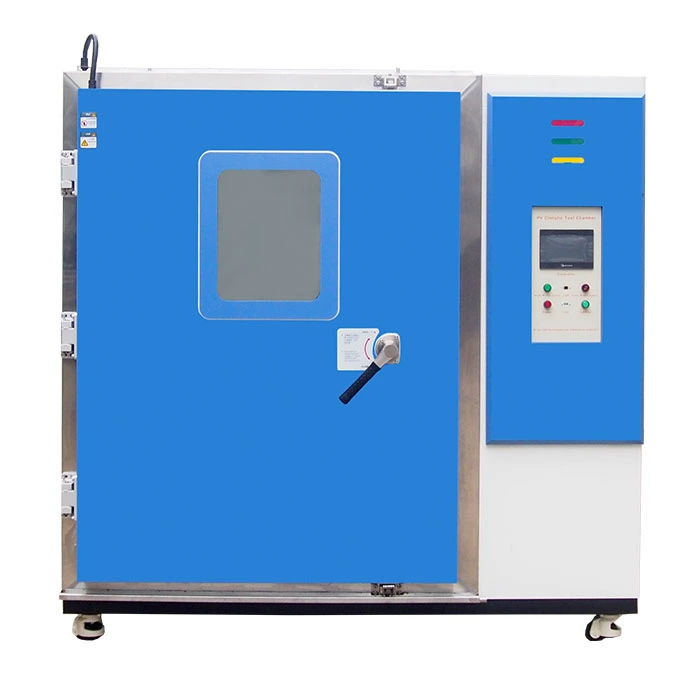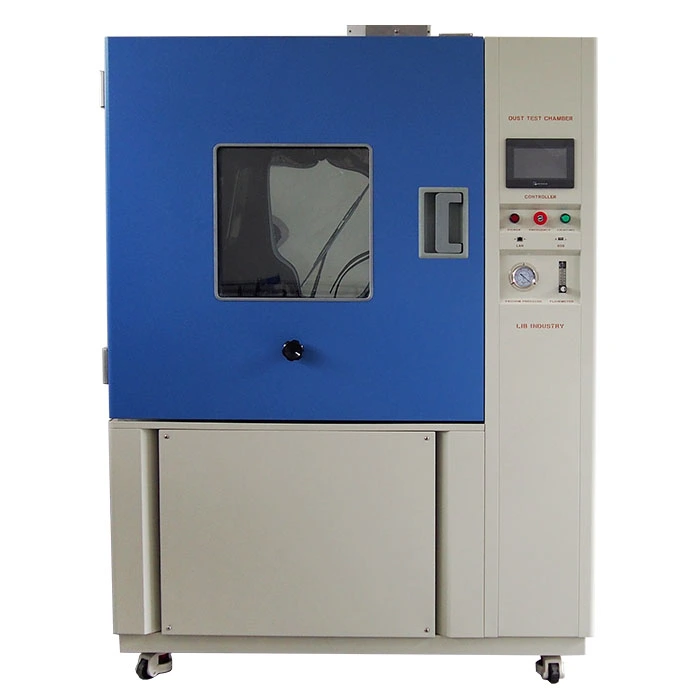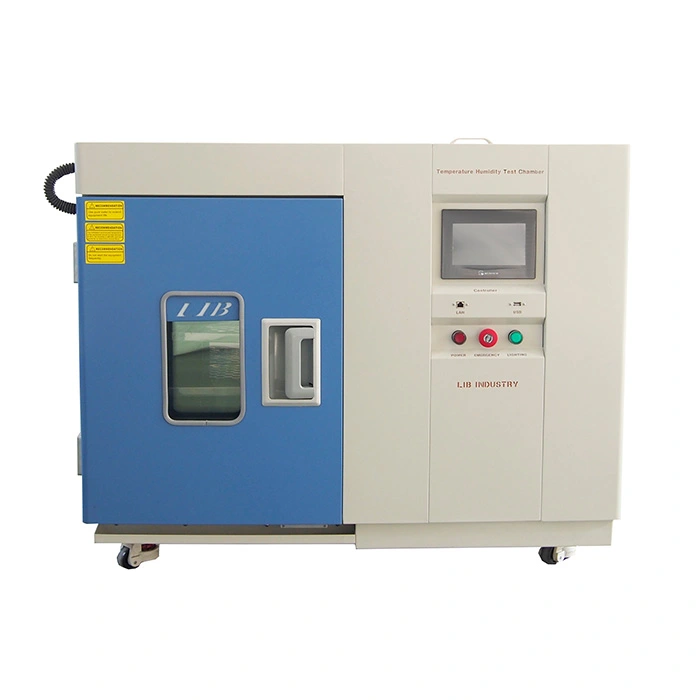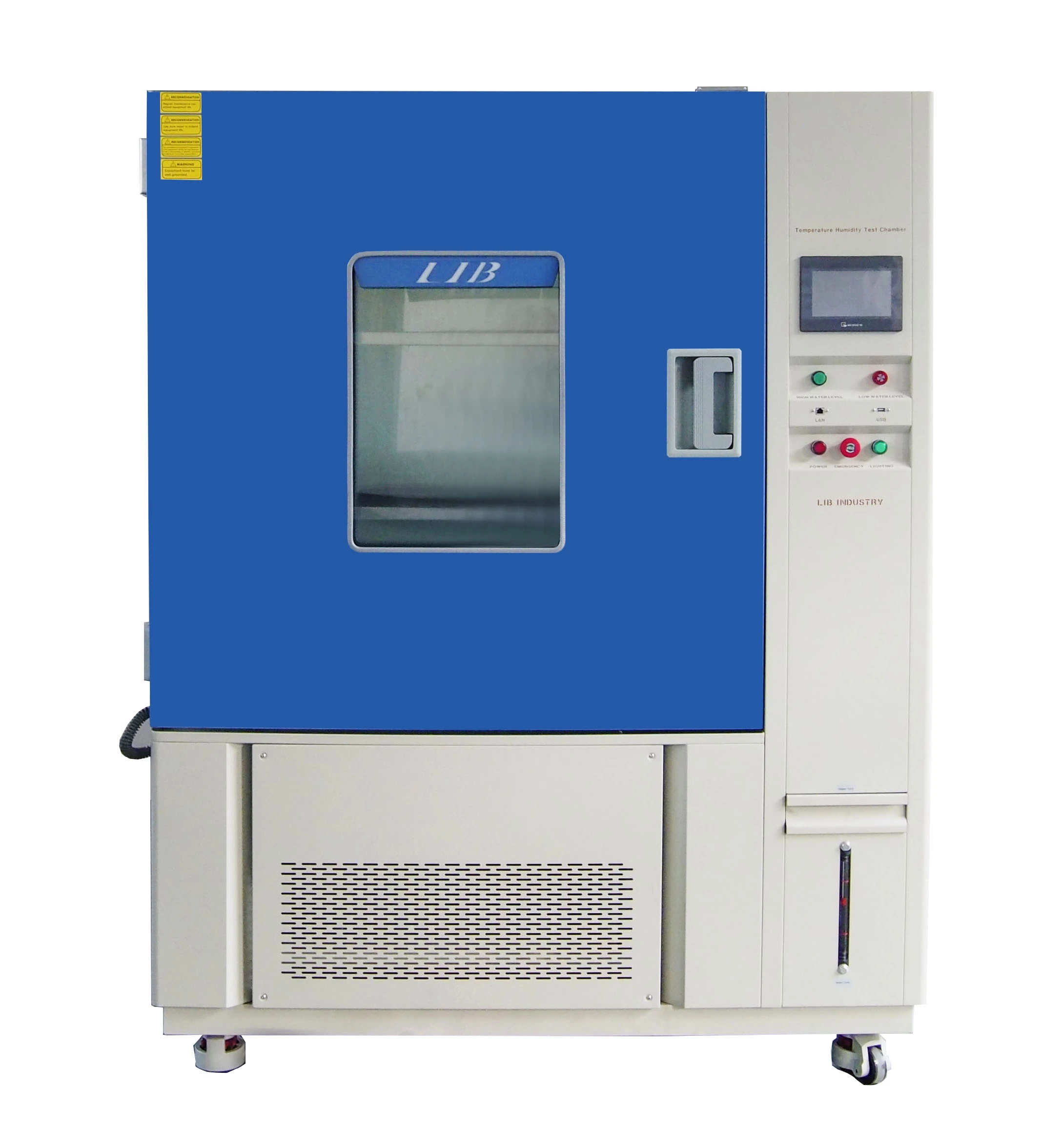
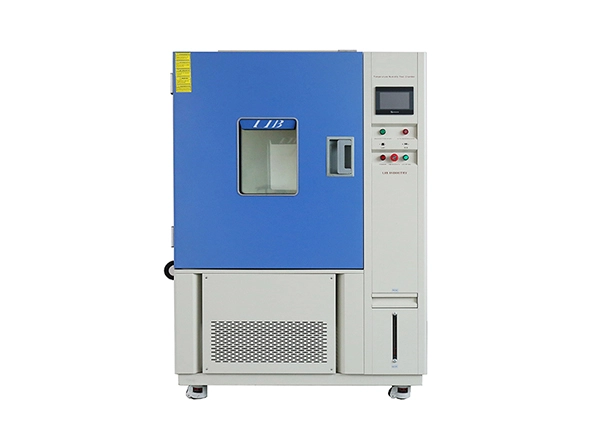
In modern research and development, electronics, semiconductors, and biopharmaceutical industries demand frequent, high-precision environmental simulations. Products must withstand a wide range of temperature and humidity conditions to ensure reliability, safety, and longevity. Traditional large-scale environmental chambers often require dedicated floor space and complex installation, making them impractical for small laboratories or rapid prototyping environments.
This is where LIB industry mini temperature humidity chambers come into play. Compact yet powerful, these desktop systems deliver performance comparable to full-sized chambers, allowing precise environmental control in limited spaces. Accuracy in LIB systems is measured by two critical standards: fluctuation—how much temperature or humidity deviates over time—and uniformity—how consistent conditions are across the testing space. These standards are essential for reproducible and reliable test results.
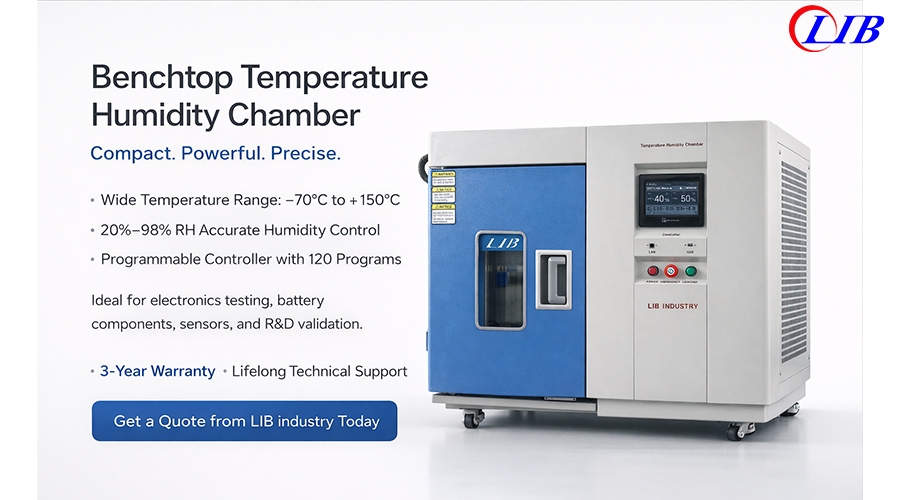
LIB industry Mini Temperature Humidity Environmental Control Chambers achieve precise environmental control through a combination of heating, cooling, humidity regulation, and airflow management. Understanding these four dimensions is key to appreciating their engineering sophistication.
|
| |||||
Temperature Control (Bi-directional)
Heating: Low thermal inertia designs, such as stainless steel heating tubes or ceramic heating plates, allow rapid and uniform heat distribution.
Cooling: Traditional compressor-based refrigeration provides fast temperature drops, while Peltier (thermoelectric) cooling offers compact, vibration-free, and energy-efficient alternatives. LIB industry carefully selects the method depending on application requirements.
Humidity Control (Water Balance)
Humidification: Shallow steam baths and ultrasonic humidifiers deliver precise moisture addition. Steam systems provide stability, while ultrasonic methods enable rapid response in small volumes.
Dehumidification: Condensation-based dehumidifiers effectively remove excess moisture, and careful placement in LIB’s compact chamber ensures consistent distribution.
Sensors: High-precision capacitive polymer humidity sensors or traditional wet-and-dry bulb systems feed real-time data to the LIB control system.
Airflow System (Circulation)
Wind Path Design: Layered airflow, or laminar circulation, minimizes “dead zones” in the chamber, ensuring uniform temperature and humidity even around densely packed samples.
Modern LIB mini humidity chambers rely on advanced controllers to manage the complex interactions of heat, cold, and moisture.
PID Control Algorithms: Proportional-Integral-Derivative (PID) logic prevents overshooting temperature or humidity targets and enables fine adjustments for precise stabilization.
PLC & HMI: Programmable Logic Controllers (PLC) and Human-Machine Interfaces (HMI) allow users to set complex temperature and humidity cycles, automate testing sequences, and adjust parameters on the fly.
Data Security & Monitoring: LIB systems provide remote monitoring, data logging, and multiple safety mechanisms, including over-temperature alarms and emergency shutdown protocols, safeguarding both samples and equipment.
Designing a mini chamber requires overcoming unique challenges:
Uniformity: Small enclosures can suffer from uneven air distribution, especially when samples block airflow.
Thermal Load Balancing: Samples themselves generate heat, which must be counteracted to maintain target conditions.
Insulation: High-density polyurethane foam and vacuum-insulated panels reduce thermal leakage, maintaining stable conditions with minimal energy consumption. LIB industry optimizes insulation for maximum performance in compact spaces.
When evaluating a LIB industry mini temperature humidity chamber, several parameters are critical:
Temperature Range: Typical -20°C to +150°C
Other low temperature options: -40°C,-70°C
Humidity Range: 20%–98% RH
Precision Metrics:
Temperature fluctuation ±0.5°C
Humidity deviation ±2.5% RH
Ramp Rates: Linear vs. non-linear heating and cooling rates determine how quickly the chamber can reach target conditions without overshoot.
These specifications ensure that LIB systems can replicate real-world environmental stresses accurately, supporting research, quality control, and accelerated life testing.
 Electronics and Semiconductors: LIB mini temperature humidity chambers simulate extreme conditions for chip reliability testing, PCB aging analysis, and component stress evaluation.
Biopharmaceuticals: Desktop chambers from LIB industry support drug stability studies following ICH guidelines, vaccine storage simulations, and temperature-sensitive reagent testing.
Automotive Electronics: Small sensors and controllers are subjected to rapid temperature and humidity shifts to validate performance under real-world conditions.
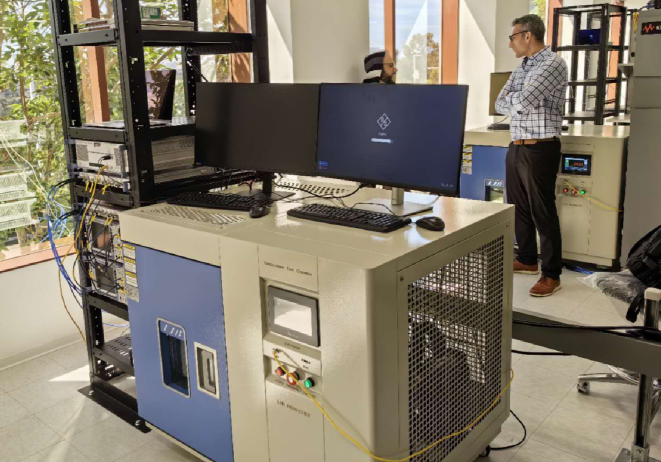
Desktop Advantage: Beyond technical performance, LIB mini chambers save space, enable single-operator handling, reduce energy consumption, and are ideal for fast-paced R&D environments. For example, a North American electronics lab recently deployed two LIB mini chambers on their benchtops, allowing continuous thermal cycling tests without dedicating large floor areas.
Beyond its general applications, LIB industry equipment is relied upon by some of the world’s most renowned companies.
In December 2023, Apple acquired two TH-80A benchtop temperature and humidity test chambers, which were installed at their Seattle, USA facility. During a visit in March 2024, LIB industry engineers met with Apple’s team, who expressed high praise for both the chambers’ performance and the responsive technical support provided.
Q1: What is the difference between a LIB mini temperature humidity chamber and a standard chamber?
A1: LIB mini chambers are compact, desktop-friendly systems designed for limited-space labs. They offer comparable temperature and humidity accuracy to full-sized chambers but with faster setup, lower energy consumption, and space efficiency.
Q2: How precise are LIB mini temperature humidity chambers?
A2: High-quality models achieve temperature fluctuation of ±0.5°C and humidity deviation of ±2.5% RH, ensuring reliable and repeatable test results.
Q3: Can I program complex temperature and humidity cycles?
A3: Yes. LIB systems use PID-controlled PLCs with HMI interfaces, allowing multi-step, programmable cycles and remote monitoring.
Q4: What kind of support is available if the chamber experiences issues?
A4: LIB industry provides on-site service through global service centers, remote technical assistance, fast response times, and replacement parts as needed.
Performance alone is not enough when investing in a LIB mini temperature humidity chamber. Reliable after-sales support ensures your system delivers consistent, precise results for years.
Warranty Coverage: 3-year warranty on core components, including compressors, heating elements, and control systems.
Lifetime Technical Support: Access to English-speaking engineers for troubleshooting and guidance.
Fast Response Times: 5×12 hour support minimizes downtime.
Calibration & Maintenance: Optional scheduled calibration ensures continued accuracy.
Global Service Network: On-site support through international service centers and over 30 global partners.
Invest in a LIB industry mini temperature humidity chamber with confidence—our comprehensive after-sales support ensures your system remains precise, reliable, and fully operational for years to come. Contact our experts today to discuss your requirements and service options.
 English
 русский
 français
 العربية
 Deutsch
 Español
 한국어
한국어 italiano
 tiếng việt
 ไทย
ไทย Indonesia

.webp "JESD22-A104 Temperature Cycling Chamber")