 Outdoor furniture is expected to maintain its appearance and performance despite years of exposure to sunlight, rain, humidity, and temperature fluctuations. However, fading colors, chalking surfaces, and cracked components remain common problems for manufacturers and exporters worldwide.
A single customer complaint about color fading can result in product returns, replacement costs, and damage to brand reputation. For this reason, many furniture manufacturers use ASTM G154 UV accelerated weathering testing to evaluate material durability before products reach the market.
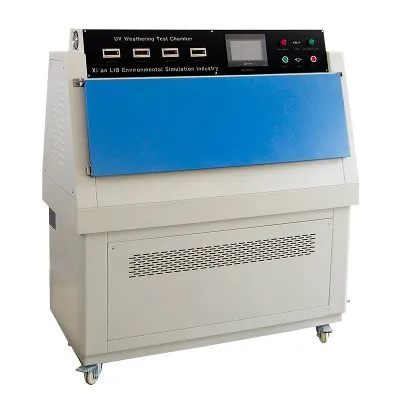
An ASTM G154 UV aging chamber simulates the combined effects of ultraviolet light, heat, and moisture under controlled laboratory conditions, allowing manufacturers to compare materials, coatings, and formulations within a much shorter timeframe than outdoor exposure testing.
Outdoor weathering is rarely caused by sunlight alone. Most failures occur because UV radiation, heat, and moisture work together to degrade materials over time.
UV radiation breaks chemical bonds within plastics, coatings, pigments, and textiles. As these materials degrade, visible changes begin to appear, including fading, gloss loss, yellowing, embrittlement, and surface cracking.
Heat further accelerates these reactions. Dark-colored furniture surfaces can reach temperatures significantly higher than ambient air, increasing stress on coatings and polymer structures. Repeated heating and cooling cycles often contribute to cracking and loss of adhesion.
Moisture introduces another challenge. Rain, condensation, and dew can remain on furniture surfaces for extended periods, promoting hydrolysis, swelling, and coating degradation. In many cases, moisture accelerates damage that was initially caused by UV exposure.
As a result, evaluating outdoor durability requires more than simple UV exposure. Realistic testing should include both UV and moisture cycles.
ASTM G154 is one of the most widely used accelerated weathering standards for non-metallic materials. The test uses fluorescent UV lamps together with elevated temperatures and moisture exposure to simulate outdoor weathering conditions.
The standard is commonly applied to:
Outdoor furniture
Plastic products
Powder coatings
Paint systems
Composite materials
Outdoor fabrics
Rubber and sealants
Rather than predicting exact service life, ASTM G154 provides a repeatable method for comparing performance between materials, suppliers, or product designs.
For example, manufacturers may use ASTM G154 testing to compare two resin formulations, evaluate a new pigment package, or verify whether a coating system meets customer durability requirements.
The test combines three major weathering factors: UV radiation, heat, and moisture.
The most commonly used exposure cycles are shown below.
Test Cycle | Typical Conditions | Common Application |
UVA-340 Cycle 1 | 8 h UV at 60°C + 4 h condensation at 50°C | Color stability and coating durability |
UVB-313 | 4 h UV at 60°C + 4 h condensation at 50°C | Rapid material screening |
UVA-340 with Spray | UV exposure + water spray + condensation | Rain and moisture simulation |
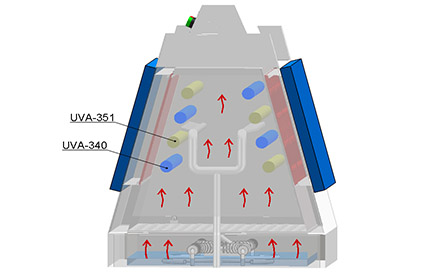 | 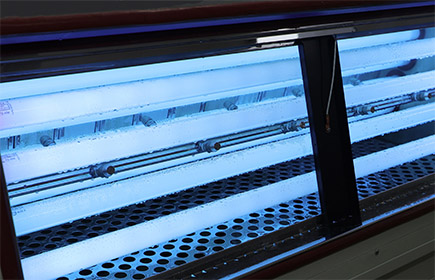 |
UVA-340 lamps reproduce the short-wave UV portion of natural sunlight and are widely used for outdoor furniture testing.
A typical ASTM G154 Cycle 1 uses:
Irradiance: 0.89 W/(m²·nm) at 340 nm
UV exposure: 8 hours
Black panel temperature: 60 ±3°C
Condensation: 4 hours at 50 ±3°C
This cycle is often selected for evaluating color retention, gloss retention, and coating performance.
UVB-313 lamps generate more aggressive UV energy than natural sunlight. Although they may accelerate degradation more quickly, they can also produce failure modes that do not occur in actual outdoor environments.
For this reason, UVB-313 is commonly used for comparative screening rather than final product qualification.
Many outdoor furniture failures occur after prolonged exposure to dew, rain, and humidity rather than UV alone.
Condensation cycles allow warm water vapor to form directly on sample surfaces, reproducing overnight moisture exposure. Some test programs also incorporate water spray to simulate rainfall and sudden cooling.
Including moisture exposure often provides a more realistic assessment of long-term outdoor performance.
Different furniture materials respond differently to outdoor weathering, making material-specific evaluation essential.
Plastic FurniturePolypropylene, polyethylene, and other molded plastics are commonly evaluated for:
| Resin Wicker and Synthetic RattanSynthetic wicker products may develop:
These failures often appear first at bending points and woven intersections. |
Powder-Coated Metal FurnitureTesting typically focuses on:
Particular attention is often given to weld areas, edges, and fastening points. | Wood-Plastic CompositesComposite outdoor furniture may experience:
|
Outdoor Fabrics and CushionsFabric covers and coated textiles are commonly evaluated for:
| |
Accelerated weathering tests are most valuable when results can be measured objectively.
Color change is often reported using ΔE values. Many manufacturers use internal limits such as:
ΔE ≤ 3 for light-colored products
ΔE ≤ 5 for darker colors
Additional performance indicators may include:
Gloss retention
Chalking grade
Surface cracking
Coating adhesion
Tensile strength retention
Monitoring these properties helps manufacturers identify potential quality risks before shipment and provides useful data when discussing specifications with customers.
For example, if a powder-coated frame shows severe gloss loss after testing while a competing coating remains stable, the results may justify changing suppliers or coating formulations.
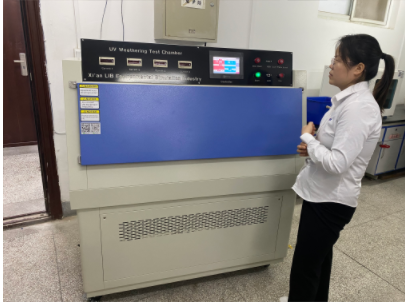
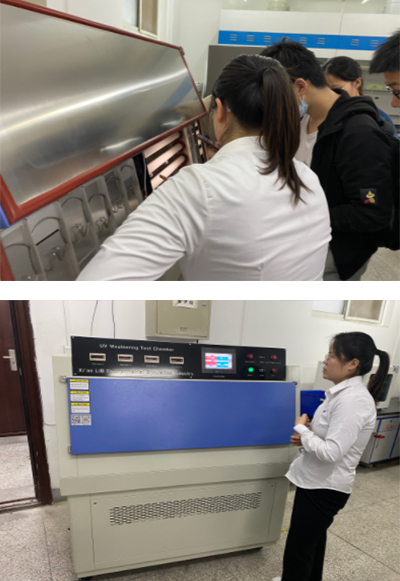 Following the successful installation and commissioning of an ASTM G154 UV aging chamber at the Department of Materials Chemistry, Xi’an Jiaotong University, LIB Industry further strengthened its role in supporting advanced materials research and academic testing infrastructure.
The system is specifically configured for research on polymers, coatings, composites, and functional surface materials within the Department of Materials Chemistry, where precise control of environmental variables is essential for publication-level experimental data. The chamber is equipped with UVA-340 and UVB-313 lamps, delivering irradiance control from 0.35 to 1.55 W/m² at 340 nm with closed-loop feedback stability of ±0.02 W/m², ensuring highly repeatable exposure conditions across long-duration experiments.
To simulate real-world degradation pathways studied in materials chemistry, the system integrates UV irradiation, condensation, and controlled temperature cycling from ambient +10°C to 70°C. Programmable multi-stage test cycles allow researchers to design complex aging profiles for studying photo-oxidation, chain scission, discoloration, and coating delamination mechanisms at a microstructural level.
LIB engineers completed full on-site installation, calibration, and training for laboratory personnel in the Department of Materials Chemistry, enabling immediate operation and method development. The chamber’s SUS304 corrosion-resistant structure, automated water supply system, and continuous 24/7 operation capability ensure long-term stability for university-scale research programs.
This project demonstrates LIB Industry’s ability to deliver ASTM-compliant UV aging chambers tailored for the Department of Materials Chemistry, providing stable, reproducible, and high-precision testing platforms that directly support scientific research and material innovation.
Model | UV-SI-260 |
|
Internal Dimension (mm) | 450*1170*500 | |
Overall Dimension (mm) | 680*1300*1500 | |
Irradiation Source | Fluorescent UV lamps (8) - 40 W | |
Temperature Range | Ambient ~ 90 ℃ ±2℃ | |
Black Panel Temperature (BPT) | 35 ~ 80 ℃ | |
Humidity Range | ≥95% RH | |
Bandwidth | 290 ~ 400 nm | |
Irradiance Control | 0.3~20 W/㎡ | |
Distance of Specimen and lamp | 50 mm | |
Heating Element | Nichrome heater | |
Controller | Programmable color LCD touch screen controller | |
Ethernet connection, PC Link,USB | ||
Water Supply System | Automatic water supply, Water purification system | |
Interior Material | SUS304 stainless steel | |
| Standards | ASTM G154, ASTM G15, ISO 4892, ASTM D4329, ISO 16474-3, IEC 61215, IEC 61730 | |
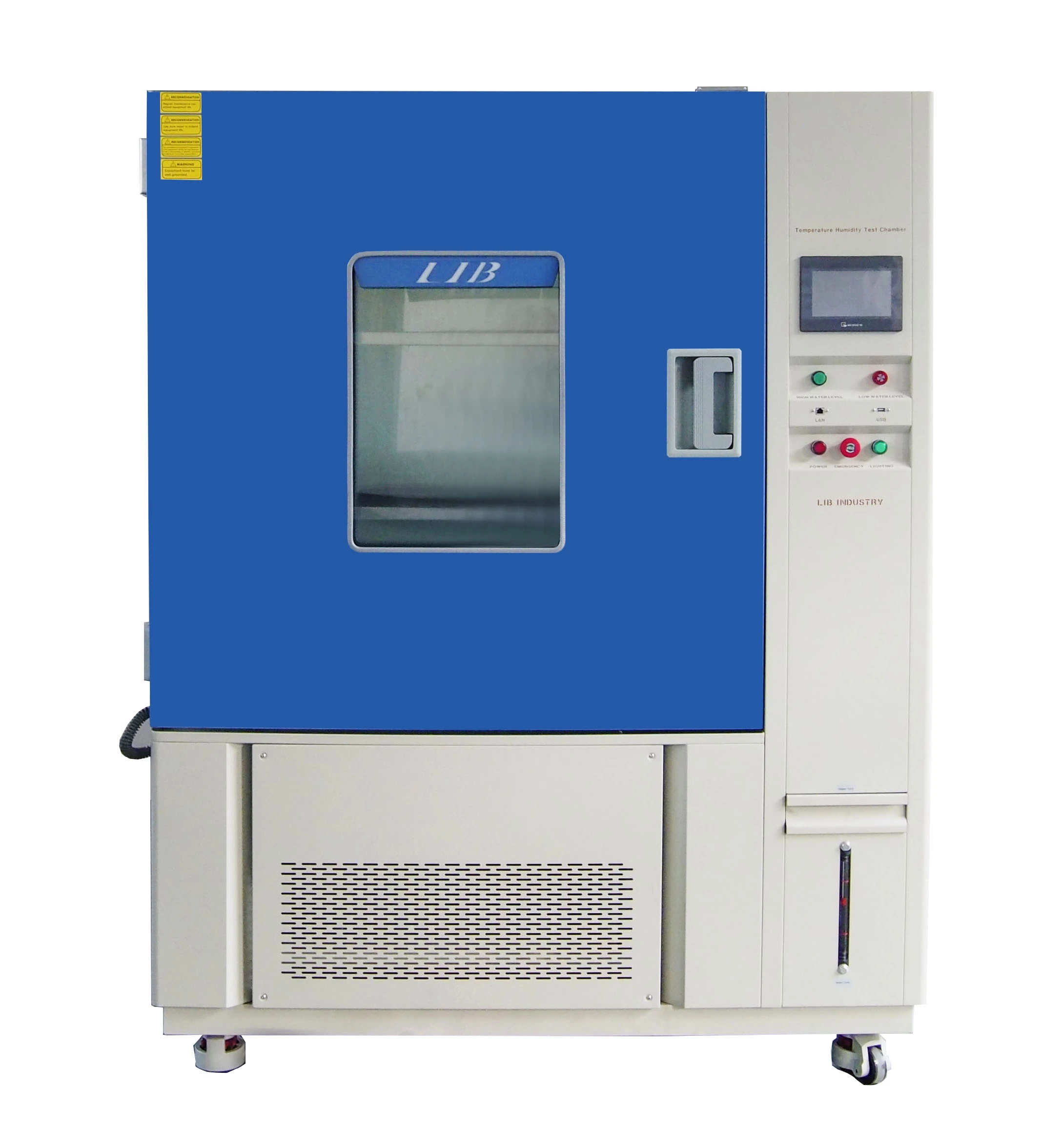
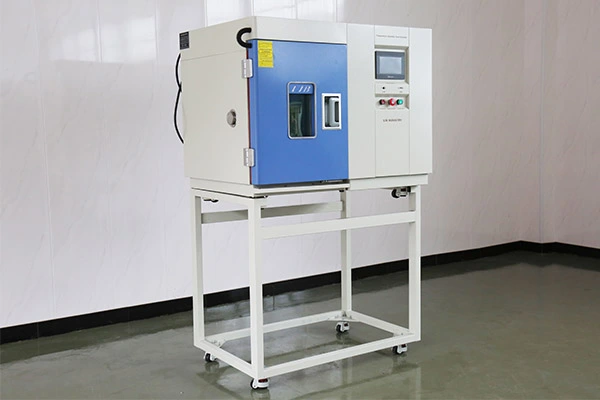
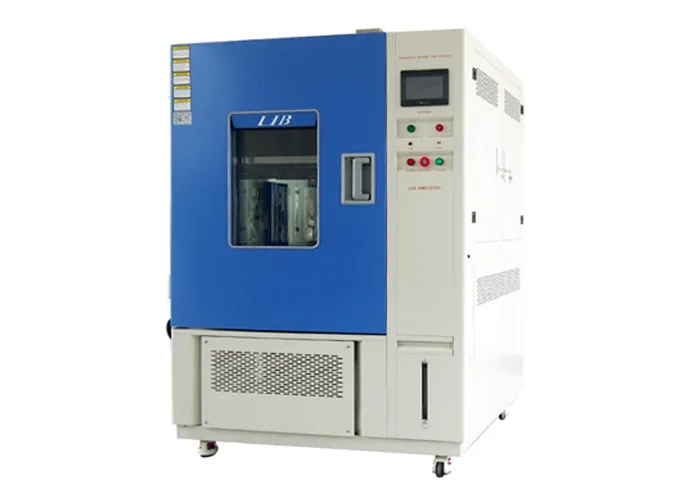
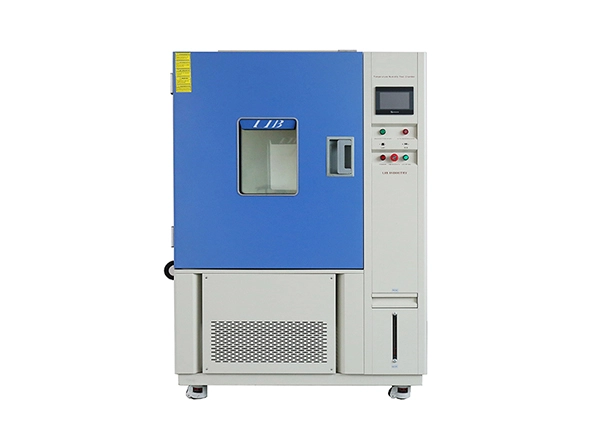
LIB Industry provides ASTM G154 UV accelerated aging chambers for material evaluation, quality control, and product development.
Designed for long-term repeatable testing, LIB chambers support both UVA-340 and UVB-313 lamp configurations and offer precise control of irradiance, temperature, and moisture conditions.
Key features include:
ASTM G154 compliant testing
UVA-340 and UVB-313 lamp options
Service life of up to 5,000 hours
Automatic condensation system
Water spray function
Programmable controller
Irradiance monitoring and control
Stainless steel chamber construction
Multiple specimen holder configurations
For furniture manufacturers, these capabilities allow consistent evaluation of coatings, plastics, fabrics, composites, and decorative finishes under controlled laboratory conditions.
LIB also provides customized testing solutions, installation support, operator training, and worldwide technical service to help laboratories establish reliable weathering testing programs.
Contact LIB Industry to discuss your testing requirements. Our engineers can help you select the appropriate ASTM G154 test cycle, chamber configuration, and specimen setup for your materials and products.
✓ Customized Solutions
✓ 3-Year Warranty
✓ Lifetime Technical Support
✓ Global Delivery & Service
UVA-340 is generally preferred because it more closely reproduces natural sunlight. UVB-313 is typically used for accelerated screening and comparative testing.
The test can identify fading, yellowing, gloss loss, chalking, cracking, coating degradation, embrittlement, and strength loss caused by UV, heat, and moisture exposure.
No. ASTM G154 is primarily a comparative test method. Actual outdoor service life depends on climate, product design, material formulation, and usage conditions.
Condensation and water spray simulate dew and rainfall, which often accelerate outdoor degradation. Including moisture cycles provides a more realistic evaluation of product durability.
LIB Industry provides a 3-year warranty on ASTM G154 UV aging chambers. During the warranty period, defective non-consumable components can be repaired or replaced according to the warranty policy.
Yes. LIB can customize specimen holders, chamber dimensions, lamp configurations, water spray systems, and control functions according to customer testing requirements and applicable standards.
LIB provides UV aging chambers, xenon weathering chambers, temperature & humidity chambers, salt spray chambers, thermal cycling chambers, and dust test chambers.
 English
 русский
 français
 العربية
 Deutsch
 Español
 한국어
한국어 italiano
 tiếng việt
 ไทย
ไทย Indonesia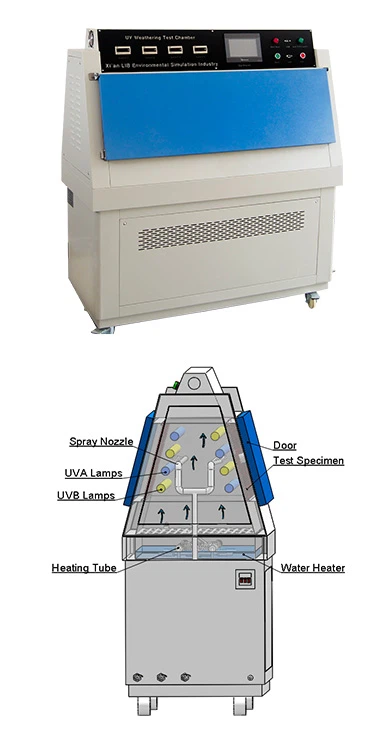
.webp "Aerospace Rapid Temperature Change Chamber")