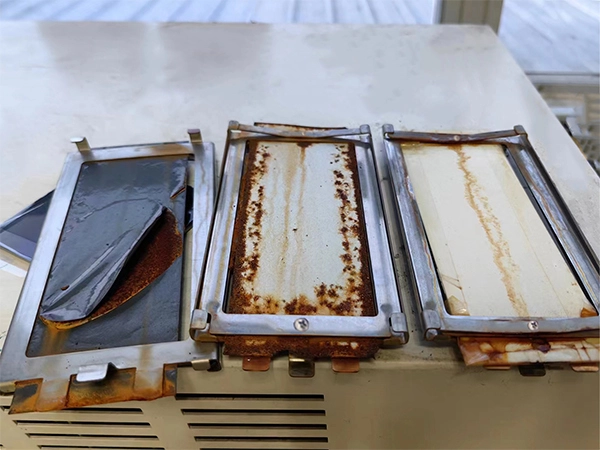
 Rubber seals that fail after a few months in storage. Cable insulation that splits open before it ever leaves the warehouse. O-rings that pass every mechanical test but crack the moment they're exposed to outdoor air. These failures share a common, often overlooked cause: ozone.
This article explains why ozone causes rubber to crack, how an ozone test chamber reproduces this failure in a controlled lab environment, which international standards govern the test, and how to choose the right chamber for your application. We'll also walk through a real customer scenario and answer the questions engineers and procurement teams ask most often before purchasing ozone testing equipment.
Ozone (O₃) is a highly reactive form of oxygen, found in higher concentrations near electrical equipment and UV light sources. When it contacts unsaturated rubber compounds — natural rubber, SBR, NBR — it attacks the carbon double bonds in the polymer chain. This reaction, known as ozone aging or ozone cracking, breaks down the material's molecular structure at the surface.
The result is a pattern of fine cracks that deepen over time, especially under mechanical stress. Two failure patterns are commonly observed:
Static ozone cracking — occurs on rubber that is stretched or under constant tension but not moving, such as a stationary seal.
Dynamic ozone cracking — occurs on rubber subjected to repeated flexing or stretching, such as a tire sidewall or a cable jacket that bends during installation.
Left undetected, ozone cracking leads to leaks, insulation failure, loss of elasticity, and ultimately product recall. This is precisely why manufacturers rely on accelerated ozone aging tests before a product ever reaches the field.
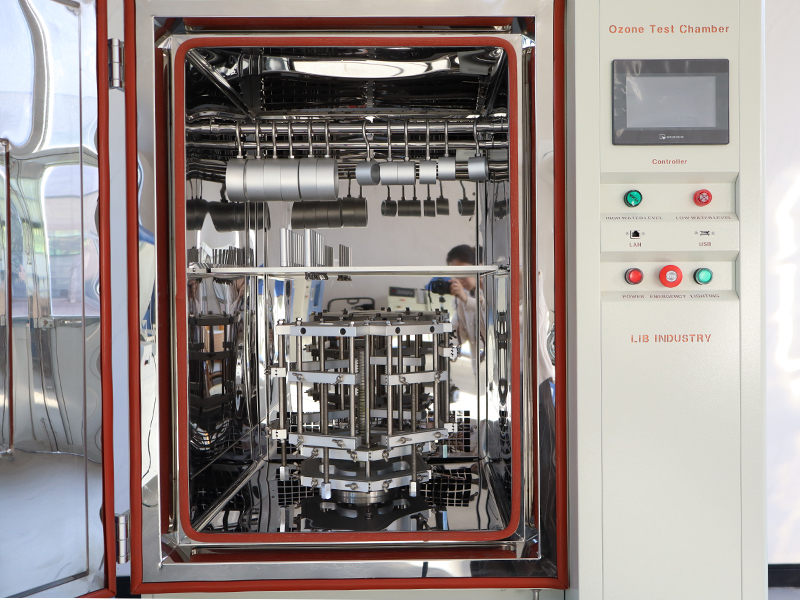
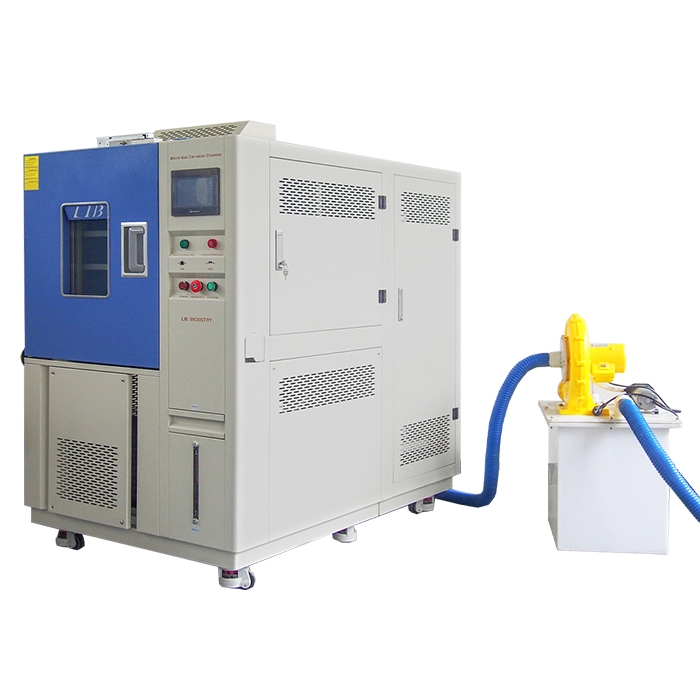
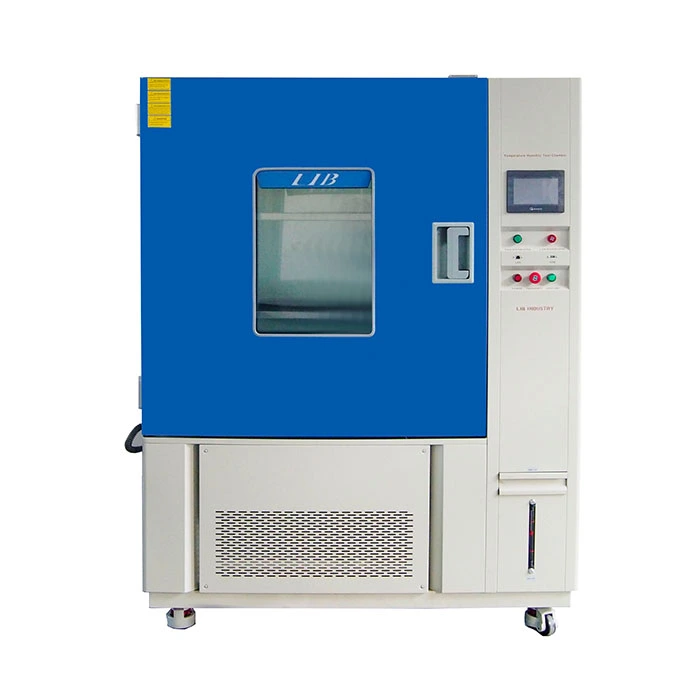
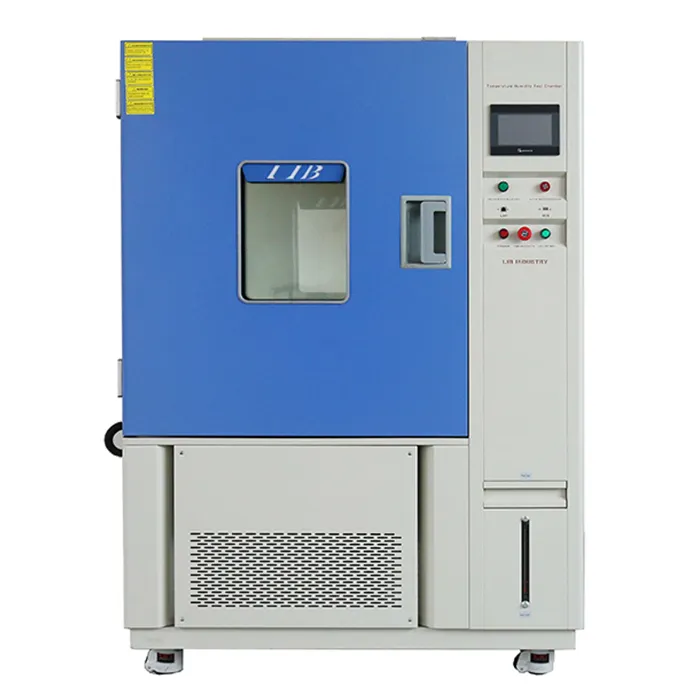
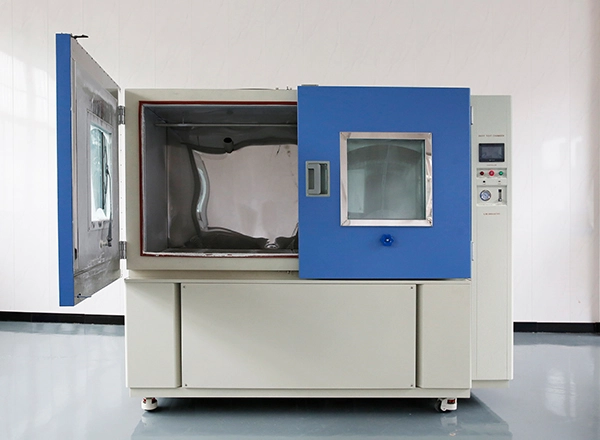
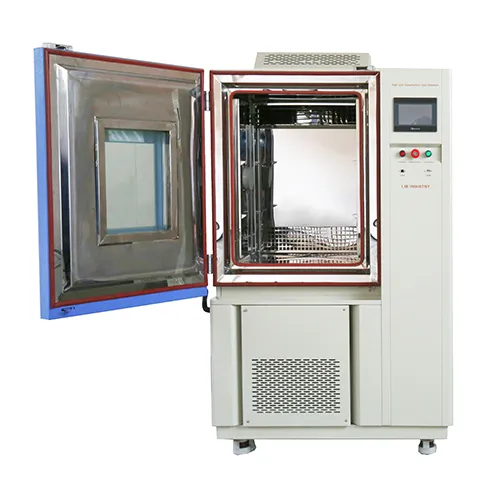
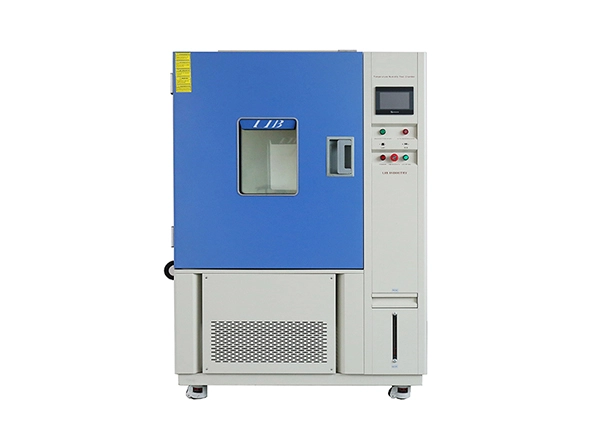
An ozone test chamber is a controlled testing environment that generates a precise, stable concentration of ozone gas around a rubber or elastomer sample, then holds it under tension for a defined period — accelerating in days the kind of degradation that would otherwise take months or years in the field.
A typical ozone test chamber includes:
An ozone generator, producing gas at a controlled concentration, typically measured in pphm (parts per hundred million)
A concentration monitoring and feedback system, continuously measuring and adjusting ozone levels to keep them stable
A sample holding system, stretching specimens to a fixed elongation (static test) or cycling them through repeated stretching (dynamic test)
Temperature control, since ozone reaction rates change with temperature — most standards specify 40°C ± 2°C
An exhaust/ozone destruction unit, neutralizing ozone gas before release to protect personnel and meet safety requirements
During testing, samples are inspected at set intervals for crack initiation, crack depth, and crack density, which are then compared against a rating scale to determine pass/fail results or estimate the material's service life.
Because ozone resistance is a critical safety and durability metric, testing is governed by several international standards. Which one you follow often depends on your target export market.
Standard | Region / Market | Ozone Concentration | Test Method | Typical Duration |
ASTM D1149 | North America | 25–100 pphm (typ. 50 pphm) | Static elongation | 24–96 hours |
ISO 1431-1 | International / Europe | 25–100 pphm | Static or dynamic elongation | 24–96 hours |
GB/T 7762 | China | 25–100 pphm | Static elongation | 24–72 hours |
JIS K6259 | Japan | 25–100 pphm | Static or dynamic elongation | 24–96 hours |
While the underlying principle across these standards is similar, differences in required concentration accuracy, sample elongation percentages, and reporting formats mean your ozone test chamber should be capable of meeting whichever standard your customers or regulators require — ideally more than one, if you export to multiple regions.
Selecting an ozone test chamber isn't just about price — the wrong specification can mean invalid test data or non-compliant reports. Here are the five factors that matter most:
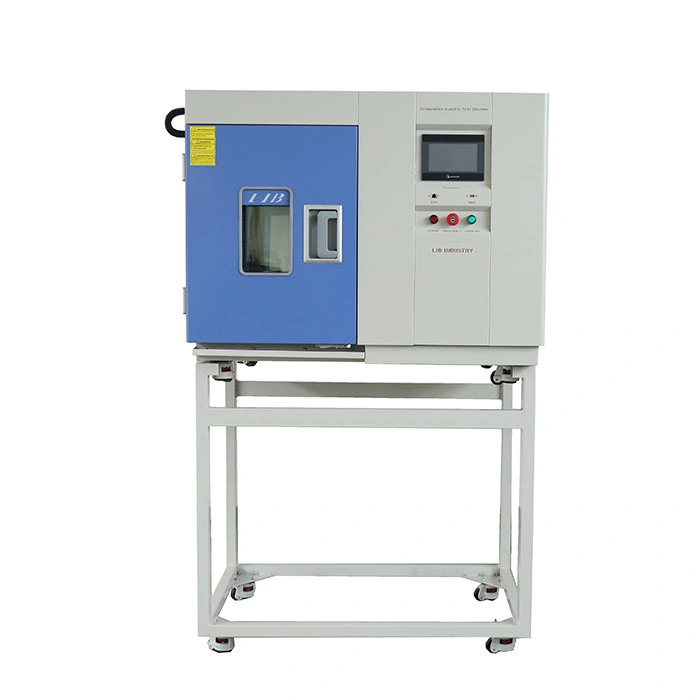
Chamber volume — benchtop models suit small QC labs testing individual samples; walk-in chambers suit large-scale production testing of finished components like tires or cable reels.
Ozone concentration range and accuracy — look for chambers with stable control within ±10% of setpoint, ideally with continuous UV photometric monitoring rather than basic sensors.
Static vs. dynamic testing capability — determine which your product category requires (see comparison below)
Temperature control integration — combined temperature-ozone testing chambers allow more realistic aging simulation for outdoor-use products.
Customization needs — non-standard sample sizes, additional test ports, or combined environmental testing (e.g., ozone + UV) may require a tailored chamber design.
Feature | Static Ozone Test Chamber | Dynamic Ozone Test Chamber | 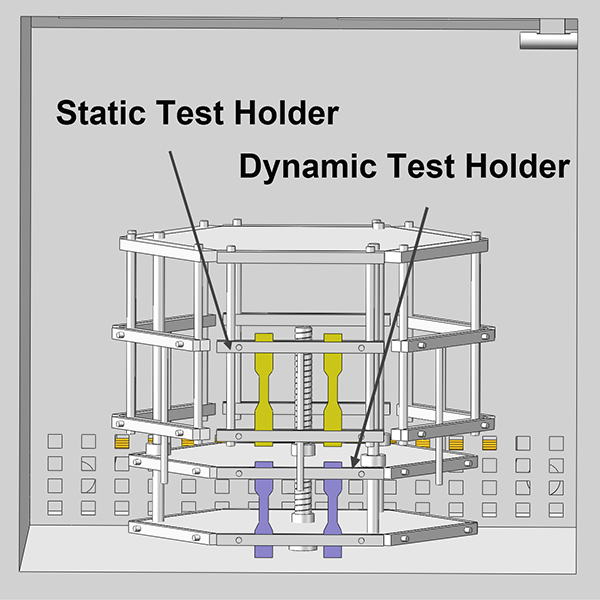 |
Sample condition | Fixed elongation, no movement | Continuous stretch-and-release cycling | |
Best for | General rubber seals, gaskets, O-rings | Tires, hoses, cables subject to flexing | |
Standards typically used | ASTM D1149, GB/T 7762 | ISO 1431-1, JIS K6259 | |
Relative cost | Lower | Higher (requires motion mechanism) |
Most general-purpose rubber QC labs start with a static chamber; manufacturers of flex-critical components such as automotive hoses or tire sidewalls typically require dynamic testing capability as well.
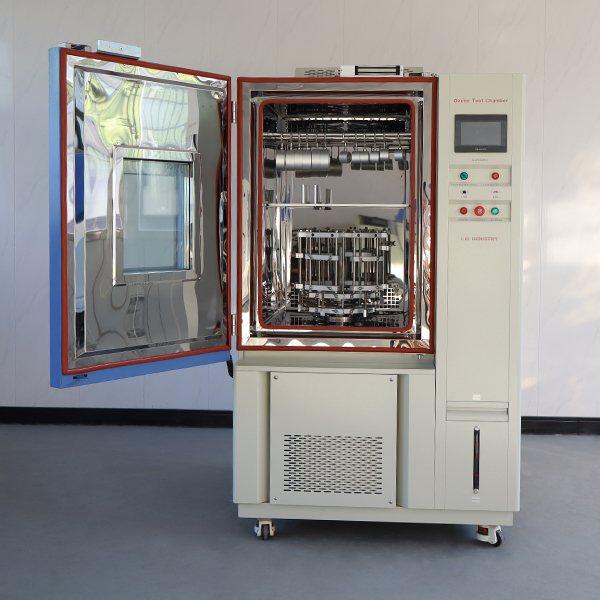
Not every ozone test chamber can hold a stable concentration for 96 straight hours, or survive years of exposure without the chamber itself corroding. LIB builds around four priorities: durability, testing accuracy, operational safety, and flexibility for both static and dynamic testing.
 | Temperature Range | 0℃ ~ +100 ℃ |
Temperature Fluctuation | ± 0.5 ℃ | |
Temperature Deviation | ± 2.0 ℃ | |
Humidity Range | 30% ~ 98% RH | |
Humidity Deviation | ± 2.5% RH | |
Cooling Rate | Ambient ~ 0℃ within 20 min | |
Ozone Concentration | 1~1000PPHM | |
Sample Holder Rotate Speed | 0~10 r/min | |
Airflow Rate | 0 ~ 60L/min | |
Clamps Tensile Stretch | 5%~35% |
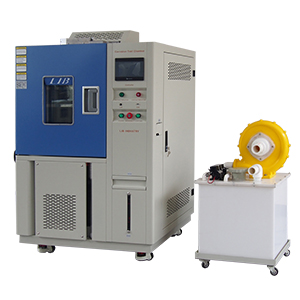
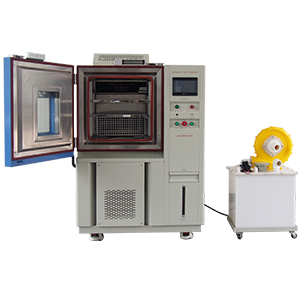
Built to last. The interior workroom is fabricated from SUS304 stainless steel, chosen for its resistance to ozone-induced corrosion — a common failure point in lower-grade chambers over years of use. The exterior pairs coated stainless steel with a clean, lab-ready finish.
Wide, standards-ready range. Ozone concentration is adjustable from 1–1000 pphm, temperature from 0–100°C, and humidity from 30–98% RH — enough range to run ASTM D1149, ISO 1431, and other regional standards on one unit.
Static and dynamic testing in one chamber. The combined sample holder supports 360° rotation (0–10 r/min) plus tensile stretching from 5% to 80%, so a single chamber can evaluate a stationary gasket and a flexing cable jacket under realistic mechanical stress.
Full visibility and control. A PID programmable color touchscreen manages concentration, temperature, humidity, and exposure time, with Ethernet/PC connectivity for remote monitoring and data logging.
Safety built in. An activated carbon filtration exhaust neutralizes residual ozone before release, paired with regulated airflow control, so labs can test without exposing operators to unsafe ozone levels.
Model | Internal Volume | Best Suited For |
OC-250 | 250 L | Small labs, R&D, individual sample testing |
OC-500 | 500 L | Mid-size QC labs, batch testing |
OC-800 | 800 L | Larger components, higher sample throughput |
OC-010 | 1000 L | Production-scale and multi-sample testing |
All four models share the same core concentration, temperature, and humidity control range, so labs can scale up chamber size as testing volume grows without switching to a different control system or retraining operators.
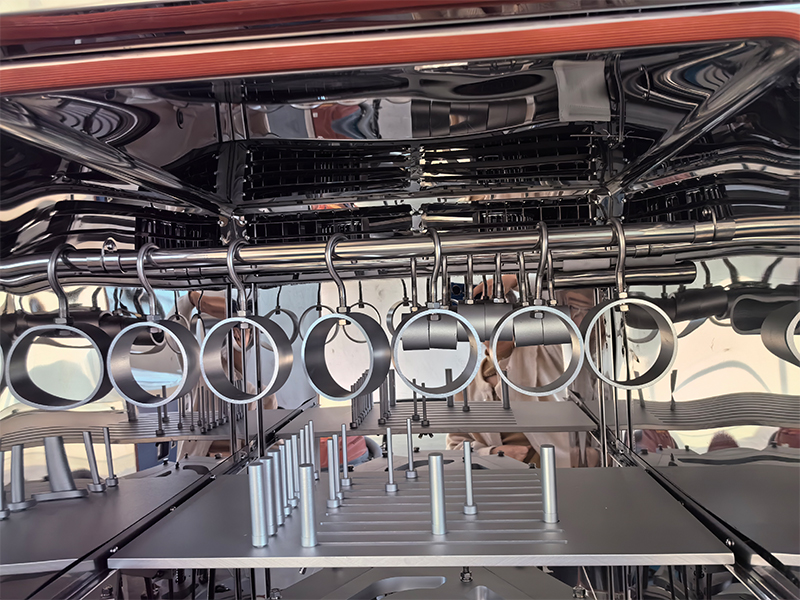
Standard dumbbell-shaped rubber strips aren't the only thing that needs ozone testing. Real-world parts come in irregular shapes — molded seals, multi-diameter hoses, connector boots — and a fixture built for flat test strips often can't hold them securely or expose them evenly to ozone.
LIB designs sample fixtures around the actual part geometry rather than forcing every sample into a one-size-fits-all clamp:
Shape-specific fixture design for irregular or molded components, keeping samples under consistent, correct tension throughout the test
Corrosion-resistant alloy construction, so fixtures don't degrade under repeated ozone exposure and skew results across test cycles
Compatibility with static and dynamic holders, so a custom fixture still uses the chamber's 360° rotation and 5–80% stretch range
Reusable fixture sets for manufacturers testing the same product line repeatedly
|  |
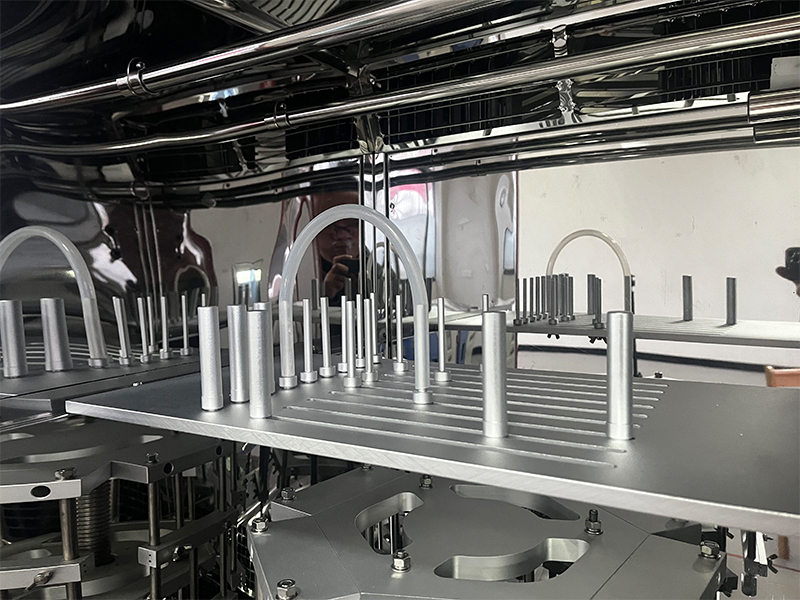 |
For engineers working with non-standard components — connector seals, custom-molded gaskets, specialty cable boots — a fixture matching the actual part shape is what makes the test result trustworthy. LIB's applications team reviews part drawings or samples to determine whether an existing fixture works or a custom design is needed.
Ozone resistance is rarely the only durability requirement your components need to meet. If your product also faces corrosive gases or salt-laden environments in the field, these LIB chambers are commonly paired with ozone testing as part of a complete material qualification program:
|
Mixed Gas Corrosion Test Chamber Simulates combined exposure to multiple corrosive gases (such as SO2, H2S, NO2, and Cl2) at once, giving a more realistic picture of how components hold up in complex industrial or electronics manufacturing environments than single-gas testing alone. |
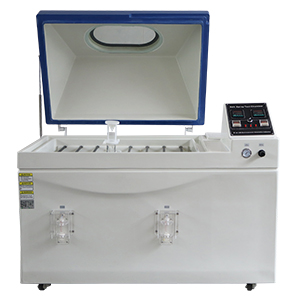
Salt Spray Test Chamber Evaluates corrosion resistance for metal components and coated parts — a common complementary test for products combining rubber seals with metal housings, fasteners, or connectors. |
1. What is an ozone test chamber used for?It simulates accelerated ozone exposure on rubber and elastomer materials, letting manufacturers predict long-term cracking behavior and verify compliance with durability standards before products reach the market.
2. How long does an ozone aging test take?Most standard tests run 24–96 hours, depending on the standard, concentration setpoint, and material type.
3. What ozone concentration is used in rubber testing — pphm or ppm?Typically expressed in pphm (parts per hundred million), commonly 25–100 pphm — equivalent to 0.25–1.0 ppm. Check which unit your target standard specifies.
4. Does LIB offer non-standard customization for ozone test chambers?Yes — including custom chamber sizing, combined ozone-temperature-humidity testing, and specialized sample fixtures built around your specific part geometry.
5. What after-sales support does LIB provide?Every chamber comes with a 3-year warranty, lifetime technical service, and one-stop support covering installation, training, calibration, and spare parts — backed by LIB's full in-house production line.
6. How do I choose between a benchtop and walk-in ozone test chamber?Benchtop chambers suit labs testing individual samples or small batches. Walk-in chambers suit manufacturers testing larger finished components or higher volumes on the production line.
Contact LIB today to get a free technical consultation, product specification sheet, and quote tailored to your ozone testing requirements.
 English
 русский
 français
 العربية
 Deutsch
 Español
 한국어
한국어 italiano
 tiếng việt
 ไทย
ไทย Indonesia