Marine fasteners, dock hardware, and coastal railings operate in one of the most aggressive corrosion environments: chloride-rich air combined with repeated wet-dry cycles. To evaluate their durability before real-world deployment, manufacturers rely on the salt spray chamber test (ASTM B117 / ISO 9227) as a standardized accelerated corrosion method.
A salt spray test does not replicate real seawater exposure exactly. Instead, it provides a controlled comparative environment to evaluate coating quality, material performance, and assembly design under continuous chloride exposure.

Marine fasteners and dock components fail faster than inland hardware due to chloride accumulation and trapped moisture structures.
Typical exposure conditions include:
Salt-laden wind deposition
Continuous humidity cycles (wet → dry → wet)
Direct seawater splash
UV exposure accelerating coating breakdown
Thread roots and bolt interfaces
Washer contact zones
Weld toes and heat-affected zones
Cut edges and drilled holes
Dissimilar metal joints (galvanic corrosion zones)
Once the protective coating is damaged, chloride ions penetrate beneath the surface, leading to underfilm corrosion and structural weakening that is often invisible in early stages.
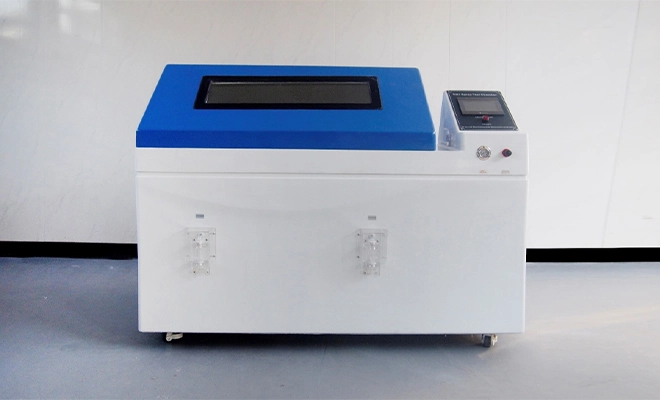
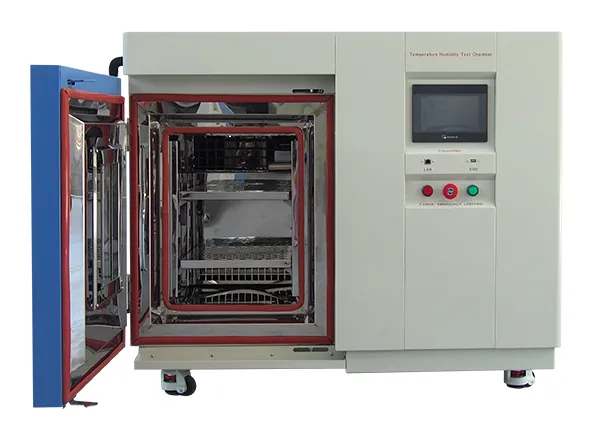
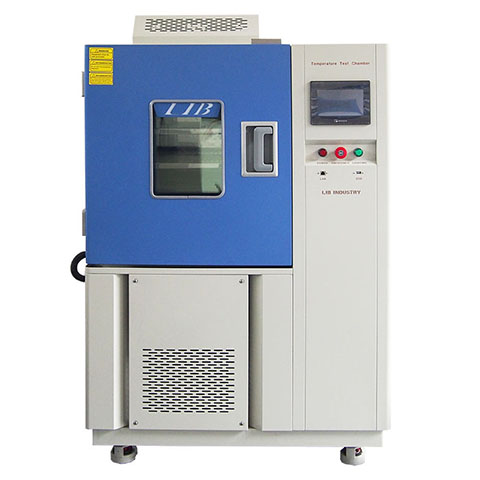
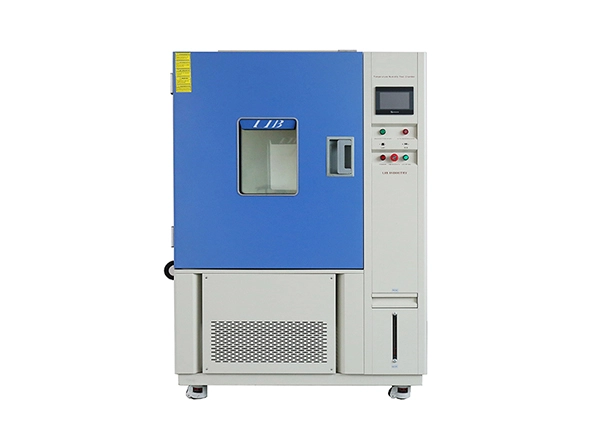
A salt spray chamber (salt fog cabinet) is a controlled corrosion testing system that generates a continuous mist of sodium chloride solution to simulate marine atmospheric exposure.
Xi’an LIB Environmental Simulation Industry provides salt spray test systems designed for ASTM B117, ISO 9227 NSS/AASS/CASS testing conditions.
Salt Solution (NaCl) → Atomized by nozzle → Compressed air → Fine salt fog → Uniform chamber exposure
Temperature: 35°C ±2°C (NSS)
pH: 6.5–7.2 (neutral test)
Deposition rate: 1.0–2.0 mL / 80 cm²·h
Continuous fog exposure
Standard | Type | Conditions | Application |
ASTM B117 | Neutral Salt Spray | 35°C, 5% NaCl | General coatings, fasteners |
ISO 9227 NSS | Neutral | 35°C, controlled pH | Metals, coatings |
ISO 9227 AASS | Acidic | pH 3.1–3.3 | Decorative coatings |
ISO 9227 CASS | Copper accelerated | 50°C, CuCl₂ | High-end corrosion resistance |
ASTM B117 is the most widely referenced global benchmark for marine fastener corrosion validation.
Why 720 Hours Salt Spray Test Is Common for Marine Hardware
The 720-hour salt spray test is widely used for marine-grade coatings and structural fasteners.
However:
⚠️ 720 hours does NOT equal real seawater service life.
Instead, it is used to answer one question:
“Does this coating/system fail before or after a defined accelerated exposure threshold?”
No red rust on base metal
No coating blistering or peeling
No corrosion creep from scribes
Only minor white corrosion allowed (zinc systems)
Xi’an LIB Environmental Simulation Industry designs salt spray chambers specifically for long-duration, high-stability corrosion testing of marine fasteners, dock hardware, and coated structural components.
Unlike general laboratory cabinets, LIB systems are engineered to maintain repeatable ASTM B117 / ISO 9227 conditions over extended 720–1000 hour test cycles without drift in fog density or temperature uniformity.
|
| ||||||
salt spray tower |
cylinder |
spray collector |
Precision atomizing nozzle design
Saturated air barrel ensures consistent droplet size
Uniform fog deposition: 1.0–2.0 mL / 80 cm²·h
Prevents uneven corrosion patterns on threaded or recessed parts
Marine hardware validation requires continuous operation over weeks.
LIB systems ensure:
±0.5°C temperature stability
Continuous 24/7 fog output
Anti-clogging spray system design
Automatic water and salt solution control
Reduces “false pass / false fail” caused by chamber fluctuation
Marine parts are rarely standard coupons.
LIB chambers support:
Fastener stacks (bolt + nut + washer assemblies)
Hinges, cleats, latch mechanisms
Welded brackets and irregular rail sections
Cut-edge and drilled-hole exposure setups
Designed to replicate real installation geometry, not just flat panels
Reinforced PP/PVC corrosion-resistant liner
Acid-resistant piping system for CASS/AASS upgrade
Anti-drip inverted V lid design
Isolation of electrical system from corrosive zone
Extends chamber service life under aggressive salt exposure
LIB salt spray systems support full compliance with:
ASTM B117 (Neutral Salt Spray Test)
ISO 9227 NSS / AASS / CASS
GB/T 10125
IEC 60068-2-11
Enables global supplier qualification for marine and offshore industries
Marine corrosion testing is not only about generating salt fog — it is about repeatability and comparability across long cycles and complex geometries.
LIB chambers are widely selected for:
Fastener coating qualification (zinc, nickel, Dacromet, etc.)
Dock hardware supplier validation
Coastal infrastructure corrosion benchmarking
OEM incoming inspection systems
LIB systems focus on three critical testing realities:
✔ Long-term stability (720–1000h continuous operation)
✔ Real part geometry compatibility (not only coupons)
✔ Standard compliance + repeatability control
To support engineering and procurement teams, LIB provides:
Salt spray chamber selection guide (based on sample size & test duration)
ASTM B117 / ISO 9227 test setup consulting
Marine fastener corrosion test fixture design
Turnkey laboratory installation and calibration service
3-year warranty, lifetime service
Contact LIB engineering team to design a corrosion testing solution tailored to your marine application.
Typical test durations are 96, 240, 480, and 720 hours depending on coating requirements and marine exposure level.
No. It is an accelerated comparative test, not a direct replication of real marine service life.
NSS: Neutral corrosion baseline
AASS: Acidic accelerated corrosion
CASS: Highly aggressive copper-accelerated test
Fasteners, brackets, hinges, welded joints, cut edges, and assembled components.
Threads trap salt solution and oxygen, accelerating localized corrosion at the root area.
 English
 русский
 français
 العربية
 Deutsch
 Español
 한국어
한국어 italiano
 tiếng việt
 ไทย
ไทย Indonesia