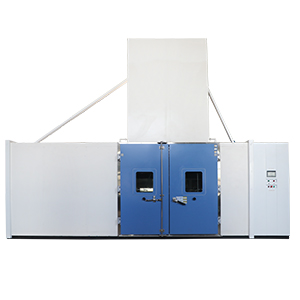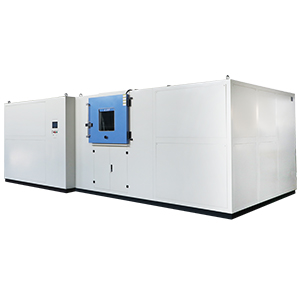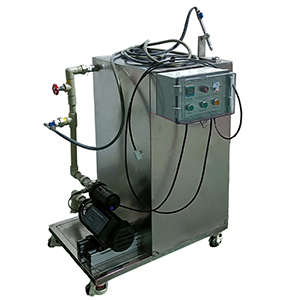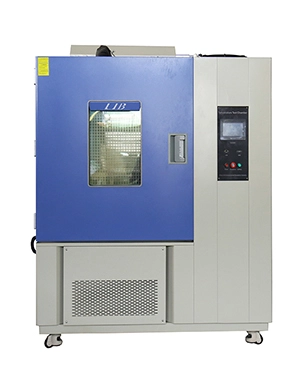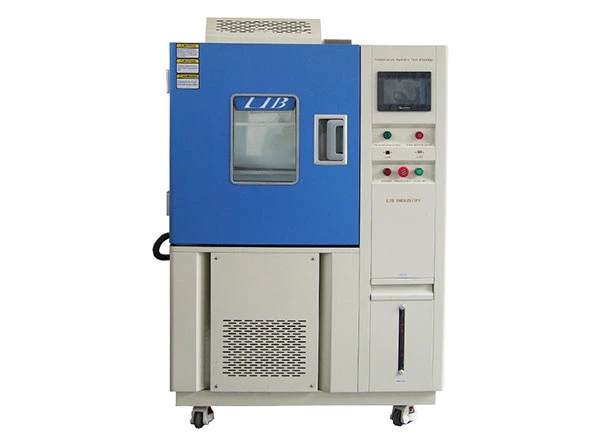
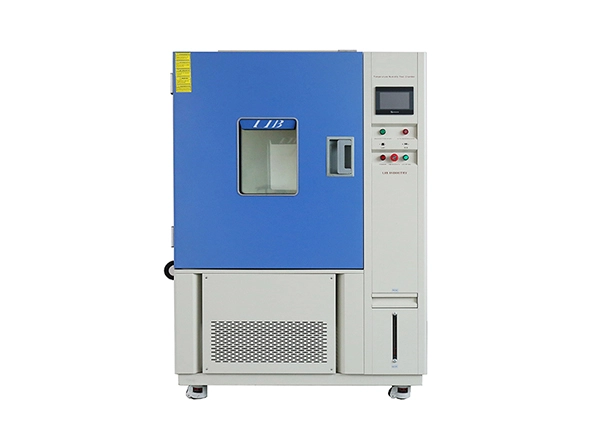
When selecting a Rain Test Chamber, many engineers focus on visible specifications such as chamber size, water pressure, spray nozzles, or IP rating. However, the most important question is often overlooked:
What kind of rain does your product actually need to withstand?
A waterproof test for a smartphone, an outdoor electrical enclosure, an automotive sensor, and military equipment are completely different. Some products only need protection against light dripping water, while others must survive strong water jets, high-pressure cleaning, or harsh outdoor environments combining rain and dust.
Choosing the right Rain Test Chamber is not simply about selecting a machine that sprays water. It requires understanding the actual water exposure conditions, applicable testing standards, and the performance requirements of the product.
As an experienced environmental test chamber manufacturer, LIB Industry provides complete waterproof and dustproof testing solutions, helping customers verify product reliability from basic water protection tests to advanced IPX9K high-pressure water testing.
Water ingress is one of the most common causes of product failure. Even a small amount of water entering a product enclosure can cause:
Electrical short circuits
Internal component corrosion
Sensor failure
Reduced service life
Safety problems during operation
A professional Rain Test Chamber simulates real-world water exposure conditions to evaluate waterproof sealing performance, enclosure protection capability, structural reliability, and product durability in outdoor environments.
Rain testing is widely used in automotive electronics, electric vehicle components, outdoor electrical equipment, LED lighting, communication devices, sensors, industrial control systems, and military and aerospace equipment.
However, different products experience different types of water exposure. The first step in choosing a Rain Test Chamber is understanding what kind of "rain" your product needs to withstand.
The most common mistake when purchasing waterproof testing equipment is choosing a chamber before understanding the required test standard.
The correct process should be:
Product application → Required waterproof level → Testing standard → Suitable Rain Test Chamber
Among global waterproof testing standards, IEC 60529 IPX1–IPX9K is the most widely used system. For automotive, military, and outdoor-specific work, additional standards such as ISO 20653 and MIL-STD-810 come into play — covered later in this guide.
IEC 60529 defines the IP (Ingress Protection) rating system, which evaluates how effectively an enclosure protects against water and solid particle intrusion. For waterproof testing, the second number after "X" represents the water protection level.
IP Level | Test Method | Typical Application |
IPX1 | Vertical dripping water | Electronic devices, meters |
IPX2 | Dripping water at tilted angles | Portable equipment |
IPX3 | Spraying water | Outdoor products |
IPX4 | Splashing water from all directions | Automotive parts, enclosures |
IPX5 | Water jets | Industrial products, vehicles |
IPX6 | Powerful water jets | Automotive and outdoor equipment |
IPX7 | Temporary immersion | Waterproof devices |
IPX8 | Continuous immersion | Underwater applications |
| IPX9K | High-pressure hot water jets | Automotive components |
| ||
Each protection level requires a different testing method and equipment configuration.
IPX1 and IPX2 simulate light water exposure caused by dripping rain or condensation.
IPX1: Water flow of 1 mm/min, vertical dripping, 10-minute test duration.
IPX2: Water flow of 3 mm/min, with the product tilted through four positions, each tested for approximately 2.5 minutes.
Typical applications: sensors, meters, small electronic devices. The recommended equipment is a Drip Test Chamber, which provides controlled vertical water drop simulation.
IPX3 and IPX4 are among the most commonly used waterproof tests for outdoor and automotive products, simulating natural rainfall, water splash, and general outdoor exposure.
IPX3 (spray water): An oscillating spray tube delivers water at approximately 0.07 L/min per hole, at spray angles up to 60° from vertical. Applications include outdoor electrical products, lighting equipment, and enclosures.
IPX4 (splash water): Similar flow rate (~0.07 L/min per hole) but water is applied from multiple directions using an oscillating tube or nozzle system, continuously, for a specified duration. Applications include automotive components, outdoor equipment, and electrical housings.
For these tests, a Rain Spray Test Chamber should provide uniform spray distribution and stable water circulation to ensure repeatable results.
Products used outdoors or in vehicles may experience stronger water impact than normal rainfall — road splash, vehicle washing, or industrial cleaning.
IPX5: A 6.3 mm nozzle delivers water at 12.5 ± 0.625 L/min from a distance of roughly 2.5–3 m. Used for outdoor equipment, vehicle components, and industrial products.
IPX6: A larger 12.5 mm nozzle delivers a much higher flow of 100 ± 5 L/min at greater pressure than IPX5. Used for automotive electronics, heavy-duty equipment, and outdoor machinery.
A reliable IPX5/IPX6 chamber requires accurate pressure control, stable water flow, and consistent nozzle performance.
 |  |  |
| ||
Although not traditional rain tests, IPX7 and IPX8 are part of the same IEC 60529 waterproof protection system.
IPX7 (temporary immersion): Immersion depth of 1 meter for 30 minutes — used for products that may accidentally fall into water.
IPX8 (continuous immersion): Conditions (depth, duration, pressure) are defined by the manufacturer, based on the product's actual use case. Used for water immersion equipment and specialized electronic devices.
|  |
 |
IPX9K is one of the most demanding waterproof tests, especially in the automotive industry, simulating high-pressure washing, hot water cleaning, and severe water impact.
Typical parameters:
Water temperature: 80°C ±5°C
Water pressure: approximately 8–10 MPa
Water flow: 14–16 L/min
Spray angles: multiple directions, including 0°, 30°, 60°, and 90°
Applications include automotive exterior parts, engine compartment components, EV components, and heavy-duty vehicle parts. An IPX9K chamber must provide accurate high-pressure water control and reliable temperature management.
 |  |
Once you've identified the required standard, three practical factors shape the final decision:
1. Testing requirements — Confirm the required IP level, the governing industry standard, and any customer-specific test specifications. A product requiring IPX4 testing needs fundamentally different equipment from one requiring IPX9K testing — the two aren't on the same spectrum of "better/worse," they're different test methods entirely.
2. Product size and testing space — The chamber needs to accommodate sample dimensions, fixture requirements, and adequate spray coverage area without compromising uniformity.
3. Testing scope beyond water — Some products only need waterproof testing; others also require dust, sand, or combined temperature/humidity testing in the same qualification cycle. If that's the case, it's worth choosing a supplier with broader environmental testing capability so future test requirements don't mean starting over with a new vendor.
Knowing which IP level you need is only half the decision — the other half is whether a given chamber can deliver that test accurately, repeatably, and without becoming a maintenance headache. Here's what LIB builds into each product line to address that.
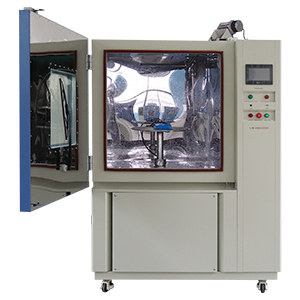
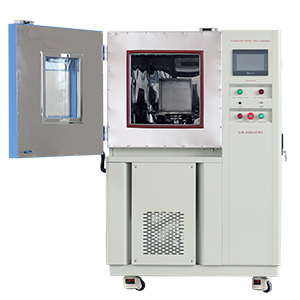
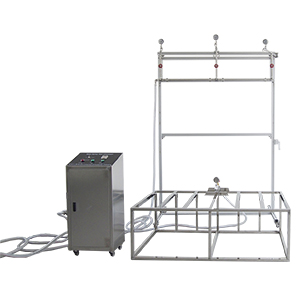
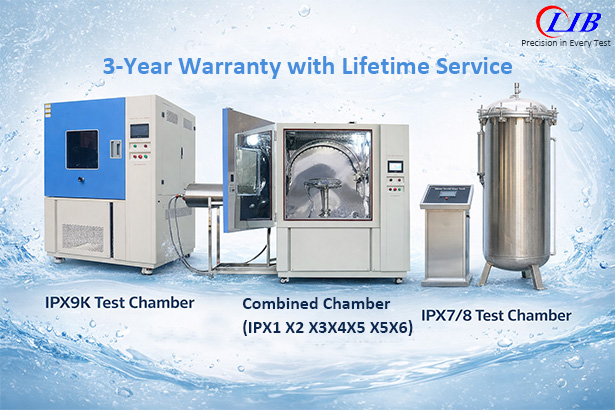
Most labs testing across the IPX1–IPX6 range end up needing multiple pieces of equipment — a drip box for IPX1/IPX2, an oscillating tube for IPX3/IPX4, and a jet nozzle rig for IPX5/IPX6. LIB's Combined Test Chamber integrates all three mechanisms into a single unit, so a lab can run the full six-level test sequence without swapping equipment or footprint.
Beyond the space savings, the chamber is built around a few practical engineering choices:
Closed-loop water recycling with auto-refill keeps the system running unattended, cutting both water and energy consumption compared to open-circuit designs.
A height-adjustable, 50 kg-capacity turntable with a built-in 15° tilt plate handles IPX2's four-position tilt test without manual repositioning, and the platform size can be customized for larger samples.
Full SUS304 stainless steel construction resists corrosion through repeated high-temperature, high-humidity, and spray cycles — a meaningful durability difference over painted steel in chambers that run daily.
A viewing window with built-in LED lighting and a manual wiper lets operators visually monitor the test in progress and catch failures in real time, rather than only finding out at the end of a cycle.
A built-in power supply on the sample platform allows electronics to be tested live (powered on) during water exposure — closer to how the product will actually fail (or not) in the field than a de-energized test.
Test parameters are held to IEC 60529 across all six levels, from IPX1's 1 mm/min drip rate to IPX6's 100 ± 5 L/min jet at 100 ± 5 kPa, so results are directly defensible against the standard.
IPX9K testing is unforgiving on equipment — sustained high-pressure, high-temperature water cycling wears out seals, nozzles, and heating elements faster than any other IP test. LIB's IPX9K chamber is built specifically around that stress:
Delivers water at up to +88°C and 8,000–10,000 kPa through four nozzles across multiple spray angles (0°, 30°, 60°, 90°), matching the full IPX9K test sequence.
A filtered, closed-loop circulation system with dedicated reservoirs and heating elements keeps spray pressure, volume, and temperature stable across repeated cycles — important for getting consistent, comparable results test after test.
A touch-panel control system lets operators set pressure, temperature, and duration directly, with built-in safety monitoring to protect both the equipment and the sample under test.
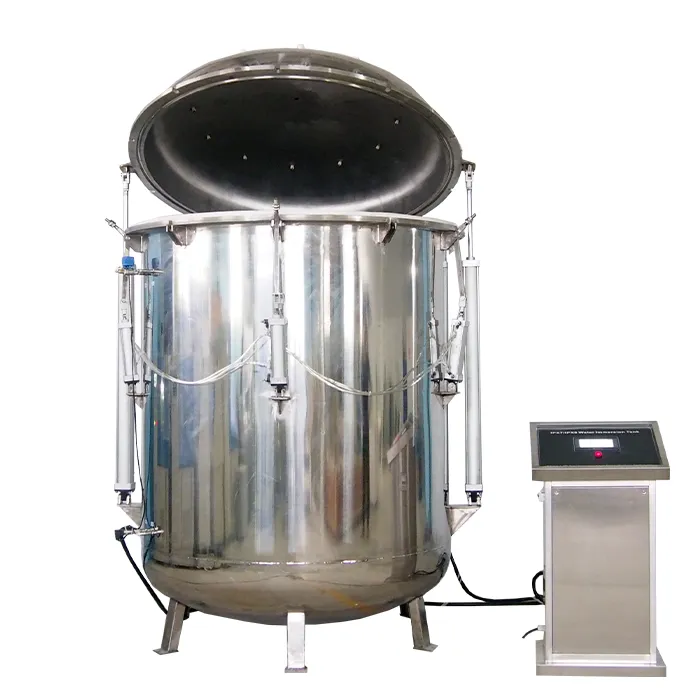
Immersion testing looks simple on paper but is demanding on chamber construction — the tank has to hold pressure reliably at depth without leaking or deforming over years of use. LIB's IPX7/IPX8 chamber addresses this directly:
Customizable tanks cover both IPX7 (1 m / 30 minutes) and simulated IPX8 conditions equivalent to 50 m depth.
15 mm-thick A3 steel chamber walls are engineered to hold pressures equivalent to that 50 m depth without deformation, with a corrosion- and impact-resistant exterior finish for long service life.
A two-tier silicone seal — a soft layer for uniform contact across uneven surfaces plus a hard layer for structural integrity under pressure — is designed to eliminate leaks across repeated test cycles, which is typically where lower-cost immersion chambers fail first.
Comprehensive safety instrumentation: real-time water-level gauges, built-in leak detectors, automatic overpressure relief valves, floor-anchorable feet for stability, and safety interlocks that prevent the lid from opening mid-test.
An intelligent PID-based touchscreen controller allows precise control of pressure, timing, and cycle sequencing, with storable test profiles for repeatable results — supporting compliance with both IEC 60529 and ISO 20653.
Beyond these three product lines, LIB also builds equipment for automotive- and military-specific standards, including:
— for automotive component testing under Japanese automotive requirements |
— for automotive supplier water resistance validation |
— for outdoor electrical enclosure protection testing |
— for military and harsh-environment rain simulation |
— for sand and dust resistance testing |
— for vehicle splash water resistance evaluation |
Chamber dimensions, fixtures, and test functions can all be customized for automotive, electronics, outdoor equipment, and military applications. LIB has manufactured environmental simulation testing equipment since 2012, holds ISO9001 and CE certification, and has exported to more than 60 countries, backed by a 3-year warranty and lifetime maintenance support.
Can one chamber cover multiple IP levels, or do I need separate equipment for each?
For IPX1 through IPX6, LIB's Combined Test Chamber integrates the drip box, oscillating tube, and jet nozzle systems into a single unit, so all six levels can be tested without switching equipment. IPX7/IPX8 immersion and IPX9K high-pressure hot water testing require dedicated chambers due to their different tank and pressure requirements.
Besides IEC 60529, does LIB support other waterproof/dustproof standards?
Yes — LIB also builds equipment for automotive (ISO 20653, JIS D 0203, GMW 16001), military (MIL-STD-810), and outdoor (UL50E) standards based on customer requirements.
What's the difference between IPX6 and IPX9K testing?
IPX6 uses powerful water jets at normal temperature; IPX9K adds high pressure (8,000–10,000 kPa) and high temperature (up to 88°C), designed to simulate severe automotive wash-down environments — which also demands more durable seals and heating components in the chamber itself.
How does LIB's IPX7/IPX8 chamber avoid leaks over repeated test cycles?
The tank uses a two-tier silicone seal — a soft layer for uniform contact plus a hard layer for structural integrity under pressure — combined with 15 mm-thick A3 steel walls rated for pressures equivalent to 50 m depth.
Can LIB customize a chamber for my product?
Yes — chamber size, sample turntable dimensions (up to 50 kg load as standard), fixtures, and testing functions can be customized to product dimensions, industry requirements, and applicable standards.
What warranty and service does LIB provide?
A 3-year warranty, lifetime maintenance, and ongoing technical support.
From the all-in-one Combined Test Chamber covering IPX1–IPX6, to the high-pressure, high-temperature IPX9K system, to the reinforced-steel IPX7/IPX8 immersion chamber, LIB builds each product line around the specific engineering challenges of that test — not a one-size-fits-all spray box.
Contact LIB to discuss your waterproof testing requirements and find the right Rain Test Chamber solution for your application.

 English
 русский
 français
 العربية
 Deutsch
 Español
 한국어
한국어 italiano
 tiếng việt
 ไทย
ไทย Indonesia