A remote monitoring environmental chamber is the better choice when environmental tests run unattended, continue for long periods, or require centralized data management. A standard Temperature & Humidity Chamber is primarily designed for controlled climatic testing, while a Special Test Chamber adds application-specific functions such as gas exposure, battery safety, pressure simulation, or other integrated test conditions. Typical standards include IEC 60068, IEC 60068-2-78, JESD22-A101, IEC 62133, UL 1642, and application-specific methods. The most important selection factors are not only temperature and humidity performance, but also communication protocols, chamber data logging, alarm records, remote access, data export, user permissions, and the ability to integrate the chamber into a laboratory or factory network.
Environmental testing is increasingly moving from isolated equipment operation toward connected test systems. The chamber still has to create a stable physical environment, but modern testing also requires reliable information about what happened during the test, when it happened, and how operators responded.
Typical samples include electronic assemblies, sensors, automotive components, battery cells and modules, rubber products, coatings, cables, pharmaceutical products, and other materials. Depending on the application, the test may investigate thermal degradation, moisture absorption, corrosion, insulation failure, material aging, battery instability, gas resistance, or loss of functional performance.
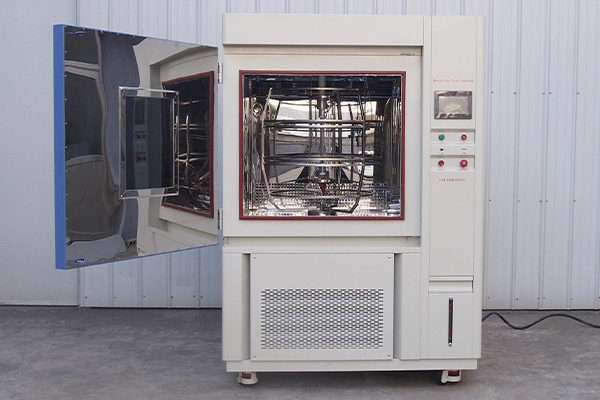
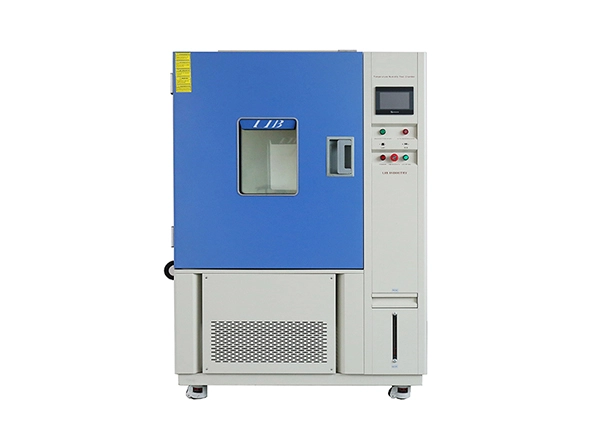
A Temperature & Humidity Chamber is commonly used when temperature and relative humidity are the primary environmental variables. LIB's current range includes 100 L, 225 L, 500 L, and 1,000 L models, with temperature options extending from -20°C, -40°C, or -70°C to +150°C and humidity control from 20% to 98% RH. The controller supports programmable testing, LAN communication, and PC-based remote control.
The digital layer becomes particularly important during long-duration testing. If a chamber operates overnight, over a weekend, or for several weeks, technicians cannot rely on physical observation alone. Remote access allows them to review temperature and humidity conditions, monitor program status, identify alarms, and retrieve test records without remaining beside the chamber.
A cloud environmental chamber takes this concept further by connecting chamber data with centralized storage or a laboratory information environment. LIB's battery test chamber, for example, supports cloud storage of test data, automatic generation of test curves, remote monitoring, and safety-related alarm functions.
Digital monitoring does not replace the environmental requirements of a test standard. Instead, it provides a more reliable way to document whether the required conditions were maintained throughout the test.
Standard / Test Method | Temperature | Humidity | Typical Cycle / Duration | Spray / Pressure Condition |
IEC 60068-2-1 | Low-temperature conditions depend on test severity | N/A | Specified exposure and recovery period | N/A |
IEC 60068-2-2 | High-temperature conditions depend on test severity | N/A | Specified dry-heat exposure | N/A |
IEC 60068-2-78 | Damp heat, typically controlled high RH | High relative humidity | Long-duration steady exposure | N/A |
JESD22-A101 | Commonly 85°C / 85% RH for reliability testing | 85% RH | Often 1,000 h, depending on qualification plan | N/A |
IEC 62133 | Battery-specific environmental and safety conditions | Application dependent | Test sequence defined by battery type | Safety conditions may apply |
UL 1642 | Lithium battery safety testing | Application dependent | Test duration depends on procedure | Mechanical, electrical and safety stresses |
LIB identifies temperature cycling, high-temperature storage, low-temperature testing, humidity aging, and 85°C/85% RH reliability testing among typical applications for its Temperature and Humidity Test Chamber. Relevant methods listed by LIB include IEC 60068-2-14, IEC 60068-2-2, IEC 60068-2-1, IEC 60068-2-78, and JESD22-A101.
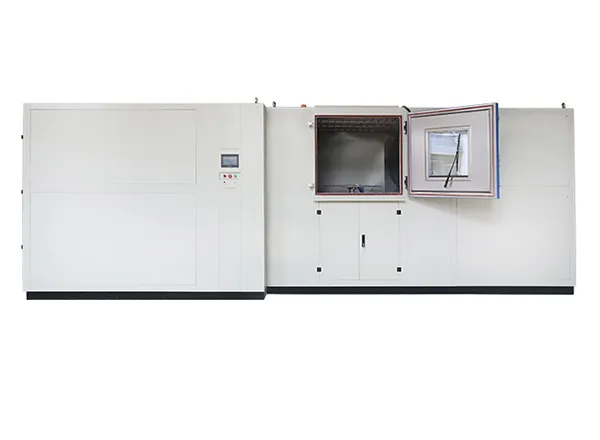
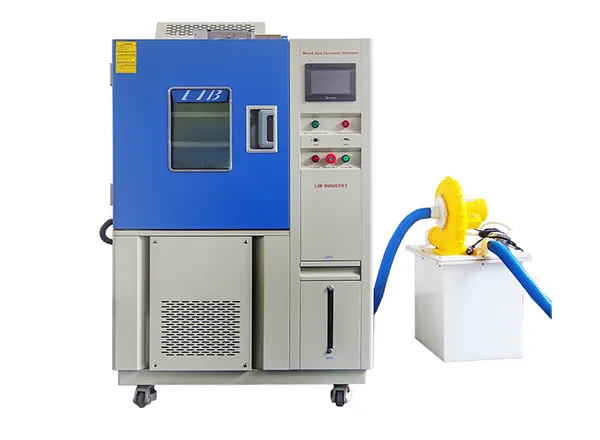
For specialized applications, the environmental variables may extend beyond temperature and humidity. LIB's Special Test Chamber range includes corrosive gas systems for SO₂, H₂S, NO₂, Cl₂, and O₃ environments. Its gas chamber solutions reference IEC 60068-2-42 and include specialized ozone and mixed-gas configurations.
The exact test profile should always be established from the current applicable standard, product specification, and qualification plan rather than relying on a generic chamber setting.
Parameter | Temperature & Humidity Chamber | Special Test Chamber |
Temperature range | -20/-40/-70°C to +150°C, model dependent | Application-specific; may be customized |
Humidity range | 20%–98% RH | Depends on test method and special function |
Chamber volume | 100–1,000 L standard models | From compact systems to customized large chambers |
Ramp rate | Typical heating 3°C/min and cooling 1°C/min | Depends on thermal or special test requirements |
Airflow | Forced circulation for controlled temperature/RH distribution | Configured according to gas, thermal, pressure, or other test needs |
Sample heat load | Up to 1,000 W on listed standard models | Engineered according to specimen and test process |
Safety configuration | Over-temperature, over-current, high-pressure, water shortage and leakage protection | May include gas treatment, emergency shutdown, pressure relief, fire protection, or other safeguards |
Applicable standards | IEC 60068, JESD22, ISO 16750 and related methods | Application-specific standards such as IEC 60068-2-42, ASTM D1149, IEC 62133 and others |
The major technological difference is the information architecture. LIB's Temperature and Humidity Test Chamber supports Ethernet and USB connectivity, Modbus/TCP communication, real-time data logging, remote monitoring, and report export. This enables the chamber to become part of a connected laboratory rather than functioning as an isolated controller.
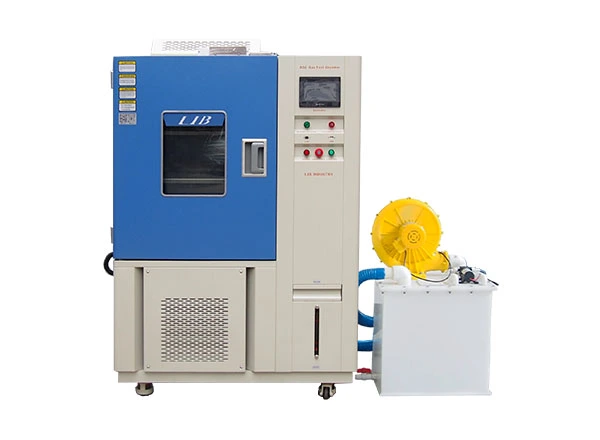
Special Test Chambers require an even more application-specific approach. An ozone test chamber, for example, can combine ozone concentration control, temperature and humidity control, programmable cycles, USB data export, alarms, and remote monitoring. A battery test chamber may add smoke, pressure, leakage, fire, and emergency shutdown monitoring to the digital control architecture.
This means future chamber selection should evaluate both environmental performance and data architecture.
A camera or remote screen does not necessarily provide meaningful test traceability. A useful system should capture actual environmental parameters, program status, alarm events, and relevant timestamps.
An alarm that disappears before the operator checks the chamber can still affect the validity of a test. Alarm records should preserve what occurred, when it occurred, and, where supported, the system response.
A CSV file containing temperature values is not automatically a complete test record. Traceability may also require test identification, program information, timestamps, alarm history, sample identification, and operator records.
Before integrating a chamber into a laboratory network, confirm whether it supports Ethernet, USB, Modbus/TCP, RS-485, or another required protocol. LIB's Temperature & Humidity Chamber supports Modbus/TCP and Ethernet connectivity.
Connecting equipment to a factory or laboratory network creates additional IT considerations. Users should define access permissions, network segmentation, password management, backup procedures, and responsibilities for software or firmware updates.
A remote alarm is useful only when somebody can respond to it. Test teams should establish who receives notifications, what constitutes a critical deviation, and when a test should be automatically stopped.
Network connectivity should not become a single point of failure. Local storage, buffered records, or another recovery mechanism can help preserve test data when the network temporarily becomes unavailable.
Different testing workflows call for different levels of digital integration.
Benchtop: Suitable for small laboratory samples and routine testing where Ethernet, USB data export, and remote supervision can reduce manual observation. LIB's compact benchtop chambers are available in 50 L and 80 L configurations, with programmable temperature and humidity cycles and Ethernet connectivity.
Reach-In: Appropriate for medium-sized specimens and laboratories running multiple routine environmental programs. A reach-in configuration can provide a practical balance between working volume and connected monitoring.
Walk-In: Better suited to large assemblies, multiple samples, and extended production-scale testing. LIB's walk-in environmental chambers support real-time monitoring, data logging, Ethernet communication, and Modbus TCP/IP integration with laboratory management systems, MES, or remote monitoring platforms.
Thermal Shock: Appropriate when the primary requirement is rapid transfer between different temperature zones. Digital monitoring becomes especially valuable when high-cycle-rate programs run continuously.
Salt Spray: Recommended for corrosion testing where spray cycles, exposure duration, and environmental conditions must be recorded. Remote alarm and data functions can improve unattended operation.
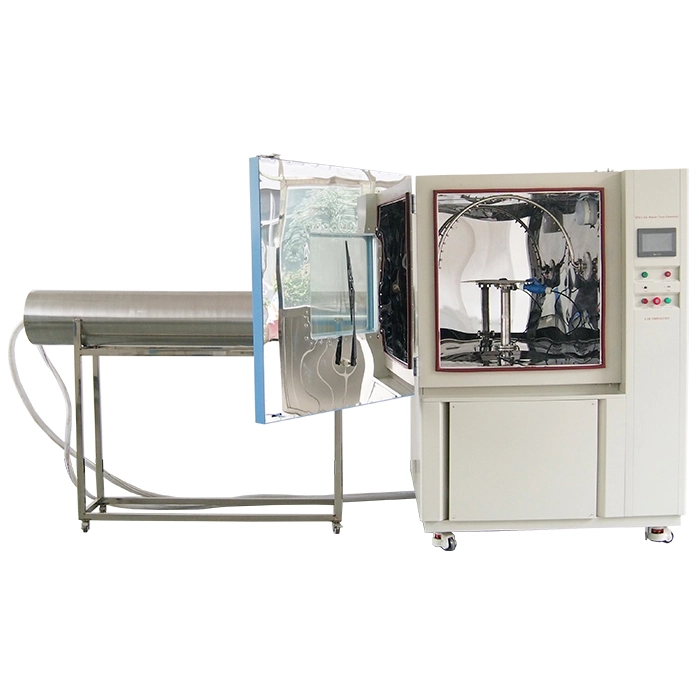
IP: Suitable for ingress protection testing involving water or dust. Specialized controllers can record test parameters and fault conditions; LIB's IP6K9K equipment, for example, provides data recording, fault alarms, remote control, and test-data export.
Special Custom Chamber: The strongest option when the test combines environmental conditioning with gas, pressure, battery safety, mechanical movement, light, or other application-specific variables. LIB's Special Test Chamber range includes corrosive-gas, ozone, mixed-gas, and other customized systems.
The LIB Temperature & Humidity Chamber provides the core platform for connected climatic testing, while the LIB Special Test Chamber extends environmental simulation into application-specific conditions. A specific LIB Temperature and Humidity Test Chamber supports LAN, USB, Modbus/TCP, real-time data logging, remote monitoring, and report export.
For battery applications requiring a higher level of safety and traceability, the LIB Battery Test Chamber combines cloud data storage, automatic test-curve generation, remote monitoring, and multiple safety monitoring functions.
The digitalization trend also extends into industry-specific testing. LIB's Electronics Environmental Testing resources describe the growing use of remote monitoring, automatic alarms, and data analysis in electronic product testing.
A related buyer guide to temperature and humidity aging chambers also highlights remote monitoring, data logging, and alarm functions as important selection criteria for modern test programs.
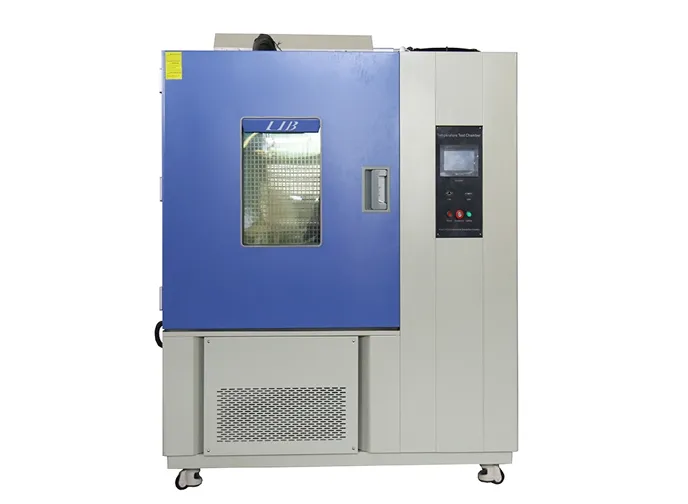
Many modern Temperature & Humidity Chambers can support remote monitoring through Ethernet, USB, PC links, or industrial communication protocols. The exact functions depend on the controller and configuration.
Remote monitoring allows users to view or control chamber status from another location. Cloud data storage focuses on retaining test information centrally for later analysis, reporting, comparison, or traceability. A system can provide one function without necessarily providing the other.
Continuous logging creates a chronological record of environmental conditions. This helps engineers identify deviations, correlate failures with environmental changes, and verify whether a test profile was maintained throughout the program.
Yes. LIB's Temperature and Humidity Test Chamber supports Ethernet, USB, PC connectivity, and Modbus/TCP, allowing data and chamber status to be integrated with laboratory or factory networks.
At minimum, the system should monitor critical environmental deviations and equipment faults. Depending on the chamber, additional signals may include water shortage, refrigeration pressure, smoke, gas concentration, leakage, or other safety conditions.
Yes, provided the controller and software architecture support programmable testing, continuous logging, alarm records, data export, and appropriate communication interfaces. For regulated applications, additional requirements for electronic records and audit trails may also apply.
An RFQ should specify the test standard, temperature and humidity profile, chamber volume, sample load, ramp rate, required sensors, data-recording interval, storage period, remote-access method, communication protocol, alarm requirements, data-export format, network environment, and any cybersecurity or compliance requirements.
No. A local Ethernet or USB data-logging system may be sufficient for a small laboratory with one or two chambers. Cloud connectivity becomes more valuable when multiple chambers, remote teams, long-duration testing, centralized reporting, or multi-site test management are involved.
 English
 русский
 français
 العربية
 Deutsch
 Español
 한국어
한국어 italiano
 tiếng việt
 ไทย
ไทย Indonesia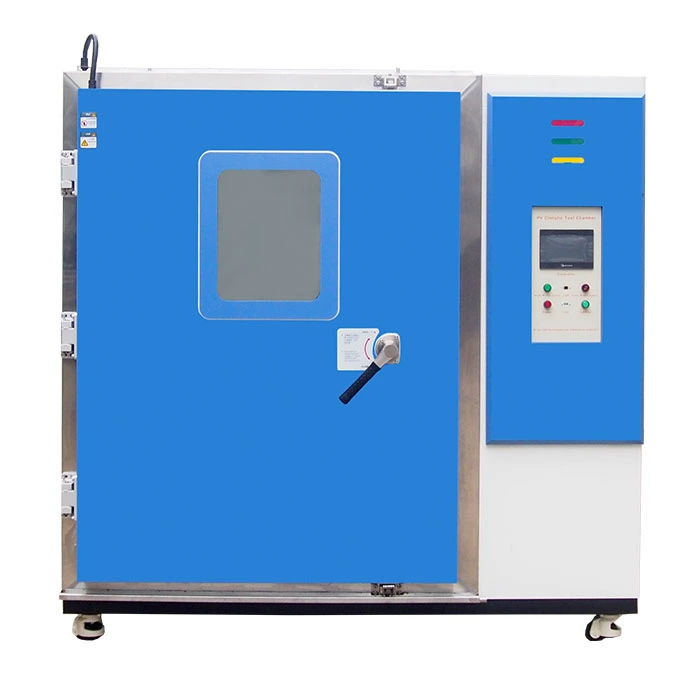

.webp "CO₂ Carbonation Curing Chamber Automation Kit")