Recycled polypropylene (rPP) and recycled high-density polyethylene (rHDPE) are being adopted at a rapid pace in outdoor applications — furniture, automotive trim, piping, and pallets. But these materials carry hidden risks: residual light and heat aging history, embedded impurities, and degradation-driven surface chalking, cracking, and loss of toughness. For engineers, these are not cosmetic concerns — they are potential field failures waiting to happen.
The direct answer to how manufacturers de-risk this is accelerated weathering testing. A laboratory weathering chamber can compress years of sunlight exposure, heat, condensation, and rain impact into a matter of weeks, giving engineers a realistic preview of long-term outdoor performance long before a product ever reaches the field.
This article walks through the physical and chemical indicators used to evaluate recycled plastic degradation, compares the major international standards (ASTM and ISO), and offers practical guidance on selecting the right weathering chamber for your application.
.webp) How UV and Heat Degrade Recycled Polyolefins
How UV and Heat Degrade Recycled PolyolefinsUltraviolet radiation activates chromophores within the polymer matrix, triggering chain scission and the formation of carbonyl groups — the chemical fingerprint of oxidative degradation. In recycled resins, this process is often accelerated because the material has already absorbed part of its "degradation budget" during its first life cycle or during reprocessing.
Importantly, rPP and rHDPE fail differently under weathering stress:
rPP typically shows a sharp drop in elongation at break as chain scission embrittles the polymer.
rHDPE tends to develop surface hardening and is more prone to environmental stress cracking (ESCR), especially at welds, hinges, or stressed geometries.
Test Item | What It Reveals | Typical Reported Data |
Color & Gloss | Surface fading, chalking, appearance loss | ΔE (color change), gloss retention % |
Tensile Strength & Elongation | Loss of ductility, embrittlement | MPa, % elongation vs. exposure hours |
Impact Strength | Brittle failure risk | Joules or ft-lb (Izod/Charpy) |
FTIR Carbonyl Index | Early-stage oxidation, before visible cracking | Carbonyl index vs. exposure time |
OIT / DSC | Remaining antioxidant/stabilizer reserve | Minutes to oxidation onset |
SEM Microscopy | Micro-cracking, surface morphology change | Visual/qualitative imaging |
Insight: Visible cracking is a late-stage symptom. FTIR carbonyl index and OIT testing can flag oxidative degradation weeks before any crack is visible to the naked eye — which is why they belong in every recycled-resin qualification protocol, not just mechanical testing.
Choosing the right standard is one of the most consequential decisions in a weathering test program, since it determines light source, irradiance, cycle design, and correlation to real-world exposure.
| Standard | Light Source | Typical Irradiance | Cycle Type | Black Panel Temp | Humidity Control |
|---|---|---|---|---|---|
| ASTM G154 | Fluorescent UV (UVA-340/UVB-313) | 0.68–0.89 W/m²/nm | UV/Condensation alternating | 50–70°C | Condensation only |
| ISO 4892-3 | Fluorescent UV | Per lamp type | UV/Condensation | 50–65°C | Condensation only |
| ASTM G155 | Xenon Arc (full spectrum) | 0.35–0.55 W/m²/nm @340nm | Light/Dark + water spray | 63–70°C | Spray + humidity control |
| ISO 4892-2 | Xenon Arc | Per method | Light/Dark cycles | 65°C typical | Programmable |
| SAE J2020 | Xenon Arc | Automotive-specific | Light/Dark, spray | 89°C (auto interior) | Programmable |
Set up control groups — compare virgin resin against PCR (post-consumer recycled) content at multiple ratios: 0%, 25%, 50%, 75%, and 100%.
Define exposure conditions — select light source, irradiance, black panel temperature, and humidity/condensation cycle appropriate to the end application (outdoor furniture vs. automotive exterior trim, for example, warrant different profiles).
Set sampling checkpoints — pull samples at 250h, 500h, 1000h, 1500h, and 2000h to build a degradation curve rather than a single pass/fail snapshot.
Run the full test panel — color/gloss, tensile/elongation, impact, FTIR, and OIT at each checkpoint.
Define pass/fail criteria — set acceptable thresholds (e.g., retained elongation ≥50% of baseline, ΔE ≤3.0) before testing begins, not after seeing the data.
Why this matters: A protocol without predefined checkpoints and pass/fail thresholds produces data — not decisions. Recycled resin qualification needs both.
Factor | UV Chamber (Fluorescent) | Xenon Arc Chamber |
Best for | Fast material screening, formulation R&D | Full-spectrum color/gloss correlation, finished-part validation |
Spectral match to sunlight | UV region only | Full solar spectrum (UV–Vis–IR) |
Relative cost | Lower | Higher |
| Typical use case | Comparing PCR ratios quickly | Final qualification for outdoor/automotive parts |
| 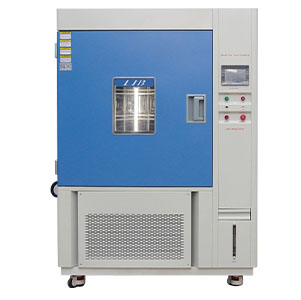 |
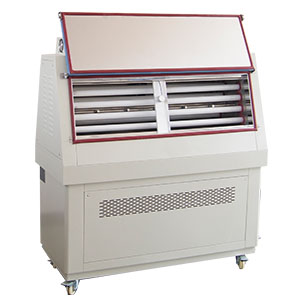
If the goal is a fast go/no-go screen across multiple recycled resin formulations, a fluorescent UV chamber is usually the more economical starting point. If the goal is matching color and gloss retention to real sunlight for a finished product — a bumper trim piece, an outdoor chair — a xenon arc chamber with full-spectrum filtering is the more defensible choice for final sign-off.
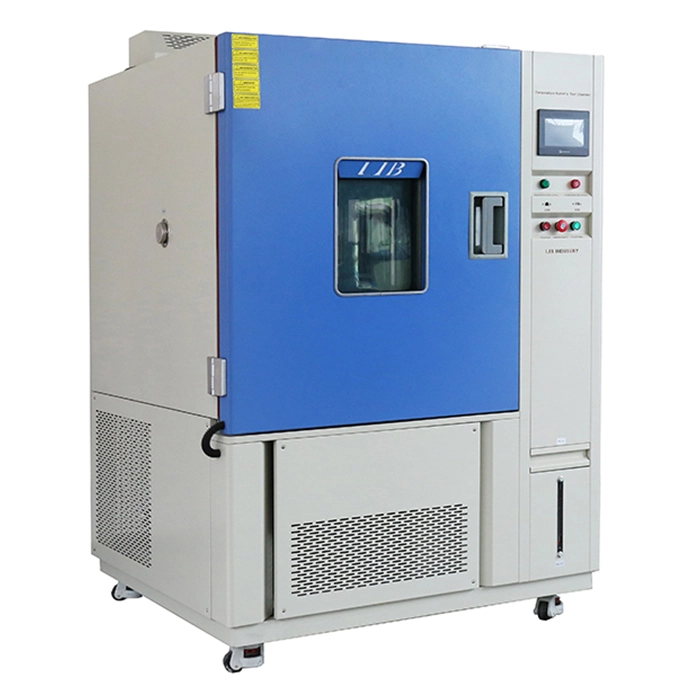
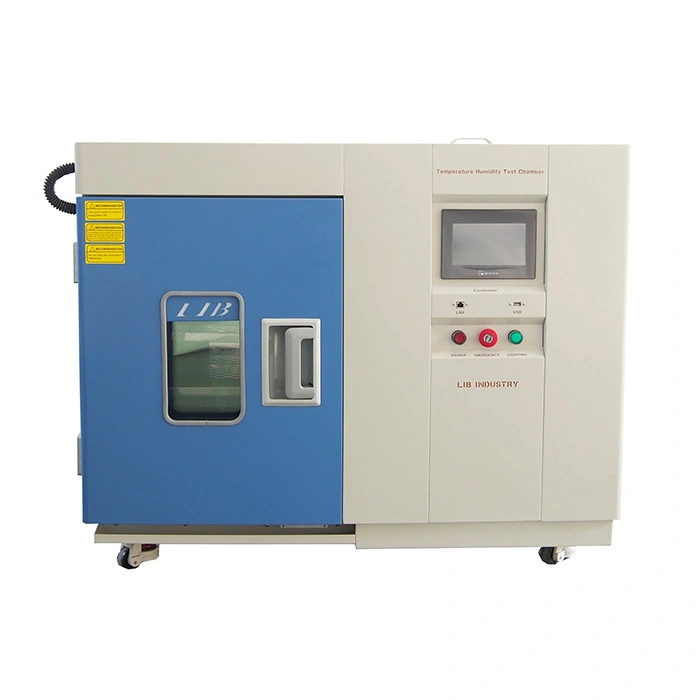
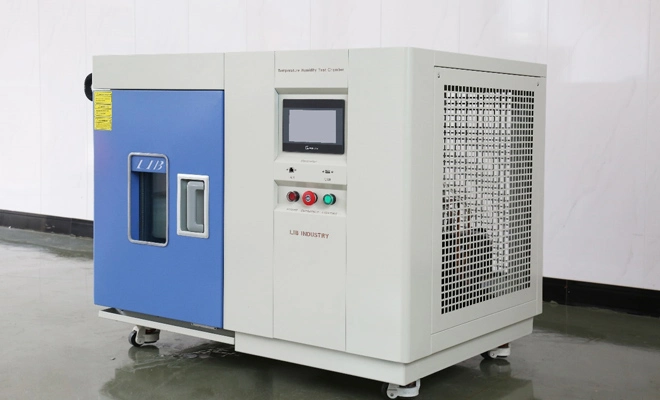
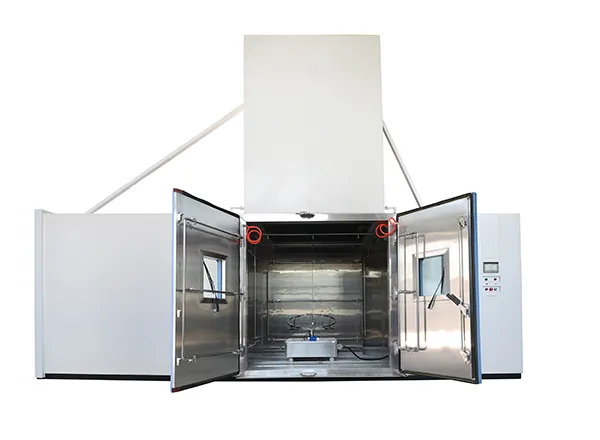
Standard tensile bars and small coupons fit comfortably in benchtop or mid-size chambers. But for large finished parts — automotive bumpers, outdoor pallets, furniture assemblies — a walk-in chamber is often the only practical option, since it accommodates full-scale components without cutting them into unrepresentative test specimens.
Founded in 2012, LIB Industry specializes in the design and manufacturing of environmental simulation test equipment for global customers.
With extensive experience in reliability testing solutions, LIB Industry provides a complete product portfolio covering:
Accelerated Weathering Test Chamber
UV Aging Test Chamber
Xenon Weathering Test Chamber
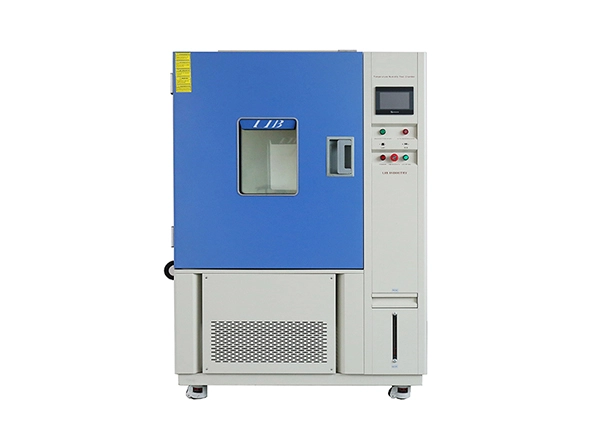
Temperature Humidity Chamber
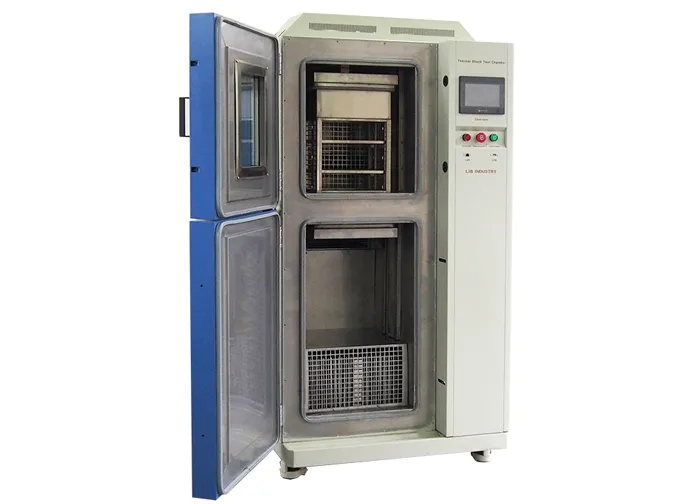
Thermal Shock Chamber
Salt Spray Chamber
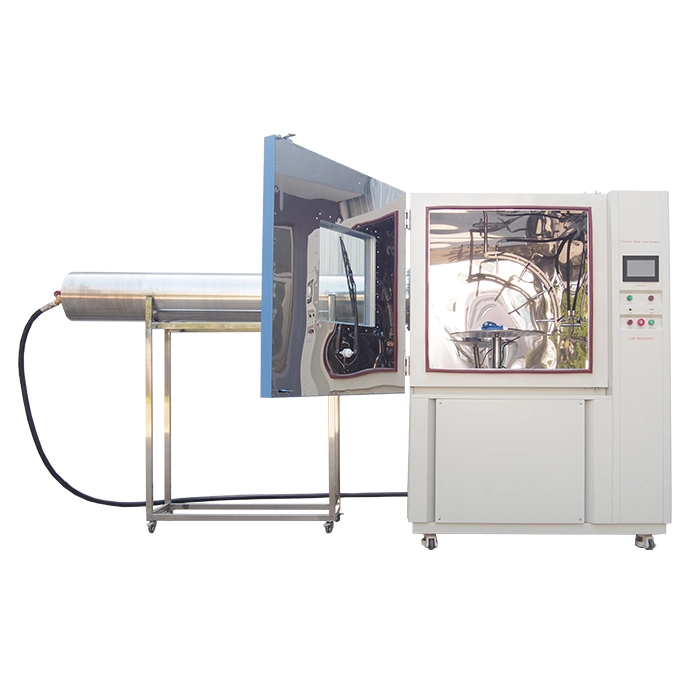
IP Waterproof and Dust Test Equipment
Instead of providing only a single testing machine, LIB Industry offers a complete environmental reliability testing solution from equipment selection and customization to installation and technical support.
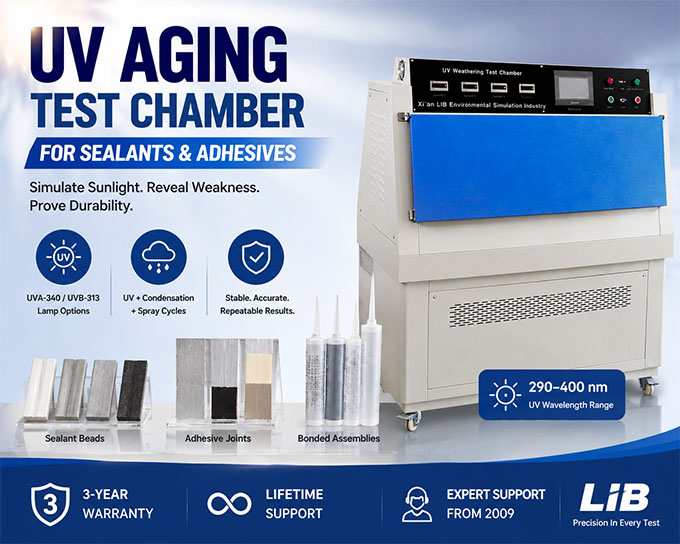
LIB accelerated weathering chambers are designed to meet the requirements of professional material evaluation programs.
Key capabilities include:
UV fluorescent lamp and xenon light source options
Stable irradiance control
Black panel temperature monitoring
Programmable condensation cycles
Water spray simulation
Automatic test operation and data recording
Typical configurations support:
290–400 nm wavelength simulation
Controlled black panel temperature
High humidity exposure conditions
Long-duration reliability testing
These functions allow engineers to evaluate polymers, coatings, automotive components, and recycled materials under repeatable environmental conditions.
Closed-loop irradiance control paired with precise black panel temperature (BPT/BST) regulation, ensuring test repeatability run after run.
Programmable condensation and water spray functions that realistically simulate thermal shock and rain-washing effects on outdoor parts.
Drawer-style and wall-mounted sample racks, allowing samples to be pulled at different checkpoints without disturbing the rest of the test load.
How is the durability of recycled HDPE (rHDPE) specifically evaluated after UV exposure?
The priority metrics are tensile strength and elongation retention, impact strength, and environmental stress cracking resistance (ESCR), since rHDPE tends to fail through surface hardening and stress cracking rather than sudden embrittlement.
Which standard should I choose for recycled plastics: ASTM G154 or ASTM G155?
ASTM G154 (fluorescent UV) is best for fast, low-cost screening of formulations during R&D. ASTM G155 (xenon arc) provides full-spectrum simulation and is the better choice when the goal is correlating color, gloss, and mechanical performance to real outdoor sunlight for final validation.
Can accelerated chamber test hours be directly converted into natural outdoor service years?
Not reliably as a fixed ratio. Acceleration factors vary by climate, material, and stabilizer package. Accelerated testing is best used for relative ranking between formulations and for benchmarking against a known reference material with established outdoor performance, rather than as a precise year-for-hour conversion.
Why is Black Panel Temperature (BPT) control critical during recycled polymer weathering?
Temperature strongly amplifies the rate of photo-oxidative chemical reactions in polymers. Even small deviations in BPT can significantly skew degradation rates, making precise, closed-loop temperature control essential for repeatable, comparable results.
What chemical testing methods best detect early surface oxidation before visible cracks appear?
FTIR carbonyl index tracking and OIT (Oxidation Induction Time) via DSC are the most effective early-warning methods, detecting oxidative changes at the molecular level well before cracking or visible surface damage occurs.
Initial mechanical data cannot represent a recycled resin's long-term outdoor service life. A systematic, well-designed accelerated weathering program is what turns recycled plastic from a cost-saving material into a certifiable, field-ready one.
Need a testing protocol or equipment quote aligned with ASTM/ISO standards? Reach out to the LIB team for a free technical consultation, product literature, and a customized weathering test solution.
 English
 русский
 français
 العربية
 Deutsch
 Español
 한국어
한국어 italiano
 tiếng việt
 ไทย
ไทย Indonesia