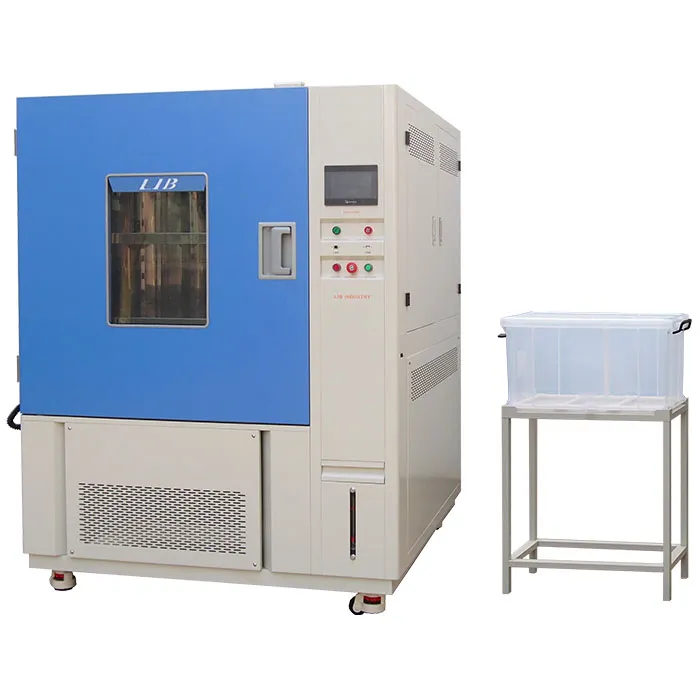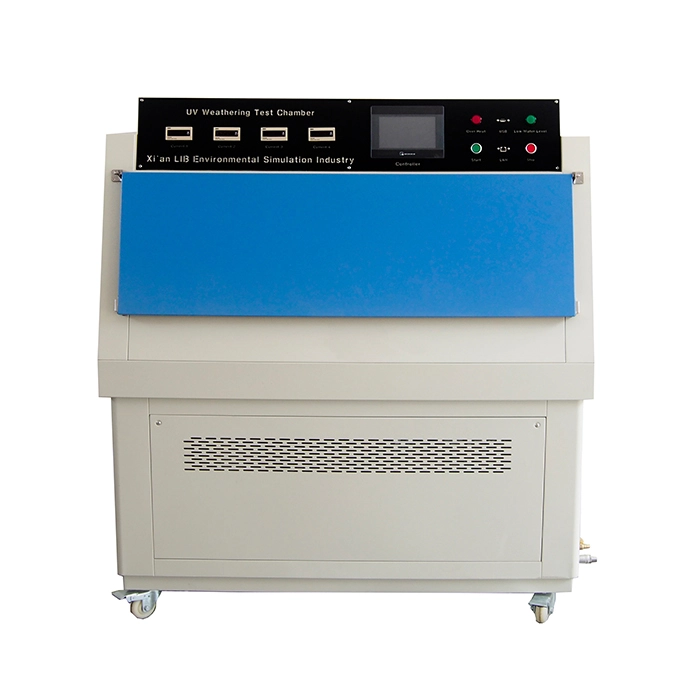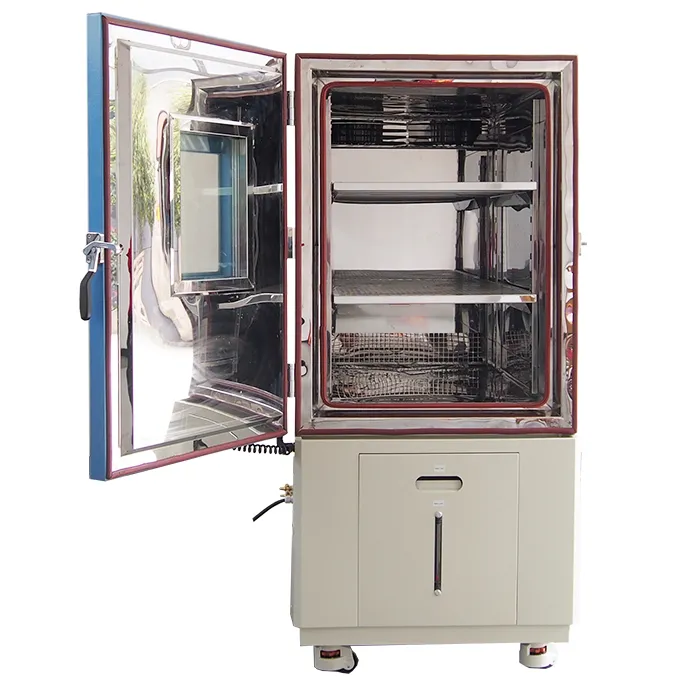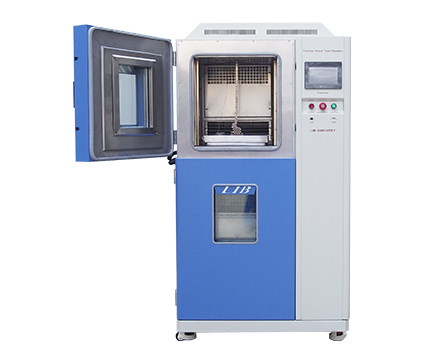
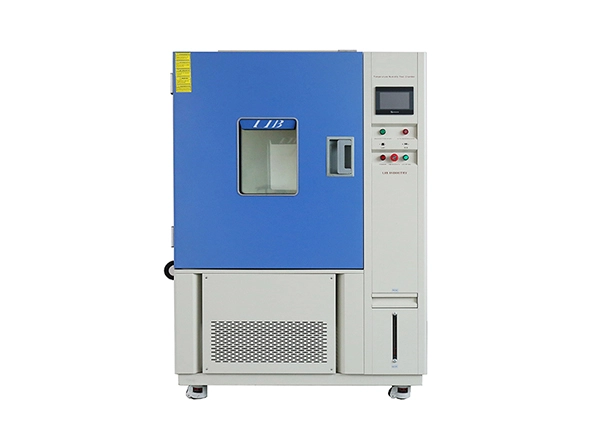
An energy efficient environmental chamber should be selected according to the actual sample size, thermal load, test profile, and required environmental standard—not simply by choosing the chamber with the lowest rated power. For small components, electronics, and laboratory samples, a Temperature & Humidity Chamber provides controlled temperature and humidity testing with lower unnecessary chamber volume. For large assemblies, battery packs, automotive components, or batch testing, a Walk-In Chamber provides the space and load capacity required for realistic testing. Standards such as IEC 60068, ISO 16750, and MIL-STD-810 define different environmental conditions and test methods. The most important selection factors are chamber volume, temperature and humidity range, ramp rate, sample heat load, airflow, control stability, and long-term test chamber energy consumption.
Environmental chambers are used to reproduce controlled climatic conditions and determine how products behave under temperature, humidity, and cyclic environmental stress. The objective may be reliability verification, accelerated aging, durability evaluation, environmental stress screening, or compliance testing.
Typical test samples include electronic components, PCBs, automotive parts, battery modules, photovoltaic products, materials, pharmaceutical products, and complete industrial assemblies. LIB Industry identifies automotive, aerospace, electronics, pharmaceutical, battery technology, biology, materials, and defence as major application fields.
The failure modes being investigated can include:
Electrical malfunction after high- or low-temperature exposure
Material expansion, contraction, cracking, or deformation
Corrosion caused by humidity or condensation
Seal and enclosure degradation
Battery performance and stability changes
Insulation and component aging
Performance drift during repeated temperature cycles
The choice of chamber directly affects both test quality and operating cost. Using a chamber that is significantly larger than the sample increases the environmental volume that must be heated, cooled, and conditioned. LIB's environmental chamber selection guidance also recommends avoiding unnecessary oversizing because it can increase energy consumption and operating cost.
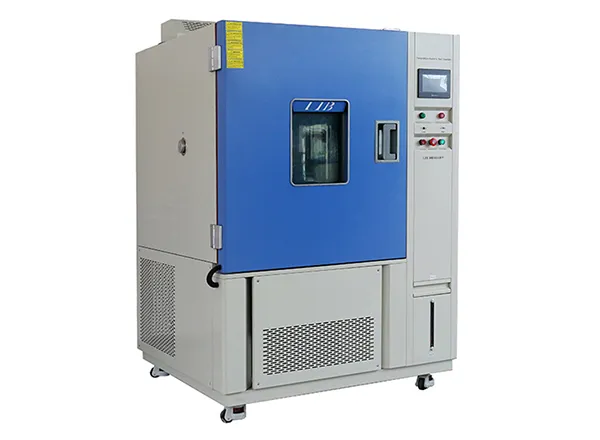
For compact samples, a Temperature & Humidity Chamber is often more efficient. LIB models are available from approximately 100 L to 1,000 L, with temperature options from -20°C, -40°C, or -70°C to +150°C and humidity control from 20% to 98% RH.
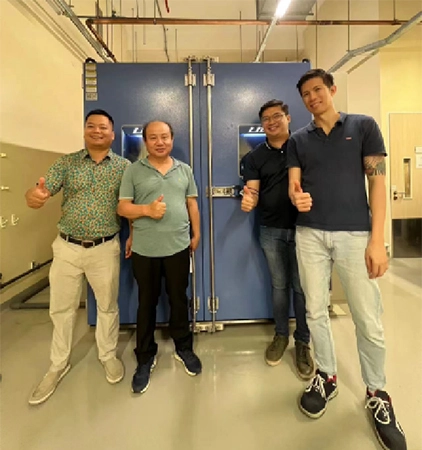
For full-size assemblies or batch testing, a Walk-In Chamber is more appropriate. LIB's walk-in environmental chamber supports temperatures from -60°C to +150°C and humidity from 20% to 95% RH, with customizable configurations for large-scale testing.
The applicable standard depends on the product, industry, and qualification program. The following table summarizes common environmental testing frameworks. Exact temperature, humidity, dwell time, and cycle requirements must be confirmed from the applicable standard and product specification.
Standard / Method | Temperature | Humidity | Typical Cycle / Duration | Spray / Pressure |
IEC 60068-2-1 | Low-temperature conditions defined by test severity | N/A | Exposure and recovery periods defined by test plan | N/A |
IEC 60068-2-2 | High-temperature conditions defined by test severity | N/A | Dry-heat exposure for specified duration | N/A |
IEC 60068-2-30 | Cyclic damp heat | Typically high RH with cyclic temperature changes | Repeated humidity/temperature cycles | Condensation may occur |
ISO 16750-4 | Product-specific climatic loads | Temperature and humidity profiles vary | Cyclic and endurance testing | Depends on application |
MIL-STD-810H | Method-specific high/low temperature conditions | Method 507.6 addresses humidity | Procedure and cycle depend on equipment | Some methods include pressure/altitude conditions |
LIB's benchtop environmental chamber range lists IEC 60068, ISO 16750, MIL-STD-810H, MIL-STD-883, JEDEC JESD22, SAE J1211, LV124 and LV148 among applicable standards. Its broader temperature and humidity range also supports applications such as accelerated aging and environmental stress screening.
For battery applications, temperature cycling, thermal stability, and aging tests can require substantially different chamber configurations. LIB's battery testing applications include temperature shock and cycle testing, thermal stability testing, and aging tests.
Parameter | Temperature & Humidity Chamber | Walk-In Chamber |
Temperature range | -20/-40/-70°C to +150°C, depending on model | About -60°C to +150°C |
Humidity range | 20%–98% RH | 20%–95% RH |
Chamber volume | Approx. 100–1,000 L standard models | Large customized workrooms |
Ramp rate | About 3°C/min heating, 1°C/min cooling on listed models | About 3°C/min heating, 1°C/min cooling |
Airflow | Forced circulation with controlled air distribution | Forced circulation for large workspaces |
Sample heat load | Listed models commonly support around 1,000 W; confirm model-specific load | Must be engineered according to sample heat load |
Safety configuration | Over-temperature, over-current, water-shortage and related protection | Over-temperature, over-current, refrigerant high-pressure, water shortage and leakage protection |
Applicable standards | IEC 60068, ISO 16750, MIL-STD-810H and others | MIL-STD-810, battery, automotive, pharmaceutical and large-assembly applications |
LIB's standard Temperature & Humidity Chamber uses mechanical compression refrigeration, programmable control, automatic water supply, and temperature/humidity sensing. The listed models include TH-100, TH-225, TH-500 and TH-1000.
A Walk-In Chamber becomes more economical when its additional volume is actually required. For example, placing an automotive assembly or multiple battery units into a small chamber would be impractical, while using a large walk-in system for a single PCB would create unnecessary environmental volume and potentially higher environmental chamber operating cost.
The key trend is therefore not simply “smaller equipment uses less energy.” Instead, energy efficiency increasingly means matching the chamber's capacity and control system to the test workload. Improved insulation, intelligent PID control, efficient refrigeration, and appropriate chamber sizing can reduce wasted energy while maintaining stable test conditions. LIB's temperature and humidity products use insulation and controlled air circulation to support stable environmental conditions, while its energy-efficiency discussions highlight intelligent control and optimized refrigeration as important approaches to reducing operating costs.
Electronic systems, battery assemblies, servers, motors, and power electronics can generate significant heat during operation. If the chamber is selected only according to empty-chamber specifications, it may struggle to maintain the required temperature.
Large samples can restrict airflow and create temperature gradients. Adequate clearance around the test specimen is necessary for reliable environmental circulation.
The chamber controller's displayed temperature does not automatically represent the temperature at every point around the sample. Sensor placement, airflow, and product heat generation can all affect the actual test condition.
A highly precise sensor does not guarantee uniform temperature throughout the working space. Control accuracy, fluctuation, deviation, and uniformity should be evaluated separately.
A chamber may reach -40°C and +85°C but still be unsuitable for a test requiring a specific temperature transition rate. Ramp rate should be included in the RFQ.
Before purchase, confirm electrical supply, drainage, water requirements, ventilation, door clearance, floor loading, access routes, and installation space. These factors become especially important for Walk-In Chambers.
A chamber that is unnecessarily large may increase heating, cooling, and humidity-control demand. The most economical system is generally the smallest configuration that can safely accommodate the sample, required airflow, fixtures, and future testing needs.
Different test programs require different environmental chamber configurations:
Benchtop: Best for small electronic components, sensors, PCBs, and laboratory samples where compact size and low energy demand are priorities. LIB's benchtop models are available in 50 L and 80 L configurations and support temperature and humidity testing.
Reach-In: Suitable for routine reliability testing of medium-sized products when a full walk-in workspace is unnecessary. LIB lists Reach-In Environmental Chamber as part of its temperature and humidity chamber range.
Walk-In: Recommended for battery packs, automotive assemblies, large electronic cabinets, photovoltaic products, and batch testing. LIB offers large customized walk-in environmental chambers for these applications.
Thermal Shock: Appropriate when the primary failure mechanism involves rapid transitions between high and low temperatures rather than long-duration humidity exposure. LIB's thermal chamber range includes thermal shock and temperature-cycle equipment.
Salt Spray: Choose a salt spray chamber when corrosion resistance is the main objective rather than general temperature/humidity conditioning. LIB offers salt spray equipment for standards such as ASTM B117 and ASTM G85.
IP: IP test equipment is preferable for evaluating dust and water ingress according to standards such as IEC 60529. LIB offers IP dust and water testing systems.
Special Custom Chamber: For combined temperature, humidity, vibration, pressure, light, rain, gas, or other environmental conditions, a customized chamber can integrate multiple test requirements. LIB provides customized environmental chamber configurations for application-specific testing.
The LIB Thermal Humidity Chamber is designed for compact and medium-sized temperature and humidity testing, with multiple chamber volumes and temperature configurations available for different test requirements. For large assemblies, multiple specimens, and batch testing, the LIB Walk In Humidity Chamber provides a substantially larger controlled test space with customizable environmental conditions. Matching chamber capacity to the actual sample size and thermal load can reduce unnecessary test chamber energy consumption while maintaining stable and repeatable test conditions.
For battery-related applications, the LIB Battery Technology testing page explains how environmental chambers are used for battery temperature cycling, thermal stability, and aging tests.
For further reading on energy efficiency, see How Energy-Efficient Climate Chambers Reduce Lab Carbon Footprint and Operating Costs.
A Temperature & Humidity Chamber is generally suitable for small and medium-sized samples requiring controlled temperature and relative humidity. For large assemblies, multiple samples, or production-scale testing, a Walk-In Chamber is usually more appropriate.
The primary difference is working volume and application scale. A Temperature & Humidity Chamber is designed for laboratory-sized specimens, while a Walk-In Chamber provides a much larger controlled environment for full assemblies, heavy samples, and batch testing.
Test duration depends entirely on the applicable standard and test objective. Some tests involve short temperature exposures or cycles, while accelerated aging and reliability programs may run for hundreds or thousands of hours.
Choose a chamber that accommodates the sample, fixtures, required airflow clearance, and future testing needs without excessive unused volume. Oversizing can increase test chamber energy consumption and operating cost.
Yes, a programmable Temperature & Humidity Chamber can support multiple environmental test profiles when its temperature range, humidity range, ramp rate, stability, uniformity, and safety configuration satisfy the applicable standards.
An RFQ should specify the sample dimensions and weight, required temperature and humidity range, ramp rate, test duration, sample heat load, number of samples, applicable standards, power supply, access requirements, chamber volume, and any special safety or environmental functions.
Not necessarily. Modern energy-efficient environmental chambers can combine insulation, efficient refrigeration, controlled airflow, and intelligent PID control to reduce energy waste while maintaining repeatable temperature and humidity conditions. The correct approach is to optimize energy use around the required test profile rather than reduce equipment capability.
 English
 русский
 français
 العربية
 Deutsch
 Español
 한국어
한국어 italiano
 tiếng việt
 ไทย
ไทย Indonesia