Selecting the right environmental chamber depends mainly on product size, testing volume, and application requirements. A Reach-In Environmental Chamber is ideal for components and medium-sized products that require frequent access and flexible testing, while a Walk-In Chamber provides a larger controlled environment for oversized assemblies and batch testing. A Drive-In Environmental Chamber is designed for vehicles, machinery, and very large products that must be moved directly into the chamber. These systems are commonly used for standards such as IEC 60068, ISO 16750, MIL-STD-810, and IEC 60529. The most important factors in chamber selection are sample dimensions, heat load, airflow, loading method, and future testing requirements.
Environmental chambers are designed to reproduce real-world conditions and verify whether products can maintain performance under controlled environmental stress. The choice between a Reach-In, Walk-In, or Drive-In Chamber depends largely on the size, quantity, and operating characteristics of the test samples.
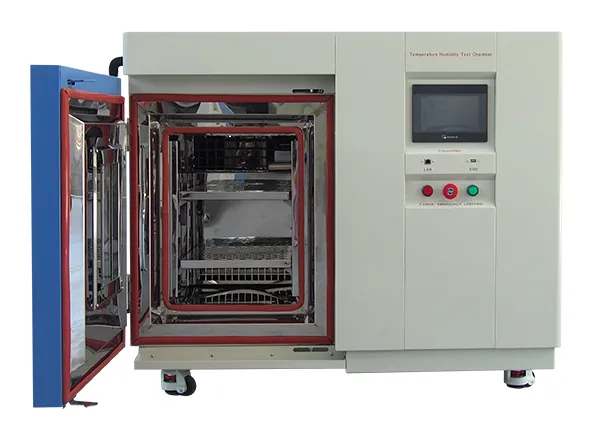
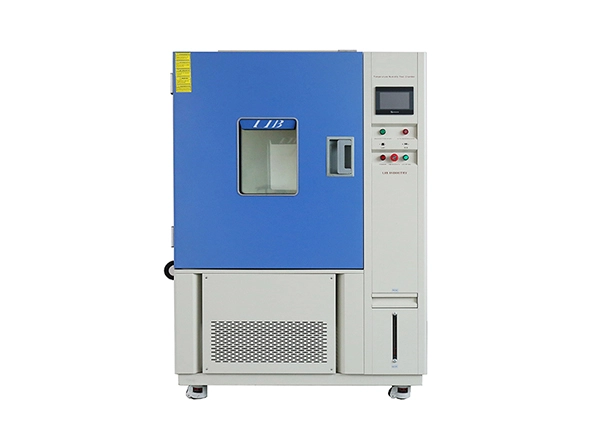
A Reach-In Environmental Chamber is commonly used for laboratory testing where samples can be manually placed inside the chamber. It provides a practical solution for component-level and small product testing.
Typical applications include:
Consumer electronics
Medical devices
Sensors and controllers
Battery modules
Communication equipment
The main failure modes evaluated include:
Thermal expansion and contraction
Electronic performance degradation
Moisture-related failures
Material aging
Seal deterioration
Component reliability issues
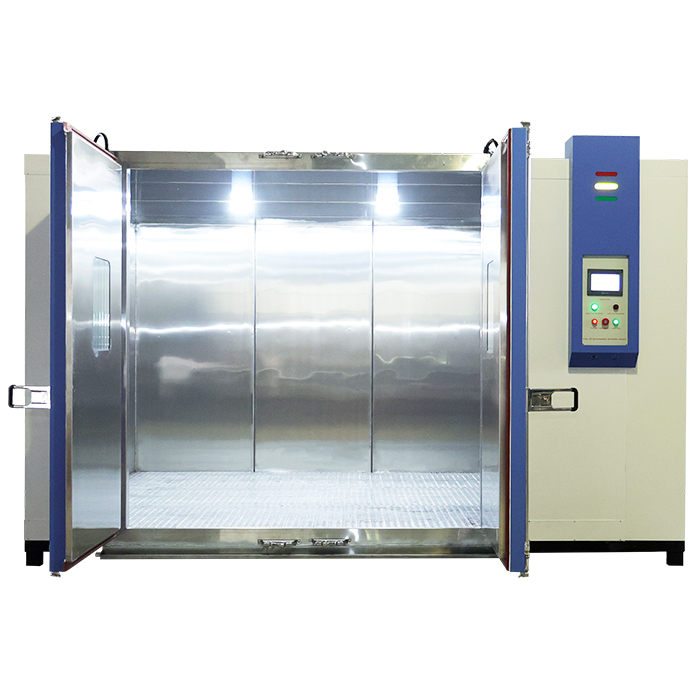
A Walk-In Chamber is designed for larger products, multiple samples, or applications requiring operators to enter the test space. Unlike a traditional reach-in design, walk-in systems provide significantly more internal volume and easier sample installation.
Common test samples include:
EV battery systems
Vehicle assemblies
Aerospace components
Industrial equipment
Large electronic systems
Typical testing objectives include:
Climate durability testing
Temperature and humidity cycling
Long-duration reliability validation
Production qualification
Large-scale environmental simulation
A Drive-In Environmental Chamber provides the largest testing capacity among these three configurations. It allows vehicles, machines, and oversized equipment to be driven directly into the chamber for full-scale testing.
Typical applications include:
Complete vehicles
Heavy industrial equipment
Large transportation systems
Specialized engineering products
Proper chamber selection ensures that the sample receives uniform environmental exposure and that test results accurately represent actual operating conditions.
Different industries use different environmental testing standards. Before choosing chamber size, manufacturers should confirm the required temperature, humidity, dust, water, or durability conditions.
Standard | Temperature Range | Humidity | Test Cycle | Spray / Pressure Condition |
IEC 60068-2-1 | Low temperature exposure | N/A | Constant exposure | None |
IEC 60068-2-2 | High temperature exposure | N/A | Constant exposure | None |
IEC 60068-2-30 | 25°C to 55°C | Up to 95% RH | Cyclic damp heat | None |
IEC 60068-2-78 | 40°C | 93% RH | Steady-state humidity | None |
ISO 16750-4 | -40°C to +125°C | Optional | Automotive temperature cycling | None |
MIL-STD-810H | Customized | Customized | Environmental simulation | Optional |
IEC 60529 | Variable | N/A | Ingress protection | Dust/water testing |
ASTM D4332 | Variable | Variable | Packaging environment simulation | None |
Large-scale chambers often require additional considerations, including airflow distribution, sample positioning, operator access, and safety systems.
The following comparison helps explain the differences in reach in vs walk in chamber selection.
Specification | Reach-In Environmental Chamber | Drive-In Environmental Chamber | |
Temperature Range | -70°C to +180°C | Customized according to application | Customized according to application |
Humidity Range | 10–98% RH | 10–98% RH | Customized |
Chamber Volume | Approximately 100–2000 L | Several cubic meters | Large-scale testing space |
Ramp Rate | Standard and rapid temperature change options | Customized based on load | Customized based on product requirements |
Airflow | Vertical or horizontal circulation | Large-volume airflow management | Full-area airflow distribution |
Sample Heat Load | Low to medium | Medium to high | Very high |
Safety Configuration | Over-temperature alarm, protection systems | Emergency release doors, safety monitoring | Vehicle access safety, emergency systems |
Applicable Standards | IEC 60068, ISO 16750, JESD22 | IEC 60068, MIL-STD-810, automotive standards | Large equipment and vehicle qualification |
Choosing the correct chamber size is more than measuring whether the product physically fits inside the workspace. Proper chamber size selection requires evaluating several technical factors.
The chamber should provide enough free space around the sample to maintain proper airflow. Multiple samples may require additional volume to prevent temperature differences between locations.
Products such as EV batteries, motors, and electronic systems may release significant heat during operation. The chamber must provide sufficient cooling capacity under actual testing conditions.
Reach-In chambers are suitable for manually loaded samples, while Walk-In and Drive-In chambers are better for large assemblies that require carts, lifting equipment, or vehicle access.
Companies often expand product sizes or testing requirements after equipment installation. Selecting additional chamber capacity can reduce the need for future replacement.
High-power electronics and battery systems may change the chamber environment. Testing without considering heat generation can lead to inaccurate results.
A chamber that is too small may restrict airflow, while an oversized chamber may increase operating costs unnecessarily.
Sensors should measure the actual product environment rather than only the air temperature near the chamber wall.
Controller resolution does not represent actual workspace uniformity. Airflow design and chamber loading have a greater impact on test accuracy.
Temperature capability alone does not determine chamber performance. Ramp rate, humidity control, airflow, and sample load are also important.
Before installation, confirm:
Electrical supply
Ventilation requirements
Drainage
Floor loading capacity
Door clearance
Maintenance space
Different testing scenarios require different chamber configurations.
Recommended for:
Small components
Laboratory research
Material evaluation
Prototype verification
Benchtop chambers provide precise environmental control when testing requirements involve limited sample sizes.
Recommended for:
Automotive electronics
Consumer electronics
Medical devices
Battery modules
Reliability qualification
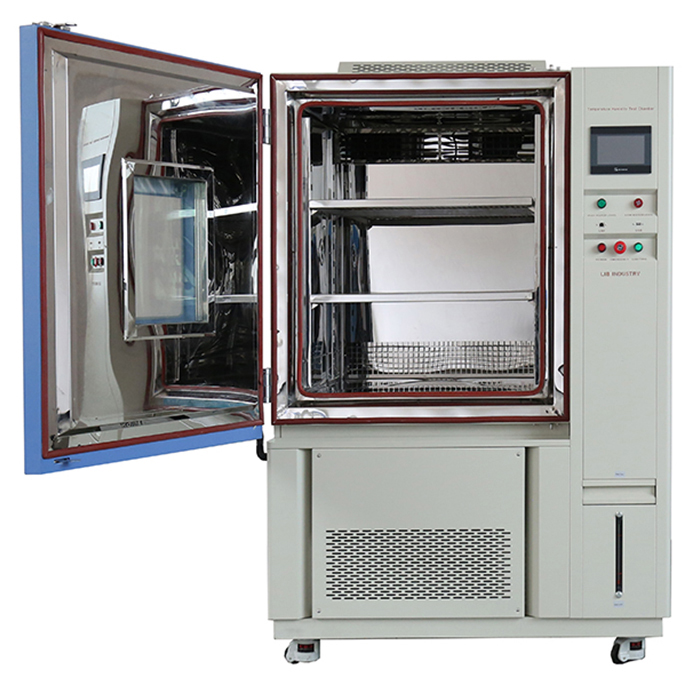
The Reach-In Environmental Chamber is suitable for laboratories that need frequent sample access, efficient operation, and flexible environmental testing capability.
Recommended for:
Large assemblies
EV battery packs
Aerospace systems
Industrial machinery
The Walk-In Chamber provides a spacious controlled environment for products that cannot fit into standard laboratory chambers. It supports large-scale reliability testing, batch testing, and customized environmental simulation.
Recommended for:
Rapid temperature transition testing
Electronic components
Automotive parts
Semiconductor evaluation
Thermal shock chambers are designed for applications requiring fast movement between extreme temperature conditions.
Recommended for:
Metal coatings
Automotive parts
Corrosion resistance testing
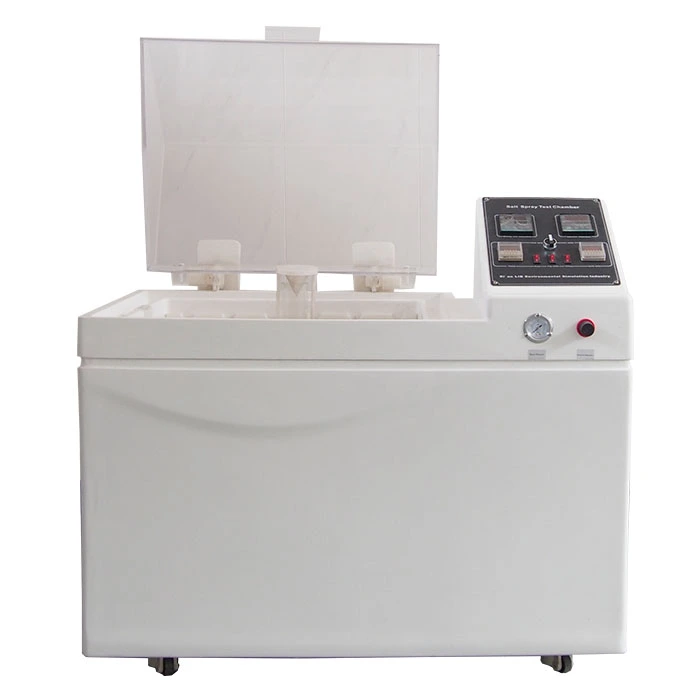
Salt spray chambers evaluate how products withstand corrosive environments before long-term deployment.
Recommended for:
Outdoor electronics
Automotive components
Industrial products
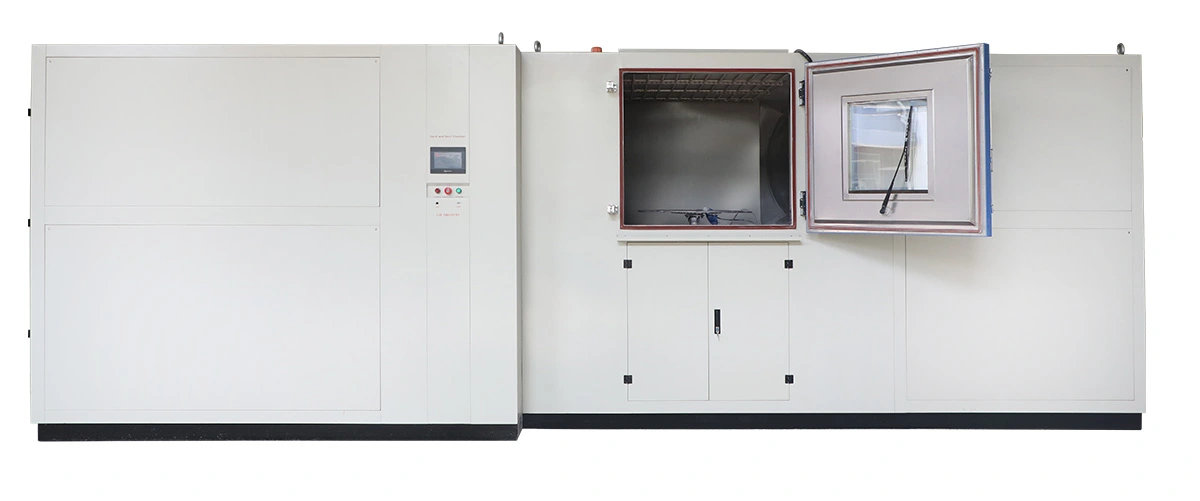
The Drive-In IP5X/IP6X Dust Test Chamber is designed for large products requiring dust ingress protection testing under IEC 60529 conditions.
Custom chambers are recommended when standard equipment cannot meet requirements such as:
Large vehicle testing
Extremely high heat loads
Special airflow requirements
Combined environmental simulations
Unique industry standards
Large equipment usually requires a Walk-In Chamber or Drive-In Environmental Chamber because these configurations provide enough space for installation, operation, and uniform environmental exposure.
A Reach-In Chamber is designed for smaller products and laboratory testing, a Walk-In Chamber allows operators to enter for large samples, and a Drive-In Chamber accommodates vehicles and oversized equipment.
Testing duration depends on the standard and application. Thermal cycling may take several hours, while long-term reliability testing can continue for weeks.
Select chamber size based on sample dimensions, quantity, heat generation, airflow requirements, loading method, and future testing plans.
Yes. A properly configured environmental chamber can support multiple standards if its temperature range, humidity capability, volume, and control functions meet the requirements.
Choose an environmental chamber based on product size, testing standards, environmental conditions, and future requirements. Consider chamber volume, airflow, sample heat load, and installation conditions before making a decision.
An RFQ should include:
Sample dimensions
Sample weight
Heat generation
Temperature range
Humidity requirements
Chamber volume
Applicable standards
Loading method
Safety requirements
Installation conditions
For more information about large-scale environmental testing and Walk-In chamber selection, read our Walk-In Environmental Chamber Buying Guide.
 English
 русский
 français
 العربية
 Deutsch
 Español
 한국어
한국어 italiano
 tiếng việt
 ไทย
ไทย Indonesia
.webp "Salt Spray Chamber for ASTM B117 96-hour Corrosion Test")