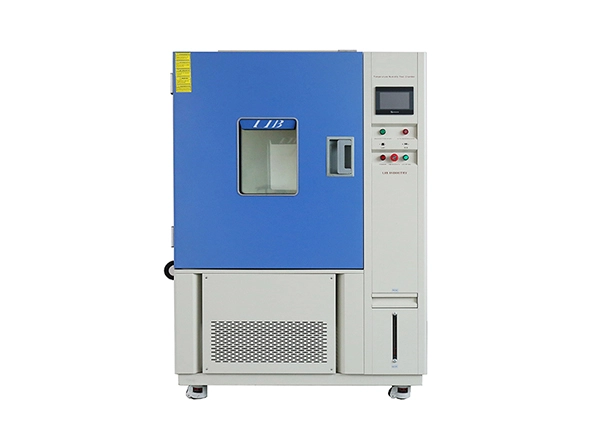
Sunlight does more than just fade colors. For items used outside, ultraviolet rays, warmth, rain, dew, and daily temperature shifts gradually harm polymers, coatings, fibers, adhesives, inks, and surface finishes. A product might seem fine after a few days outdoors. However, after one summer on a store shelf, a building facade, a garden chair, or a printed package, the surface can become chalky, crack, turn yellow, lose shine, or get brittle.
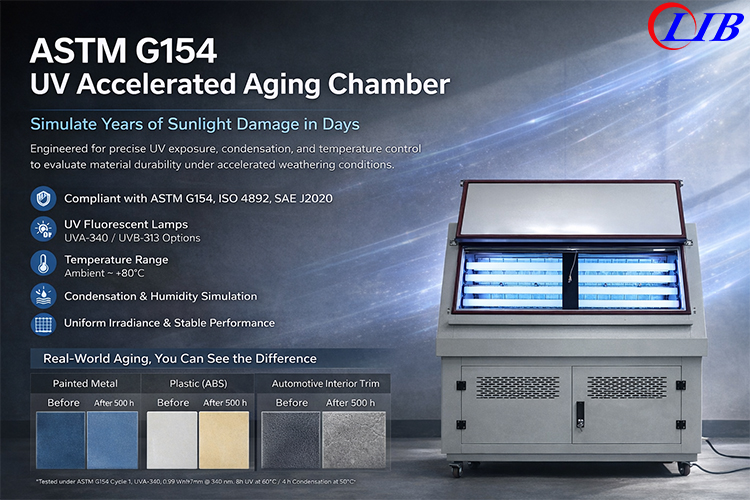
This is why many makers use a UV Weathering Test Chamber before releasing or okaying materials. Labs do not have to wait months for real outdoor exposure. Instead, they can put controlled samples inside a UV weathering testing machine. There, the samples face repeated cycles of UV light, condensation, spray, temperature, and humidity. As a result, this speeds up material checks, improves supplier comparisons, and cuts down on surprises once products start real use.
For packaging, outdoor furniture, building materials, and textiles, UV testing is more than a lab job. It plays a key role in product development, checking incoming materials, preventing complaints, and quality control.
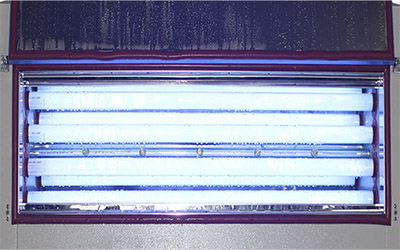
A UV Weathering Test Chamber is lab gear that mimics harm from sunlight and moisture. It usually employs fluorescent UV lamps to recreate the harshest part of sunlight. Then, it pairs that with heat, condensation, or water spray.
 |  |
The aim is not to match every outdoor weather detail. Rather, it creates a steady test setup that spots weak materials quicker. A solid test lets engineers compare samples under the same cycle. Thus, they can decide which coating, film, resin, fabric, ink, or additive works best.
Typical checks include changes in color, loss of gloss, cracking, chalking, blistering, fading, yellowing, shrinkage, drop in tensile strength, and surface brittleness. For many goods, these early signs count more than total breakdown. This is because buyers often turn down outdoor items as soon as looks start to worsen.
Test Factor | What It Simulates | Common Material Response |
UVA-340 light | Natural sunlight UV range | Fading, gloss loss, polymer aging |
UVB-313 light | More severe short-wave UV exposure | Faster cracking, yellowing, surface damage |
Condensation | Night dew and long wet periods | Blistering, coating weakness, hydrolysis |
Water spray | Rain wash, cleaning, sudden wetting | Staining, peeling, pigment washout |
Temperature control | Hot outdoor surface conditions | Softening, brittleness, accelerated aging |
| ||
Outdoor materials seldom fail from a single cause. For instance, a plastic cap might fade under UV. Then, it could crack quicker after heat cycles. A coated metal panel may appear okay after sunlight. Yet, moisture might show poor adhesion. A textile awning could pass a basic color check. Still, it may lose tensile strength after repeated UV and condensation cycles.
A UV weathering test chamber for outdoor materials offers a useful way for buyers and makers to compare performance before big production. It proves especially helpful when a new raw material supplier comes in. Or, when a pigment, coating, resin, or stabilizer changes. It also aids if a product goes to sunny, coastal, hot, or humid markets. Plus, it supports when a customer wants proof of outdoor durability for approval. Finally, factories use it to cut returns from fading, cracking, or peeling.
In B2B projects, the benefits are clear. Testing a small batch of samples can stop a full shipment of faulty goods. It also avoids delayed setups or warranty issues from far-off buyers.

Packaging manufacturers test printed films, labels, coated cartons, shrink sleeves, and plastic containers to evaluate:
Ink fading and discoloration
Label adhesion
Yellowing of transparent materials
Gloss retention
Cracking and brittleness after UV exposure
UV testing helps ensure packaging maintains appearance and readability during storage, transportation, and outdoor display.
Outdoor furniture brands test plastic components, powder-coated metal frames, synthetic rattan, WPC materials, and outdoor fabrics for:
Color fading
Chalking
Surface cracking
Coating peeling
Material brittleness caused by sunlight and moisture
Accelerated UV exposure helps manufacturers compare material formulations before mass production.
Building material suppliers use UV weathering testing for roofing panels, wall coatings, sealants, window profiles, decking, and waterproof membranes to assess:
Long-term color stability
Surface degradation
Gloss loss
Coating adhesion
Resistance to cracking and chalking
Weathering data supports product qualification for different climate conditions.
Manufacturers of awnings, tents, tarpaulins, marine covers, and outdoor fabrics evaluate:
Colorfastness
Tensile strength retention
Coating durability
Water resistance
Cracking and stiffness after UV and moisture exposure
Testing helps improve outdoor textile durability and maintain appearance during long-term use.
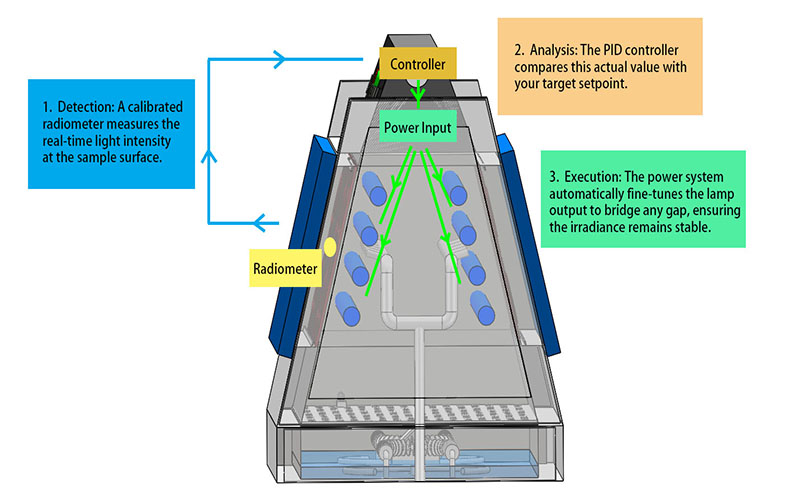
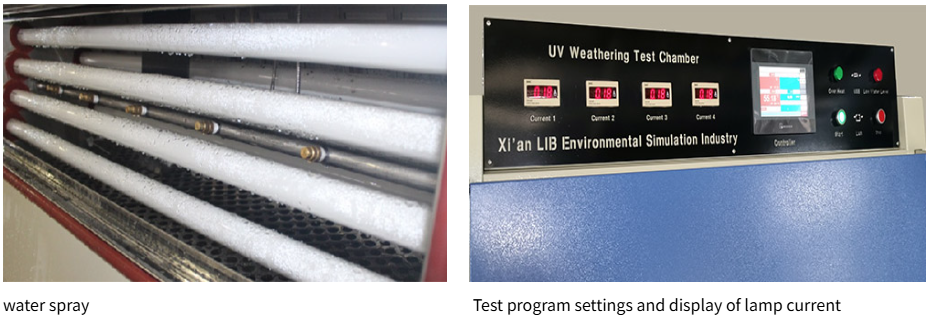
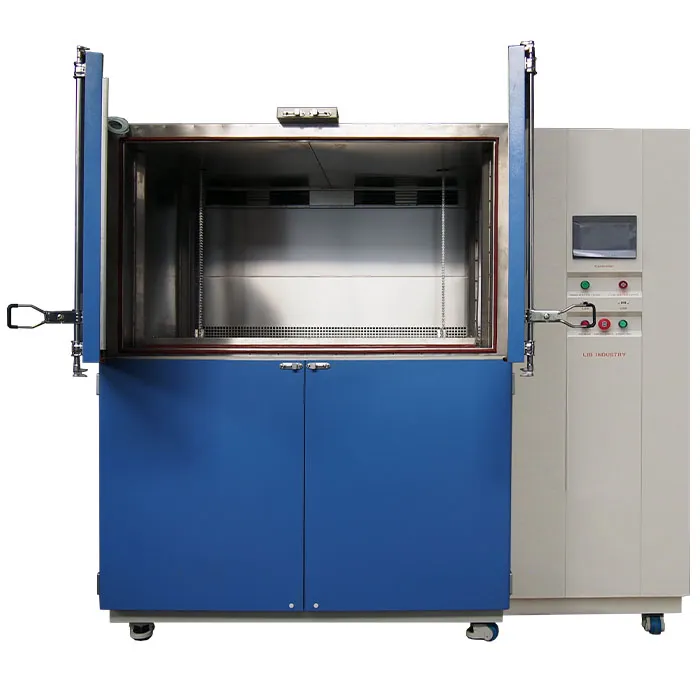
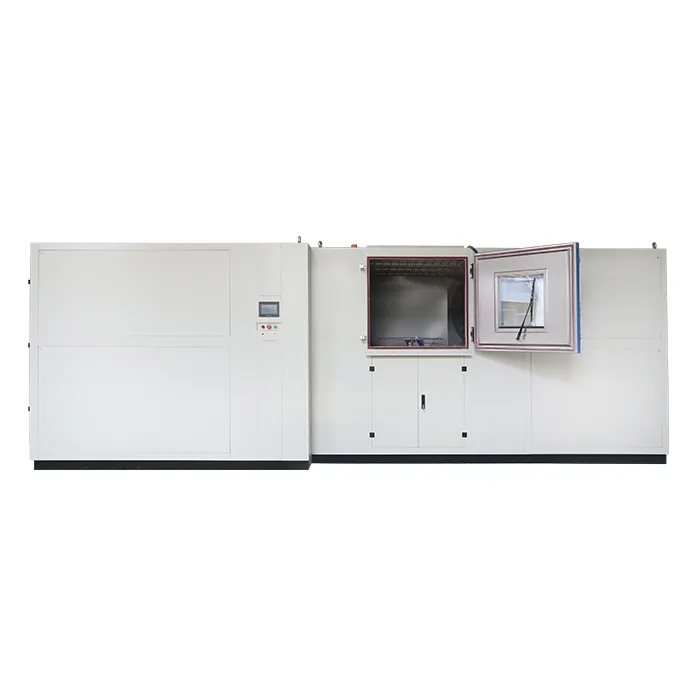
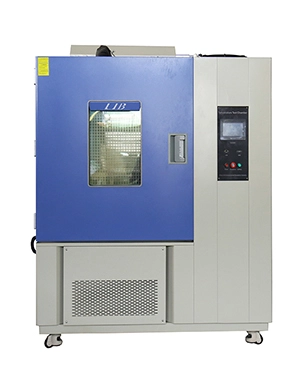
The LIB UV Weathering Test Chamber suits labs and factory quality teams needing steady quick weathering tests. It blends fluorescent UV exposure with moisture and weather control. This lets various fields test samples under set cycles, not just natural outdoor time.
The setup aids material matching, regular quality looks, and customer okay tests. For buyers dealing with packaging, outdoor furniture, build products, and textiles, the real worth is in even exposure, easy sample spots, set cycles, and aid for ongoing work.
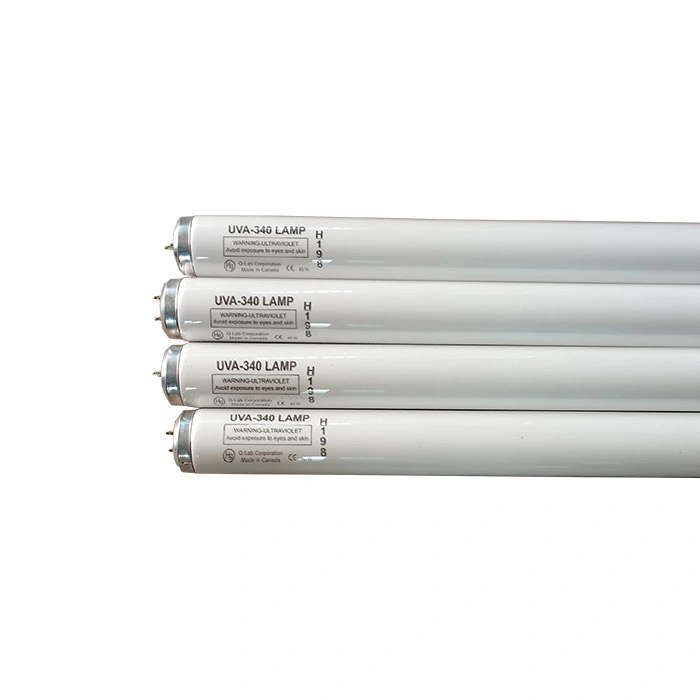
UVA-340 lamps often fit tests that need to align with natural sunlight's short-wave UV. This works well for many outdoor strength studies, mainly color shifts, gloss loss, and surface aging.
UVB-313 lamps make a tougher exposure. They suit quick screening or when materials face hard UV stress. The pick relies on the material, standard, customer need, and test goal.
LIB’s UV lamp setup offers labs room for varied testing while showing lamp work via display and life tracking.
Outdoor harm usually stems from sunlight plus moisture mixes. LIB UV weathering gear backs UV exposure, condensation, spray, temperature, and humidity in one flow.
This helps goods that meet daytime sun and night dew. Coatings, printed films, fabrics, and polymer panels may act quite differently with moisture added to UV. A dry UV test might skip blistering, bond loss, or water-linked surface harm.
Steadiness counts big in material testing. A set test cycle lets teams run same conditions for varied lots, suppliers, or mixes. LIB’s touchscreen control, parameter picks, set cycles, and data tools help labs handle tests better.
For factories, this cuts reliance on hand work. A tech can pick UV time, condensation length, spray timing, temperature, and humidity. Then, they compare run results with more trust.
Sample space counts when matching several materials in one go. LIB’s chamber fits many flat or 3D pieces. This makes it handy for lot matching and daily checks.
A lab can lay out packaging films, coated panels, textile bits, plastic strips, and control samples. This lets teams match exposed and unexposed ones, note changes, and decide quicker before production starts.
Xi’an LIB Environmental Simulation Industry builds environmental test chambers for fields needing set climate, corrosion, dust, rain, UV, xenon, temperature, and humidity tests. Since 2009, the firm has handled design, making, sales, and aid for users worldwide.
For UV weathering jobs, LIB industry’s worth goes beyond the chamber. Its wide product line lets labs set up fuller reliability test systems. A material might need UV aging first. Then, it could face temperature-humidity, corrosion, or rain tests, based on the good and market.
LIB offers project advice, chamber picks, after-sales aid, and world support too. For buyers eyeing suppliers, this counts. Environmental test gear is a lasting tool. Steady run, spare parts, test tips, and quick aid can shape lab work as much as specs.
A UV Weathering Test Chamber helps manufacturers evaluate how materials perform after long-term exposure to sunlight, heat, and moisture. It is widely used for packaging, outdoor furniture, building materials, and textiles to reduce fading, cracking, chalking, coating failure, and other aging problems.
By simulating outdoor conditions in a controlled environment, manufacturers can compare materials faster, improve product reliability, and reduce quality risks before mass production.
LIB industry UV Weathering Testing Machine provides stable and accelerated weathering testing for laboratories and quality control applications across multiple industries.
Packaging, outdoor furniture, building materials, textiles, plastics, coatings, automotive components, rubber products, and printed materials commonly use UV weathering testing. These industries must evaluate fading, cracking, chalking, yellowing, gloss loss, and moisture-related surface damage before products are released for outdoor use.
Yes. LIB UV Weathering Testing Machine is widely used for packaging materials such as plastic films, labels, printed pouches, laminated packaging, coated cartons, and outdoor retail packaging. It helps evaluate ink fading, film yellowing, label adhesion, gloss retention, and print clarity after UV and moisture exposure.
UVA-340 lamps are commonly used to simulate natural sunlight UV and are suitable for realistic outdoor aging studies. UVB-313 lamps create stronger short-wave UV exposure and are often used for accelerated screening tests. The correct lamp depends on the material type, testing standard, and evaluation purpose.
Yes. LIB UV Weathering Testing Machine supports programmable test cycles including UV exposure time, condensation periods, water spray cycles, temperature settings, and humidity control. Users can create customized test programs based on product standards or real outdoor conditions.
LIB UV Weathering Test Chamber can support common accelerated weathering standards such as ASTM G154, ISO 4892, SAE J2020, and other UV aging test requirements depending on the application and configuration.
Yes. LIB industry provides customized chamber sizes, test configurations, voltage options, sample holders, and testing solutions for different industries. The company also offers installation guidance, technical support, spare parts service, and long-term after-sales support for global customers.
 English
 русский
 français
 العربية
 Deutsch
 Español
 한국어
한국어 italiano
 tiếng việt
 ไทย
ไทย Indonesia