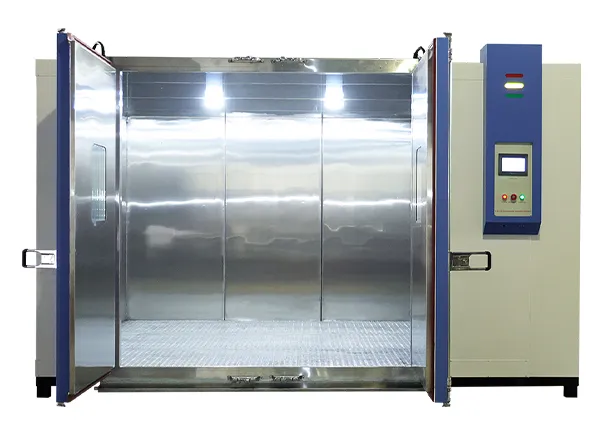
Electric vehicle battery packs do not fail only because of chemistry or heat. Many failures originate at weak sealing points—enclosure seams, vent areas, cable entries, and connectors. Once water enters, it can cause insulation loss, corrosion, unstable signals, or short circuits, ultimately reducing pack reliability.
For battery manufacturers and automotive labs, LIB industry water spray test chambers are not just testing equipment, but critical tools for early risk detection. A battery pack may pass initial lab validation yet fail months later under repeated rain, splash, or high-pressure cleaning. Even small leak paths can lead to long-term damage that is difficult to trace in the field.
By delivering controlled, repeatable water exposure, LIB industry systems help engineers identify sealing weaknesses before road trials or mass production—reducing field failures, lowering warranty risks, and minimizing costly post-launch repairs.
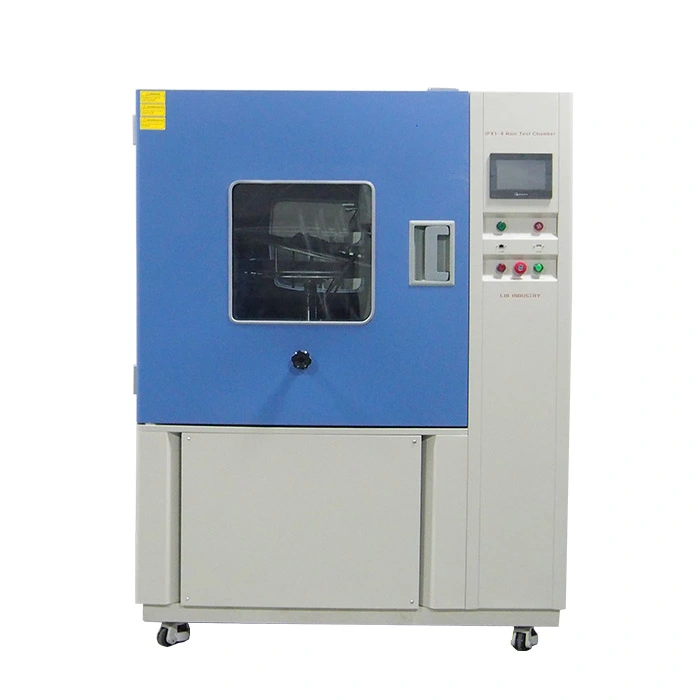 |  |
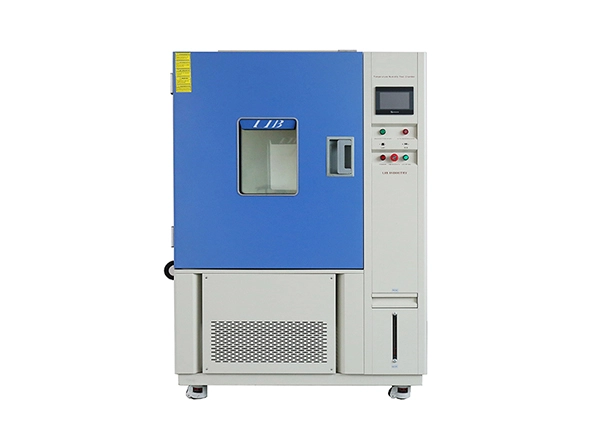
A water spray test chamber recreates controlled wet conditions that products face in real use. For EV battery systems, that can mean dripping water during parking, angled spray from road splash, or hot, high-pressure jets during vehicle washdown. The key is control. The rain test chamber sets water flow, spray angle, pressure, temperature, exposure time, and part orientation so the same test can be repeated and compared.
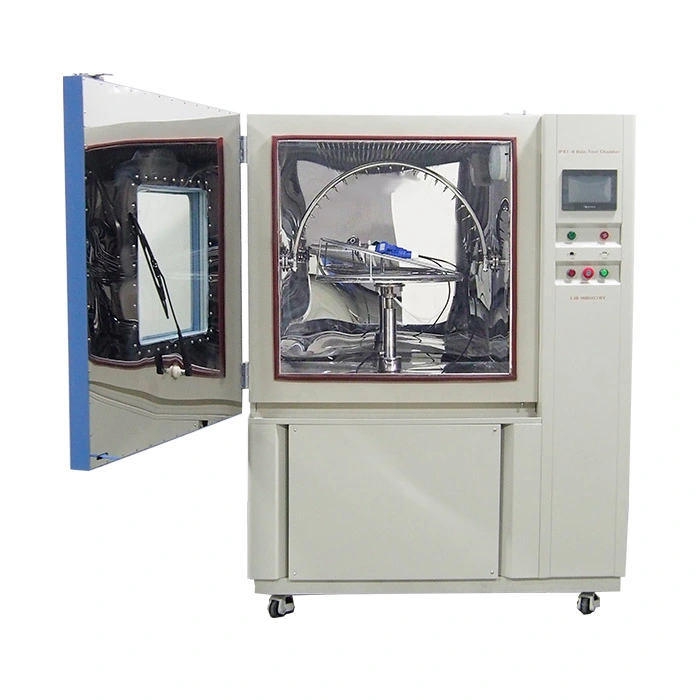
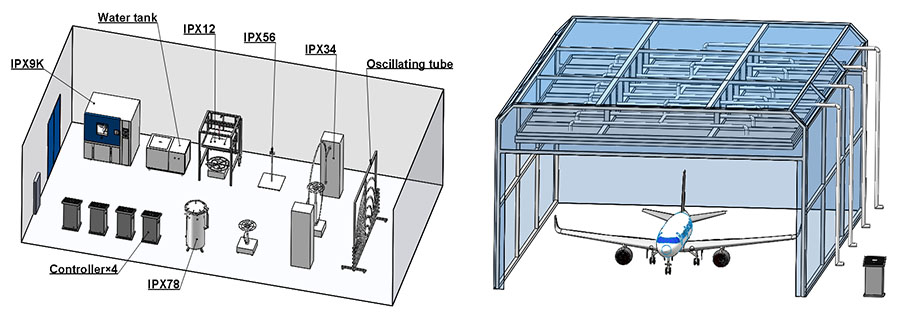
That is a major difference from simple hose testing on the shop floor. Informal spray checks may show obvious leaks, but they do not build reliable test data. A proper chamber gives fixed conditions, documented cycles, and known acceptance criteria. LIB describes its water spray chambers as systems for reproducing rainfall, splashing water, and water jets under controlled conditions, with oscillating tubes, programmable cycles, and flow control to evaluate sealing integrity and resistance to water penetration.
· enclosure seams and gasket joints
· connector interfaces and cable entries
· vent valve seats and pressure relief areas
· fastener points and service covers
· welded transitions between dissimilar materials
These are not theoretical risks. They are the common places where design tolerance, assembly variation, vibration, and thermal cycling create small leak paths over time.
Battery waterproof testing becomes meaningful only when the test level matches the real operating scene. For that reason, the most useful search terms are not broad phrases like “battery waterproof test,” but standard-based queries such as IEC 60529, ISO 20653, IPX4 test, or IPX9K battery testing.
IEC 60529 is the widely used ingress protection framework for enclosures. ISO 20653 is commonly used in road vehicle applications and is especially relevant for automotive parts exposed to washing and road spray. LIB lists IEC 60529 and ISO 20653 among the applicable standards for its water spray testing solutions, and its broader IP portfolio spans from low-pressure drip and splash tests to high-pressure vehicle-oriented testing.
Test level | Main condition | Typical parameters | Typical battery relevance |
IPX1 | Vertical dripping water | 1 mm/min for 10 min | Parking, storage, mild roof drip exposure |
IPX2 | Dripping water with tilt | 1 mm/min, 15° tilt, 2.5 min each of 4 positions | Sloped installation and uneven runoff |
IPX3 | Spraying water | oscillating tube up to 60° from vertical, 0.07 L/min per hole, 10 min; or spray nozzle at 10 L/min | Road spray and angled rain |
IPX4 | Splashing water from all directions | oscillating tube near full arc, 0.07 L/min per hole, 10 min; or nozzle at 10 L/min for at least 5 min | Splash from multiple directions |
IPX5 | Water jets | 6.3 mm nozzle, 12.5 L/min, about 30 kPa at 3 m, min 3 min | Hose-down or stronger jet exposure |
IPX6 | Powerful water jets | 12.5 mm nozzle, 100 L/min, about 100 kPa at 3 m, min 3 min | Severe jet spray around underbody areas |
| IPX9K | High-pressure, high-temperature water jets | 80 °C water, 80–100 bar, 14–16 L/min, 100–150 mm distance, 30 s at 0°, 30°, 60°, 90° | Vehicle washdown, heavy-duty and high-risk sealing validation |
 |
| ||
The numbers above matter because they change failure behavior. A pack that survives IPX4 may still fail IPX9K if the seal lip lifts under hot, high-pressure water or if connector geometry traps a jet at a specific angle.
Not every battery project needs the highest test level at every stage. The right approach depends on the product, its mounting position, the service environment, and customer requirements.
A battery enclosure for passenger EV use may start with IPX3 or IPX4 during early design screening, then move to IPX5 or IPX6 if the underbody and service conditions call for stronger spray exposure. Packs for utility vehicles, charging support equipment, or harsh road environments often need IPX9K validation because hot, high-pressure cleaning is part of real use.
· Use IPX1 or IPX2 for early checks on drip paths and top-surface water handling.
· Use IPX3 or IPX4 for angled rain and splash from many directions.
· Use IPX5 or IPX6 when the pack may see hose-down or stronger jet impact.
· Use IPX9K when hot, high-pressure spray is a real service condition or a contract requirement.
This step-by-step logic helps labs avoid overtesting too early while still building a clear route to compliance and field reliability. LIB’s water ingress range covers these waterproof levels across broader IP testing needs, which is useful for labs that test several parts, not only battery packs.
Warranty claims usually come from variability. One unit leaks, another does not. One pack survives a wash cycle, another develops an intermittent fault three weeks later. That kind of inconsistency is expensive because it leads to extra inspection, returns, and field diagnosis.
Repeatable water spray testing helps in three practical ways.
If a seam fails only when the enclosure is rotated or only when hot water hits a vent at 60 degrees, a repeatable chamber can show that pattern. Engineers can then adjust gasket compression, flange geometry, vent placement, or connector shielding before tooling is frozen.
A formal test method gives the same water flow, pressure, angle, and duration every time. That makes it easier to compare prototype changes, production batches, and supplier parts under one protocol.
The cheapest leak is the one found before shipping. Once a battery pack enters service, even a minor ingress issue can trigger transport handling, diagnostic labor, and customer downtime. LIB’s recent battery waterproof article specifically links controlled severe water testing with earlier detection of weak seals and lower warranty exposure.
A LIB Water Spray Chamber’s value is not only in passing or failing a sample. It is in how well the chamber controls the variables that matter.
For lower IP levels, spray volume and droplet distribution need to stay stable across the full test duration. LIB notes the use of flowmeters, pressure monitoring, and controlled spray systems to keep test conditions consistent. For IPX3 and IPX4 type setups, published LIB specifications include a 0.4 mm spray hole diameter, 50 mm hole spacing, adjustable oscillating tube movement, and turntable rotation around 1 rpm.
Battery packs are not simple cubes. They have ribs, recessed connectors, vent areas, and service covers. Oscillating tubes and rotating turntables help expose all faces of the sample instead of only one side. For high-level tests such as IPX9K, multiple nozzle angles matter because one sealing path may only fail when a jet strikes from a specific direction. LIB’s high-temperature, high-pressure automotive water spray content highlights four spray positions: 0°, 30°, 60°, and 90°.
Water recycling, automatic level control, and integrated filtration make long test campaigns easier to run. That matters for labs doing design validation across many samples. LIB also positions its equipment as part of a larger one-stop lab solution, covering design, commissioning, training, and follow-up service rather than only machine delivery.
LIB industry is an environmental test chamber manufacturer with global experience since 2009.
Its solutions cover climate, corrosion, dust, water ingress, and customized systems for automotive, battery, and electronics testing.
What LIB industry provides:
Standard and customized water spray test chambers
Support from design to installation and commissioning
Operator training and long-term technical service
3-year warranty and lifetime follow-up support
It improves battery safety by exposing weak sealing paths before the pack reaches the field. Controlled spray, splash, or jet tests can reveal leak points at seams, cable entries, connectors, and vent areas, allowing design fixes before mass production.
IEC 60529 and ISO 20653 are the most common references. IEC 60529 is the general ingress protection framework, while ISO 20653 is widely used for road vehicle parts and includes severe automotive water exposure conditions such as IPX9K.
A typical IPX9K test uses water heated to 80 °C, pressure of 80 to 100 bar, flow of 14 to 16 L/min, a spray distance of 100 to 150 mm, and four spray angles of 0°, 30°, 60°, and 90°. Each angle is applied for 30 seconds, for a total test time of 2 minutes.
The most common failure points are enclosure seams, gasket joints, cable entries, connector interfaces, vent valve seats, and service covers. These are the areas where assembly tolerance, pressure, vibration, and thermal stress often create a leak path.
Because a water spray test chamber is part of a test process, not just a piece of equipment. Installation, commissioning, calibration, operator training, and after-sales support all affect how reliable the test data will be over time.

 English
 русский
 français
 العربية
 Deutsch
 Español
 한국어
한국어 italiano
 tiếng việt
 ไทย
ไทย Indonesia