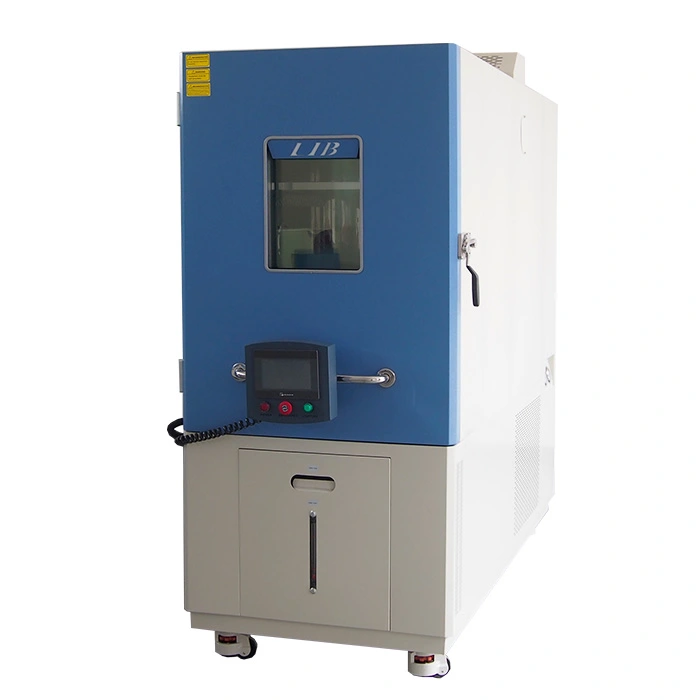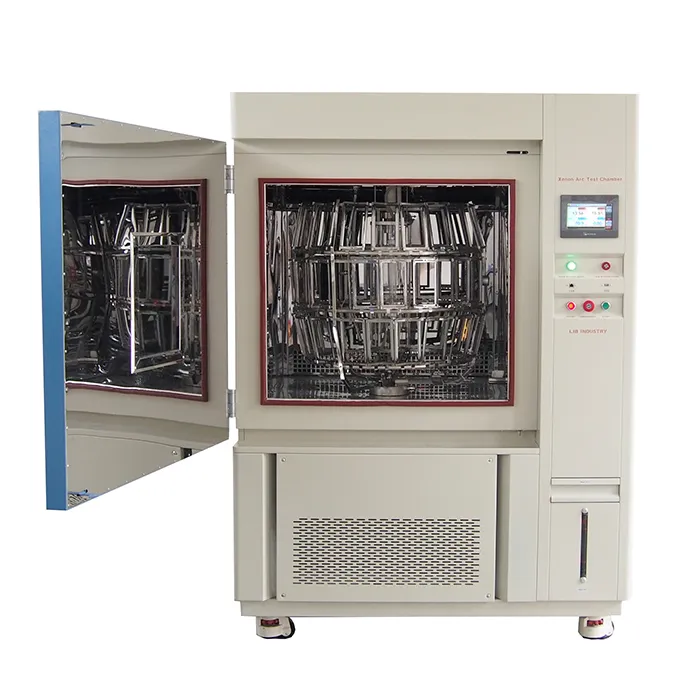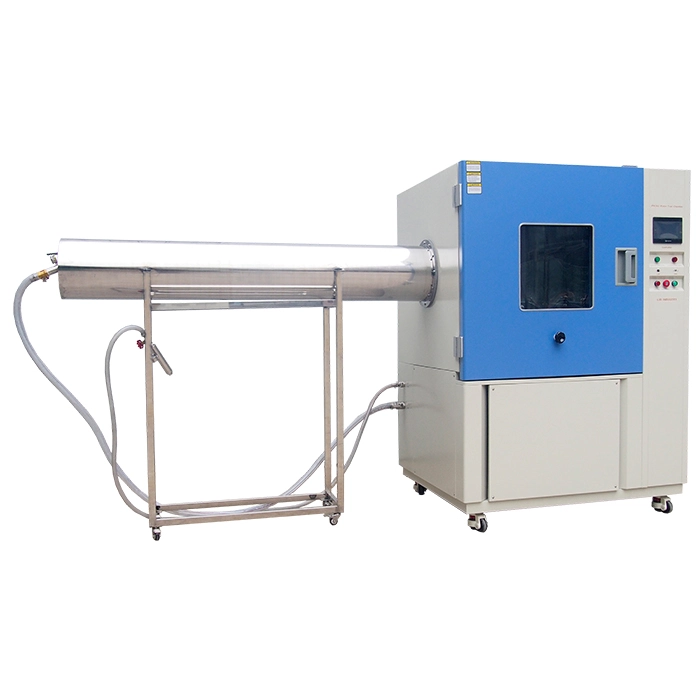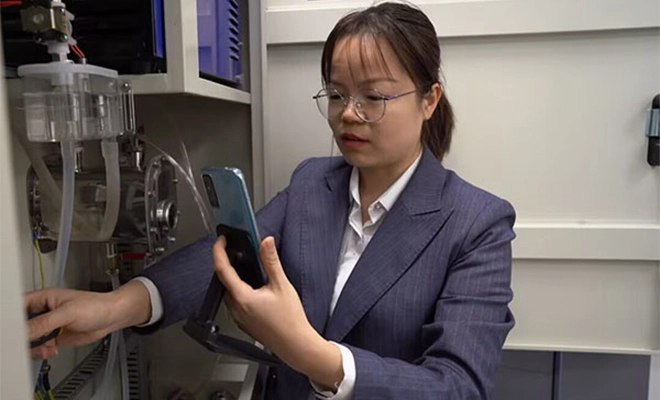
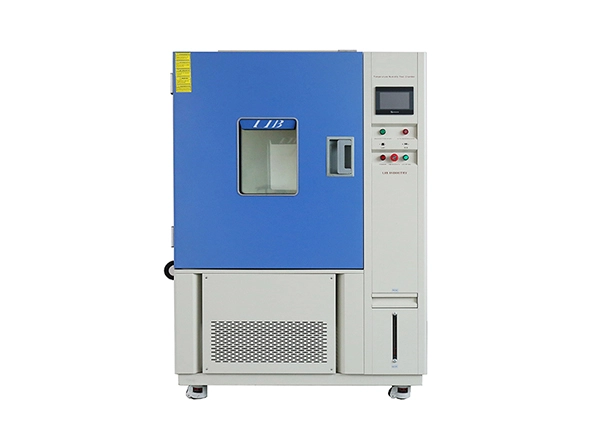
LIB industry has successfully completed the on-site installation and commissioning of a Cyclic Salt Spray Test Chamber for a university in South Korea on Apr 27, 2026. The project included equipment delivery, installation guidance, system calibration, and operational training for laboratory staff and teaching personnel.
Following commissioning, the system was immediately integrated into the university’s materials research and engineering curriculum, supporting both academic experiments and applied corrosion studies. The chamber is now operating stably, providing reliable and repeatable test conditions for ongoing research programs.
This installation is not just a routine delivery—it reflects LIB’s continued commitment to supporting higher education and scientific research through advanced environmental simulation technology.
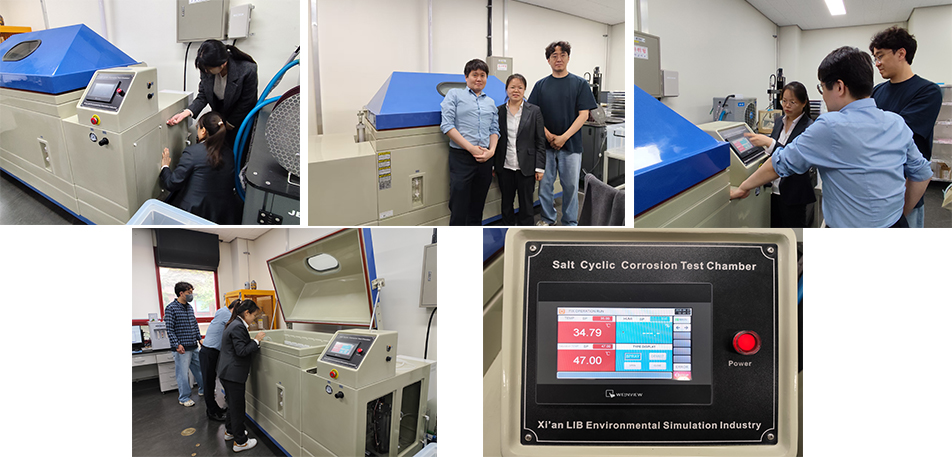
Modern universities are increasingly focused on bridging the gap between theoretical materials science and real-world industrial conditions. Corrosion, especially in coastal and industrial environments, remains one of the most critical failure mechanisms affecting metals, coatings, electronics, and automotive materials.
By introducing a cyclic corrosion testing system into the laboratory, the university can now:
Simulate alternating environments such as salt fog, humidity, and drying cycles
Evaluate long-term durability of coatings and protective materials
Support student-led research projects in materials engineering
Conduct standardized testing aligned with international corrosion standards
This enables students and researchers to move beyond textbook learning and directly observe how materials behave under accelerated environmental stress conditions.
Unlike simple continuous salt fog testing, real-world environments are dynamic. Materials are exposed to cycles of:
Marine salt fog
High humidity condensation
Drying and thermal variation
Polluted or industrial atmospheres
To replicate these conditions, cyclic corrosion testing is essential. It provides a more realistic prediction of material lifespan compared to traditional static exposure methods.
The installed system at the university allows researchers to simulate these complex conditions in a controlled and repeatable way, making it highly valuable for both academic publications and industrial collaboration projects.
LIB designs corrosion testing systems around real-world standards and application needs. The installed system belongs to the cyclic corrosion testing category, designed for alternating environmental simulation.
Designed for continuous corrosion exposure testing.
Salt Spray Test Chamber Supports standards such as:
ASTM B117
ISO 9227 (NSS, AASS, CASS)
Key applications:
Coating quality control
Basic corrosion resistance evaluation
Material certification testing
Function:
Salt fog spray
Temp (Ambient ~+60℃)
The S-Series is widely used in industrial QC labs and teaching environments where standard salt fog testing is required.

Salt Fog Cyclic Corrosion Test Chamber Designed for dynamic environmental simulation.
Supports standards such as:
IEC/EN 60068-2-52
ASTM G85 (cyclic methods)
SAE J2334 automotive corrosion cycles
Key features:
Salt spray → humidity → drying cycle automation
Programmable test sequences
Realistic simulation of outdoor corrosion behavior
Function:
Salt fog Spray
Temp (+10℃ ~+90℃)
Humid (30% ~98%RH)
This is the same category used in the Korean university project, making it ideal for research-based testing and automotive material studies.

Salt & SO₂ Corrosion Test Chamber Designed for advanced industrial pollution simulation.
Supports:
ASTM G85 A4 hybrid corrosion testing
Key capabilities:
Combined salt fog and SO₂ gas exposure
Acid rain and industrial atmosphere simulation
Enhanced corrosion acceleration for severe environments
Function:
Salt fog Spray
Temp (+10℃ ~+90℃)
Humid (30% ~98%RH)
So2 gas
This system is commonly used in aerospace, infrastructure, and high-end coating validation research.

By integrating LIB corrosion testing systems into academic environments, universities gain access to:
Industry-level environmental simulation capability
Hands-on experimental learning for students
Improved research publication quality through standardized testing
Collaboration opportunities with industrial partners
For engineering education, this transforms a traditional lab into a real-world durability testing center, aligning academic outcomes with industrial requirements.
The successful installation of the Cyclic Salt Spray Test Chamber in South Korea highlights LIB’s broader mission—not only to serve industrial manufacturers, but also to actively support scientific education and research innovation.
By providing stable, standardized, and customizable corrosion testing systems, LIB enables universities to explore material performance under real environmental conditions, helping train the next generation of engineers and researchers.
Whether for academic research or industrial validation, LIB continues to deliver solutions that make environmental testing more precise, more realistic, and more accessible.
To learn more about LIB corrosion testing solutions or to request a customized academic configuration, contact the engineering team for tailored support and consultation.
3-Year Warranty | Lifetime Technical Support | Rapid Engineering Response
 English
 русский
 français
 العربية
 Deutsch
 Español
 한국어
한국어 italiano
 tiếng việt
 ไทย
ไทย Indonesia