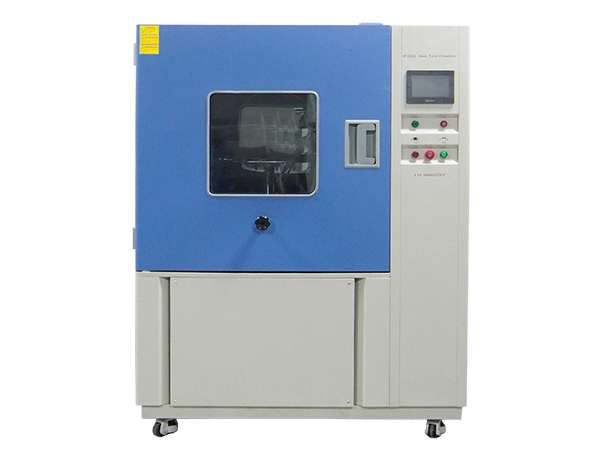
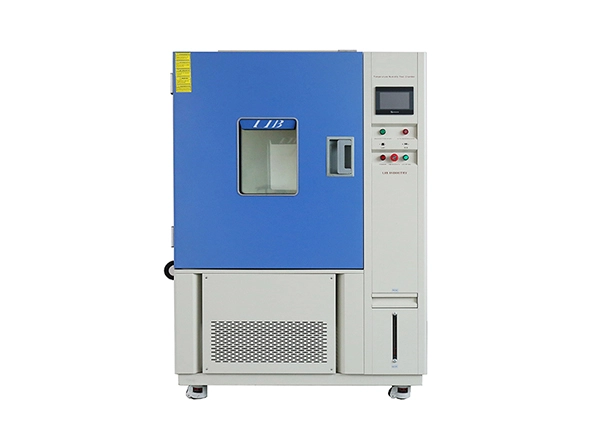
In long-term reliability testing, a humidity chamber must do more than reach a target relative humidity value — it must hold stable, repeatable humidity conditions for hours, days, or weeks without drift, overshoot, condensation, sensor error, or airflow inconsistency. For electronics manufacturers, automotive component suppliers, battery developers, medical device companies, coating researchers, and packaging engineers, the difference between a humidity chamber that maintains ±2% RH stability throughout a 500-hour or 1,000-hour test and one that drifts by ±5% RH during the same test is the difference between valid reliability data and a failed test batch that must be repeated — with all the associated cost, delay, and engineering frustration that repeated testing creates.
The procurement decision between a full-size humidity chamber for enterprise reliability testing programs and a portable humidity chamber for R&D, quality verification, accelerated aging, corrosion resistance evaluation, and constant humidity test chamber applications requires a systematic understanding of how humidity control is achieved, what causes humidity instability in long-duration tests, how different sensor technologies perform under industrial testing conditions, and what chamber specifications, maintenance practices, and water quality controls are required to maintain the precision humidity control that demanding reliability testing programs require. LIB humidity chambers cover 20% to 98% RH, offer temperature ranges down to -20°C, -40°C, or -70°C and up to +150°C, and are designed for controlled, repeatable reliability testing environments — providing the specification range and engineering quality that precision humidity testing requires.
This guide covers the complete picture for QA engineers, reliability testing managers, and procurement teams: why humidity fluctuation causes test failure, what a constant humidity test chamber is and how it functions as a precision environmental control system, how precision humidity control is achieved through coordinated sensing, humidification, temperature control, and airflow, how to evaluate humidity chamber components for long-term stability, and what maintenance practices protect humidity control precision through the chamber's service life.
The commercial and technical case for investing in a properly specified humidity chamber starts with a clear understanding of the specific mechanisms by which humidity instability creates invalid test data in long-duration reliability testing — and why the most damaging instability is often not a visible chamber malfunction but a gradual, continuous drift that accumulates over hundreds of test hours before it becomes apparent in the results.
Humidity sensor calibration drift is the most insidious source of humidity instability in long-duration reliability testing — because it creates a systematic error that shifts the actual test condition away from the specified condition without triggering any alarm or visible indication. A humidity sensor that has drifted by 3% RH from its calibrated value will report the target humidity while actually maintaining a condition that is 3% RH higher or lower — creating a test that appears to be running correctly but is actually exposing the samples to a different stress condition than specified. For products tested against specific humidity standards, this calibration drift can invalidate the entire test batch and require complete repetition after sensor recalibration.
Temperature instability creating RH deviation is the humidity control failure that most directly demonstrates the interdependence of temperature and humidity control in precision testing. Relative humidity is temperature-dependent — the same absolute moisture content in the chamber air produces different RH values at different temperatures. A temperature fluctuation of ±1°C can create an RH deviation of approximately 3% to 5% RH depending on the operating conditions — meaning that a chamber with poor temperature control cannot achieve stable humidity control regardless of how well the humidification system performs. This is why temperature fluctuation specification is as important as humidity deviation specification when evaluating a humidity chamber for precision long-term testing.
Poor airflow uniformity creating local RH differences is the spatial humidity instability that creates the most difficult-to-diagnose test failures — because it produces different humidity conditions at different locations within the chamber workroom, meaning that samples placed at different positions experience different stress conditions even though the chamber controller reports a single stable RH value. For test programs where multiple samples are tested simultaneously, poor airflow uniformity creates sample-to-sample variability that makes the test results unreliable and the product lifetime predictions inaccurate.
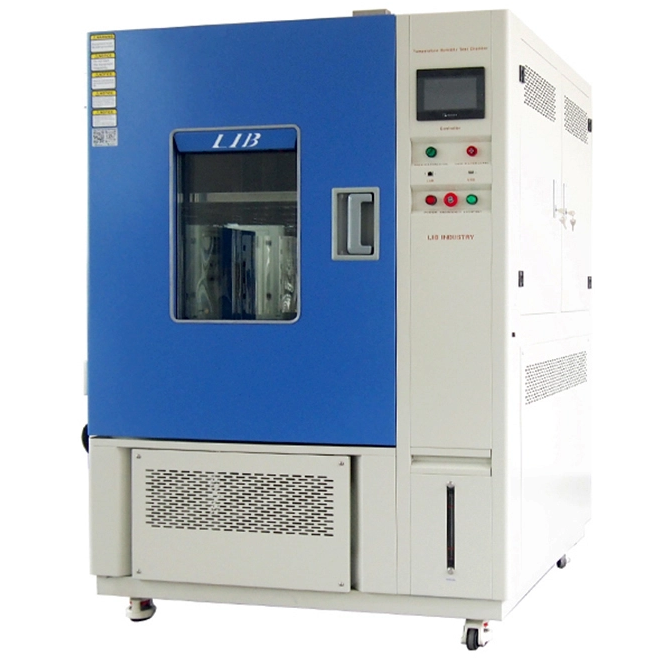
Understanding what a humidity chamber is — and how its humidification system, temperature control, sensing, airflow, sealing, and water quality must work together as an integrated precision environmental control system — is essential for procurement teams evaluating humidity chamber specifications for long-term reliability testing applications.
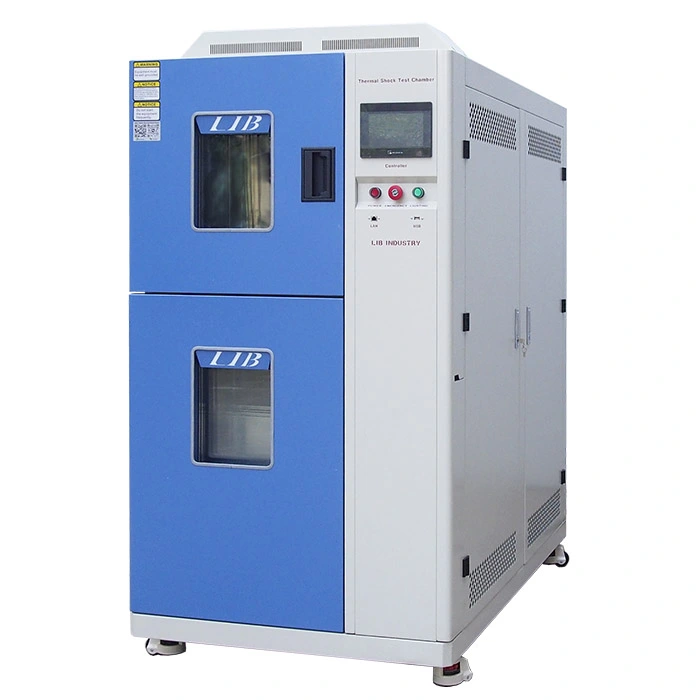
A humidity chamber is an environmental test chamber designed to simulate controlled humidity and temperature conditions — allowing engineers to evaluate how products, materials, components, and assemblies perform under moisture and thermal stress. LIB describes temperature and humidity test chambers as equipment used to simulate different temperature and humidity conditions to test and evaluate product performance, stability, durability, and reliability under controlled environments.
A humidity chamber is not simply a "wet environment box" — it is a precision environmental control system where humidity generation, temperature control, sensing, airflow, sealing, and water quality must work together to maintain the stable, repeatable conditions that valid reliability testing requires. The quality of each subsystem determines the overall humidity stability that the chamber can achieve and maintain through long-duration tests.
| Selection Factor | Full-Size Humidity Chamber | Portable Humidity Chamber |
|---|---|---|
| Sample size | Medium to large samples | Small to medium samples |
| Long-term testing | Stronger for continuous reliability programs | Good for R&D and flexible testing |
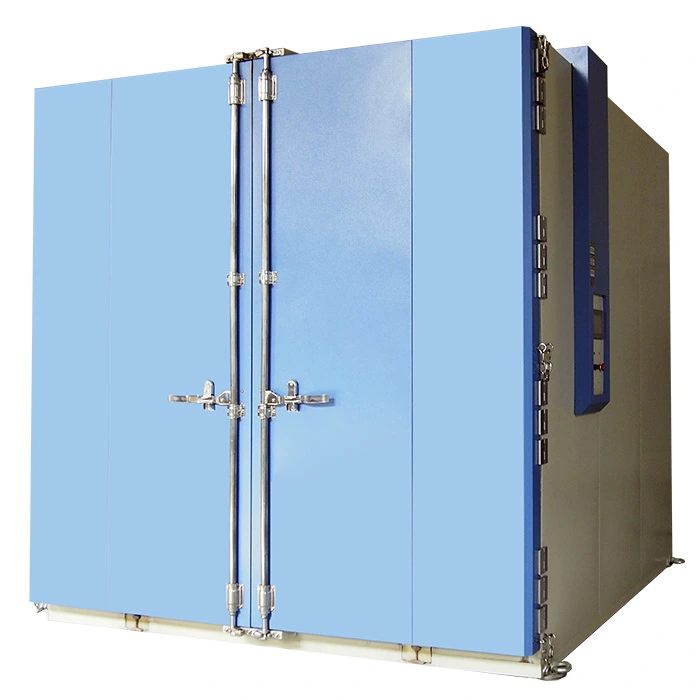
| Mobility | Fixed installation | Easier relocation within laboratory |
| Lab space | Requires more dedicated space | Space-saving compact footprint |
| Load capacity | Better for larger or heavier sample loads | Limited by compact size |
| Primary use case | QA, reliability lab, production validation | R&D, small-batch testing, engineering iteration |
| Procurement logic | Long-term test infrastructure investment | Flexible test asset for multiple locations |
LIB states that portable humidity chambers are useful for small to medium-sized products and can be relocated within laboratories or production areas — making them practical for versatile testing scenarios where flexibility and space efficiency are as important as testing capability.
The technical mechanism by which a humidity chamber achieves and maintains precision humidity control through the coordinated operation of its sensing, humidification, temperature control, airflow, and water quality subsystems — and why each subsystem's performance directly affects the overall humidity stability that the chamber can deliver — is the core engineering knowledge that QA engineers and procurement managers need to evaluate humidity chamber specifications for demanding long-term reliability testing.
A humidity chamber maintains target RH through a closed-loop control system that coordinates seven interdependent subsystems:
Temperature control system — adjusts chamber temperature to the set point, providing the stable thermal foundation that humidity control requires
Humidification system — adds moisture when RH is below the set point, with response speed determining how quickly the chamber recovers from disturbances
Dehumidification and cooling system — removes moisture or reduces RH when needed, with cooling capacity determining the minimum achievable humidity
Humidity sensor — measures real-time RH and provides the feedback signal that the controller uses to adjust humidification and dehumidification
Controller — compares actual RH with the target set point and commands the humidification and dehumidification systems to maintain the specified condition
Air circulation system — distributes moisture evenly through the test space, ensuring that all samples experience the same humidity condition
Water supply system — provides clean water for stable humidification, with water quality directly affecting humidifier performance and sensor contamination risk
LIB's humidity chamber specification includes mechanical compression refrigeration, nichrome heating, a programmable color LCD touch screen controller with Ethernet connection, automatic water supply, water purification, and an external isolation stainless steel surface evaporation humidifier — providing the subsystem integration that precision humidity control requires.
Because relative humidity is temperature-dependent, stable humidity control requires stable temperature control as its foundation. LIB's humidity chamber specification lists temperature fluctuation of ±0.5°C and temperature deviation of ±2.0°C — providing the temperature stability that supports controlled humidity conditions for long-duration reliability testing. For projects requiring strict ±2% RH stability, buyers should confirm model configuration, calibration plan, test load, chamber size, and custom performance requirements before purchase.
The humidity sensor technology is the component that most directly determines the accuracy and long-term stability of the humidity control system — and the choice between dry-wet bulb and capacitive sensor technologies involves trade-offs that depend on the specific testing application.
| Sensor Technology | Advantages | Limitations | Best Application |
|---|---|---|---|
| Dry-wet bulb sensor | Traditional stable principle, commonly used in industrial chambers, well-understood calibration | Requires wet wick maintenance, clean water, and consistent airflow for accurate measurement | Long-term industrial humidity chambers where maintenance capability is available |
| Capacitive sensor | Fast response, compact, easy digital integration, no wick maintenance | Can drift with contamination, condensation, or chemical exposure — requires periodic recalibration | Portable humidity chamber, compact chambers, fast monitoring applications |
| High-accuracy industrial sensor system | Better data confidence, automation integration, traceable calibration | Requires planned calibration and maintenance program | Long-duration reliability testing where data traceability is a quality requirement |
For long-term reliability testing, the sensor choice should be based on the required RH accuracy, test duration, humidity range, condensation risk, maintenance capability, calibration procedure, water quality control, and applicable industry test standard requirements — rather than on sensor technology alone.
The systematic evaluation of humidity chamber components — humidity sensor, humidifier, water supply system, refrigeration system, air circulation, controller, door seal, and interior material — against the requirements of the specific long-term reliability testing application is the technical procurement knowledge that ensures the selected chamber delivers the humidity stability the testing program requires.
| Component | Function | Engineering Evaluation Criterion |
|---|---|---|
| Humidity sensor | Measures RH | Accuracy, drift rate, calibration cycle, condensation resistance |
| Temperature sensor | Measures chamber temperature | Stability, calibration traceability |
| Humidifier | Generates moisture | Response speed, cleanability, water quality sensitivity |
| Water supply system | Provides humidification water | Purification capability, automatic supply, mineral buildup prevention |
| Refrigeration system | Controls cooling and dehumidification | Stability under long tests, minimum temperature capability |
| Air circulation fan | Distributes humidity evenly | Uniformity under sample load, airflow pattern |
| Controller | Runs programs and alarms | Data logging, Ethernet connectivity, programmability |
| Door seal | Prevents leakage | Long-term compression stability, material compatibility |
| Cable port | Supports powered sample testing | Sealing quality and port size |
| Interior material | Resists corrosion and moisture | SUS304 stainless steel for durability and cleanability |
LIB's humidity chamber uses SUS304 stainless steel interior material, polyurethane foam and insulation cotton, a double-layer thermally stable silicone rubber seal, an observation window, a cable hole with plug, and two shelves as standard configuration — providing the component quality that long-term humidity testing reliability requires.
Precision humidity control delivers the most value for: electronics reliability testing where moisture-induced failures must be characterized under controlled conditions, automotive component validation where temperature-humidity cycling tests must meet OEM specifications, battery cell and module testing where humidity exposure affects electrochemical performance and safety, medical device qualification where humidity stability is a regulatory requirement, coating and corrosion research where precise humidity control determines the validity of accelerated aging results, and pharmaceutical packaging stability testing where humidity deviation directly affects product shelf-life predictions.
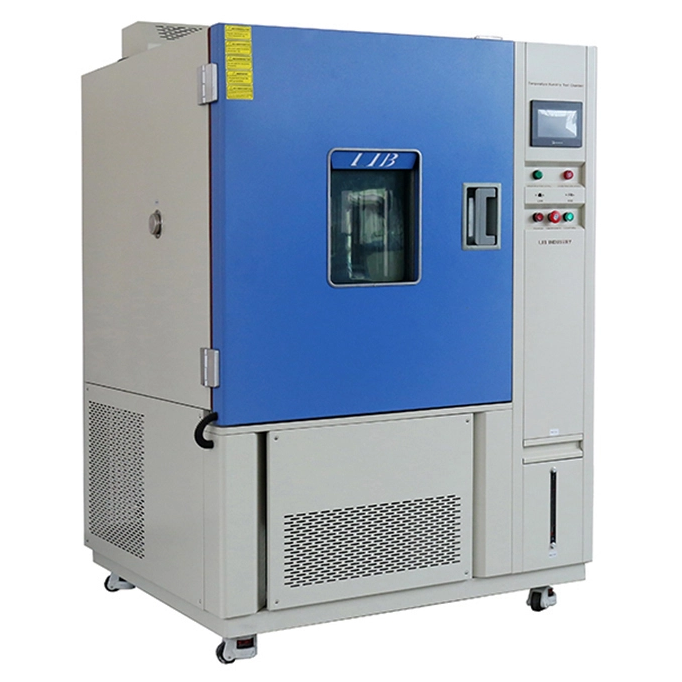
Procuring the right humidity chamber for a specific long-term reliability testing application requires systematic pre-order confirmation of humidity and temperature requirements, sensor specifications, water quality needs, and maintenance expectations — and a maintenance program that protects humidity control precision through the chamber's service life.
Before requesting a quotation for a humidity chamber, prepare and confirm the following:
Confirm the required humidity range — and verify that the selected chamber covers the full range from 20% to 98% RH required by the applicable test standards
Confirm the required RH deviation — ±2% RH, ±2.5% RH, or another requirement — and verify that the selected chamber's specification meets this target under the expected sample load and test conditions
Confirm the required temperature range — and verify that the selected chamber's temperature range, from -20°C, -40°C, or -70°C to +150°C, covers the full thermal stress range required by the test program
Confirm the test duration — short-duration screening, cyclic testing, or long-duration constant humidity testing — and verify that the selected chamber's design is appropriate for the planned test duration
Confirm the sample size, quantity, and heat load — and verify that the selected chamber's workroom volume and load capacity can accommodate the test samples with adequate clearance for air circulation
Confirm whether powered-on testing is required — and verify that the selected chamber includes a cable port of adequate size for the test sample wiring
Confirm the sensor type and calibration documentation requirement — and verify that the supplier can provide calibration certificates and calibration interval recommendations
Confirm the water supply and water purification requirements — and verify that the selected chamber's automatic water supply and purification system is compatible with the available water quality at the installation site
Confirm the data logging and remote monitoring requirements — and verify that the selected chamber includes Ethernet connectivity and PC control capability if off-hours test supervision is required
Calibrate humidity and temperature sensors regularly according to the calibration interval recommended by the manufacturer and required by the applicable quality system — sensor calibration is the single most important maintenance practice for long-term humidity control accuracy
Use purified or demineralized water as recommended — mineral buildup in the humidification system reduces humidifier performance, contaminates sensors, and creates deposits on chamber interior surfaces that affect humidity uniformity
Clean the water tank and humidification system at the recommended interval — biological growth and mineral deposits in the water system are primary causes of humidifier performance degradation and sensor contamination
Precondition the chamber before starting formal tests — allowing the chamber to stabilize at the target temperature and humidity conditions before recording data ensures that the test starts from a stable baseline
Allow adequate stabilization time before recording data — the time required for the chamber to reach stable conditions after a set-point change or door opening depends on the chamber size, sample load, and target conditions
Keep door openings to a minimum during long tests — each door opening introduces ambient air that disturbs the chamber's temperature and humidity equilibrium, requiring recovery time that affects test data continuity
Inspect door seals regularly for compression set and leakage — a degraded door seal allows moisture exchange with the ambient environment that reduces humidity control accuracy and increases energy consumption
Validate chamber performance after major maintenance — verifying that the chamber meets its humidity and temperature specifications after maintenance confirms that the maintenance was performed correctly and that the chamber is ready for formal testing
LIB's portable humidity chamber guidance highlights correct specimen placement, preconditioning, periodic sensor calibration, water quality checks, cleaning, and routine inspection of seals and sensors as important practices for reliable test outcomes.
In long-term reliability testing, the humidity chamber is not simply a piece of test equipment — it is the environmental control system that determines whether the test conditions specified in the test plan are actually the conditions that the samples experience throughout the test duration. A humidity chamber that maintains ±2% RH stability through a 1,000-hour test produces valid, defensible reliability data. A chamber that drifts by ±5% RH during the same test produces data that cannot be trusted — and a test program that must be repeated at significant cost in time, energy, and engineering resources. The investment in a properly specified humidity chamber, with the right sensor technology, water quality control, airflow design, and maintenance program, is the investment that makes long-term reliability testing a reliable source of product quality knowledge rather than a source of repeated test failures.
LIB provides humidity chambers and temperature-humidity chambers for precision environmental simulation, with programmable control, automatic water supply, water purification, safety protection, SUS304 stainless steel interiors, and remote monitoring options — covering the full range of long-term reliability testing requirements from R&D screening to enterprise quality validation.
Contact LIB today to discuss your required humidity range, RH stability target, temperature range, sample load, chamber volume, sensor preference, cable port needs, calibration requirements, and whether a full-size or portable humidity chamber is the best fit for your laboratory. LIB can help evaluate the right humidity chamber specification for your long-term reliability testing requirements and provide the technical support and supply reliability that precision environmental testing equipment procurement requires.
Q1: What is a humidity chamber used for in reliability testing?
A humidity chamber is used to simulate controlled humidity and temperature conditions to evaluate product reliability, moisture resistance, material stability, accelerated aging, corrosion resistance, condensation resistance, and quality performance. It is used across electronics, automotive, battery, medical device, coating, packaging, and materials testing applications where controlled moisture exposure is required to characterize product performance and predict service life.
Q2: What causes humidity fluctuation in a long-term test chamber?
Common causes include humidity sensor calibration drift, slow humidifier response speed, poor water quality or mineral buildup in the humidification system, overloaded chamber workroom that restricts airflow, incorrect specimen placement blocking air circulation, frequent door opening during testing, leaking door seals, insufficient stabilization time before testing, and unstable temperature control that creates RH deviation through the temperature-humidity relationship.
Q3: What is the difference between a dry-wet bulb sensor and a capacitive humidity sensor for industrial testing?
A dry-wet bulb sensor is a traditional industrial measurement method that provides stable long-term performance but requires wet wick maintenance, clean water supply, and consistent airflow for accurate measurement. A capacitive sensor is compact and fast-response with no wick maintenance requirement, but may drift with contamination, condensation, or chemical exposure and requires periodic recalibration. For long-term industrial humidity chambers where maintenance capability is available, dry-wet bulb systems provide well-understood and stable performance. For portable humidity chambers and compact chambers where fast response and easy integration are priorities, capacitive sensors are more practical.
Q4: What humidity range does a LIB humidity chamber support?
LIB's humidity chamber specification lists a humidity range of 20% to 98% RH, with humidity deviation of ±2.5% RH. For projects requiring stricter ±2% RH stability, buyers should confirm model configuration, calibration plan, test load, chamber size, and custom performance requirements with LIB before purchase.
Q5: Is a portable humidity chamber suitable for long-term reliability testing?
A portable humidity chamber is suitable for small to medium-sized products, R&D testing, engineering validation, quality verification, and flexible laboratory use where mobility and space efficiency are important. For larger samples, higher heat loads, or continuous enterprise-level reliability programs requiring the highest humidity stability over extended test durations, a full-size humidity chamber provides stronger load capacity, better long-term stability, and more robust performance under demanding test conditions.
 English
 русский
 français
 العربية
 Deutsch
 Español
 한국어
한국어 italiano
 tiếng việt
 ไทย
ไทย Indonesia