 Outdoor electronic products operate under harsh conditions — continuous sunlight, temperature changes, humidity, rain, and UV radiation. Over time these stresses cause plastic yellowing, coating failure, rubber aging, cracking, and loss of sealing performance, and for products like outdoor surveillance cameras, EV charging stations, and communication equipment, material reliability directly affects lifespan and customer satisfaction.
A UV Light Fastness Test Chamber gives manufacturers a controlled way to simulate outdoor UV exposure and evaluate materials before mass production, by controlling UV radiation, temperature, condensation, humidity, and water spray. But choosing the right equipment takes more than picking a chamber with UV lamps — engineers need to weigh lamp type, testing standards, irradiance control, and supplier experience. This article explains how these chambers work, which standards apply, how to select equipment, and how LIB Industry supports reliable UV weathering testing.
Outdoor products rarely fail from one factor alone — UV radiation usually works with heat, humidity, and rain to accelerate material degradation, since ultraviolet energy breaks chemical bonds inside polymers and gradually changes their physical and mechanical properties.
Product | UV Aging Problems |
Outdoor surveillance cameras | Housing yellowing, optical degradation, cracking |
EV charging stations | Plastic fading, cable aging, seal failure |
Solar monitoring equipment | Reduced transparency, adhesive degradation |
Communication cabinets | Material embrittlement, moisture penetration |
Outdoor displays | Color fading, reduced visibility |
Without accelerated UV testing, manufacturers may only discover these problems after installation. A UV Light Fastness Test Chamber lets engineers reproduce that stress in the lab and catch weak materials before launch.
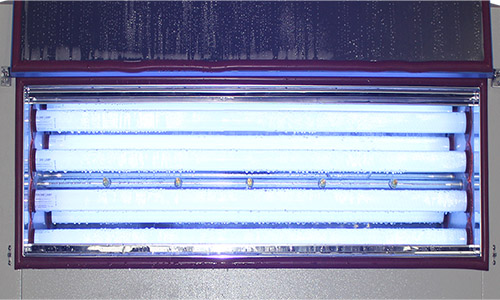
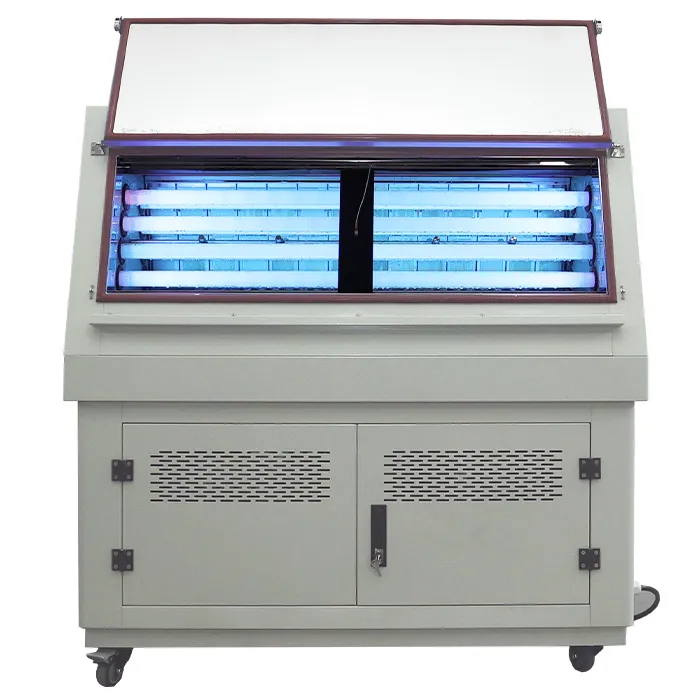 Professional UV aging chambers reproduce several environmental factors together — UV radiation, heat, condensation, humidity, and water spray — rather than exposing samples to light alone. A typical test follows four steps: sample preparation using actual production materials (plastic housings, rubber seals, cable jackets, coated surfaces); cycle selection, since plastic housings need UV + condensation, outdoor equipment needs UV + spray, and coatings need UV with surface evaluation; controlled exposure, holding UV intensity, temperature, and moisture steady throughout; and performance evaluation of color change, gloss retention, surface cracking, chalking, and mechanical strength.
The lamp system is one of the most important selection factors, since different lamps create different degradation effects. UVA-340 lamps simulate the ultraviolet portion of natural sunlight and correlate well with outdoor exposure, suiting outdoor housings, automotive plastics, coatings, and long-term durability verification. UVB-313 lamps produce stronger short-wave UV energy that accelerates degradation — useful for fast screening and R&D comparison, but more severe than natural sunlight, so results shouldn't be read as a direct prediction of real service life.
Item | UVA-340 | UVB-313 |
Main purpose | Outdoor durability simulation | Accelerated screening |
UV spectrum | Close to natural sunlight UV | Strong short-wave UV |
Testing speed | Medium | Faster |
Outdoor correlation | Higher | Lower |
| Typical users | Manufacturers needing reliability data | R&D laboratories |
 | ||
Most companies developing outdoor electronics use UVA-340 for durability validation and UVB-313 for material screening.
Standard | Application |
ASTM G154 | Fluorescent UV exposure testing |
ISO 4892-3 | Plastics UV weathering evaluation |
ASTM D4329 | Plastic material weathering testing |
IEC 60068-2-5 | Electronic equipment solar radiation testing |
A typical ASTM G154 Cycle 1 condition uses a UVA-340 lamp with irradiance of 0.89 W/(m²·nm) at 340 nm, 8 hours of UV exposure at 60°C, and 4 hours of condensation at 50°C. ISO 4892-3 evaluates plastics for color stability, cracking resistance, and mechanical retention, while IEC 60068-2-5 commonly applies to outdoor electronic devices exposed to simulated solar radiation. The right standard should match the product's actual environment and failure risks.
Beyond the standard itself, a few equipment factors determine whether test data will actually be reliable:
Lamp system. A professional chamber should support both UVA-340 (better sunlight correlation) and UVB-313 (faster screening), giving labs flexibility across testing needs.
Irradiance control. Fluctuating UV intensity means different samples receive different energy and unreliable results, so a good chamber needs real-time monitoring, automatic adjustment, and calibration support.
Combined UV, condensation, and spray simulation. Outdoor products face sunlight, temperature swings, night condensation, and rain together, so a complete chamber should cycle through all of these to realistically evaluate plastic degradation, coating failure, and seal durability.
Chamber size. Research labs often need only small sample runs for formulation comparison, while manufacturers typically need larger capacity for production and supplier comparison.
Controller system. An intelligent controller that lets operators set and monitor UV intensity, temperature, and exposure/condensation cycles reduces manual error and improves repeatability.
Supplier support. Since chambers are long-term investments, manufacturing experience, technical support, spare parts availability, and warranty policy matter for stable performance over years of use.
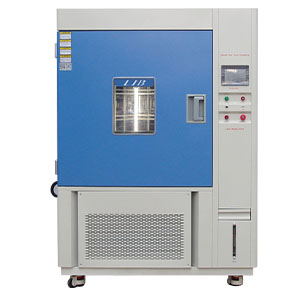
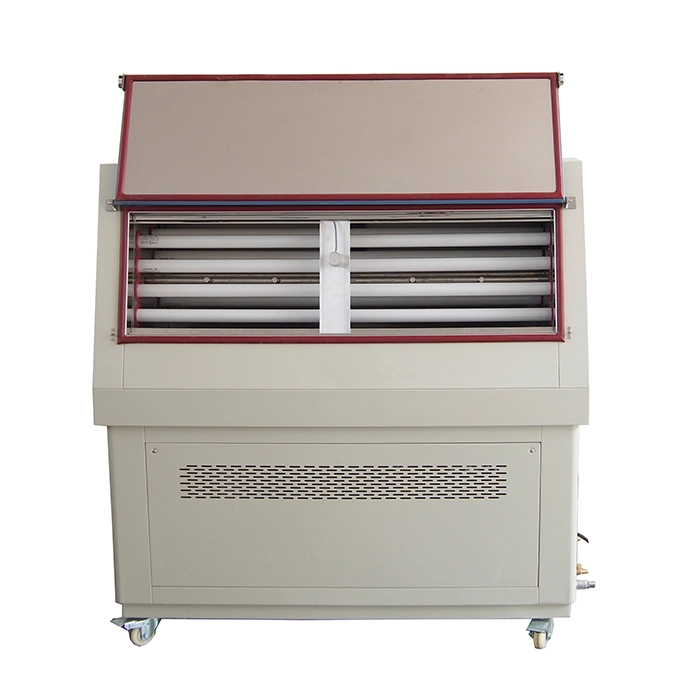
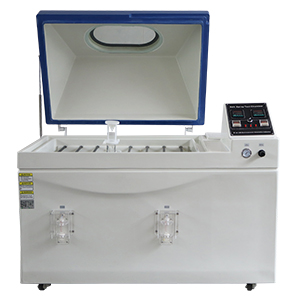
Xi'an LIB Environmental Simulation Industry provides professional UV weathering test solutions for manufacturers, laboratories, and research organizations. The LIB UV Light Fastness Test Chamber combines UV radiation simulation, temperature control, condensation, humidity control, and water spray functions, letting engineers evaluate materials under complex outdoor conditions before deployment.
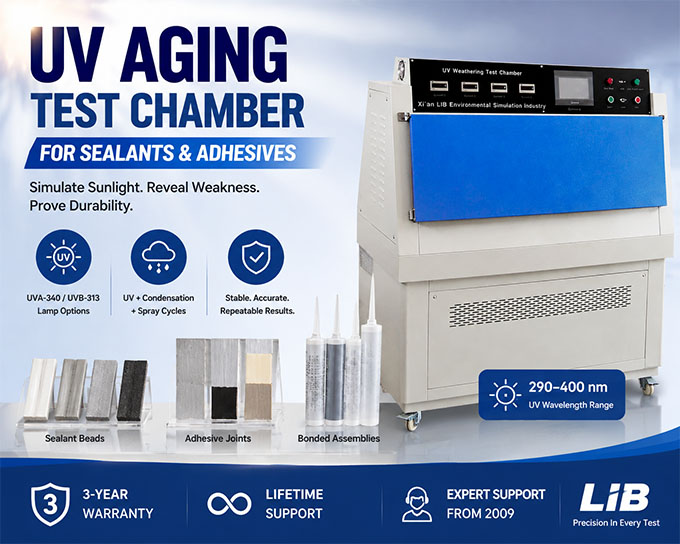
UVA-340 and UVB-313 lamp options. LIB chambers support both fluorescent UV lamp systems — UVA-340 for outdoor reliability and long-term durability studies, UVB-313 for accelerated screening and R&D comparison — giving labs one platform for multiple testing programs.
Precise UV irradiance control.
| Feature | Benefit |
|---|---|
| Irradiance monitoring | Maintains stable UV exposure |
| Automatic control | Reduces testing variation |
| Uniform radiation distribution | Improves sample comparison |
| Calibration support | Maintains long-term accuracy |
Integrated UV, condensation, and spray testing. The system reproduces UV radiation, high temperature, condensation moisture, and water spray together — important because many outdoor failures come from combined stress, such as an enclosure that resists UV alone but fails after repeated UV → heating → condensation → rain cycles.
Intelligent control system. Operators can manage UV cycle settings, temperature, exposure duration, condensation, and spray programs from one interface, improving efficiency and keeping conditions consistent across long-term aging programs.
Large specimen capacity and customization. LIB offers customized holders, fixtures, and testing programs to suit material laboratories, automotive suppliers, electronics manufacturers, and research institutions.
| Parameter | Specification |
|---|---|
| Lamp type | UVA-340 / UVB-313 fluorescent lamps |
| Wavelength range | 290–400 nm |
| Irradiance control | 0.3–20 W/m² |
| Chamber temperature | Ambient to 90°C |
| Temperature accuracy | ±2°C |
| Black panel temperature | 35–80°C |
| Humidity | ≥95% RH |
| Testing modes | UV exposure, condensation, water spray |
| Timer | Up to 9,999 hours 59 minutes |
| Specimen capacity | Up to 56 pieces |
| 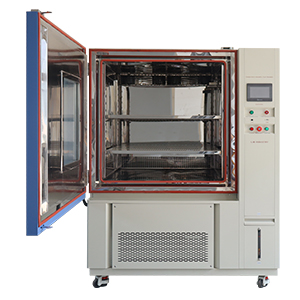 |  |
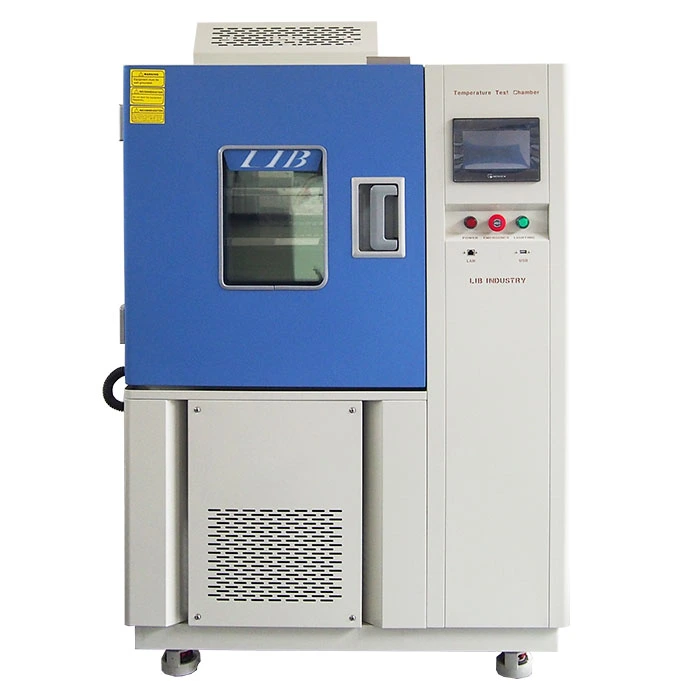
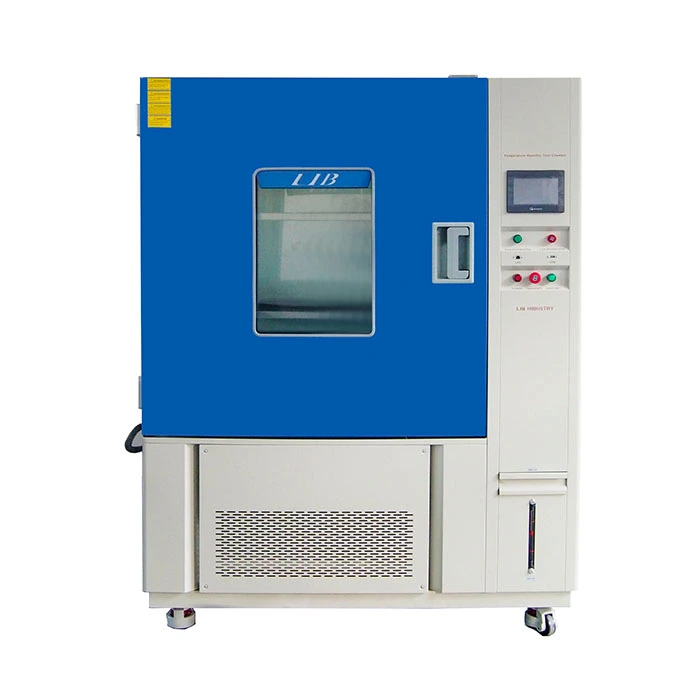
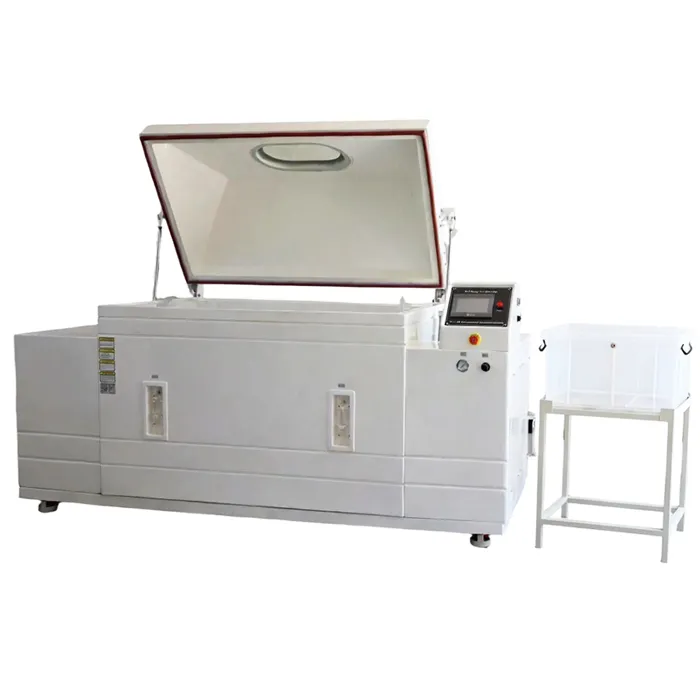
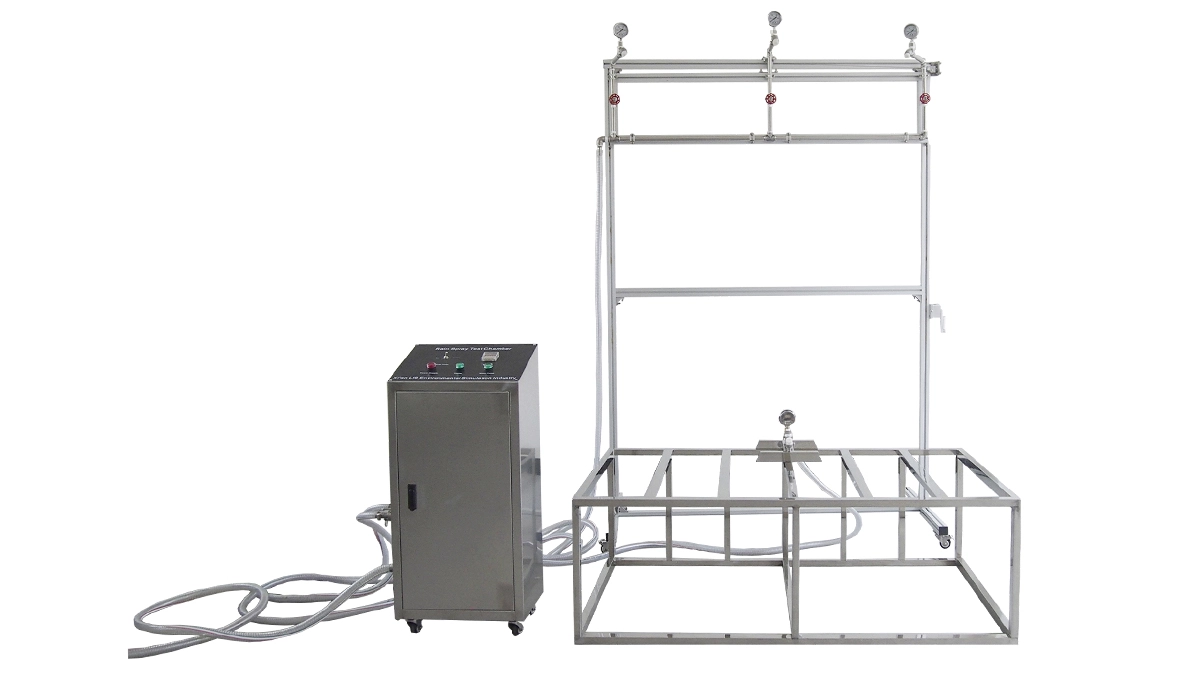
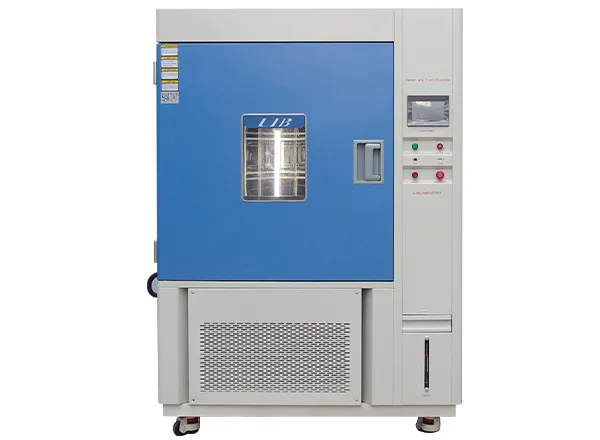
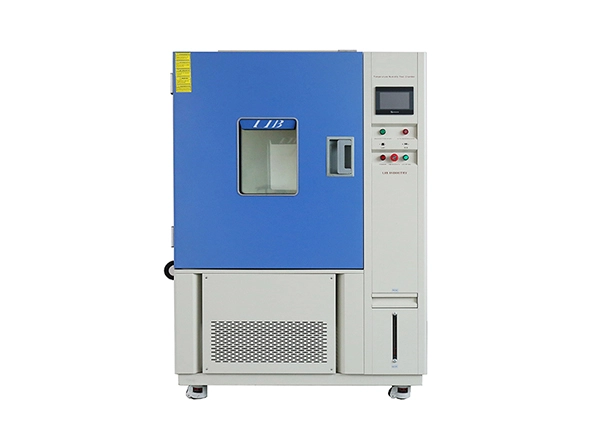
Xenon Weathering Test Chamber Full-spectrum sunlight simulation (UV + visible + infrared) | Temperature & Humidity Chamber Thermal aging and humidity stress for electronics, batteries, automotive parts | Salt Spray Test Chamber Corrosion resistance per ASTM B117 / ISO 9227 |
Choose UV testing when ultraviolet degradation is the main concern; choose xenon testing when full-spectrum sunlight simulation is required, since a xenon arc lamp covers UV, visible, and infrared radiation at a higher cost.
Founded in 2012, LIB Industry specializes in environmental simulation test chambers for automotive, electronics, new energy, and research reliability evaluation. Its product line spans UV weathering, xenon, temperature & humidity, salt spray, and dust/waterproof equipment, plus customized chambers, backed by ISO 9001 certified manufacturing, export experience across 60+ countries, a 3-year warranty, and lifetime maintenance support. Every chamber undergoes performance testing before shipment to ensure stable operation after delivery.
What is a UV Light Fastness Test Chamber used for?It simulates ultraviolet radiation, temperature, condensation, and water spray to evaluate weathering resistance in outdoor electronics, plastics, rubber products, coatings, and automotive components.
What's the difference between a UV chamber and a xenon chamber?A UV chamber simulates the ultraviolet part of sunlight using fluorescent lamps, while a xenon chamber simulates a wider spectrum including visible and infrared light — UV chambers suit polymer degradation studies, xenon chambers suit full sunlight simulation.
Which lamp should I choose, UVA-340 or UVB-313?UVA-340 is recommended when outdoor sunlight correlation matters most; UVB-313 is better for faster screening and identifying weak materials. The right choice depends on the material and testing objective.
What standards are used for UV aging testing?Common standards include ASTM G154, ISO 4892-3, ASTM D4329, and IEC 60068-2-5, with the correct one depending on product type and industry requirements.
Outdoor electronic products face continuous challenges from UV radiation, heat, humidity, and rain, and without accelerated weathering testing, material failures may only surface after products enter the market. A UV Light Fastness Test Chamber gives engineers a reliable way to evaluate durability and reduce environmental failure risk — and choosing the right lamp system, testing standard, and simulation functions is key to accurate results.
Contact LIB Industry today to get UV Light Fastness Test Chamber specifications, technical solutions, and customized reliability testing recommendations for your products.
 English
 русский
 français
 العربية
 Deutsch
 Español
 한국어
한국어 italiano
 tiếng việt
 ไทย
ไทย Indonesia