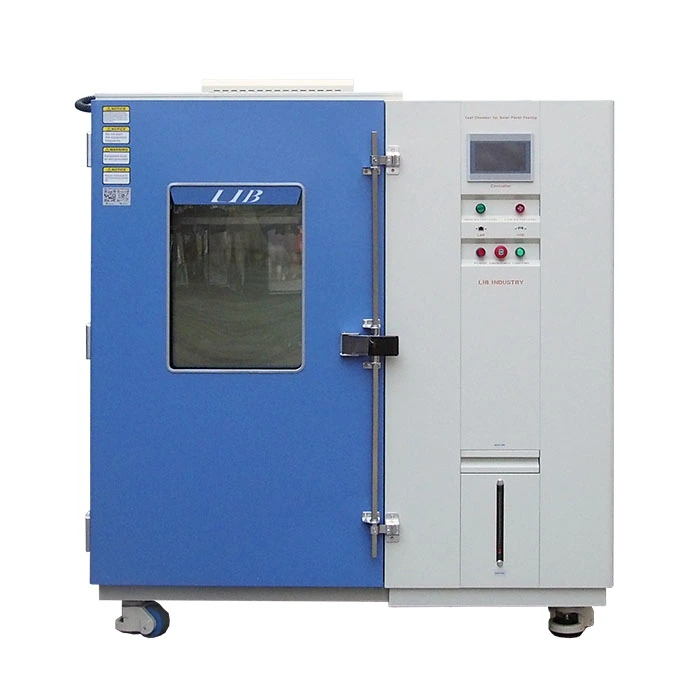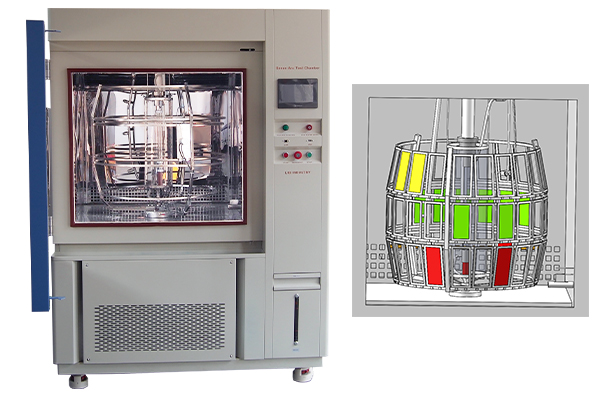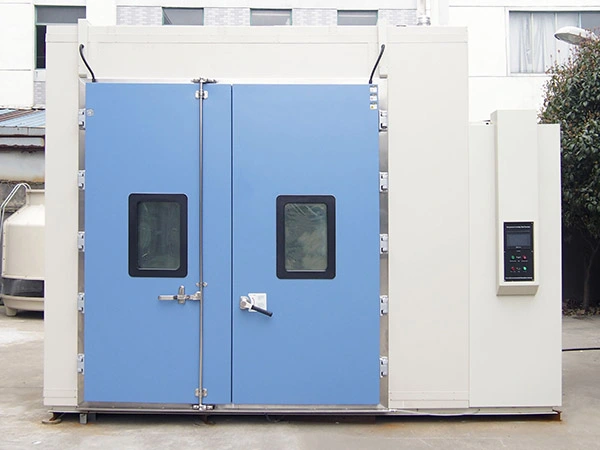
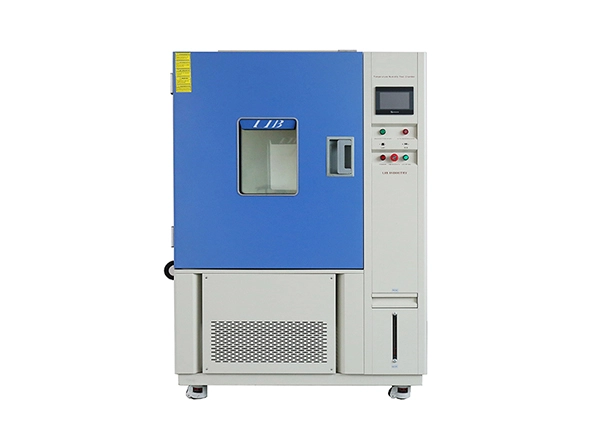
When preparing an environmental chamber RFQ checklist, buyers should provide complete technical information instead of only requesting a price. The right environmental test chamber depends on the sample size, testing standards, environmental conditions, and future application needs. A supplier should receive a detailed test chamber specification sheet covering temperature range, humidity control, chamber volume, ramp rate, safety functions, and installation requirements. Different chambers support different standards, including IEC 60068, ISO 16750, MIL-STD-810, and IEC 60529. The most important factor is selecting a supplier that can provide both suitable equipment and technical support throughout the project.
Environmental test chambers are used to evaluate whether products can maintain reliability when exposed to controlled environmental stresses. Before sending a climatic chamber RFQ, buyers should clearly define the product being tested, expected failure modes, and required test conditions.
Typical test samples include:
Electronic components
Aerospace systems
Industrial equipment
Communication devices
Medical products
Defence equipment
Materials and assemblies
Environmental testing helps identify potential failures such as:
Thermal expansion and contraction
Material aging
Moisture damage
Corrosion
Electronic malfunction
Seal degradation
Mechanical stress
Performance instability
For high-reliability industries, detailed specifications are especially important. Applications such as Defence Environmental Testing often require precise environmental profiles, strict standards compliance, and customized chamber configurations.
A supplier needs accurate information about the product before recommending equipment. For example, a small electronic component may require a standard reach-in chamber, while a large assembly may require a walk-in or custom environmental chamber.
A complete RFQ allows manufacturers to evaluate:
Required chamber size
Cooling and heating capacity
Airflow design
Safety requirements
Control system configuration
Testing standards
Providing these details reduces quotation delays and prevents purchasing equipment that does not meet actual testing requirements.
Environmental chambers are commonly designed according to international testing standards. Buyers should include the required standards in their RFQ to ensure the supplier provides a suitable solution.
Standard | Temperature Range | Humidity | Test Cycle | Spray / Pressure Condition |
IEC 60068-2-1 | Low temperature exposure | N/A | Constant exposure | None |
IEC 60068-2-2 | High temperature exposure | N/A | Constant exposure | None |
IEC 60068-2-30 | 25°C to 55°C | Up to 95% RH | Cyclic damp heat | None |
IEC 60068-2-78 | 40°C | 93% RH | Steady humidity | None |
ISO 16750-4 | -40°C to +125°C | Optional | Automotive environmental testing | None |
MIL-STD-810H | Customized | Customized | Military environmental simulation | Optional |
IEC 60529 | Variable | N/A | Ingress protection testing | Dust/water conditions |
ASTM D4332 | Variable | Variable | Packaging environment simulation | None |
Including the correct standard in an RFQ helps suppliers configure:
Temperature performance
Humidity accuracy
Control software
Safety features
Data recording functions
Before selecting a chamber, buyers should compare equipment specifications based on their actual application.
Specification | Standard Environmental Chamber | Large Walk-In Chamber | Custom Environmental Chamber |
Temperature Range | -70°C to +180°C | Customized | Customized |
Humidity Range | 10–98% RH | 10–98% RH | According to requirements |
Chamber Volume | 100–2000 L | Several cubic meters | Custom dimensions |
Ramp Rate | Standard or fast change options | Customized based on load | Fully customized |
Airflow | Vertical or horizontal circulation | Large-space airflow management | Application-specific airflow |
Sample Heat Load | Low to medium | Medium to high | High or special thermal loads |
Safety Configuration | Alarm systems, over-temperature protection | Emergency doors, monitoring systems | Customized safety solutions |
Applicable Standards | IEC 60068, ISO, ASTM | IEC 60068, MIL-STD-810 | Special industry requirements |
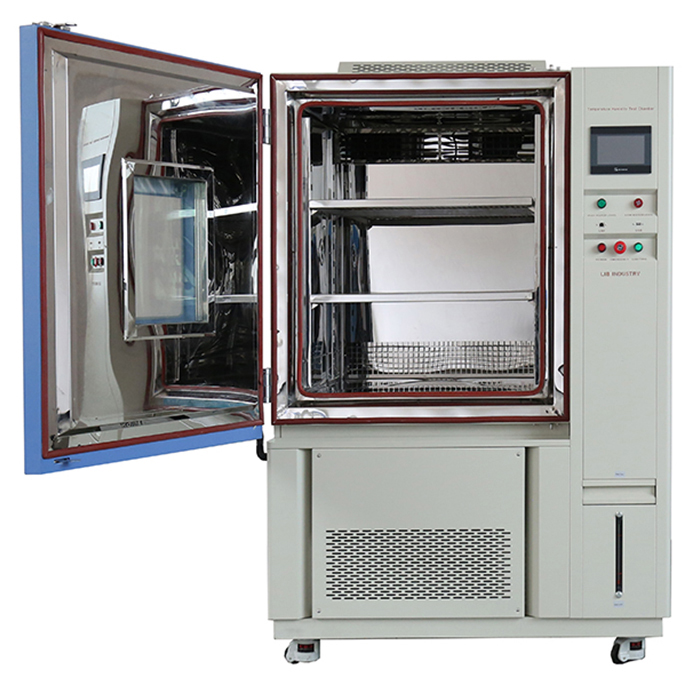
A complete environmental chamber RFQ checklist should include the following information.
1. Product name and application
2. Industry requirement
3. Sample dimensions
4. Sample weight
5. Number of samples tested at one time
1. Minimum temperature
2. Maximum temperature
3. Temperature accuracy requirement
4. Temperature uniformity requirement
5. Temperature ramp rate
1. Required humidity range
2. Humidity accuracy
3. Humidity stability requirement
1. Internal chamber volume
2. External installation space
3. Door size requirement
4. Loading method
5. Shelf configuration
1. Sample heat generation
2. Airflow requirements
3. Recovery time after door opening
4. Noise requirements
1. Required safety functions
2. Applicable testing standards
3. Data recording and communication requirements
Providing these details allows suppliers to prepare an accurate quotation and recommend the most suitable configuration.
A supplier cannot accurately calculate chamber capacity without knowing product dimensions, weight, and heat generation.
Temperature is important, but humidity, ramp rate, airflow, and sample load also affect chamber selection.
Battery systems, motors, and powered electronics can significantly influence chamber performance.
A chamber that is too small restricts airflow, while an oversized chamber increases operating costs.
Display resolution does not represent actual chamber performance. Buyers should review validated temperature and humidity uniformity data.
The RFQ should include:
Available power supply
Drainage requirements
Ventilation conditions
Installation space
Maintenance access
Different applications require different equipment configurations.
Recommended for:
Small components
Laboratory testing
Material research
Prototype verification
The Benchtop Environmental Chamber provides precise environmental control in a compact design, making it suitable for laboratories and research applications where space and sample size are limited.
Recommended for:
Electronics
Medical products
Small assemblies
Reliability testing
Reach-in systems are suitable for laboratories requiring frequent sample access and flexible environmental testing.
Recommended for:
Large assemblies
Industrial equipment
Aerospace systems
Batch testing
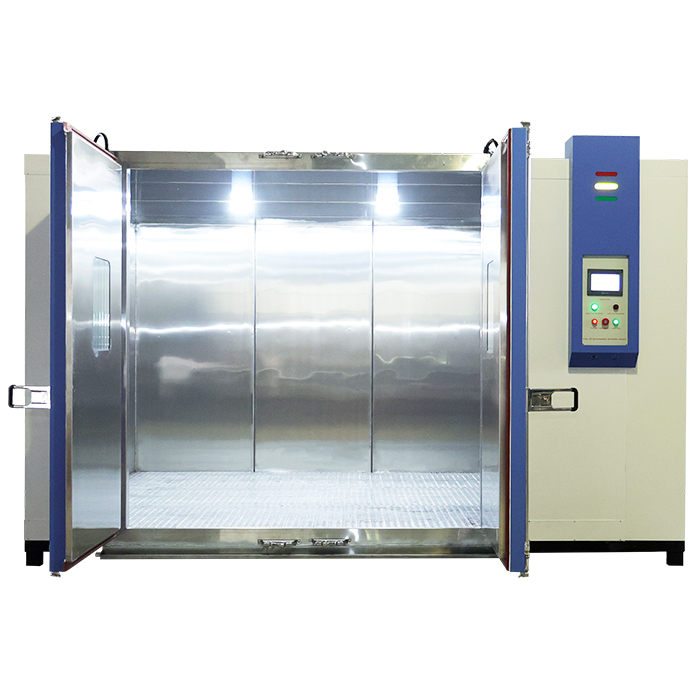
Walk-in chambers provide a larger controlled environment for products that cannot fit into standard laboratory equipment.
Recommended for:
Rapid temperature transition testing
Electronic components
Semiconductor reliability evaluation
The Thermal Shock Chamber is designed for applications requiring fast changes between high and low temperature conditions.
Recommended for:
Metal components
Coatings
Corrosion evaluation
Salt spray chambers simulate corrosive environments to evaluate material durability.
Recommended for:
Outdoor equipment
Industrial products
Protection testing
IP testing chambers verify resistance against dust and water according to IEC 60529 requirements.
Custom chambers are recommended when standard equipment cannot meet requirements such as:
Large product testing
Special temperature profiles
High heat loads
Combined environmental simulation
Unique industry standards
A climatic chamber RFQ should identify the required temperature, humidity, chamber size, sample conditions, standards, and safety requirements so suppliers can recommend the correct equipment.
A test chamber specification sheet describes technical requirements, while an RFQ uses those specifications to request supplier quotations and solutions.
Testing time depends on the standard and application. Some tests require several hours, while long-term reliability evaluations may continue for weeks.
Choose chamber size based on sample dimensions, quantity, airflow requirements, heat generation, and future testing needs.
Yes. Many programmable chambers can support multiple standards if their temperature range, humidity capability, and control functions meet the requirements.
An RFQ should include product details, chamber size, temperature and humidity requirements, standards, sample heat load, safety functions, installation conditions, and data recording needs.
Before preparing an RFQ, understanding chamber capacity, configuration options, and application requirements can help avoid incorrect specifications. Read our guide: 100L to 1000L Environmental Stress Chamber Size Guide or contact us directly.

 English
 русский
 français
 العربية
 Deutsch
 Español
 한국어
한국어 italiano
 tiếng việt
 ไทย
ไทย Indonesia
.webp "CO₂ Carbonation Curing Chamber Automation Kit")