 Electronic devices, automotive components, batteries, and industrial materials all face challenges from temperature and humidity fluctuations during storage, transportation, and daily use. Even minor deviations in environmental conditions can lead to material degradation, corrosion, solder joint failure, or malfunction.
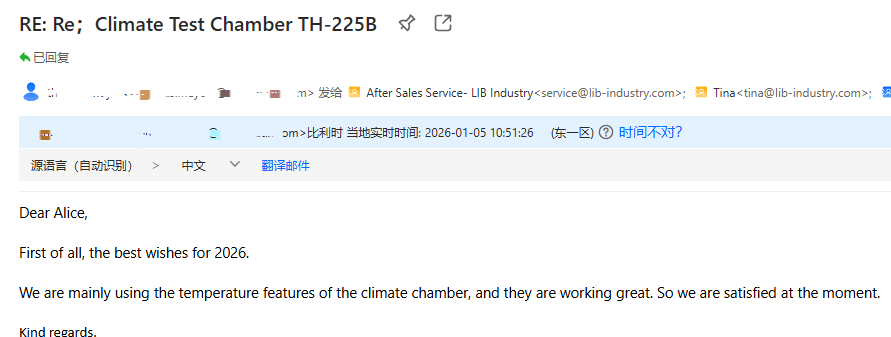
A recent example comes from a customer in Belgium, who uses a LIB industry climatic chamber to test electronic products. They shared that the chamber’s temperature features are performing excellently, allowing their team to conduct reliable testing with confidence. Feedback like this reflects the growing trust engineers place in precision climate chambers to ensure product quality and durability.
Temperature and humidity testing provides a controlled way to simulate these conditions and evaluate product performance before market release. At the heart of these tests are climate chambers, which offer precise control over temperature, humidity, and environmental cycles, ensuring consistent and repeatable results.
This complete guide covers key international standards, common testing methods, engineering considerations, and the capabilities of LIB industry climate chambers, providing both technical insight and practical guidance.
Products are increasingly exposed to harsh and unpredictable environments, from high-humidity coastal areas to extreme desert heat. Temperature and humidity are two of the most critical environmental factors that affect product longevity and functionality.
High temperature can cause material softening, electronic drift, and accelerated chemical reactions in coatings or plastics.
High humidity may lead to corrosion, insulation failure, and coating degradation.
Temperature and humidity cycling can induce expansion and contraction, compromising seals and solder joints, potentially leading to failure over time.
Simulating these environmental stresses in a controlled laboratory environment using climate chambers allows manufacturers to detect potential weaknesses early, optimize designs, and ensure compliance with industry standards.
A professional environmental testing guide must provide a systematic overview of relevant international standards. These standards define testing conditions and ensure consistency across industries, making them essential for reliable product evaluation.
IEC 60068 is the most widely used environmental testing standard for electronic products, including PCB assemblies, sensors, and consumer devices.
Typical tests:
Damp Heat Test
Temperature Cycling Test
Humidity Steady-State Test
Common methods:
IEC 60068-2-30 Damp Heat Cyclic Test
IEC 60068-2-78 Damp Heat Steady-State Test
IEC 60068-2-14 Temperature Change
IEC 60068 ensures electronic products maintain performance under high-humidity conditions and thermal stress.
MIL-STD-810 is primarily used in military and aerospace applications, designed to simulate extreme environmental conditions.
Relevant tests:
Method 507 Humidity Test
Method 501 High Temperature Test
Method 502 Low Temperature Test
Key features:
Simulates extreme heat, cold, and humidity
Suitable for military equipment, aerospace systems, and rugged electronics
ISO standards are widely adopted for industrial materials and automotive components.
Common tests:
ISO 6270 Humidity Test for Coatings
ISO 16750 Automotive Environmental Testing
These standards ensure durability of coatings, plastics, and electronic assemblies in industrial and automotive environments.
Automotive electronic components such as ECUs, sensors, and connectors require specialized environmental testing standards.
Common standards:
SAE J1455
LV124
GMW3172
Typical applications:
Electronic Control Units (ECU)
Sensors and actuators
Connectors and wiring harnesses
Incorporating these standards ensures vehicles meet safety, reliability, and regulatory requirements.
Beyond standards, manufacturers need practical testing methods to evaluate product performance. Climate chambers allow simulation of real-world environmental conditions, including constant climates, cyclic changes, and accelerated aging.
Damp heat testing evaluates product reliability under high-humidity conditions.
Typical test conditions:
85°C / 85% RH
40°C / 93% RH
Applications:
Electronics reliability testing
Coatings and plastics performance evaluation
Industrial component durability
This test reveals moisture-induced corrosion, insulation breakdown, and polymer or coating degradation.
This test simulates natural day-night or seasonal variations, exposing products to repeated temperature and humidity changes.
Typical conditions:
-40°C → 85°C
Varying humidity levels
Applications:
Automotive electronics
Sensors and connectors
PCB assemblies
Cycling tests help identify failures caused by thermal expansion, contraction, and material fatigue over repeated environmental cycles.
Constant climate testing exposes products to a stable temperature and humidity environment to evaluate long-term stability.
Applications:
Long-term stability testing
Material performance evaluation
Coatings, plastics, and electronic components
By maintaining controlled conditions, constant climate tests ensure that products meet quality and durability standards over extended periods.
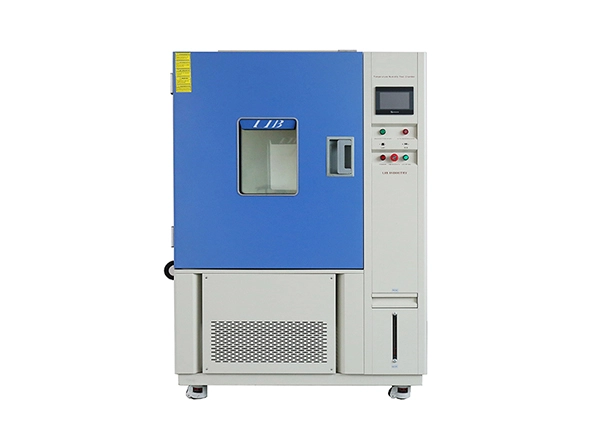
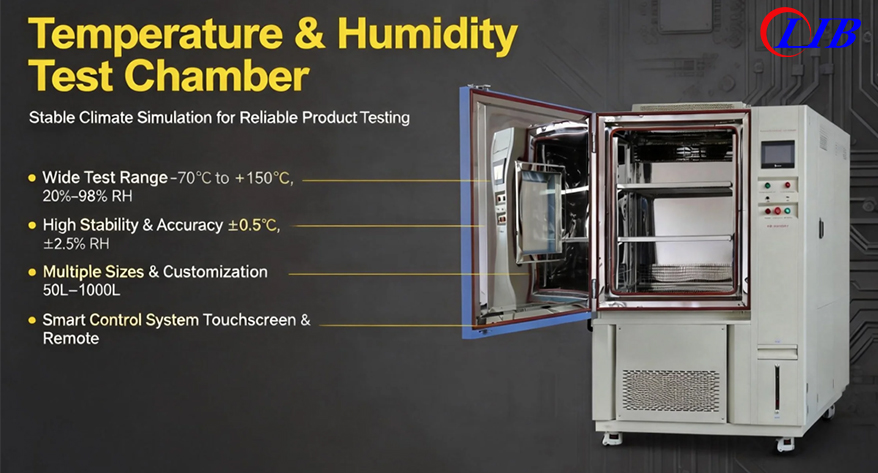
A high-performance LIB industry climate chamber provides precise control over temperature, humidity, and environmental cycles to ensure reproducible test results.
|  | ||||
| Name | Temperature Humidity Chamber | ||||
Temperature range | -20℃ ~+150 ℃ | ||||
Low type | A: -40℃ B:-70℃ C -86℃ | ||||
Humidity Range | 20%-98%RH | ||||
Temperature deviation | ± 2.0 ℃ | ||||
Heating rate | 3 ℃ / min | ||||
Cooling rate | 1 ℃ / min | ||||
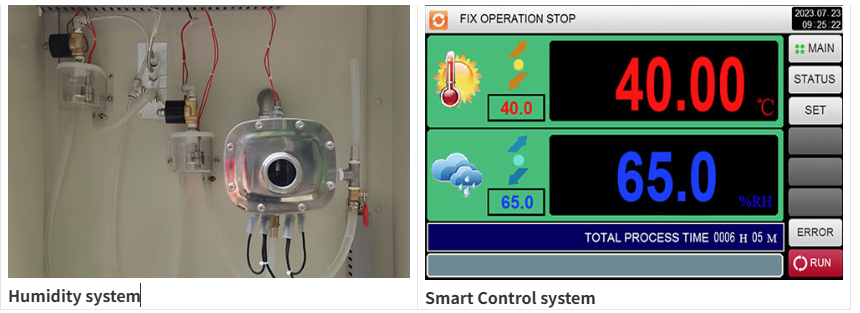
Controller | Programmable color LCD touch screen controller, Multi-language interface, Ethernet , USB | ||||
Refrigerant | Environmentally friendly refrigerant, meeting GWP emission requirements | ||||
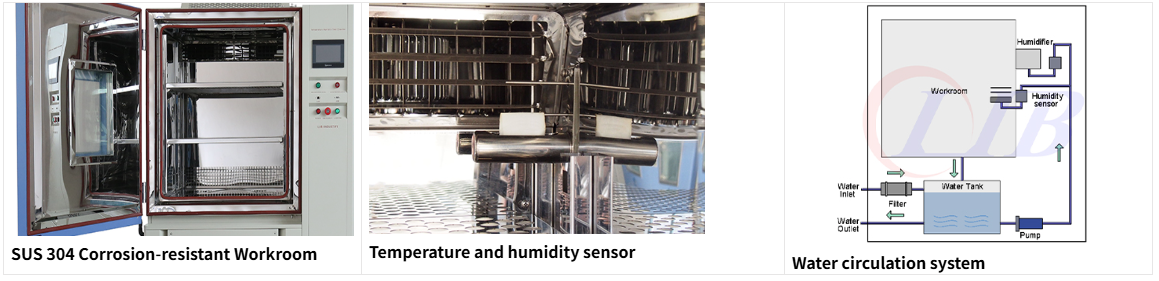
Interior material | SUS304 stainless steel | ||||
Standard configuration | 1 Cable hole (Φ 50) with plug; 2 shelves | ||||
Timing Function | 0.1~999.9 (S,M,H) settable | ||||
Key Technical Highlights:
Wide Temperature Range: From -70°C to +150°C, covering extreme cold and high heat scenarios.
Precise Humidity Control: Steam humidification and dehumidification systems maintain RH from 20% to 98%, suitable for damp heat tests or steady-state humidity evaluations.
Uniform Air Circulation: Optimized airflow ensures even temperature and humidity distribution across all samples.
Programmable Test Profiles: Simulate constant climates, cyclic temperature changes, or complex seasonal patterns with automated control.
Advanced Control System: Touchscreen interface, remote monitoring, and data logging support repeatable, automated testing and real-time performance tracking.
Safety and Reliability: Built-in over-temperature protection, humidity sensors, and emergency stop systems protect both samples and equipment.
These features allow engineers to conduct tests like 85/85 damp heat, temperature humidity cycling, and constant climate stability evaluations efficiently and accurately.
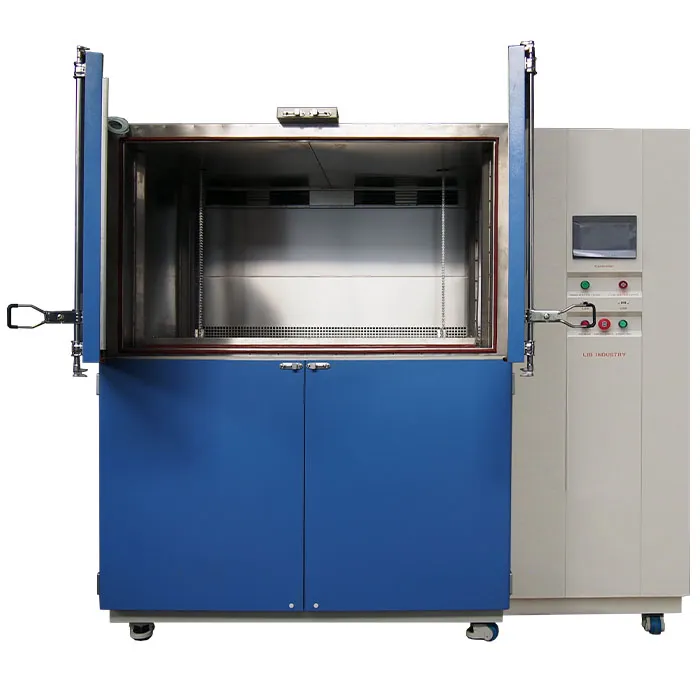
LIB industry offers fully customizable climate chambers to match diverse industries, test standards, and sample sizes.
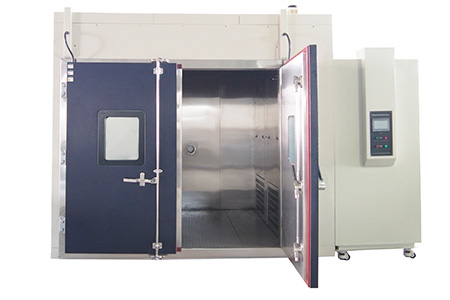
Large or Walk-in Environmental Chambers: Suitable for full automotive assemblies, battery packs, or multiple electronic devices.
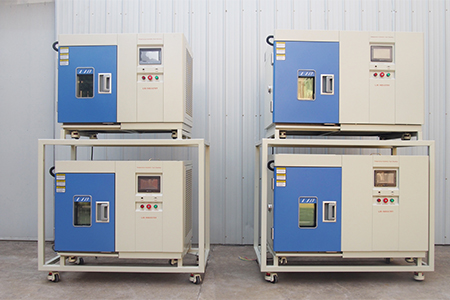
Benchtop and Compact Temperature Humidity Chambers: Perfect for R&D labs, electronics components, and material samples.
Custom Test Profiles: Programming tailored test cycles according to IEC 60068, MIL-STD-810, ISO 16750, SAE, or automotive-specific standards.
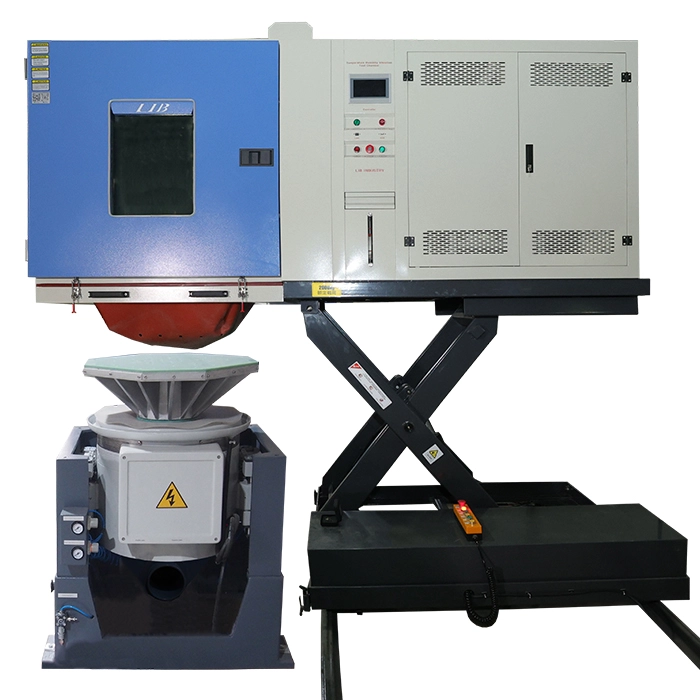
Special Features: Optional vibration integration, high-pressure humidity tests, or accelerated aging simulations for specialized product development.
|
|
|
Real-World Applications:
Automotive manufacturers validate ECUs, sensors, and connectors under LV124 or GMW3172 standards.
Electronics companies rely on damp heat and temperature cycling tests to ensure long-term reliability of PCBs and connectors.
Battery manufacturers accelerate thermal aging and humidity resistance testing for lithium-ion cells.
Industrial materials, including plastics, coatings, and composites, benefit from constant climate and cyclic temperature-humidity testing.
With over 17 years of experience, LIB industry provides not only equipment but also engineer-led consultation, ensuring each chamber meets precise testing requirements while supporting efficiency and repeatability.
LIB industry climate chambers deliver:
Precise temperature and humidity control
Wide range of programmable test cycles
Customizable chamber sizes for R&D labs or full assemblies
Compliance with IEC, MIL-STD, ISO, and automotive standards
For high-precision, reliable, and fully customizable climate chambers, contact LIB Industry today. Our engineers provide personalized guidance to ensure your testing meets the most stringent standards and product reliability requirements.

_20251204110329.webp "Xenon Arc Chamber for Automotive Embedded Systems — UV Aging for ECUs, Digital Clusters, and In-Vehicle Displays")
 English
 русский
 français
 العربية
 Deutsch
 Español
 한국어
한국어 italiano
 tiếng việt
 ไทย
ไทย Indonesia
.webp "Accelerated Weathering Test Chamber for Polymer Durability Testing")