Solar modules spend decades outdoors, moving from hot afternoons to cold nights and through seasonal swings. That constant expansion and contraction stresses solder joints, ribbons, seals, backsheets, and junction-box connections. Solar panel thermal cycling matters because it brings that stress into the lab, where weak points can be found before a module reaches the field.For module makers, test labs, and project buyers, a thermal cycling test for solar panels is more than a box-checking exercise. It affects product release timing, warranty exposure, and long-term confidence in field performance.
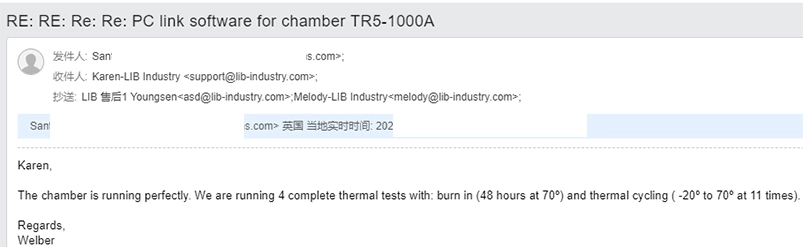
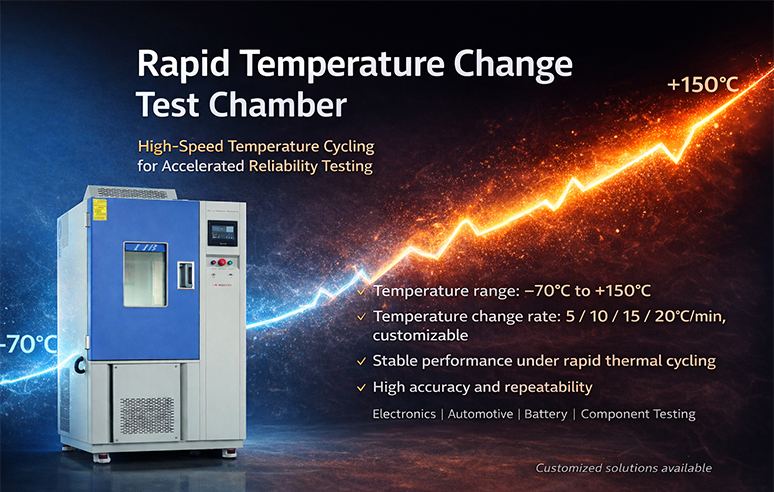
An automotive electronics manufacturer in Italy reported strong performance from the rapid temperature change chamber during their testing program. As they noted: “The chamber is running perfectly. We are running four complete thermal tests, including burn-in (48 hours at 70°C) and thermal cycling (–20°C to 70°C, repeated 11 times).”
Throughout these demanding conditions, the chamber maintained consistent and stable operation. This reliability enabled the team to conduct extended burn-in and multiple thermal cycling sequences without interruption, ensuring precise temperature transitions and supporting accurate evaluation of electronic module durability under realistic thermal stress.
Thermal cycling testing repeatedly drives a PV module between low and high temperature limits to expose thermal fatigue. The main issue is mismatch. Different materials inside the module expand and contract at different rates, and repeated cycling can slowly damage solder bonds, cell connections, and interfaces inside the laminate and junction box.
The IEC 61215 thermal cycling test is commonly associated with -40°C to +85°C, usually for 200 cycles, with each cycle taking up to about six hours. Industry guidance also points out that the requirement is tied to module temperature rather than air temperature alone, and that current is applied when the module temperature is above 25°C in the 200-cycle sequence. In practice, this means a temperature cycle chamber for solar panels must deliver stable ramps, repeatable dwells, and uniform conditions across the whole module.
A module can pass visual inspection and still hide weakness in interconnects or solder joints. Thermal cycling is valuable because it pushes those weaknesses toward early failure while the design is still under review.
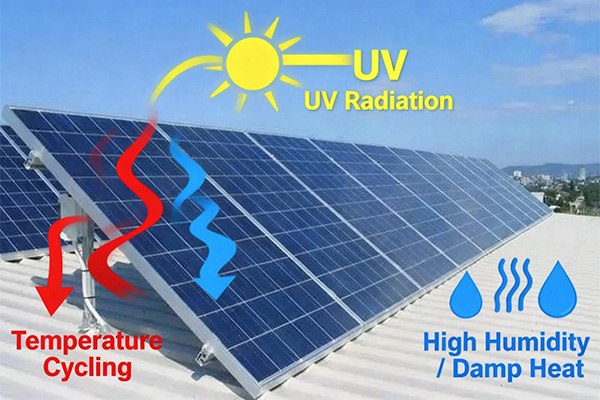
Thermo-mechanical fatigue is the core failure mechanism. Repeated temperature swings can create cell microcracks, ribbon or solder fatigue, resistance increase at electrical connections, and heating around junction-box terminals. Some extended cycling programs used in the market also show that minimum certification is not always enough to expose every field-relevant weakness in harsh climates with large day-night temperature gaps.
Failure mode | What it can lead to |
Solder joint fatigue | Intermittent contact, power loss, early warranty claims |
Cell microcracks | Hidden damage and gradual output drop |
Junction-box connection stress | Hot spots and unstable performance |
Interface weakness | Faster degradation when combined with broader aging stresses |
Thermal cycling is an accelerated aging method, not a full lifetime guarantee. What it does well is compress major outdoor temperature stress into a controlled program. References commonly place a TC200 program in the range of roughly 850 to 1,200 hours, and research into faster profiles shows that time can be reduced only when the failure mechanisms are properly understood. For development teams, that makes thermal cycling useful for comparing designs, checking process changes, and screening materials before certification.
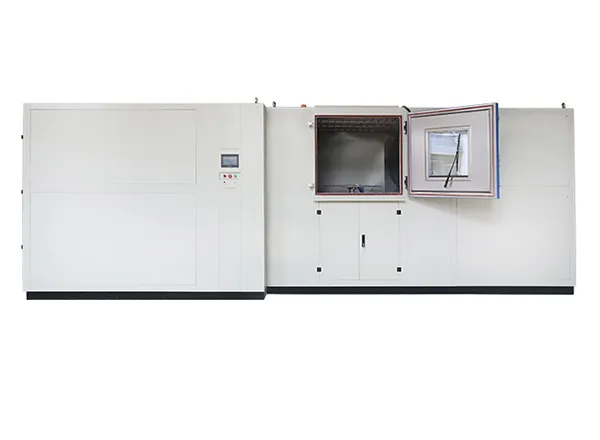
Once the test profile is defined, chamber fit becomes the next issue. A solar panel test chamber needs the right temperature range, ramp control, and workspace for the module size. For labs that also run UV preconditioning or humidity-freeze work, the chamber plan needs to support the full PV qualification sequence rather than a single isolated test.
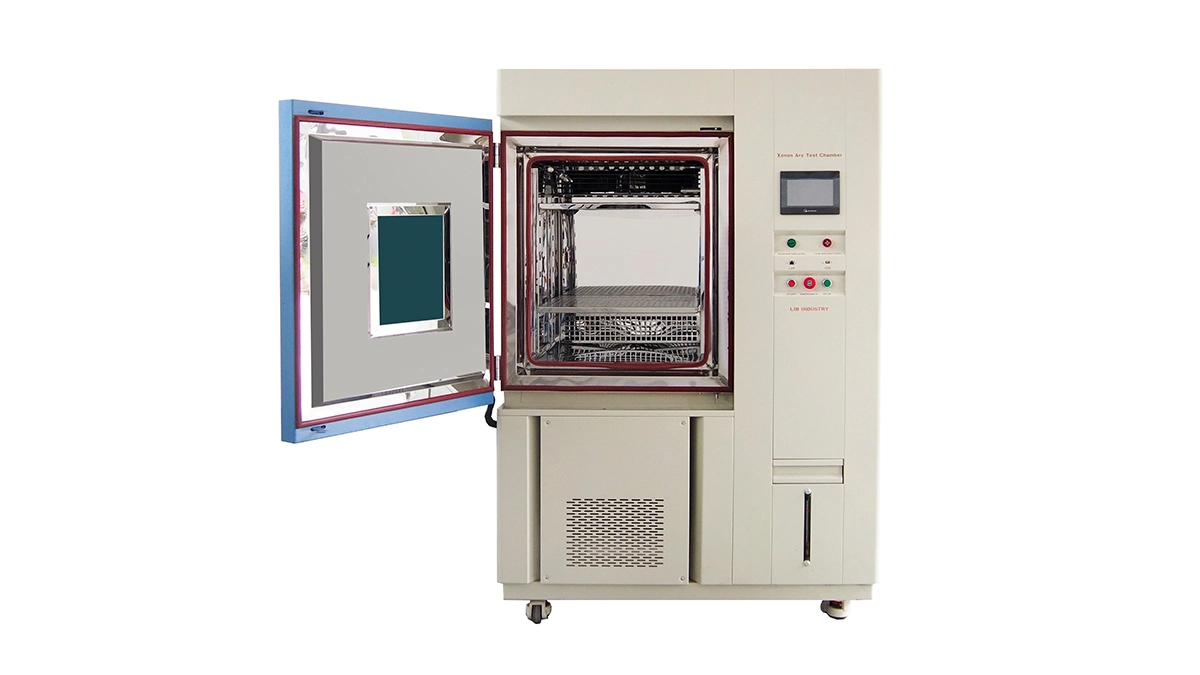
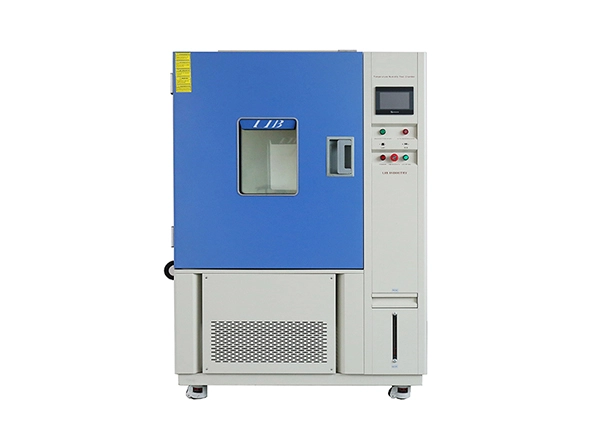
LIB’s temperature cycle chamber covers ranges that include -40°C and extend to -70°C on lower-end options, with listed temperature control accuracy of ±0.5°C and ramp rates up to 5, 10, 15, or 20°C per minute depending on configuration. The same pages position the equipment around standards that include IEC 61215. For PV qualification, LIB also offers a solar climatic chamber for UV pretreatment before thermal cycling and humidity freezing in the IEC 61215 workflow.
This matters because many labs are building a solar panel reliability testing workflow, not buying a chamber for one test only. When UV, thermal cycling, humidity freeze, and damp heat are planned as one sequence, matching equipment reduces setup friction.
|
|
|
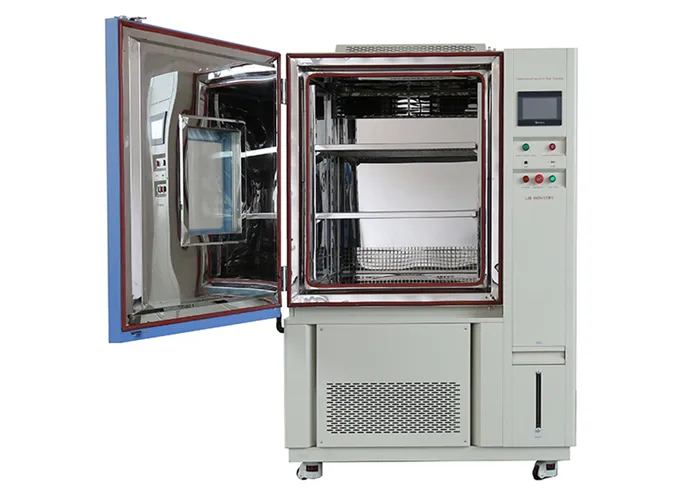
| Robust Workroom | Cable Hole | Temperature and Humidity Sensor |
Some labs mainly need standards-based qualification. Others need quicker engineering screening during R&D. That is where the difference between a temperature cycle chamber and a rapid-rate thermal cycling chamber becomes useful.
Chamber type | Best fit | Main value |
Temperature cycle chamber | Routine IEC-style PV module durability testing | Stable, repeatable qualification programs |
Rapid-rate thermal cycling chamber | Faster development screening and engineering validation | Shorter stress loops and faster feedback |
UV pretreatment chamber | Earlier step in PV qualification | Supports preconditioning before later climate tests |
LIB’s rapid-rate chamber page lists 5, 10, and 15°C per minute temperature-change rates, while the standard temperature cycle chamber page emphasizes wider cyclic testing flexibility.
In solar panel thermal cycling, test accuracy depends on consistent ramps and dwells. Official LIB data lists ±0.5°C temperature fluctuation for its temperature cycle chamber, while broader industry references stress the need for homogeneous module temperature and repeatable conditions. That level of control is especially important when comparing module builds, validating new materials, or checking whether a production change affected reliability.
Full-size PV modules make chamber geometry a serious selection issue. Industry guidance recommends enough clearance to avoid airflow disruption, and LIB’s official points to full-size PV module handling plus customized design support. For teams testing larger-format modules or planning batch runs, interior layout, fixture spacing, and airflow can matter as much as temperature range.
A useful short checklist includes:
· maximum module size and weight
· qualification test versus R&D screening target
· need for UV pretreatment, humidity freeze, or damp heat
· sample-temperature monitoring and data logging
· installation space and service access
A certification lab and a pilot development team may need very different equipment even when both search for a solar panel environmental chamber.
Crystalline silicon and thin-film modules can bring different design and application needs, and module size changes the chamber requirement even more. Small samples may fit a compact chamber, but full-size rooftop or utility modules usually need a larger workspace, stable airflow, and consistent fixture spacing. A lab qualifying multiple panel formats should also think about cable routing, sensor count, and whether one chamber must cover several test stages.
The value is not only in the chamber itself. LIB’s offers a broader turnkey path covering design discussion, production, inspection, commissioning, delivery, installation, training, and after-sales support. The company has specialized in environmental test chambers for more than 16 years, has manufactured and sold chambers since 2009, and provides a 36-month warranty with lifelong follow-up service. For buyers launching or upgrading a solar panel test chamber line, that wider support can reduce installation and startup friction.
Xi'an LIB Environmental Simulation Industry presents itself as an environmental test chambers supplier covering design, manufacturing, sales, and service for customers worldwide. Its official company profile describes a product range that includes temperature and climate chambers, corrosion chambers, dust and water IP chambers, weathering chambers, and special test chambers, backed by CE and RoHS certifications. The company also highlights turnkey environmental testing solutions and long-term after-sales support, which makes it relevant for PV buyers that need more than a single temperature cycle chamber.
Thermal cycling remains one of the clearest ways to judge whether a solar module design is ready for real outdoor stress. It reveals fatigue in cells, ribbons, solder joints, and junction-box connections before those problems turn into field failures. The right chamber should match the standard, the module format, and the lab’s broader workflow. When that match is correct, the result is not just pass-or-fail data, but faster troubleshooting and stronger confidence in product durability.
A temperature cycle chamber is usually better for standards-based thermal cycling test for solar panels, where stable ramps and repeatable dwells matter most. A rapid-rate thermal cycling chamber is more useful for faster engineering screening during development.
For an IEC 61215 thermal cycling test, a cycle can run up to about six hours, and a full TC200 program often stretches into hundreds of hours. Industry references commonly place the total duration around 850 to 1,200 hours, depending on the test profile.
Solar panel thermal cycling can reveal solder fatigue, interconnect weakness, cell microcracks, resistance rise at stressed connections, and heat issues around junction boxes. These are classic effects of repeated thermal expansion and contraction.
Start with the largest module planned for testing, then leave enough space for airflow, fixtures, wiring, and sensors. For full-size photovoltaic modules, interior geometry and airflow uniformity matter as much as temperature range.
Better interconnect design, tighter lamination control, reliable soldering, compatible material expansion behavior, and early screening of design changes all help. A repeatable solar panel test chamber also matters because stable conditions make weak points easier to identify before formal qualification.
 English
 русский
 français
 العربية
 Deutsch
 Español
 한국어
한국어 italiano
 tiếng việt
 ไทย
ไทย Indonesia


.webp "Portable Temperature Humidity Calibration Chamber for Thermometers and Hygrometers")
.webp "SAE J2334 Cyclic Corrosion Chamber for Automotive")