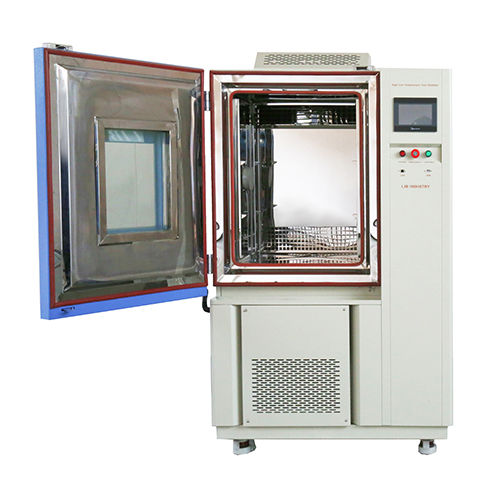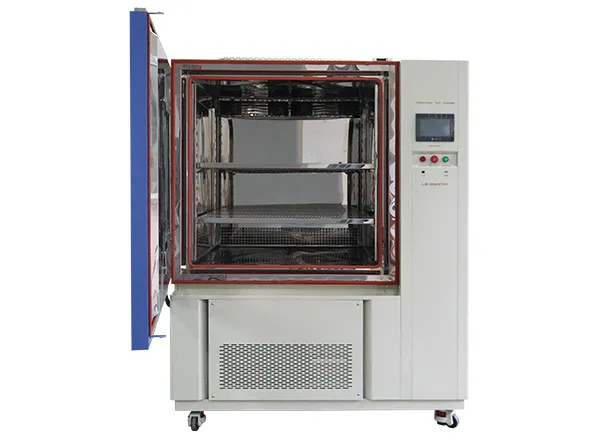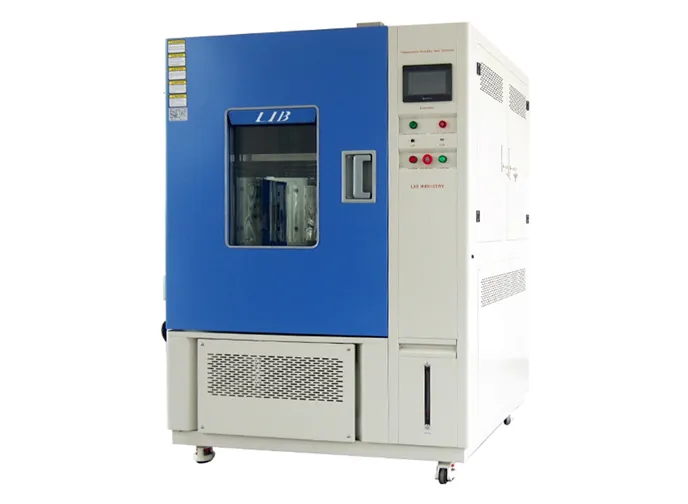
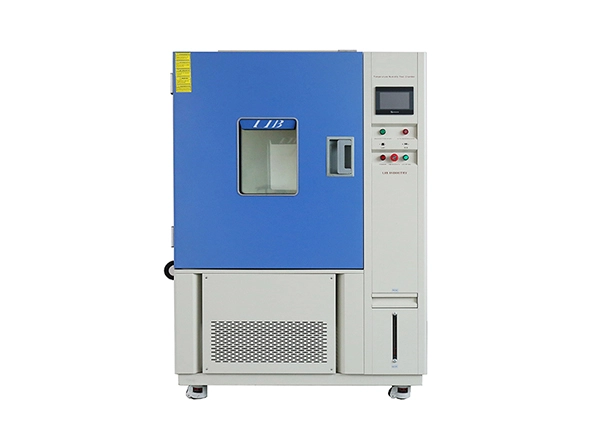
A walk-in environmental chamber is not just a larger version of a bench-top test chamber. For many laboratories, it becomes part of the reliability infrastructure: a controlled room where full assemblies, heavy samples, production batches, electronic cabinets, automotive parts, battery packs, aerospace components, and industrial systems can be exposed to repeatable temperature and humidity conditions.
For buyers, the main question is not only “How big should the chamber be?” A better question is: can the chamber reproduce the real test condition, hold stable control during long runs, carry the load safely, and meet the required standard without wasting floor space or budget?
This guide explains how to choose a walk-in environmental chamber for large samples, batch testing, and long-term reliability programs, with special attention to MIL-STD-810H Method 503.7 temperature shock requirements.
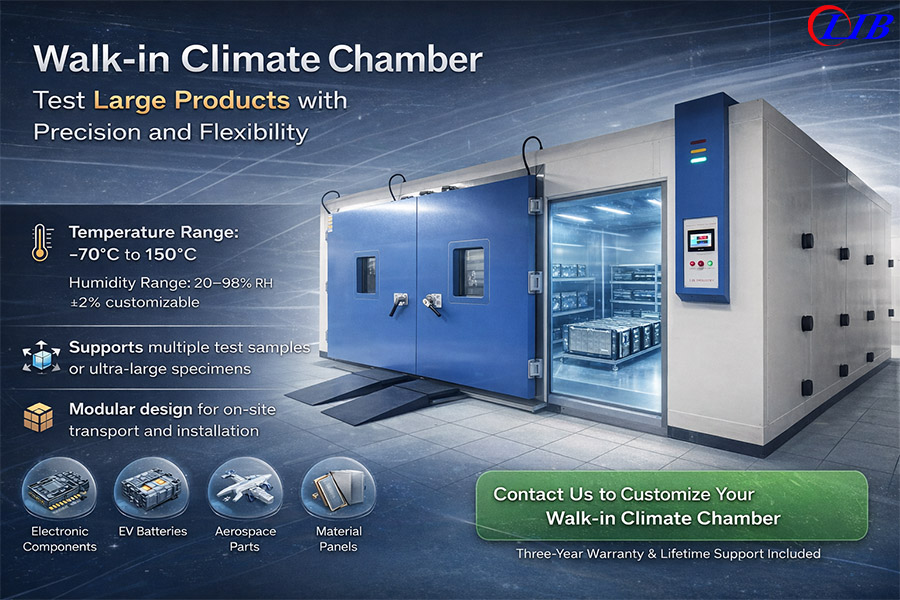
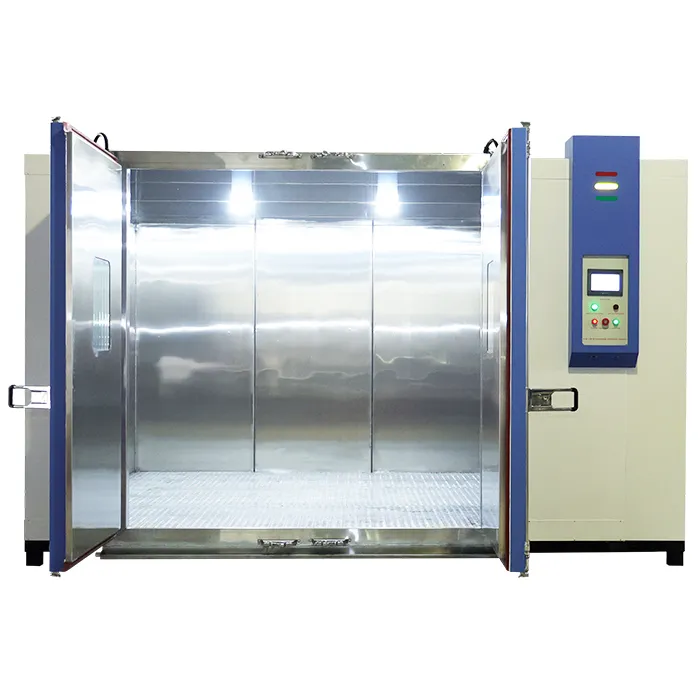
A walk-in environmental chamber is a large controlled test space used to simulate temperature, humidity, cycling, and other environmental stresses around oversized products or multiple samples.
Unlike a reach-in chamber, a walk-in test chamber allows technicians to enter the workspace for loading, fixture setup, wiring, inspection, and sample placement. The chamber may be used for high and low temperature exposure, temperature humidity cycling, storage testing, reliability screening, material evaluation, and product qualification.
A large environmental test chamber is commonly selected when the sample cannot be tested properly in a smaller cabinet. This happens when airflow is blocked, the sample produces heat, the product is too heavy for shelves, or multiple units must be tested under the same profile.
Walk-in chambers are widely used in automotive, electronics, aerospace, battery technology, defense, materials, and industrial equipment testing. Typical examples include:
· Automotive lighting assemblies, dashboards, sensors, connectors, and EV battery modules
· Telecom cabinets, server racks, control panels, and power electronics
· Aerospace enclosures, avionics housings, packaged equipment, and ground-support components
· Solar panels, industrial motors, large plastic parts, and coated metal assemblies
· Batch reliability tests for mass-produced components before shipment
In these cases, test repeatability depends on more than chamber volume. Air circulation, floor loading, heat removal, cable routing, humidity recovery, door sealing, and long-duration stability all affect the final test result.
A standard temperature humidity chamber is easier to install and often enough for small parts. A walk-in chamber becomes the better choice when sample size, batch quantity, fixture design, or test duration exceeds the practical limits of a smaller unit.
|
|
Choose a walk-in chamber when the sample must be tested as a complete system. Removing parts from a large assembly may make the test easier, but it may also hide real failure points such as gasket leakage, connector stress, material expansion mismatch, cable hardening, coating cracks, or condensation around installed electronics.
For environmental chamber for large samples selection, check three dimensions instead of one:
Selection Item | What to Check | Why It Matters |
Sample envelope | Length, width, height, doors, handles, fixtures | Prevents airflow blockage and loading difficulty |
Working clearance | Space around all sides and above the sample | Helps temperature and humidity distribution |
Total load | Sample weight, cart weight, fixture weight | Affects floor structure and safety |
Heat load | Motors, electronics, lamps, batteries, powered devices | Changes cooling capacity requirements |
Access points | Cable ports, observation window, ramp, carts | Reduces test interruption during long runs |
A common mistake is selecting the chamber only by internal dimensions. The real usable space is smaller because air must move around the load. Dense batch placement may give good sample capacity on paper but poor uniformity in practice.
Batch testing needs stable chamber performance over many hours, days, or weeks. The chamber must recover after door openings, hold humidity without large drift, and keep data traceable.
For production validation, a walk-in climatic chamber can reduce test time by running many samples together. For example, an electronics manufacturer may test 80 control boxes in one temperature humidity walk-in chamber instead of running several small chambers in parallel. The key is to place samples so every unit sees a comparable environment.
MIL-STD-810H Method 503.7 covers temperature shock. It is often discussed in aerospace, defense, outdoor electronics, vehicle-mounted equipment, and packaged systems that may move quickly between very different environments.
.png "Walk-In_Environmental_Chamber_Buying_Guide_for_Large_Samples,_Batch_Testing,_and_MIL-STD-810H_Applications_(3).png")
Method 503.7 is used to evaluate whether materiel can withstand sudden air temperature changes without physical damage or performance loss. The method defines a sudden change as an air temperature change greater than 10°C within one minute.
That number is critical. A single walk-in environmental chamber with a heating rate of 3°C/min and cooling rate of 1°C/min may be suitable for temperature cycling, humidity cycling, storage, and reliability tests, but it is not the same as a strict temperature shock transfer. For Method 503.7, the test setup often needs rapid transfer between conditioned environments or a specially designed arrangement that meets the transfer-time rule.
Method 503.7 includes Procedure I with four variations. The right choice depends on the life cycle exposure of the product.
Procedure | Test Logic | Key Parameter |
I-A | One-way shock from one constant extreme temperature to another | At least one shock in the required direction |
I-B | Single cycle shock from constant extreme temperature | One low-to-high shock and one high-to-low shock |
I-C | Multi-cycle shocks from constant extreme temperature | Minimum three cycles; repeated transfers between T1 and T2 |
I-D | Shock to or from controlled ambient temperature | Starts from controlled ambient, then moves to hot or cold |
Before transfer, the test item is conditioned at T1 or T2. The chamber air is adjusted at a rate not exceeding 3°C/min until the required extreme is reached. Then the test item is transferred to the other temperature environment in no more than one minute. If transfer takes more than one minute, the extra time must be justified in the test plan.
Method 503.7 places strong emphasis on real configuration. The sample should be tested in the expected storage, shipment, or operating condition. That may mean packaged, unprotected, installed on a representative mounting platform, restrained in a fixture, or connected with service cables.
Several parameters should be written into the purchase requirement:
· Sudden change threshold: more than 10°C within 1 minute
· Transfer time: no more than 1 minute, unless justified
· Conditioning ramp before shock: not more than 3°C/min
· Air velocity near the test item: not more than 1.7 m/s unless the real platform condition requires another value
· Procedure I-C shock count: at least three cycles when multi-cycle shock is required
· Controlled ambient for cold-region enclosure scenarios: typically 18°C to 24°C with 30% to 50% RH
· Relative humidity: usually not controlled during thermal shock unless the material is moisture-sensitive
These numbers should be discussed before purchase. Otherwise, a chamber may meet general temperature range requirements but fail to support the actual standard workflow.
The best walk-in test chamber selection starts with the test profile, not the catalog size.
Internal size should be checked against the largest sample, the batch layout, operator access, carts, stands, and airflow clearance. For large assemblies, the door opening can be just as important as chamber volume. A product that fits inside the chamber but cannot pass through the door is a costly planning error.
For heavy samples, reinforced floor structures, heavy-duty carts, ramps, and multi-layer stands may be needed. Battery packs, motors, metal assemblies, and power cabinets can create concentrated loads, so the floor design must match the real loading method.
For many reliability programs, a temperature range from -60°C to +150°C and humidity control from 20% to 95% RH can cover common high-low temperature, damp heat, storage, and cycling profiles. Temperature fluctuation around ±2.0°C and humidity fluctuation around ±5.0% RH are useful reference points for long-duration environmental tests.
For buyers, the important part is not only the maximum and minimum value. Ask whether the chamber can hold the required condition with the real sample inside, especially if the sample generates heat or blocks airflow.
A heating rate such as 3°C/min and a cooling rate such as 1°C/min can suit many large-volume temperature cycling programs. However, powered equipment changes the calculation. A server rack, inverter cabinet, battery module, or lighting system may release hundreds or thousands of watts inside the chamber.
Heat load must be listed clearly before quotation. The supplier needs sample weight, operating power, test temperature, humidity point, fixture material, and duty cycle. Without that data, cooling capacity may be undersized.
.png "Walk-In_Environmental_Chamber_Buying_Guide_for_Large_Samples,_Batch_Testing,_and_MIL-STD-810H_Applications_(2).png")
Walk-in chamber structure affects installation, relocation, sealing, and long-term maintenance.
A modular walk-in environmental chamber uses insulated panels assembled on site. It is suitable for laboratories with narrow doors, elevators, limited access, or future relocation plans. Modular construction also gives flexibility in size, layout, cable ports, doors, and service position.The TH-0098 for Nidec Batch Motor Testing project utilizes a modular installation design for its ultra-large walk-in environmental test chamber.
This structure is often preferred for large environmental test chamber projects where building access is restricted.
An integral structure is factory-built as a more complete unit. It can reduce on-site assembly work and may offer strong sealing performance, but transportation and installation access must be checked early. It is better suited for sites with enough loading space and a clear route from unloading area to laboratory.
The choice should be based on the building, not only the chamber. Ceiling height, drainage, power supply, ventilation, floor strength, and maintenance access all matter.
A good buying decision starts with a practical test description.
Before requesting a quotation, prepare the sample size, weight, material, heat load, test standard, temperature range, humidity range, ramp rate, test duration, and batch quantity. Also specify whether the sample is powered during the test.
For example, a telecom cabinet tested at -40°C to +85°C while powered needs a different refrigeration and airflow plan than an unpowered plastic housing stored at the same temperatures.
Large samples often fail the “easy loading” test before they fail the environmental test. Check whether the chamber needs a flush floor, ramp, reinforced base, rail cart, forklift access, or multi-layer racks. Door width and turning space in front of the chamber should match the actual handling process.
Bigger is not always safer. Oversizing increases energy use, recovery time, humidity water demand, and installation cost. A chamber should be large enough for airflow and handling, but not so large that the control system must condition unused volume every day.
| Part of LIB industry's Step-in Environmental Test Chamber Projects | |
|
|
LIB walk-in environmental chambers are designed for large samples and multi-sample testing with flexible structure options, reinforced loading designs, programmable control, mechanical compression refrigeration, forced air circulation, and safety protection systems.
LIB walk-in chambers can be built as modular detachable or integral structures. They support high and low temperature testing, temperature humidity cycling, corrosion, low air pressure, dust, rain, gas environments, and UV or xenon weathering when configured for the project.
Safety features can include humidifier dry-combustion protection, over-temperature protection, over-current protection, refrigerant high-pressure protection, water shortage protection, and earth leakage protection. The interior uses stainless steel for durability, while the exterior uses coated steel plate for industrial working environments.
For automotive labs, the chamber can support full assemblies and batch parts under hot-cold and damp heat profiles. For electronics, cable ports and stable airflow help powered testing. For aerospace and defense-related products, test planning can consider MIL-STD workflows. For battery and industrial samples, reinforced loading and safety design become central.
Buyer Need | Useful Chamber Feature | Practical Benefit |
Large assemblies | Custom internal size, large door, reinforced floor | Easier loading and realistic system-level testing |
Batch validation | Multi-layer stands and uniform air circulation | More samples per run with repeatable exposure |
Long test duration | Stable temperature and humidity control | Better data consistency during reliability programs |
Site limits | Modular detachable structure | Easier installation in existing labs |
Project acceptance | Calibration, commissioning, training | Faster handover to the testing team |
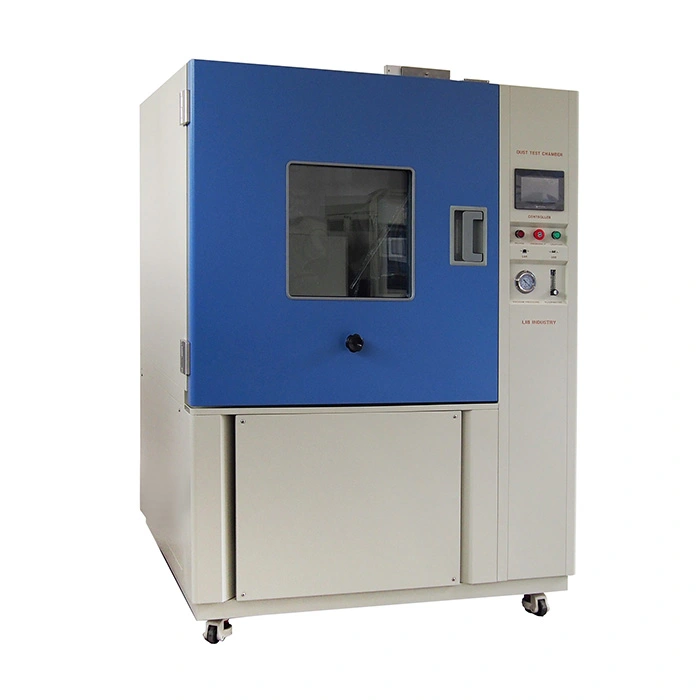
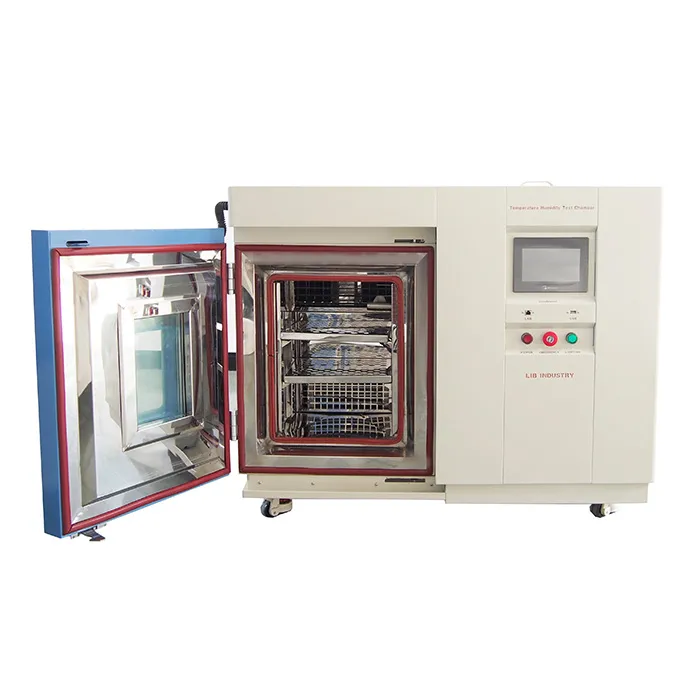
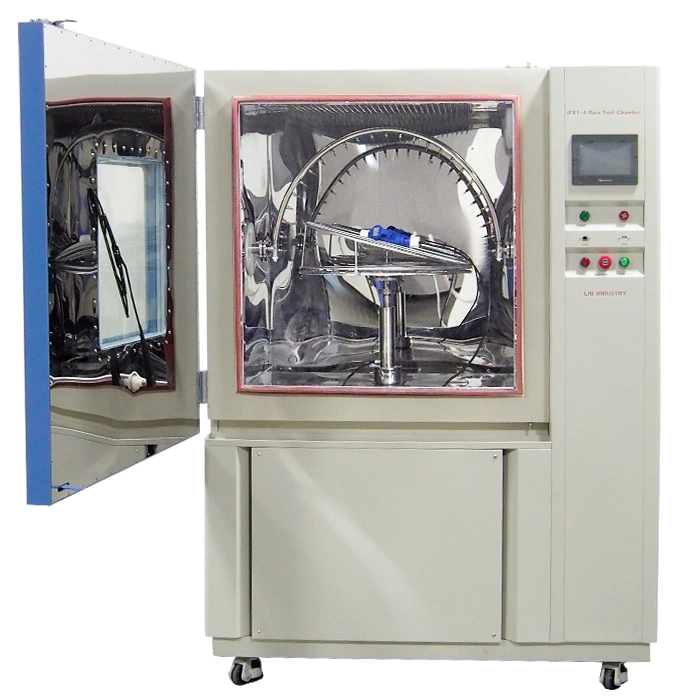
Since 2009, LIB industry has specialized in environmental simulation equipment for customers worldwide, serving industries including automotive, electronics, aerospace, batteries, defense, and industrial manufacturing.Its product range covers temperature and climate chambers, corrosion chambers, dust and water ingress chambers, weathering chambers, and special test chambers for different environmental conditions.
LIB industry provides more than just a walk-in environmental chamber. Each project includes technical consultation, customized chamber design, production according to required parameters, calibration, commissioning, international delivery, on-site installation, and operator training to ensure smooth project implementation.
Custom sizes for large samples and batch testing
Stable temperature and humidity control
Reinforced structures for heavy loads
Modular or integral walk-in chamber options
Flexible configurations for temperature, humidity, dust, rain, corrosion, and other environmental tests
Support for MIL-STD-810H-related testing
3-year warranty and lifetime technical support
For laboratories performing batch testing and continuous reliability programs, long-term stability and service support are essential. LIB industry provides a 3-year warranty, lifetime technical support, and continuous after-sales service to help reduce downtime and maintain reliable environmental testing performance throughout the product life cycle.
The chamber should fit the largest sample, fixture, cart, and handling space while leaving enough clearance for airflow. For batch testing, calculate the real loaded layout instead of only comparing total chamber volume.
Yes. A walk-in environmental chamber is often used for batch reliability testing when many samples must run under the same temperature and humidity profile. Sample spacing and airflow design are key to repeatable results.
A reach-in chamber is better for smaller parts and lower sample quantities. A walk-in chamber is used for large assemblies, heavy loads, full systems, or high-volume batch testing that needs more internal space and flexible loading.
MIL-STD-810H Method 503.7 defines temperature shock as an air temperature change greater than 10°C within one minute. It also gives procedure options, transfer-time limits, stabilization guidance, and shock-cycle requirements that affect chamber selection.
Prepare sample size, weight, quantity, heat load, test standard, temperature range, humidity range, ramp rate, test duration, power-on condition, loading method, site dimensions, power supply, drainage, and installation access.
 English
 русский
 français
 العربية
 Deutsch
 Español
 한국어
한국어 italiano
 tiếng việt
 ไทย
ไทย Indonesia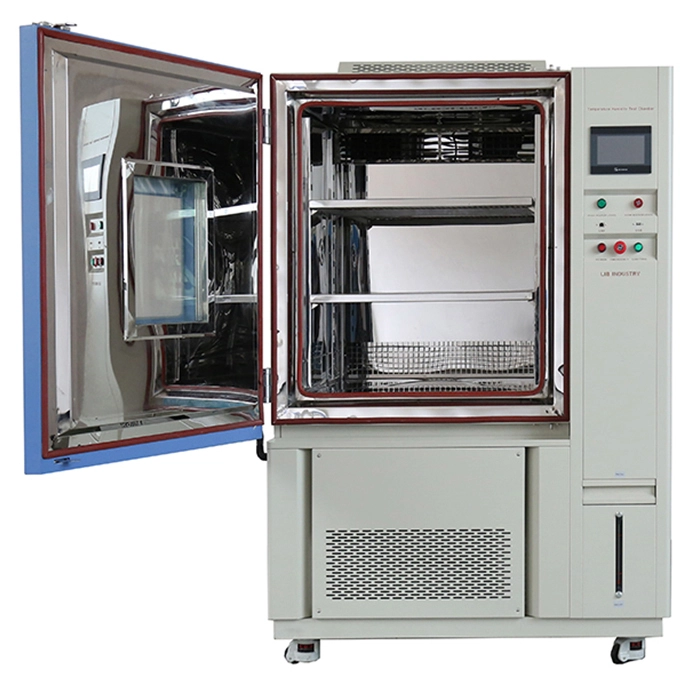
.png "Walk-In_Environmental_Chamber_Buying_Guide_for_Large_Samples,_Batch_Testing,_and_MIL-STD-810H_Applications_(1).png")
.png "Walk-In_Environmental_Chamber_Buying_Guide_for_Large_Samples,_Batch_Testing,_and_MIL-STD-810H_Applications_(4).png")