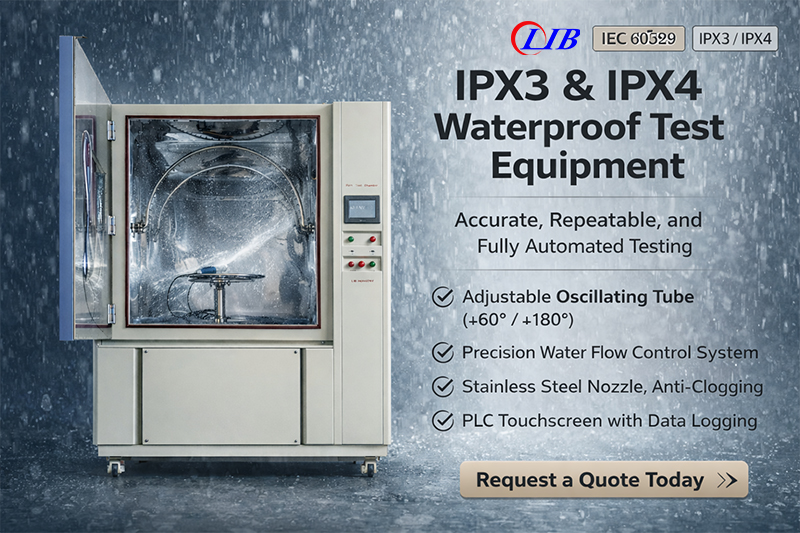
In today’s competitive global market, waterproof performance is no longer optional—it is a basic requirement for product quality and certification. From consumer electronics and wearable devices to automotive components and outdoor lighting, exposure to rain and splashing water is unavoidable in real-world environments.
Without proper IPX3 or IPX4 waterproof testing, products face serious risks:
Failure to meet IEC certification requirements
Increased warranty claims and product returns
Damage to brand reputation in international markets
IPX3 (rain-proof) and IPX4 (splash-proof) represent the most widely applied and essential ingress protection levels under IEC standards. Choosing compliant and precise IPX4 test equipment is the first step toward ensuring product durability and market access.
 |
|
Both IPX3 and IPX4 are defined under IEC 60529, but they differ significantly in test coverage and severity.
| Test Item | Oscillating Tube Angle | Water Exposure | Test Duration |
|---|---|---|---|
| IPX3 | ±60° from center | Simulated rainfall | 10 minutes |
| IPX4 | ±180° full coverage | Splashing from all directions | 10 minutes |
IPX4 testing is more demanding because water is sprayed from all directions, not just limited angles. This creates a much harsher environment for seals, enclosures, and joints.
Two primary methods are used:
Oscillating Tube Method (most common)
Handheld Spray Nozzle Method
For laboratory consistency and automation, the oscillating tube system is the preferred choice, especially for repeatable industrial testing.
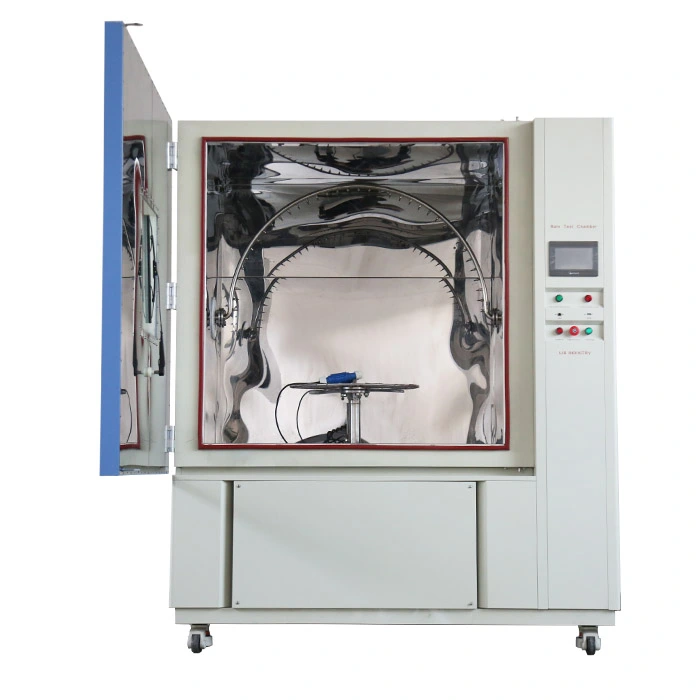
Selecting the right IPX3/IPX4 test equipment is critical. A well-designed system ensures compliance, repeatability, and long-term reliability.
| 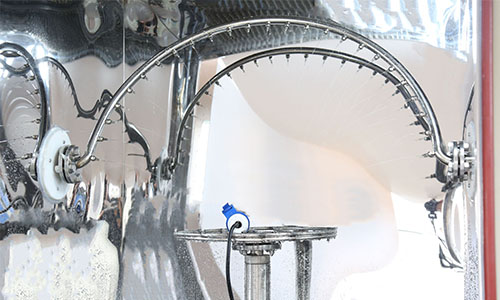 |
| |
Workroom | oscillating tube | Build-in Lighting | |
| 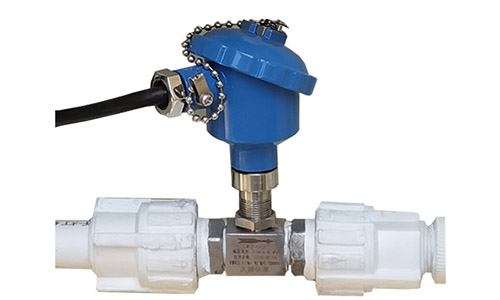 |  | |
| Turnbale | Flowmeter | Built-in waterproof power supply | |
A high-quality system should support multiple test angles, including:
15°, 30°, 60°, 90°, and 180°
Automatic switching between IPX3 and IPX4 modes
This flexibility allows one system to cover multiple protection levels efficiently.
This is one of the most critical yet often overlooked factors.
A reliable IPX4 test equipment must include:
Automatic water pressure regulation
Real-time flow monitoring
Compliance with IEC 60529 flow tolerance requirements
Without stable flow control, test results become inconsistent and invalid.
The quality of spray nozzles directly affects test accuracy.
Look for:
Stainless steel construction
Laser-drilled отверстия (precise hole diameter)
Anti-corrosion and anti-clogging design
This ensures uniform water distribution and long-term stability.
For powered testing (live testing), cable management is critical.
Advanced systems include:
Rotating turntable with adjustable speed
Built-in slip ring system to prevent cable twisting
Continuous power supply during testing
This is especially important for electronics and automotive components.
Choosing the correct tube radius depends on your product size.
Typical options include:
R200 / R400 → Small electronics
R600 / R800 → Medium-sized products
R1000+ → Large equipment or assemblies
Selecting the wrong radius can lead to uneven water impact and inaccurate results.
Modern IPX4 test equipment should feature:
PLC + touchscreen interface
Programmable test cycles
Data logging and export
Real-time display of pressure, flow, and duration
Automation improves efficiency and reduces operator error.
Challenge: Limited lab space and high-volume testing
Solution: Compact IPX4 test chamber with multi-position fixtures
This setup maximizes space utilization while maintaining testing efficiency.
Challenge: Large product size and strong water exposure requirements
Solution: Large-radius oscillating tube system with optimized drainage design
Efficient drainage prevents water accumulation and ensures continuous testing.
Challenge: Multi-environment testing (temperature + water)
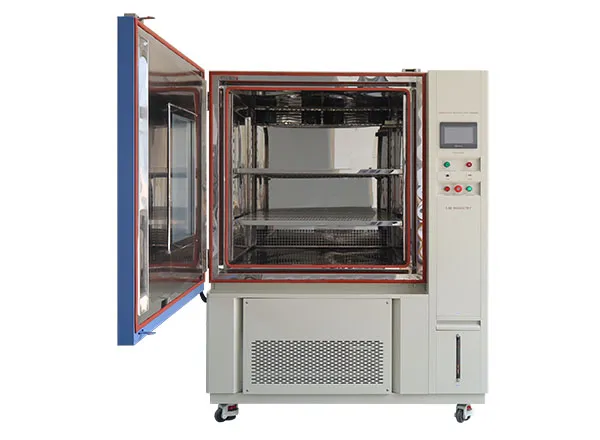
Solution: Integration of IPX4 testing with environmental chambers
This enables combined testing such as high/low temperature with water exposure, simulating real-world conditions more accurately.
Not true. Oversized tubes can reduce water impact consistency.
Always match the radius to your product dimensions.
Without proper filtration:
Nozzles can clog
Scale buildup affects flow rate
Test results become unreliable
A built-in filtration system is essential for long-term operation.
Even the best equipment will fail in a poorly designed lab.
Ensure:
Adequate drainage capacity
Anti-backflow design
Floor slope optimization
Not all machines on the market are truly compliant.
Key questions to ask:
Does the system meet IEC 60529 calibration requirements?
Is there verification or validation documentation?
Can the manufacturer provide test reports?
Compliance is not just about function—it’s about verified accuracy.
The main difference lies in water exposure coverage.
IPX3 protects against water sprayed at angles up to ±60°, simulating rainfall, while IPX4 provides protection against water splashing from all directions (±180°). This makes IPX4 a more stringent waterproof test level.
According to IEC 60529, the standard IPX4 waterproof test duration is 10 minutes. However, in practical applications, the duration may be extended depending on product requirements, testing standards, or customer specifications.
Yes. A well-designed IPX3/IPX4 test equipment can perform both tests by adjusting the oscillating tube angle and test parameters. This dual-function capability improves efficiency and reduces equipment investment.
Explore more waterproof testing solutions to cover all IP rating requirements from IPX1 to IPX9K.
To meet higher waterproof protection requirements and broader testing applications, you may also be interested in the following solutions:
Designed to simulate high-pressure water jets, IPX5 X6 water jetting chamber evaluates product resistance under more extreme water exposure conditions. It is widely used for automotive parts, outdoor equipment, and industrial electronics.
This water immersion tank system is used for testing waterproof performance under immersion conditions, including temporary or continuous submersion. Ideal for devices such as smart wearables, sensors, and sealed electronic components.
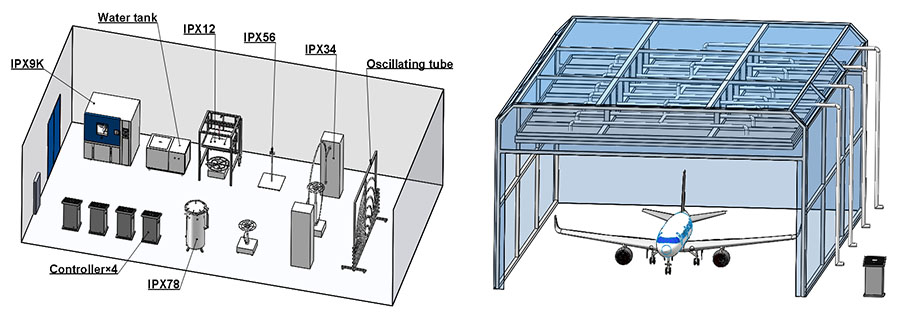
A fully integrated solution covering IPX1 to IPX9K testing, combining rain, splash, jet, and immersion tests into a comprehensive system. Suitable for laboratories and manufacturers requiring full compliance with IEC 60529.
Looking for a reliable IPX4 test equipment supplier?
Download detailed technical datasheets
Request a demo video
Get a free customized testing solution
Contact LIB industry today to optimize your waterproof testing system and ensure your products meet the highest quality standards.
 English
 русский
 français
 العربية
 Deutsch
 Español
 한국어
한국어 italiano
 tiếng việt
 ไทย
ไทย Indonesia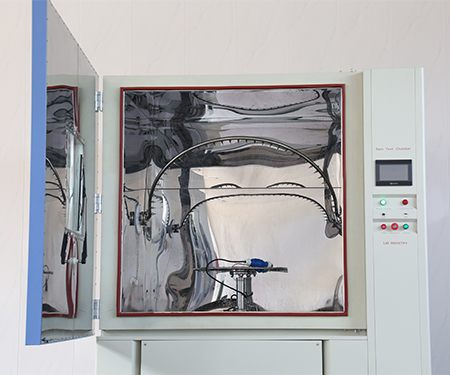




.webp "Coil Steel Sunshine Carbon Arc Weathering Tester")