In today’s global manufacturing landscape, outdoor durability is no longer optional—it is a requirement for market access. Products exposed to sunlight, moisture, and fluctuating temperatures must demonstrate long-term resistance to environmental degradation. If materials fail to meet internationally recognized testing standards, they risk rejection by clients, certification bodies, and regulatory markets.
Standards such as ASTM G154 and ISO 4892-3 define how accelerated UV aging tests should be conducted to ensure reliable and repeatable results. At the center of these standards is the use of 340nm UVA light, which plays a critical role in simulating real-world sunlight damage.
This article explores how UVA 340nm aging machines help manufacturers meet these standards, control critical parameters, and achieve accurate, compliant test results.
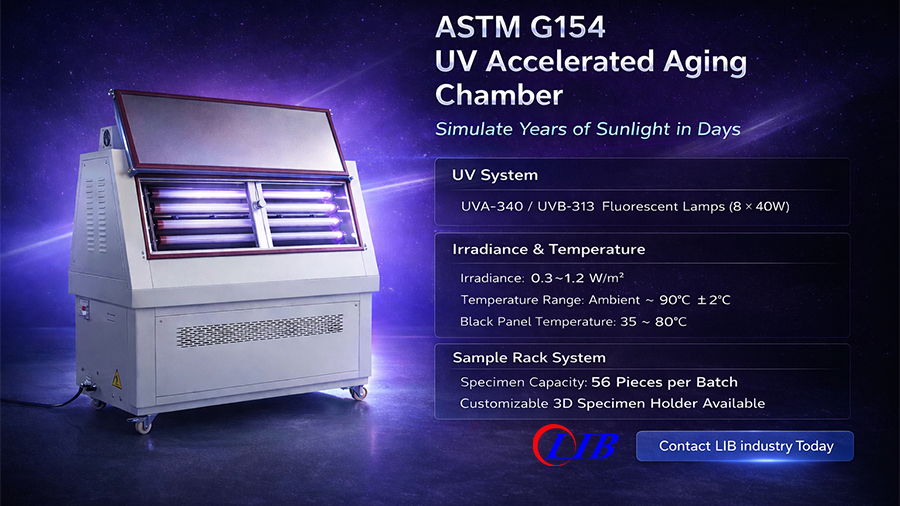
To achieve compliance, it is essential to understand the requirements of the two most widely used UV aging standards.
ASTM G154 is the most commonly used standard for testing non-metallic materials such as coatings, plastics, and rubber. It specifies the use of fluorescent UV lamps, particularly UVA-340, to simulate sunlight exposure.
One of the most widely used test procedures is Cycle 1, which includes:
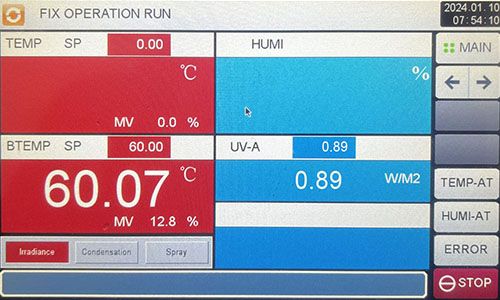
8 hours UV exposure at 0.89 W/m²/nm @340nm
4 hours condensation (moisture simulation)
This cycle replicates the combined effects of sunlight and nighttime moisture, accelerating material degradation in a controlled environment.
ISO 4892-3 focuses on plastics and defines methods for UV exposure using fluorescent lamps. It includes multiple methods (such as Method A) that specify lamp types, irradiance levels, and environmental conditions.
Compared to ASTM G154, ISO 4892-3 provides more detailed control over test parameters, ensuring consistency for plastic materials across different laboratories.
Together, these standards form the global benchmark for accelerated UV weathering testing.
The effectiveness of any UV aging test depends heavily on the light source. UVA-340 lamps are specifically designed to reproduce the most damaging portion of natural sunlight.
Within the Ultraviolet radiation, the wavelength range between 295nm and 360nm is responsible for the majority of photochemical degradation in materials. The 340nm peak closely matches this critical region.

Compared to UVB lamps, UVA-340 offers several advantages:
More realistic simulation of natural sunlight
Reduced over-acceleration, preventing unrealistic damage
Higher correlation with outdoor exposure results
Because of these benefits, UVA-340 is the preferred—and often required—light source in ASTM G154 and ISO 4892-3 testing.
To meet standard requirements, a UV aging machine must precisely control several key parameters:
The standard irradiance level is typically 0.89 W/m²/nm at 340nm. This parameter directly affects the rate of material degradation and must be accurately maintained through closed-loop control.
Black panel temperature simulates the actual surface temperature of materials under sunlight. Typical test ranges are 50°C to 70°C, depending on the standard and application.
Moisture plays a critical role in real-world aging. Standards define two main methods:
Condensation: Simulates dew formation
Water spray: Simulates rain exposure
Different standards and applications require different combinations of these conditions.
Parameter | Specification |
| Model | UV-SI-260 |
Irradiance (UV Intensity) | 0.68–0.89 W/m²/nm @340nm, ±5% stability, closed-loop control |
| Irradiance Control | 0.3~20 W/㎡ |
Black Panel Temperature (BPT/BST) | 35 ~ 80 ℃ adjustable, ±0.5 °C accuracy |
Moisture Simulation | Condensation and programmable water spray, adjustable cycles |
Lamp Configuration | 8 U.S.-made QUV fluorescent lamps (UVA-340, UVB-313, UVB-351), freely configurable |
Lamp Lifespan | Up to 5000 hours |
Spectral Range | 290–400 nm, precise and stable output |
Chamber Size | Customizable per testing requirement |
| Specimen Holder Size(mm) | 75*150 |
| Specimen Capacity | 56 Pieces |
Precise control of these parameters is essential to ensure valid, repeatable, and standard-compliant results.
Even when following standards, several common issues can affect test accuracy:
Lamp aging: UV output decreases over time, requiring regular irradiance calibration
Non-uniform irradiance: Poor chamber design can lead to inconsistent exposure across samples
Improper sample placement: Uneven positioning can distort results
Environmental interference: External temperature fluctuations may impact test stability
These challenges highlight a critical point:
The reliability of your test results depends heavily on the quality of your aging equipment.
To overcome these challenges and ensure accurate testing, LIB industry provides advanced UVA 340nm aging machines specifically engineered for ASTM G154 and ISO 4892-3 compliance.
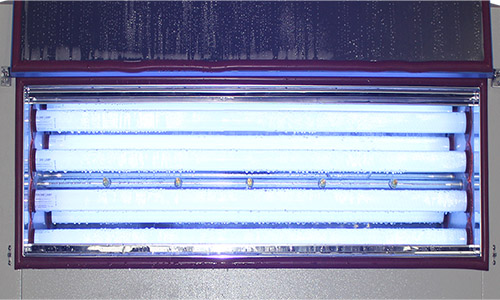
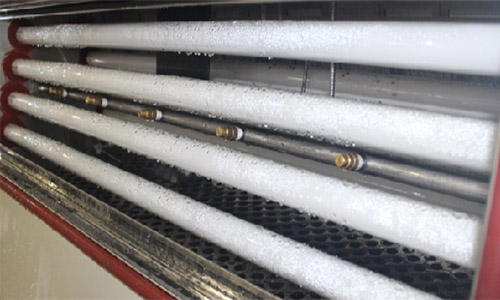
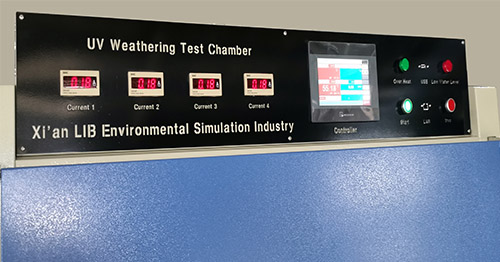
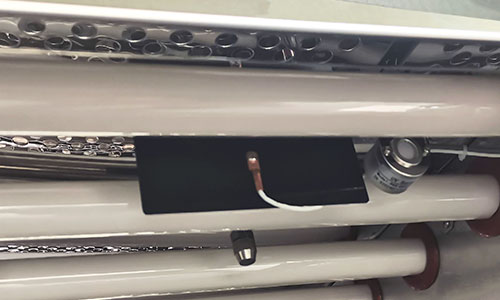
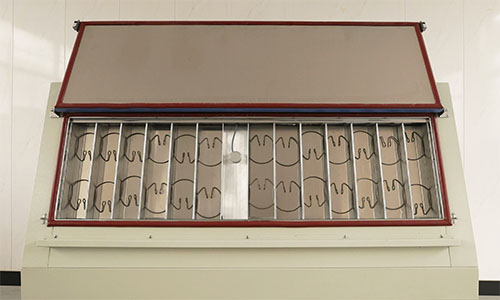
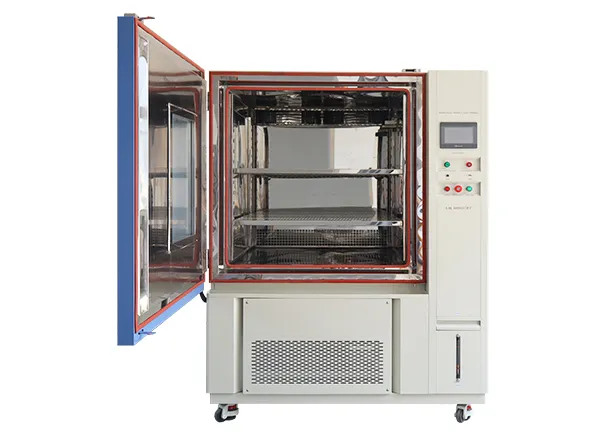
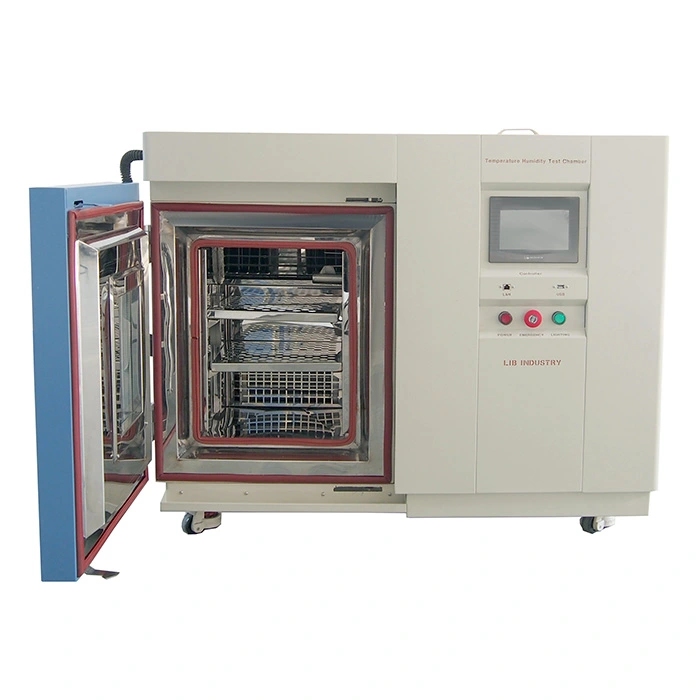
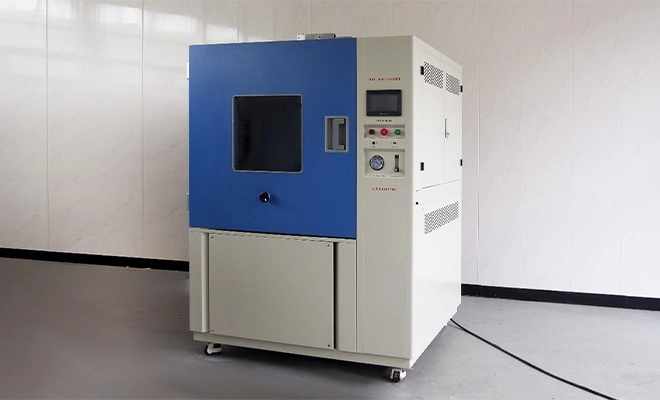
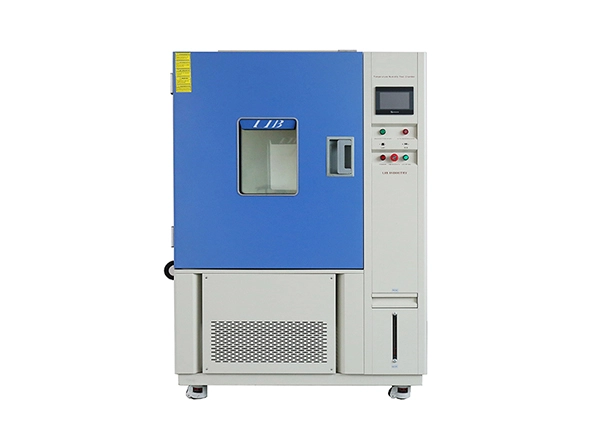
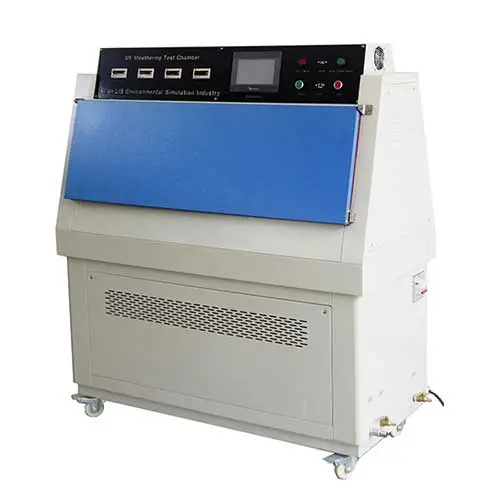
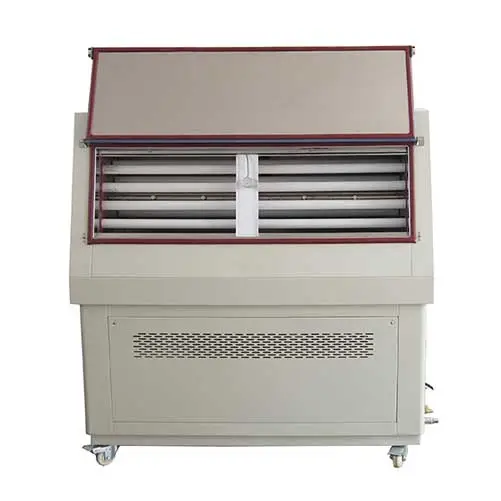
The LIB UV Test Chamber is engineered for accelerated weathering tests, accurately simulating the effects of UV radiation, temperature, humidity, and rain on materials and products. It features eight U.S.-made QUV fluorescent lamps, including UVA-340, UVB-313, and UVB-351, which can be freely configured to suit different testing requirements. These lamps deliver precise and stable spectral output across 290–400 nm and offer a long lifespan of up to 5,000 hours, ensuring consistent and repeatable test results every time.
 |  |
|
|
|
|
Programmable Test Cycle Controller |
Customizable Sample Holder |
LIB industry systems are fully aligned with international testing standards, featuring:
Pre-programmed ASTM G154 cycles (including Cycle 1)
Configurable ISO 4892-3 test methods
UVA-340 lamp integration as standard
This ensures users can perform compliant testing without complex manual setup.
Accurate parameter control is critical for valid results. LIB industry chambers offer:
Automatic irradiance control with real-time feedback
High-precision temperature control (±0.5°C)
Stable and repeatable condensation systems
These features guarantee consistent testing conditions across long test durations.
LIB industry focuses on minimizing test variability through advanced engineering:
Uniform UV light distribution across all samples
Optimized lamp arrangement for consistent exposure
Durable construction for long-term operation
This reduces the risk of uneven aging and improves data reliability.
Different industries require different testing conditions. LIB industry offers flexible customization, including:
Adjustable irradiance ranges
Custom chamber sizes
Programmable test cycles for specific standards or applications
Tailored solutions ensure that each customer can meet both standard requirements and unique product testing needs.
Meeting standards such as ASTM G154 and ISO 4892-3 is not just about obtaining certification—it is about ensuring long-term product performance and protecting brand reputation.
By using 340nm UVA aging machines, manufacturers can accurately simulate real-world environmental conditions, reduce testing errors, and generate reliable data for product validation.
LIB Industry UVA-340 Aging Machines – After-Sales Highlights:
3-Year Warranty & Lifetime Support
English-Speaking Service Team
Fast Response: 5×12 Hours
Global Service Centers & 30+ Partners
Contact LIB industry today to get a customized UV aging test solution that meets ASTM and ISO standards and ensures your products are ready for global markets.
 English
 русский
 français
 العربية
 Deutsch
 Español
 한국어
한국어 italiano
 tiếng việt
 ไทย
ไทย Indonesia