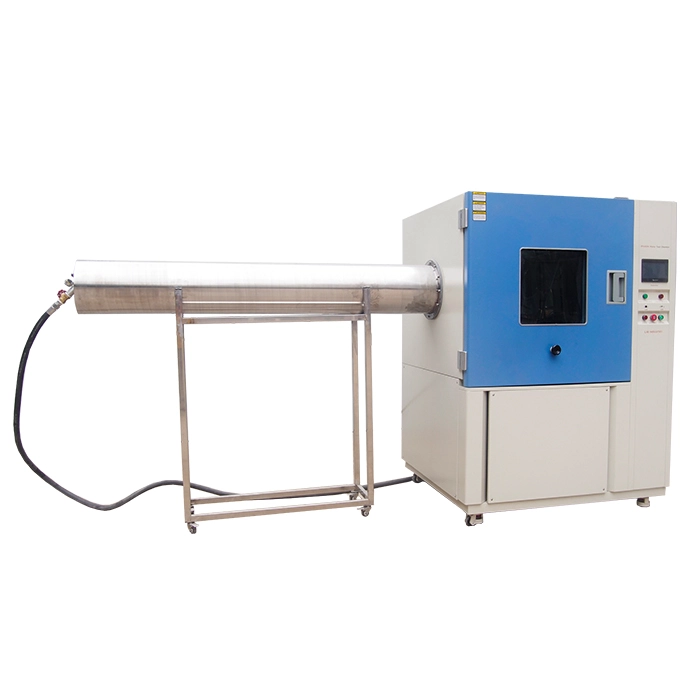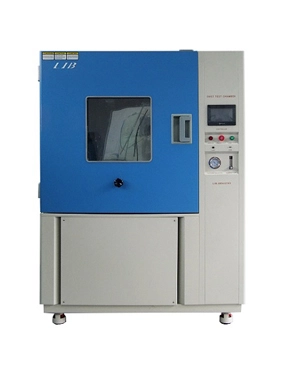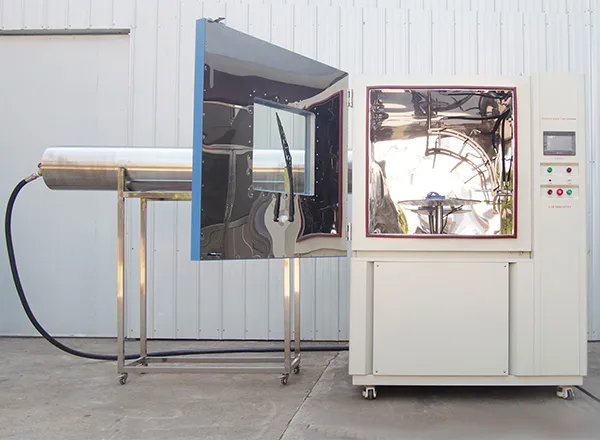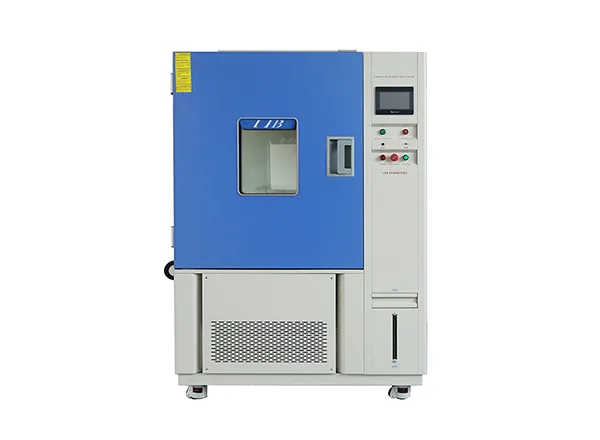
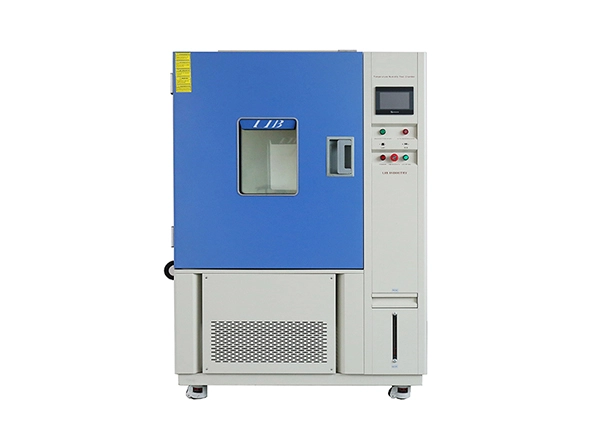
When selecting an Aerospace Rapid Temperature Change Chamber for powered avionics testing, temperature range and chamber volume are only the basic considerations. Modern avionics systems, including flight computers, communication modules, radar units, and power control equipment, generate heat during operation. Therefore, the chamber must simulate extreme temperature environments while also removing heat from energized test specimens and maintaining the required temperature change rate.
A suitable rapid temperature change chamber should be evaluated based on the actual test profile, including DUT heat generation, temperature ramp requirements, airflow performance, refrigeration capacity, and aerospace qualification standards.
LIB industry designs customized rapid temperature change chambers for aerospace electronics and reliability testing applications, helping engineers verify product performance under realistic operating conditions.
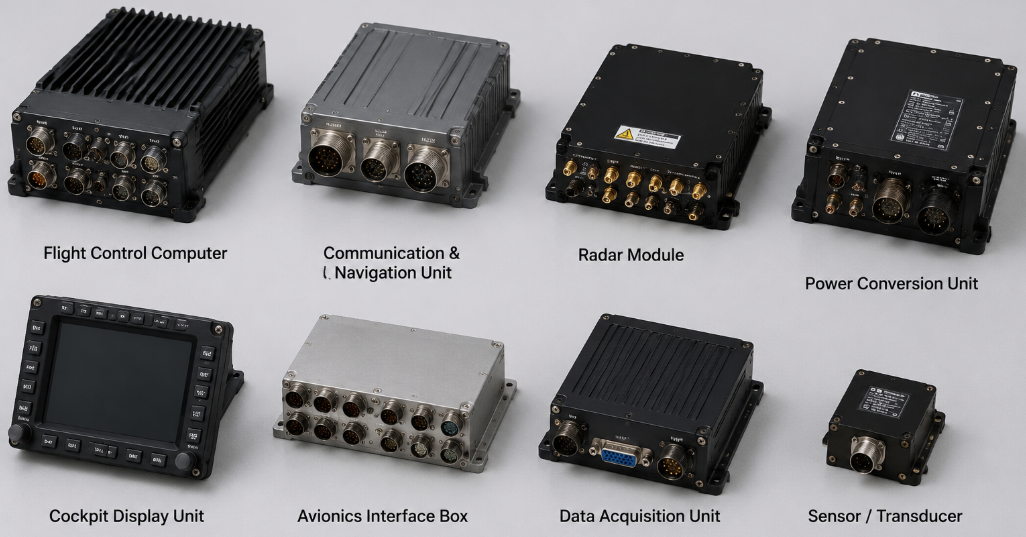
Powered avionics testing is more challenging than testing passive components because the equipment under test becomes a heat source during operation.
A powered flight computer or electronic control unit may generate different levels of heat depending on processor workload, communication status, power conversion efficiency, and operating conditions. During a low-temperature ramp, the heat released by the DUT directly affects the chamber’s cooling performance.
The total thermal challenge usually comes from three aspects: the thermal mass of the DUT and fixtures, the continuous heat generated by powered electronics, and the energy required to change the product temperature within the specified time.
This means a chamber that reaches -40°C under empty conditions may not achieve the same temperature transition performance when testing an energized avionics assembly.
For aerospace applications, chamber selection should be based on actual loaded testing conditions instead of only published empty chamber specifications.
.webp) How to Define Requirements for Aerospace Rapid Temperature Change Testing
How to Define Requirements for Aerospace Rapid Temperature Change TestingBefore purchasing a rapid temperature change chamber, engineers should clearly define the complete test profile. Temperature range, temperature change rate, dwell time, product condition, fixture design, and acceptance criteria all influence the final chamber configuration.
The chamber air temperature and DUT temperature should be considered separately. A large aluminum enclosure or high-density electronic assembly may require additional time to reach thermal equilibrium. Therefore, customers should define whether the dwell period begins when the chamber reaches the target temperature or when the DUT temperature sensors become stable.
Temperature ramp rate is another critical factor. A chamber rated at 10°C/min in an empty condition may not provide the same performance with a powered avionics system, heavy fixture, and cable connections.
For example, a more meaningful requirement would be:
“10°C/min average chamber-air cooling rate from +70°C to -40°C with an energized DUT producing 800W heat load.”
This specification allows suppliers to evaluate actual refrigeration capability rather than only comparing nominal parameters.
For aerospace qualification, the required standard should also be considered. RTCA DO-160G Section 5 defines temperature variation requirements for airborne equipment, while MIL-STD-810H Method 503.7 covers temperature shock-related testing. The final chamber configuration depends on the required procedure, temperature profile, and application environment.
Heat load calculation is one of the most important steps when selecting a rapid temperature change chamber for powered avionics testing.
The total cooling requirement can be estimated as:
Qtotal = Qlive + Qmass + Qfixture + Qinfiltration + Qauxiliary
The calculation includes heat generated by powered equipment, energy required to change the temperature of the DUT and fixtures, heat leakage from the environment, and additional system losses.
For temperature ramp testing:
Qmass = m × cp × ΔT ÷ t
where:
m represents product and fixture mass
cp represents specific heat capacity
ΔT represents temperature difference
t represents transition time
For example, an 18kg aluminum-equivalent DUT and fixture cooling from +55°C to -40°C at 10°C/min requires significant cooling capacity. If the avionics system generates additional heat during operation, the refrigeration system must handle both the temperature transition load and continuous heat output.
This is why a powered DUT generating 800W does not simply require an 800W cooling system. The chamber must also compensate for low-temperature refrigeration losses, fixture thermal mass, cable heat conduction, and chamber heat leakage.
A professional supplier should evaluate cooling performance at the actual operating point, especially under the lowest temperature condition.
Many environmental chambers can achieve impressive specifications under empty chamber conditions. However, aerospace testing is performed with real products, real fixtures, powered electronics, and connected instrumentation.
The most difficult condition often occurs near the end of a low-temperature ramp. At this stage, refrigeration capacity decreases while the DUT continues generating heat. If the chamber is not correctly sized, the result may be a slower ramp rate, unstable temperature control, or extended test time.
When evaluating a rapid temperature change chamber, customers should confirm:
Loaded temperature ramp performance
Cooling capacity at the lowest temperature
Continuous holding capability
Recovery performance after door opening or operating mode changes
Airflow design is also essential. Large fixtures, cable bundles, or multiple assemblies can restrict circulation and create temperature differences inside the workspace. Proper sensor placement and airflow validation help ensure repeatable test results.
For powered avionics applications, the chamber should also include suitable safety and monitoring functions, such as independent temperature protection, cable access ports, data recording, and controlled shutdown functions.
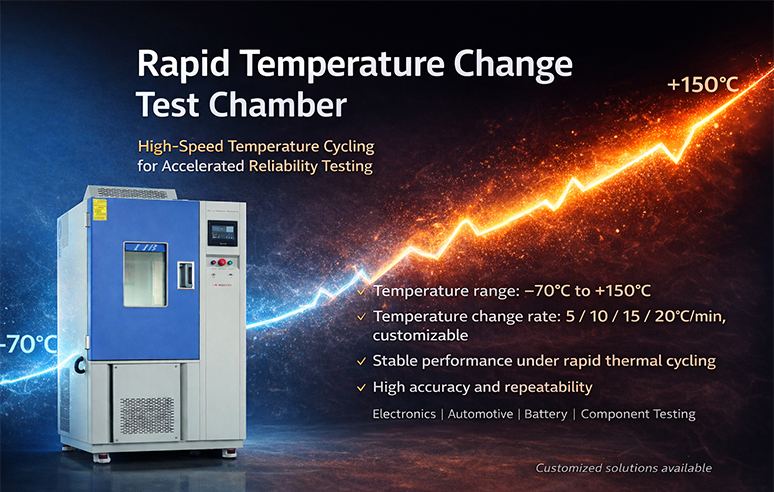
LIB industry provides aerospace rapid temperature change chambers designed for electronic reliability testing, temperature cycling, and demanding environmental simulation applications.
The chambers are available in multiple workspace sizes and configurations to match different DUT requirements.
| Item | Specification |
|---|---|
| Workspace volume | 100L, 225L, 500L, 800L, 1000L |
| Temperature range | -20°C to +150°C / -40°C to +150°C / -70°C to +150°C |
| Temperature change rate | 5°C/min, 10°C/min, 15°C/min, customized up to 20°C/min |
| Temperature fluctuation | ±0.5°C |
| Temperature deviation | ±2.0°C |
| Heat load capability | 1000W or customized according to requirements |
 | |
|
|
|
| Robust Workroom | Cable Hole | Temperature and Humidity Sensor |
LIB rapid temperature change chambers are designed according to real testing requirements rather than only standard empty chamber performance.
The system can be customized with suitable refrigeration capacity, airflow design, cable ports, data acquisition functions, and safety protection according to the DUT condition.
For powered avionics testing, LIB engineers can review product heat dissipation, fixture structure, required ramp rate, and applicable aerospace standards before recommending the appropriate chamber configuration.
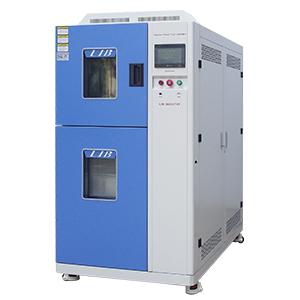
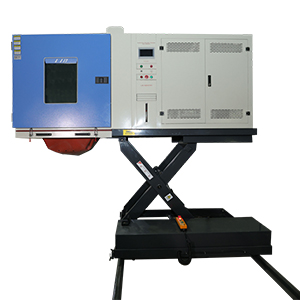
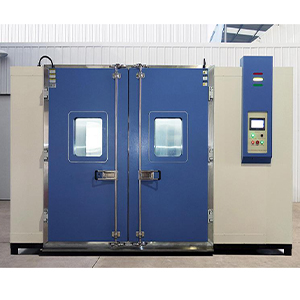
LIB industry provides complete environmental simulation solutions beyond rapid temperature change chambers.
Temperature & Humidity Test Chamber Aerospace electronics reliability and environmental aging testing |
Extreme temperature transition and thermal shock evaluation |
Temperature Vibration Test Chamber Combined temperature and vibration testing for aerospace equipment |
Walk-in Environmental Test Chamber Large aerospace assemblies and complete equipment validation |
These systems can be integrated into a complete reliability testing program for aerospace components, electronic systems, and advanced materials.
Heat load should include DUT power consumption, product and fixture thermal mass, temperature transition requirements, cable conduction, and chamber losses. The final chamber capacity should be verified under actual loaded testing conditions.
Yes. LIB rapid temperature change chambers can be configured for temperature cycling and related environmental testing applications based on MIL-STD-810H requirements. The final configuration depends on the required test procedure and temperature profile.
Customers should provide the required temperature range, ramp rate, DUT dimensions, product weight, heat dissipation, fixture details, operating conditions, and applicable testing standards. LIB engineers can then recommend a suitable chamber design based on the complete test requirement.
LIB provides a three-year warranty for environmental test chambers, covering manufacturing defects and equipment quality issues.
After the warranty period, LIB continues to provide lifetime technical support. Customers only need to cover replacement parts when required.
LIB also provides remote troubleshooting, technical consultation, and long-term service support to help customers maintain stable equipment operation.
Yes. LIB provides one-stop installation and commissioning support for customers.
The service includes equipment setup guidance, operation training, parameter configuration, performance verification, and technical assistance after delivery.
Through complete project support from requirement analysis to installation and training, LIB helps customers quickly put environmental test equipment into operation.
Selecting the right rapid temperature change chamber requires more than comparing temperature range and chamber size.
The chamber must match the actual powered DUT condition, heat load, temperature profile, airflow requirements, and aerospace testing standards.
With years of experience in environmental simulation testing, LIB industry provides customized chamber solutions, professional engineering support, three-year warranty, and lifetime service assistance for customers worldwide.
Contact LIB industry to discuss your aerospace rapid temperature change chamber requirements.
 English
 русский
 français
 العربية
 Deutsch
 Español
 한국어
한국어 italiano
 tiếng việt
 ไทย
ไทย Indonesia


.webp "Walk In Mixed Noxious Gas Chamber")
.webp "SAE J2334 Cyclic Corrosion Chamber for Automotive")