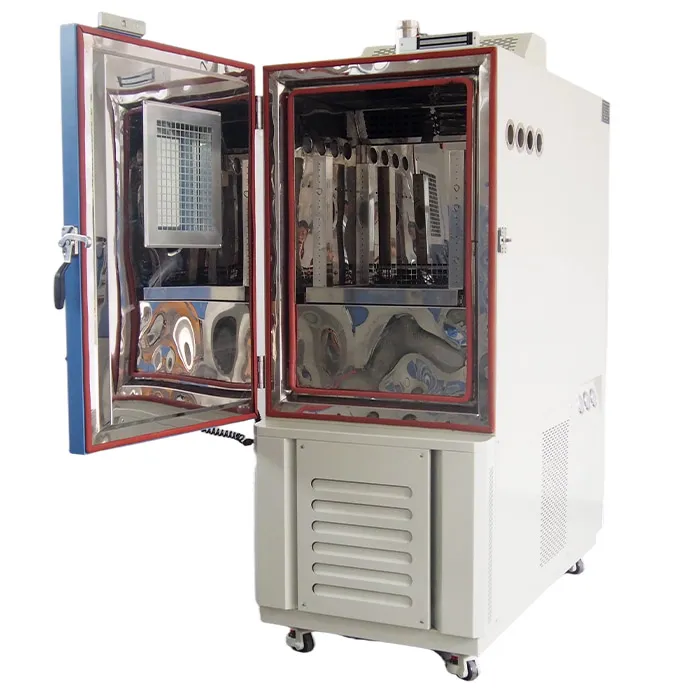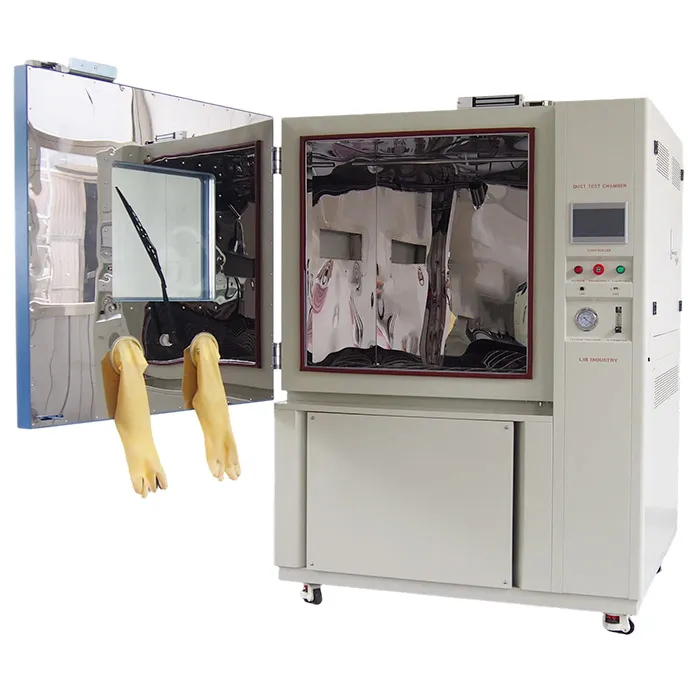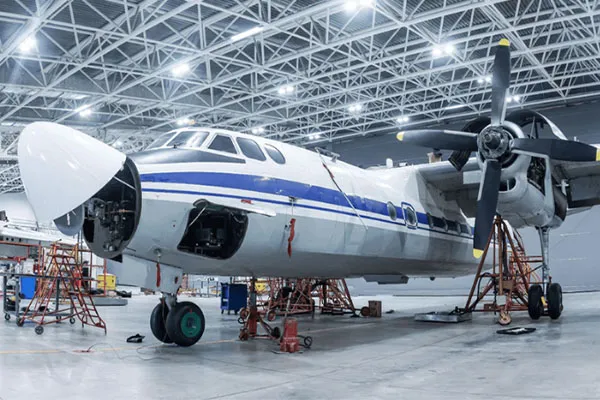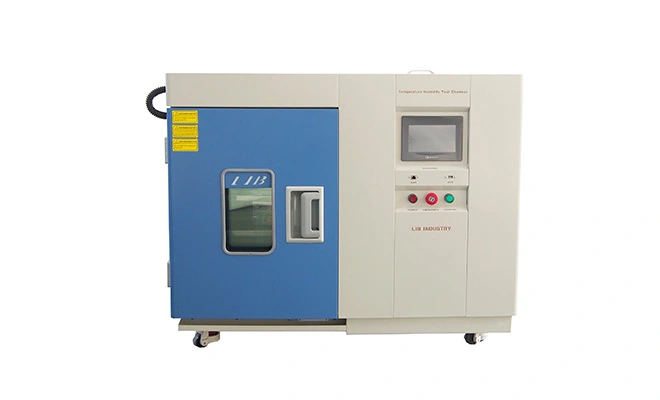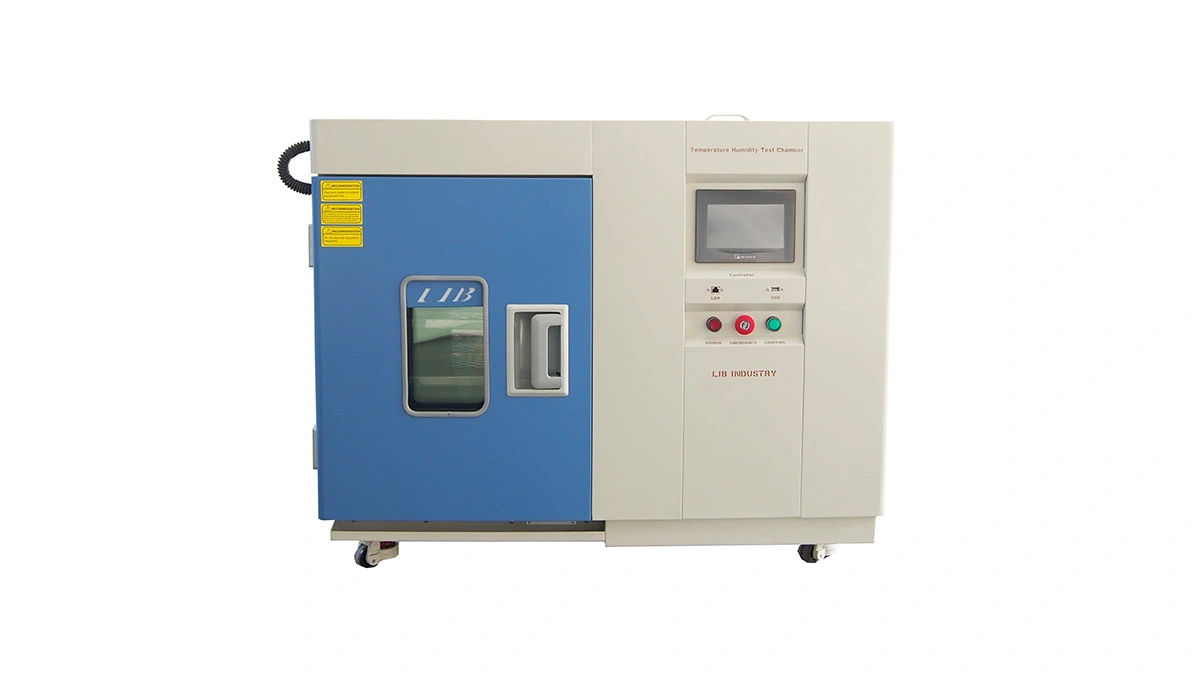
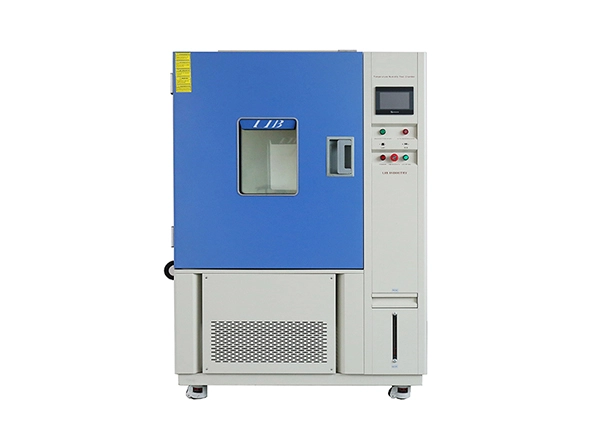
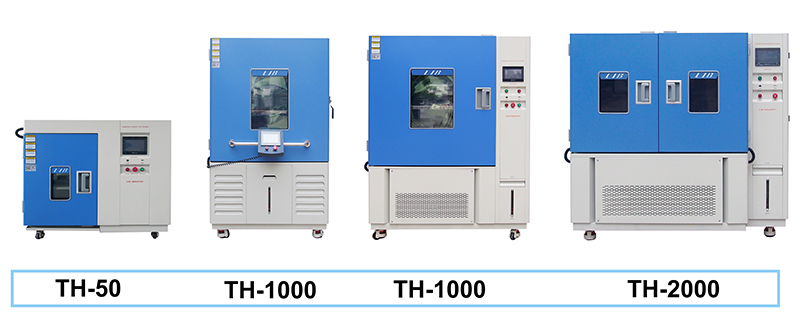
Electronics teams, component suppliers, battery developers, and materials engineers often need thermal data before full validation. A portable thermal chamber gives controlled temperature and humidity in a compact footprint, while a traditional environmental chamber is better suited for larger test samples, heavy test fixtures, and validating large batches of samples.
| benchtop environmental chamber mini temperature humidity chambers Mini Temperature Humidity Environmental Control Chambers | |||||
Environmental test chambers are used by engineers to verify products before customer delivery. They can be programmed to simulate heat, cold, humidity, and temperature cycling. But reliable data depends on more than the setpoint — airflow, sensor location, heat load, cable routing, sample spacing, and recovery time all matter just as much.
A chamber answers practical questions: Will a PCB start at -40°C? Will a connector drift after damp heat? Will a seal harden after dry heat storage? For small parts, the chamber must hold stable conditions without eating up lab space you don't have.
 A portable thermal chamber is a compact temperature or temperature-humidity chamber built for benchtop or limited-space testing. It's used for electronic assemblies, sensors, modules, material coupons, connectors, and R&D samples.
Portable chambers fit cases where the sample is small, the profile is clear, and the team needs fast access. Common work includes early design screening, small-batch inspection, thermal aging of connectors or PCBs, failure reproduction after field returns, and engineering tests near production.
LIB portable thermal chambers hit some tight numbers:
Temperature: -20°C / -40°C / -70°C up to +150°C
Humidity: 20% to 98% RH
Control accuracy: ±0.5°C fluctuation, ±2.0°C deviation, ±2.5% RH deviation
That last part matters most. Repeatable testing depends on tight control — not just a wide range on a spec sheet.
A traditional environmental chamber usually means a larger reach-in, walk-in, or custom chamber built for higher sample volume, heavier products, or broader environmental simulation.
Traditional chambers are necessary when specimen size, quantity, or the governing standard demands more internal volume. Automotive subassemblies, aerospace hardware, packaged equipment, and high-power electronics often need a larger air volume so the sample doesn't dominate the chamber environment. A portable chamber may cycle faster, but a large chamber can process more parts under the same exposure.
Cost isn't only purchase price. Floor space, power, commissioning, calibration, maintenance access, operator time, and chamber availability all affect the real budget.
A portable thermal chamber usually costs less to buy, install, and place. Why? It runs on a compact workroom and a smaller refrigeration system. That makes it the better financial fit for:
R&D
Repair analysis
Small batches
Frequent short tests
A traditional environmental chamber costs more up front — but earns its place when one run needs to validate a large assembly or many samples at once.
One catch: a portable chamber is only cost-effective if the sample fits with enough free airflow around it. If a part blocks circulation, produces a large heat load, or needs many feedthroughs, the data can become unreliable. LIB portable chambers are rated for a 1000 W heat load, with 1°C/min cooling and 3°C/min heating — check these against your sample's actual thermal output before you buy.
Efficiency is about starting a valid test quickly, holding the profile, collecting data, and returning the chamber to the next user.
Portable thermal chambers are strong in short-cycle engineering work. Here's what that looks like in practice:
Place a small assembly inside
Connect a cable through the Φ50 mm cable port
Set a profile on the touch-screen controller
Start the run
No days-long wait to reserve a large chamber. Traditional chambers need more planning — fixtures, shelves, safety review, load balancing.
Portable equipment wins when many small, different tests are needed through the week. A sensor team might run -40°C cold-start checks in the morning, +85°C storage in the afternoon, and humidity exposure overnight — all in the same chamber. A larger chamber wins when the same profile has to be applied to a production lot or a bulky assembly.
The right chamber choice depends on the failure mode. Thermal stress doesn't behave the same way in a solder joint, a battery pack, a rubber seal, or a coated metal part.
Electronics and semiconductor reliability testingSmall boards, chips, relays, connectors, and sensors often need cold start, dry heat, damp heat, and temperature cycling. A portable thermal chamber can reproduce solder-joint cracking, LCD response delay at low temperature, connector resistance drift after humidity exposure, and intermittent reset of powered electronics.
For standard-based work, the exact profile needs to go into the test plan:
IEC 60068-2-1 (cold): -65°C to -5°C, dwell of 2, 16, 72, or 96 hours after temperature stability
IEC 60068-2-2 (dry heat): specified high-temp exposures, same 2/16/72/96-hour durations
IEC 60068-2-78 (damp heat, steady-state): commonly 30°C ±2 K or 40°C ±2 K, at 85% ±3% RH or 93% ±3% RH
Automotive component environmental simulation Automotive parts face parked-vehicle heat, cold starts, under-hood temperature rise, and moisture migration. Small modules, switches, displays, key fobs, sensors, and wire-harness connectors are well suited to compact chamber screening.
But there's a limit: if the profile calls for fast temperature shock, splash water, vibration, or a full vehicle-level part, go with a traditional chamber or combined system instead. A portable chamber's 1°C/min cooling and 3°C/min heating are built for controlled ramp testing — not instant-transfer thermal shock.
Aerospace and material durability validation Aerospace suppliers test dimensional stability, coating behavior, adhesive strength, and electronic response under low or high temperature. MIL-STD-810H temperature methods are tailored to the product's life-cycle environment rather than copied as one fixed recipe. For high-temperature exposure, induced hot conditions can reach 71°C to 85°C in severe solar-related cases.
R&D accelerated aging tests R&D teams value portable chambers because waiting on a large chamber can stall design decisions. Examples include adhesive comparison at +70°C, plastic deformation checks at +85°C, sensor offset drift after 40°C/93% RH exposure, and low-temperature boot tests at -40°C.
No chamber type is universally better. The right choice matches sample size, heat load, profile severity, reporting needs, and lab workflow.
Choose a portable thermal chamber when:
The sample is small and the test load is moderate
Quick access matters more than raw capacity
You're testing compact electronics, small automotive or aerospace components, material coupons, coatings, seals, or adhesives
You're working in an R&D lab with limited floor space
Choose a traditional environmental chamber when:
The sample is bulky, heavy, or high-powered
You're running formal batch validation
You need multiple shelves, walk-in access, or large fixtures
The test involves high heat dissipation, vibration integration, or special safety protection
LIB's portable thermal chamber is built for compact labs that still need precise control. The build:
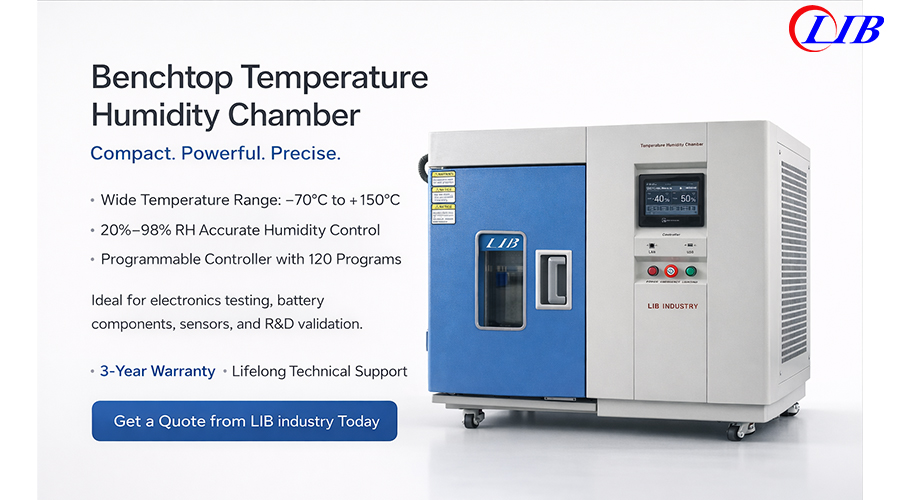
Workroom: SUS304 stainless steel
Exterior: protective-coated steel
Insulation: polyurethane foam and insulation cotton
Cooling: mechanical compression refrigeration system
Safety protections: over-temperature, over-current, refrigerant high pressure, water shortage, earth leakage, humidifier dry burn
| Parameter | Specification |
|---|---|
| Internal volume | 50 L or 80 L |
| Internal dimensions | 320 × 350 × 450 mm or 400 × 400 × 500 mm |
| Overall dimensions | 820 × 1160 × 950 mm or 900 × 1210 × 1000 mm |
| Temperature range | -20°C / -40°C / -70°C to +150°C |
| Humidity range | 20% to 98% RH |
| Control accuracy | ±0.5°C fluctuation; ±2.0°C deviation; ±2.5% RH deviation |
| Ramp rate | 1°C/min cooling; 3°C/min heating |
| Heat load | 1000 W |
| Standard configuration | Φ50 mm cable port with plug; two shelves |
 |  |
These specifications support small-batch reliability testing, powered sample monitoring, compact lab work, and repeatable engineering checks.
Xi'an LIB Environmental Simulation Industry has manufactured environmental test chambers since 2009 — design, production, commissioning, delivery, installation, and training, all in-house. The product range covers temperature and climate chambers, corrosion chambers, dust and water ingress chambers, weathering chambers, and special test chambers.
Quick facts:
56+ countries served
36-month warranty, with lifelong follow-up service
LIB's delivery process: technical discussion → chamber design → production to agreed parameters → performance inspection → three days of continuous commissioning → calibration → report issue → transportation → installation guidance → operator training. The goal is simple — reduce the risk that a technically correct chamber becomes difficult to install, maintain, or use.
A portable thermal chamber is ideal for testing small articles such as compact circuit boards, gives fast engineers a quick check, fits into a very small laboratory, and has moderate capacity for heat removal. A traditional environmental chamber is the safer choice for very large articles, high-volume validation testing with heavy fixtures, and complex environmental testing programs.
The best decision starts with the test profile: temperature range, humidity range, dwell time, ramp rate, sample volume, heat output, cable routing, and standard parameters.
Not sure which chamber fits your test plan? Talk to LIB's engineering team for a spec recommendation, or request a quote for a 50L or 80L portable thermal chamber.
What is a portable thermal chamber used for?
A portable thermal chamber tests small items under hot, cold, and humid conditions. Typical uses include PCB testing, sensor testing, connector aging, material testing, and reproducing field failures on returned parts.
How does a portable thermal chamber differ from a traditional environmental chamber?
A portable thermal chamber is smaller, easier to place in a compact lab, and suited to small samples. A traditional environmental chamber provides larger capacity for bulky products.
Is a benchtop environmental chamber suitable for long-term testing?
Yes — as long as sample size, heat load, humidity range, and dwell time match the chamber's capability. Damp heat profiles such as 40°C and 93% RH need stable humidity control and enough airflow around the sample.
Why choose LIB portable thermal chambers?
LIB's portable thermal chambers are space-saving without giving up precision. They run from -20°C / -40°C / -70°C up to +150°C, hold humidity between 20% and 98% RH, stay within ±0.5°C, and support a 1000 W heat load — enough to protect even temperature-sensitive samples during testing.
 English
 русский
 français
 العربية
 Deutsch
 Español
 한국어
한국어 italiano
 tiếng việt
 ไทย
ไทย Indonesia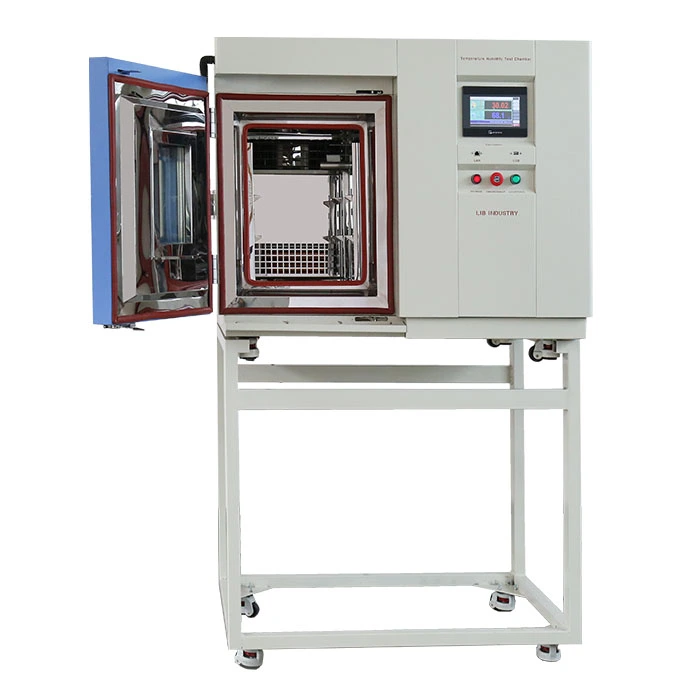
.webp "Walk In Mixed Noxious Gas Chamber")