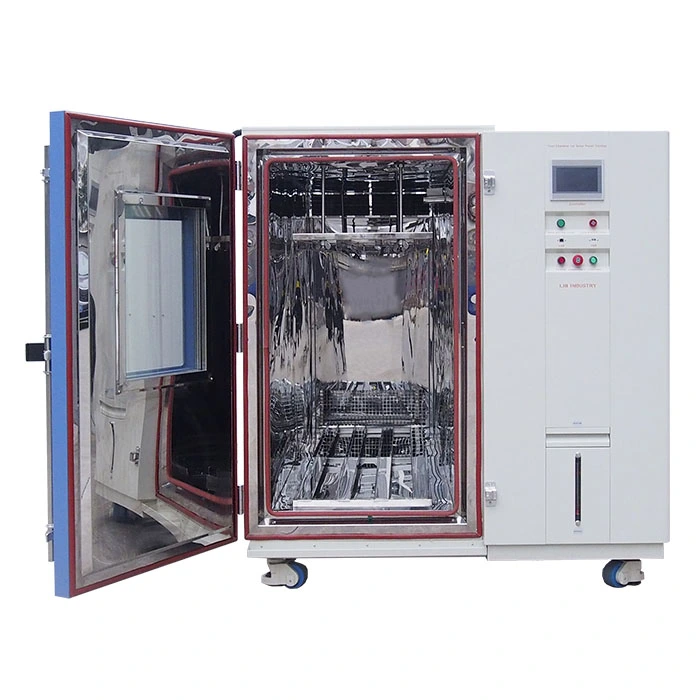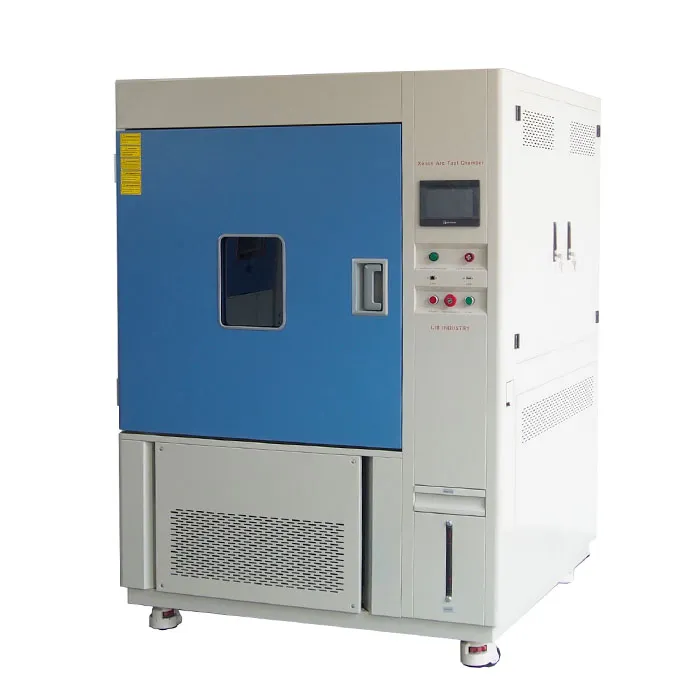
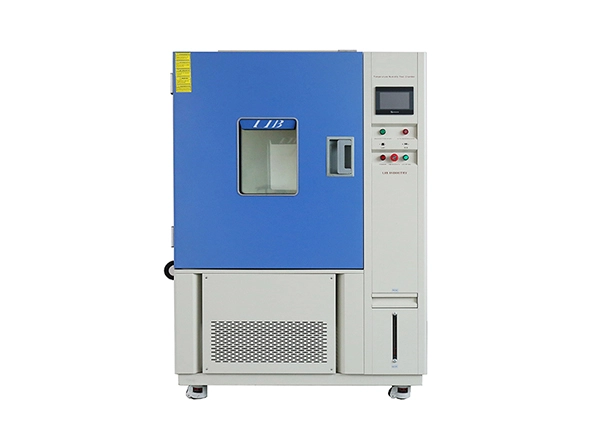
Selecting the right equipment for EV battery environmental testing depends on the battery type, testing objectives, and applicable industry standards. For battery cells, modules, and small battery packs, a dedicated EV battery test chamber with precise temperature and humidity control is typically sufficient. Larger battery packs or integrated energy storage systems may require customized or walk-in solutions with enhanced safety protection. Common testing standards include IEC 60068, IEC 62660, ISO 16750, UN 38.3, and SAE J2464. The most important selection factors are sample heat load, safety configuration, chamber capacity, temperature uniformity, and the ability to reproduce real operating environments for reliable battery pack climate testing.
Modern electric vehicles rely on lithium-ion battery systems that must operate safely in a wide range of environmental conditions. EV battery environmental testing evaluates how battery cells, modules, and complete battery packs perform under controlled temperature and humidity conditions throughout their service life.
Typical test samples include:
Individual lithium-ion cells
Battery modules
EV battery packs
Battery management systems (BMS)
Energy storage battery assemblies
Charging components and connectors
Environmental testing focuses on identifying potential failure modes before products enter mass production. Common concerns include:
Capacity degradation
Thermal expansion and contraction
Moisture ingress
Insulation failure
Corrosion of electrical connections
Seal deterioration
Reduced charging and discharging performance
Thermal runaway risks under extreme environments
These tests help manufacturers verify whether batteries can maintain safety, electrical performance, and structural integrity during transportation, storage, and long-term operation.
For manufacturers in the Automotive Industry, environmental qualification has become an essential step before batteries are integrated into electric vehicles, energy storage systems, or industrial equipment. Reliable testing data supports product certification, quality control, and regulatory compliance.
Because battery systems generate heat during operation, suppliers must understand the sample's electrical characteristics, operating state, and expected heat load when recommending an environmental chamber. Compared with conventional product testing, battery pack climate testing requires additional attention to airflow design, cooling capacity, safety monitoring, and emergency protection systems.
Battery environmental testing follows internationally recognized standards to ensure products meet safety and performance requirements across different markets. When selecting an EV battery test chamber, buyers should confirm which standards apply to their products.
Standard | Typical Temperature | Humidity | Test Duration / Cycle | Special Conditions |
IEC 60068-2-1 | Low-temperature exposure | N/A | Constant exposure | Environmental durability |
IEC 60068-2-2 | High-temperature exposure | N/A | Constant exposure | Heat resistance |
IEC 60068-2-30 | 25°C–55°C | Up to 95% RH | Cyclic damp heat | Moisture resistance |
IEC 60068-2-78 | 40°C | 93% RH | Steady-state humidity | Long-term humidity testing |
IEC 62660 | -40°C to +85°C (typical) | Optional | Charge/discharge cycling | EV battery performance |
ISO 16750-4 | -40°C to +125°C | Optional | Vehicle environmental testing | Automotive electronics |
UN 38.3 | Various | N/A | Transportation simulation | Shipping qualification |
SAE J2464 | Customized | Optional | Abuse and safety testing | Battery safety evaluation |
Actual test profiles vary depending on battery chemistry, vehicle platform, and customer specifications. Some manufacturers also combine environmental cycling with electrical charging and discharging to simulate real operating conditions.
When preparing a testing program, engineers should define:
Temperature cycling profile
Humidity range
Charging status during testing
Sample operating condition
Number of cycles
Pass/fail criteria
Providing complete testing requirements improves repeatability and ensures meaningful comparison between different battery designs.
Different battery testing applications require different chamber configurations. Selecting equipment based only on chamber size or temperature range may result in insufficient performance or unnecessary investment.
Specification | Standard Temperature & Humidity Chamber | Custom Battery Environmental Chamber | |
Temperature Range | -70°C to +180°C | -70°C to +180°C | Customized |
Humidity Range | 20–98% RH | 20–98% RH | Customized |
Chamber Volume | 100–1000 L | 150–2000 L | Customized for battery packs |
Ramp Rate | Standard or rapid temperature change | Standard or programmable | Customized according to application |
Airflow | General laboratory circulation | Optimized for battery testing | Designed around sample layout |
Sample Heat Load | Low to medium | Medium to high | High heat-load capability |
Safety Configuration | Over-temperature protection | Explosion relief, gas monitoring, emergency shutdown, fire protection options | Customized multi-level safety system |
Applicable Standards | IEC 60068 | IEC 60068, IEC 62660, ISO 16750, UN 38.3 | Customer-specific standards |
Unlike conventional environmental chambers, a dedicated Battery Test Chamber incorporates additional safety functions to address the unique risks associated with lithium-ion batteries. Features such as pressure relief, combustible gas detection, explosion-resistant construction, and emergency shutdown systems help improve operator safety during battery qualification testing.
Selecting the correct chamber also depends on the testing stage. Research laboratories often evaluate individual cells or small modules, while production validation may require testing complete battery packs with higher heat generation and larger dimensions. In these cases, chamber volume, cooling capacity, and airflow uniformity become as important as temperature and humidity accuracy.
Furthermore, buyers should consider future testing requirements. As EV battery technology evolves, larger battery packs and higher energy densities may require upgraded chamber configurations. Choosing equipment with sufficient expansion capability can reduce long-term investment costs and improve laboratory flexibility.
Even with advanced equipment, inaccurate test planning can reduce the value of EV battery environmental testing. The following mistakes are frequently encountered during battery qualification projects.
Lithium-ion batteries generate heat during charging, discharging, and cycling. If sample heat load is not considered, the chamber may struggle to maintain stable environmental conditions, leading to inaccurate results.
Battery modules and packs require sufficient clearance for proper airflow. Overcrowding the chamber can create temperature gradients and reduce testing consistency.
Positioning temperature or humidity sensors too close to chamber walls or air outlets may not reflect the actual conditions around the battery. Sensors should be placed according to the test standard and sample configuration.
A controller may display precise temperature values, but this does not guarantee uniform conditions throughout the workspace. Always verify chamber uniformity and stability specifications.
Many buyers compare chambers only by their minimum and maximum temperatures. For battery pack climate testing, ramp rate, humidity control, airflow, and cooling recovery are equally important.
Before purchasing, confirm:
Power supply capacity
Ventilation requirements
Floor loading capacity
Drainage system
Maintenance clearance
Emergency safety measures
Different battery testing applications require different environmental chamber configurations.
Recommended for:
Battery cell research
Small lithium-ion cells
Material evaluation
Laboratory development
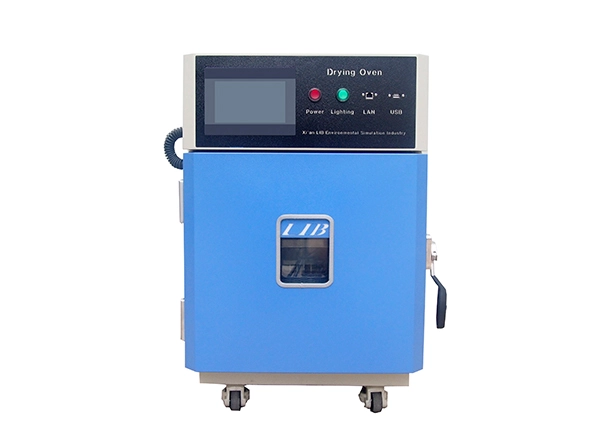
A Benchtop Environmental Chamber offers precise temperature and humidity control for early-stage battery development and small-scale testing.
Recommended for:
Battery modules
Consumer batteries
EV component qualification
Reliability testing
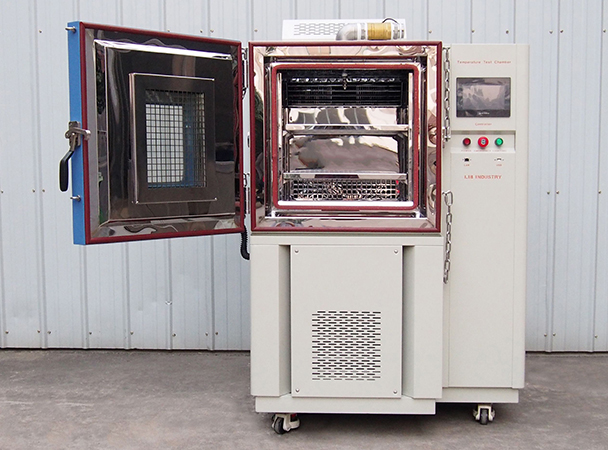
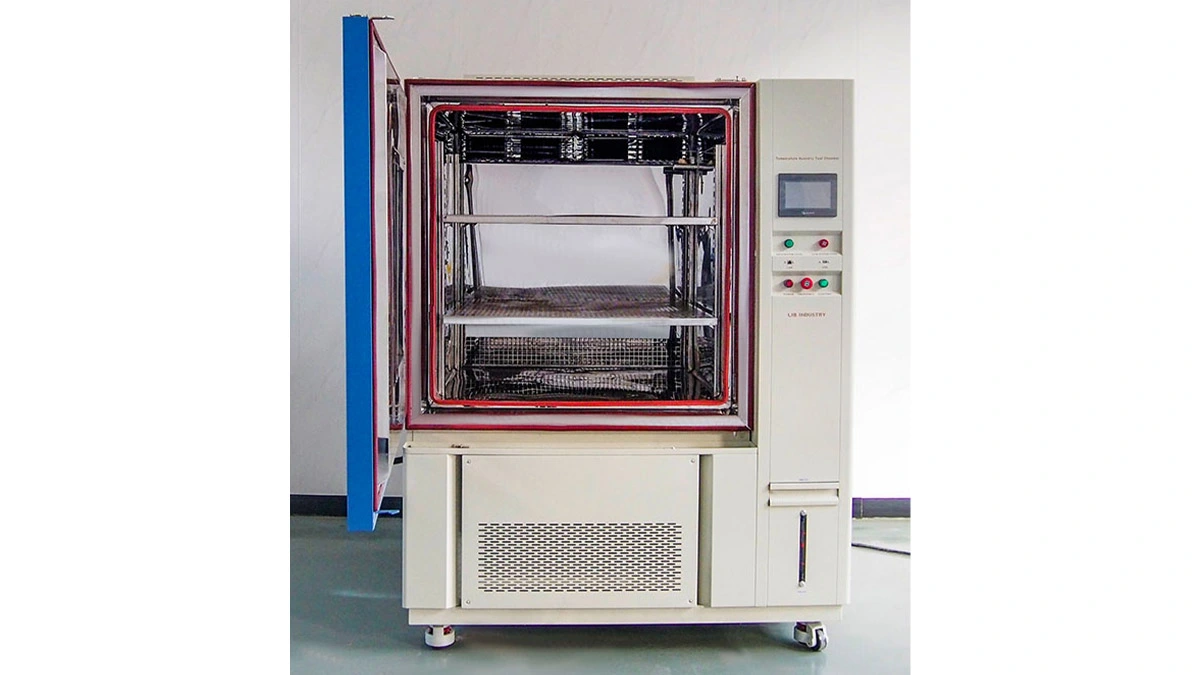
A Battery Test Chamber is suitable for routine environmental testing of battery modules and medium-sized samples, combining climate simulation with enhanced safety features.
Recommended for:
Complete EV battery packs
Energy storage systems
Large battery assemblies
Production validation
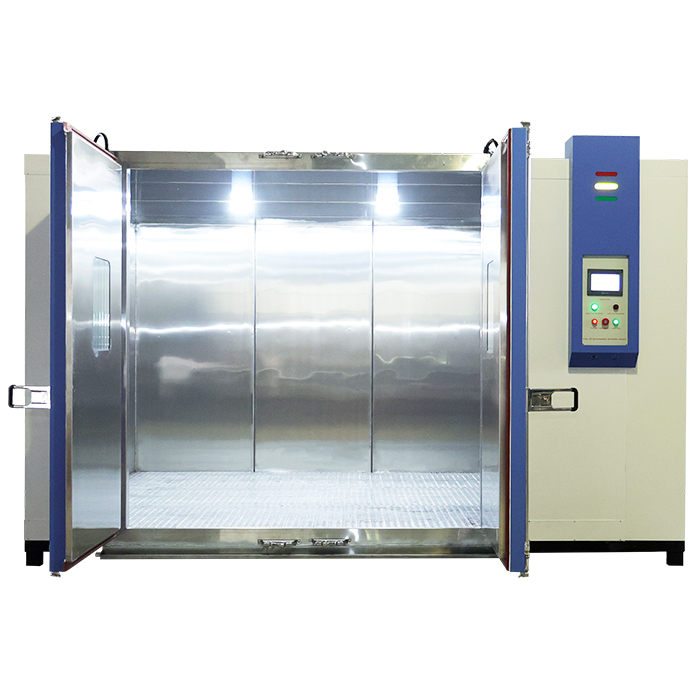
Walk-in chambers provide sufficient space for oversized battery systems while maintaining stable environmental conditions during long-duration testing.
Recommended for:
Rapid temperature transition testing
Battery material evaluation
Thermal stress verification
Thermal shock chambers evaluate battery performance under sudden temperature changes that may occur during transportation or extreme weather conditions.
Recommended for:
Battery enclosures
Connectors
Busbars
Metal structural components
Salt spray testing evaluates corrosion resistance of metallic battery components exposed to humid or coastal environments.
Recommended for:
EV battery housings
Charging connectors
Outdoor battery systems
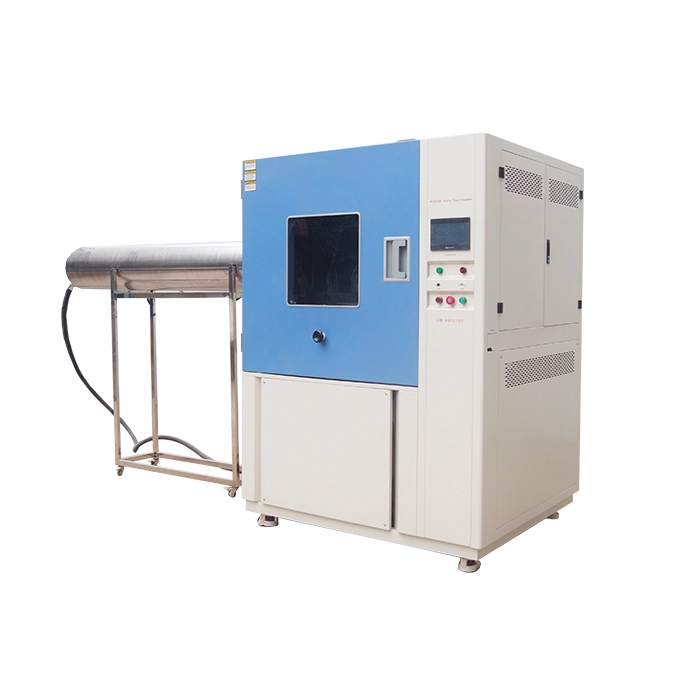
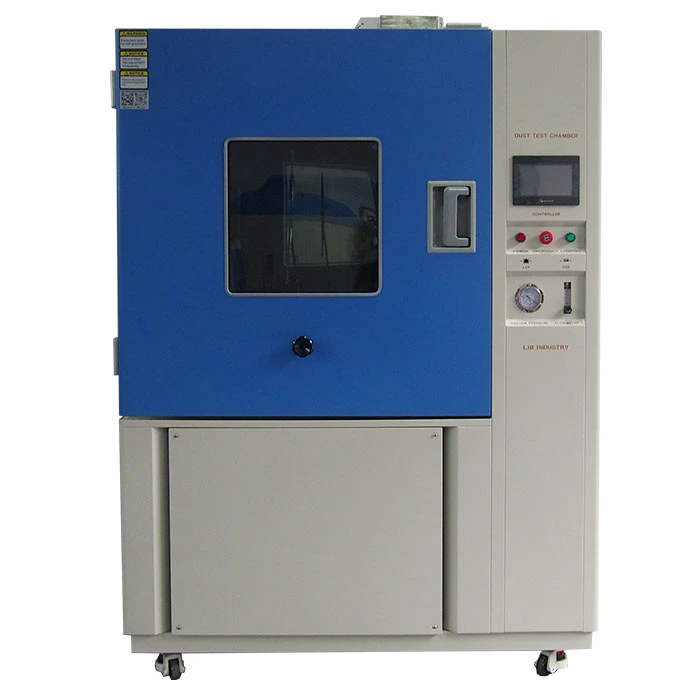
IP chambers verify resistance against dust and water ingress according to IEC 60529 requirements.
Custom battery chambers are recommended for:
High-voltage battery packs
Large energy storage systems
Combined charge/discharge testing
High heat-load applications
Customer-specific safety requirements
Customized systems can integrate battery cyclers, gas monitoring, fire suppression, and explosion protection according to project requirements.
Battery cells and modules are typically tested in a dedicated Battery Test Chamber, while complete battery packs or energy storage systems may require walk-in or custom environmental chambers with enhanced safety features.
It can be used for basic temperature and humidity testing, but dedicated battery chambers provide additional safety functions such as explosion protection, gas monitoring, and emergency shutdown.
Common standards include IEC 60068, IEC 62660, ISO 16750, UN 38.3, and SAE J2464, depending on the battery type and application.
The chamber should provide adequate clearance around the battery for uniform airflow while accommodating the sample size, heat generation, and any future testing requirements.
Heat generated during charging and discharging affects chamber performance. Correctly calculating heat load helps maintain accurate temperature control and ensures reliable test results.
Some customized battery chambers can combine environmental simulation with safety features such as gas monitoring and explosion protection, but the configuration should match the applicable testing standards and project requirements.
To learn more about battery reliability evaluation and environmental simulation, read How Battery Test Chambers Enhance the Safety and Performance of Lithium-Ion Batteries.
 English
 русский
 français
 العربية
 Deutsch
 Español
 한국어
한국어 italiano
 tiếng việt
 ไทย
ไทย Indonesia